REVIEW · BERLIN
Berlin: Charité Hospital History Walking Tour
Book on GetYourGuide →Operated by Beyond and Beneath Tours · Bookable on GetYourGuide
Charité Hospital turns medical history into an outdoor walking story. You’ll see neo-gothic architecture, meet the names behind major breakthroughs, and connect it all to the real events behind the Charité TV series. I especially like how the tour moves from 1710 plague-house beginnings to the 20th century’s biggest ethical and social shifts, and how the stop at the Veterinary Anatomy Theatre links medicine to everyday life in 18th-century Berlin. One consideration: this is mostly outside, so cold weather planning matters.
Two standouts: you get a focused look at medical giants like Robert Koch and Rudolf Virchow, and you also see quieter-but-important progress stories like Rachel Hirsch becoming the first woman to hold a medical professorship in Prussia. The guides are often praised for strong storytelling, and Martina (often mentioned in past departures) is known for sharing plenty of facts with clear, enthusiastic direction. The main drawback is that access to some active hospital or university areas is limited, so don’t expect to roam freely inside every building.
If you want a compact, high-impact history walk, this one fits well. You’ll finish near Berlin’s central transit area, which makes it easier to keep exploring afterward. Just wear comfortable shoes and bring a water bottle, and you’ll be set for about two hours on your feet.
In This Review
- Key highlights worth knowing before you go
- Charité’s roots begin in a plague-house
- From Robert-Koch-Platz to the neo-gothic campus walls
- Veterinary Anatomy Theatre: where 18th-century medicine met real animals
- Robert Koch and Rudolf Virchow: science on the move
- Rachel Hirsch and the 1913 step forward for women
- Nazi-era ethics and the hard truths Charité carried
- East Germany, West Berlin, and the missing windows
- The walk itself: timing, clothing, and comfort
- Price and value: what $28 gets you in practice
- Should you book this Charité Hospital history walk?
- FAQ
- Where does the tour start?
- Where does the tour end?
- How long is the tour?
- How much does it cost?
- Is the Veterinary Anatomy Theatre included?
- Are other Charité buildings included to enter?
- What languages is the tour offered in?
- Is the tour wheelchair accessible?
- Is it suitable for children?
- Will the Veterinary Anatomy Theatre always be open?
- What should I bring?
Key highlights worth knowing before you go
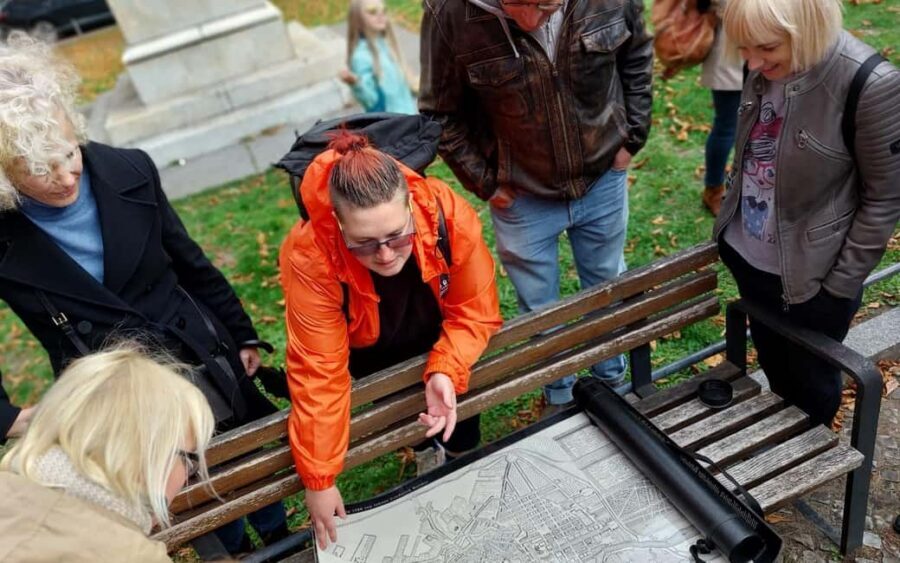
- Charité’s plague-house origin (1710): the tour starts with the hospital’s first purpose to protect Berlin from an approaching epidemic.
- Veterinary Anatomy Theatre visit: you’ll see how 18th-century experts studied livestock and cavalry horse ailments.
- Big medical names on the campus: Robert Koch and Rudolf Virchow appear in the story of real scientific change.
- Women in medicine, Prussia-style: Rachel Hirsch’s 1913 professorship is a major social milestone on the route.
- Hard history addressed directly: Nazi-era medical ethics and racial hygiene are part of the tour’s message.
- Outdoor walking, warm clothing needed: most of the experience happens outside on a historic campus layout.
Charité’s roots begin in a plague-house

Charité didn’t start as a grand medical empire. The story begins in 1710, when it was built as a plague house as the city faced an approaching epidemic. That opening matters because it sets the tone: you’re not just looking at old stones—you’re walking through changing ideas about disease, treatment, and responsibility.
From there, the tour explains how early medical care worked when today’s tools didn’t exist. You might hear about methods like bloodletting, the use of mercury doses, and amputations—practices that were common at the time, even though they sound shocking now. It’s the kind of context that makes modern medicine feel earned, not magical.
And if you’re a fan of Charité the TV series, this is where the real-life storylines can click into place. The tour connects famous characters and plot themes to the actual institutional history—helping you separate drama from the bigger truth of what Charité was doing, and why.
You can also read our reviews of more walking tours in Berlin



From Robert-Koch-Platz to the neo-gothic campus walls

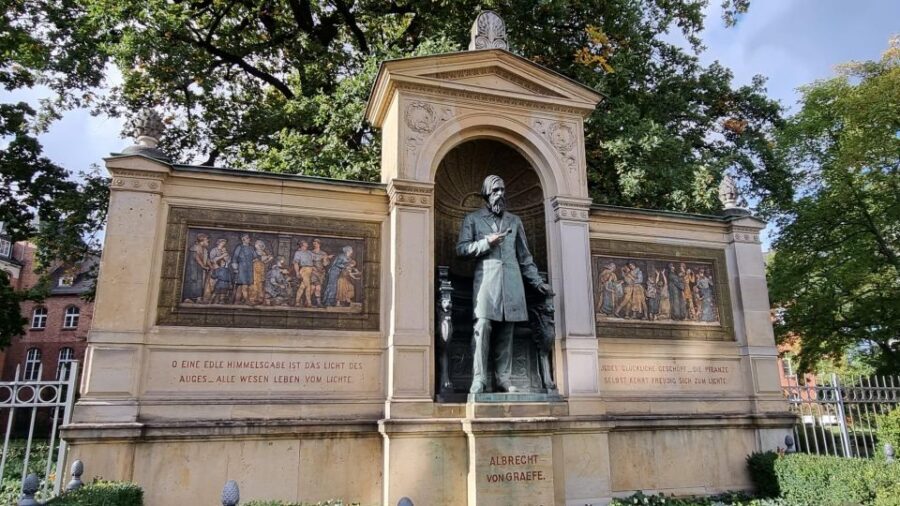
You’ll meet at Robert-Koch-Platz by the Robert Koch statue, and you’ll spot your guide holding an orange umbrella. That little detail helps you find the group fast, and it’s handy if you’re arriving from a nearby tram or train station.
Right away, you’re positioned to read the campus like a time machine. Charité’s grounds are known for their historic neo-gothic architecture, and the tour uses that setting to explain how scientific institutions project authority and permanence. In practical terms, it’s also a good way to get your bearings: you’re outside, with clear landmarks, and you’re moving at an easy walking pace.
One thing I like about the way this portion is handled is the balance. You’re not only seeing the famous scientific era. You’re also getting the sense that Charité kept changing with the politics and beliefs of the moment—so the campus isn’t just a museum. It’s a witness.
Veterinary Anatomy Theatre: where 18th-century medicine met real animals
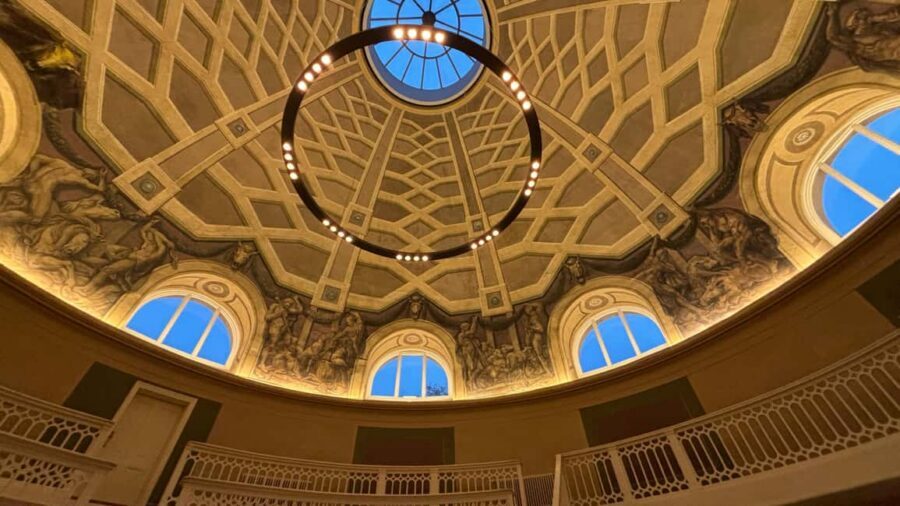
The first true “wow” stop is the Veterinary Anatomy Theatre. This is Berlin’s oldest academic building still in existence, and even if you’re not a history buff, the sheer specificity of its purpose makes it memorable.
Instead of focusing on human medicine alone, the tour takes you back to the 18th century, when ailments in the city’s livestock and cavalry horses had direct everyday consequences. Livestock illness could affect food supply. Horse health mattered for transport and military readiness. Studying veterinary ailments wasn’t a side project—it was practical medicine.
The theatre visit is short (about 15 minutes), but it’s tightly aimed. You’ll get guided context on why a teaching space like this mattered, and what it says about the era’s view of learning by observation. The admission to the theatre is included, so you don’t have to hunt for extra tickets or detours.
A small heads-up: on occasion, the theatre can be closed due to internal events or public holidays. If that happens, your guide may adjust what you see in the time you have, so keep that flexibility in mind.
Robert Koch and Rudolf Virchow: science on the move

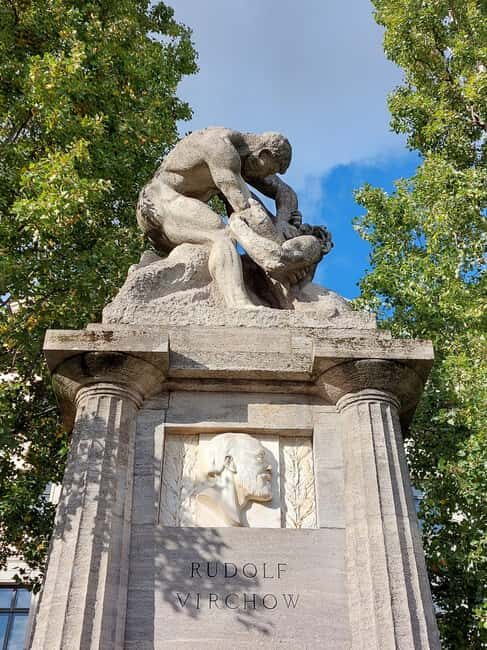
Charité is strongly linked to medical history through the figures whose names you’ve probably heard, even if you didn’t know where they worked. On this tour, Robert Koch and Rudolf Virchow appear as part of a larger shift toward modern thinking—methods that eventually helped change how diseases were understood and treated.
What’s useful for you here is how the tour frames these names as more than legends. You’ll learn how breakthroughs were tied to institutions, facilities, and the ongoing work of researchers. That helps if you’re trying to build a mental map of German medical progress rather than just collecting names.
Also, the pacing is good for staying power. The guided segments that follow your theatre stop keep walking and storytelling connected, so you’re not stuck in one long lecture. It’s history, but it has momentum.
Rachel Hirsch and the 1913 step forward for women
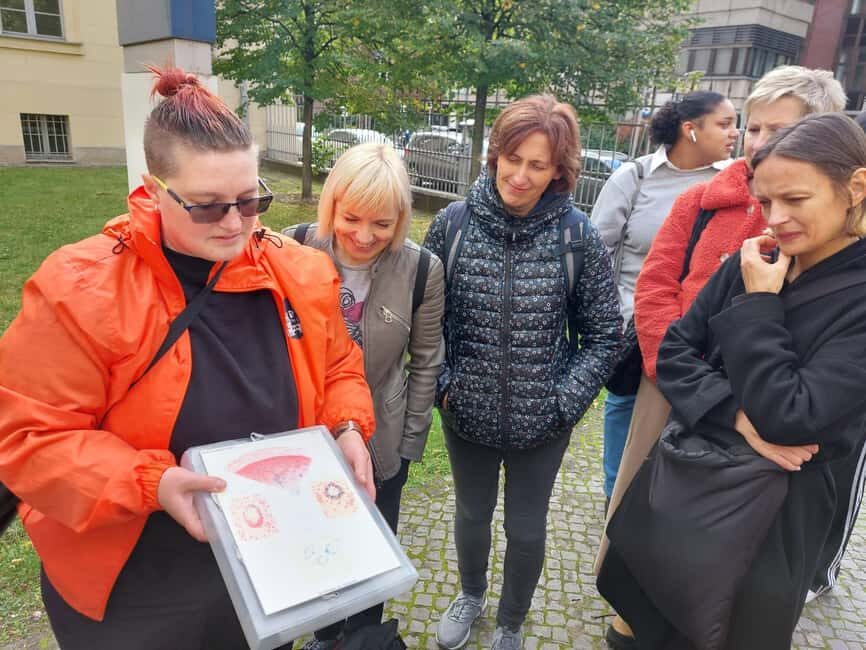
This tour makes space for a key social turning point: Rachel Hirsch becoming the first woman to hold a medical professorship in Prussia in 1913. It’s a moment that goes beyond biography. It’s a snapshot of how institutions resisted change—and how change still happened.
The guide’s angle is practical: Hirsch’s appointment marks shifting attitudes in the early 20th century, but there was resistance inside the institution. That tension matters, because it makes the story feel real. Progress wasn’t a straight line.
If you care about who gets credited in medical history, this stop helps rebalance the story. You leave with more than a list of discoveries—you also take away how access to teaching, authority, and professional credibility has always been part of medicine’s evolution.
You can also read our reviews of more historical tours in Berlin






Nazi-era ethics and the hard truths Charité carried
There’s no soft language in the tour when it reaches the Nazi regime. The hospital becomes a symbol of how medical authority can be corrupted when ethics are ignored. The tour covers ideas of racial hygiene and how they were imposed ruthlessly through medical systems.
It also addresses what some doctors did and didn’t do. Some kept quiet. Others actively organised the extermination of psychiatric patients. That’s heavy material, but it’s part of understanding Charité’s full history—not just the achievements.
From a traveler’s perspective, I like that the tour doesn’t treat this as a separate, gloomy chapter. It connects the moral failures to the institution itself, which is exactly what you want when you visit a place like this. You’re not only learning what happened—you’re learning how systems can be built to either protect people or harm them.
East Germany, West Berlin, and the missing windows
After the war, Charité also becomes a mirror for political division. The tour explains how East Germany highlighted Charité’s achievements, while windows facing the capitalist West were bricked up.
Even if you don’t notice every architectural hint in the moment, the idea lands clearly: borders reshape what people see. They also shape what institutions choose to show and what they choose to hide. This is where the campus setting becomes more than a backdrop—it’s part of the story of East-West separation.
That makes the ending feel meaningful. When you leave the area, you’re not just walking away from landmarks—you’re stepping out of a place that has repeatedly been used by governments to define medical truth.
The walk itself: timing, clothing, and comfort

This is a two-hour walking tour with stops that are mostly outdoors. That affects what you should do before you go.
- Wear comfortable shoes. You’ll be standing and walking for around two hours.
- Bring water.
- Dress warmly in cold weather. A lot of the campus is exposed, and the tour doesn’t wait for you to warm up every time.
The route is structured, and the guided segments help keep your attention focused. Still, it’s best if you go in ready to walk and listen for the full time.
Wheelchair accessibility is listed. That said, it’s still a campus walk, so you’ll want to be prepared for outdoor surfaces and changing terrain.
Age-wise, the tour is recommended for ages 14 and up due to the historical depth. All minors must be accompanied by an adult, and it’s not suitable for children under 14.
Price and value: what $28 gets you in practice
At about $28 per person for roughly two hours, the value comes from three things: expert guidance, a meaningful included visit, and a tight focus on turning institutional history into a story you can actually follow.
The included visit to the Veterinary Anatomy Theatre (free admission) is one clear value piece. The rest is the guided walking explanation around the Charité campus, where you’re helped to connect architecture, names, and the institution’s changing ethics over time.
Also, the tour manages expectations in a smart way: entry to all hospital or university activity buildings isn’t included, and some areas are restricted for guided tours. That’s common in working institutions. The practical benefit for you is that the guide can concentrate on what you can access and make it coherent, rather than rushing into areas you can’t enter.
If you like history that’s specific—dates, institutions, and real shifts in ethics and social policy—this price feels fair for the amount of context you get.
Should you book this Charité Hospital history walk?
Book it if you want:
- a structured, two-hour way to understand Charité beyond headlines
- the chance to see the Veterinary Anatomy Theatre and learn what it was for
- a balanced story that includes both medical breakthroughs and the institution’s darkest chapters
- a guide-led walk that helps you link the real history to what you’ve seen in the Charité TV series
Skip it (or choose a different style of visit) if:
- you want lots of interior time inside active hospital buildings
- cold weather walking is a problem for you—because most of this is outside
- the historical material feels too intense for your comfort level
If you’re coming into Berlin for the first time and you like tours with clear themes—science, ethics, society, and architecture—this one is a solid pick.
FAQ
Where does the tour start?
It starts at Robert-Koch-Platz, where you meet by the Robert Koch statue and look for your guide holding an orange umbrella.
Where does the tour end?
The tour ends at Alexanderufer, 10117 Berlin, Germany.
How long is the tour?
The tour duration is about 2 hours (starting times vary by availability).
How much does it cost?
The price is $28 per person.
Is the Veterinary Anatomy Theatre included?
Yes. The visit to the Veterinary Anatomy Theatre is included, and admission is free.
Are other Charité buildings included to enter?
No. Entry to buildings where hospital or university activities take place is not included, and some restricted areas can’t be accessed during the guided portion.
What languages is the tour offered in?
The live guide offers the tour in English and German.
Is the tour wheelchair accessible?
Yes, the tour is listed as wheelchair accessible.
Is it suitable for children?
It’s recommended for ages 14 and up due to the historical depth. It is not suitable for children under 14, and minors must be accompanied by an adult.
Will the Veterinary Anatomy Theatre always be open?
On occasion, the theatre can be closed due to internal events or on public holidays.
What should I bring?
Bring comfortable shoes and water, and dress warmly for cold weather since most of the tour takes place outside.