REVIEW · BERLIN
The Stachelschweine anniversary program: Ich hab’ noch einen Tesla in Berlin (I still have a Tesla in Berlin)
Book on GetYourGuide →Operated by Kabarett Theater: Die Stachelschweine · Bookable on GetYourGuide
Berlin cabaret is best when it feels close and dangerous. This 75th anniversary program at Die Stachelschweine is a fast-moving, uncensored political satire with lots of music and very current targets. I love the way it mixes black humor with a calm, Berlin-like delivery, and I love how the show treats big national topics like they belong on stage, not in a lecture hall. One thing to consider: the performance is in German, so you’ll want a good working level of the language to catch the punchlines.
The heart of the show is a not-so-far-future sketch in 2028, where politics, debt, and everyday life all collide in one chaotic plan. You’ll meet a very plausible cast of characters, hear the story twist, and watch the plot tip from smug certainty into full panic. If you’re sensitive to sharp social criticism and political jokes, this is exactly that sort of evening—thoughtful, but not soft.
In This Review
- Key reasons this cabaret anniversary program hits hard
- Die Stachelschweine: Cabaret in a real Berlin room
- Finding the theater: Europacenter basement entrance
- The 2028 satire plot: debt, politics, and everyday costs
- What the stage is really doing: sharp critique with tempo
- Meet the creators and performers: Schrader, Henking, Stert
- Seating, small group feel, and the live-room reality
- Price and value: $53 for live, uncensored political cabaret
- Berlin’s past and present: how the Wall-era shows up
- Who should book this cabaret show (and who might want to skip it)
- Should you book Ich hab’ noch einen Tesla in Berlin?
- FAQ
- Is the show performed in German?
- How long is the program?
- Where do I meet for the show?
- Can I choose specific seats?
- Do I need to exchange my voucher?
- Is there a small group limit?
Key reasons this cabaret anniversary program hits hard
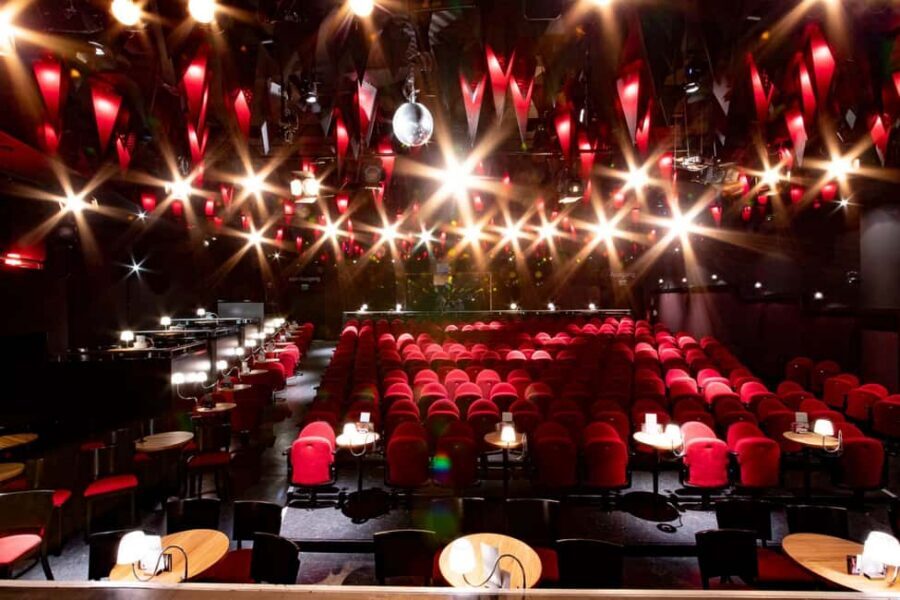
- Die Stachelschweine: Berlin’s first cabaret theater, with live satire where you can’t hide behind distance.
- A topical 2028 storyline: A future-german-government script that turns economic anxieties into comedy machinery.
- The “3 Stachelschweine” cast: Santina Maria Schrader, Mirja Henking, and Sebastian Stert bring nonstop energy.
- Live music woven into the pacing: Original music by Luca Fazioli, arranged by Martin Rosengarten.
- Short, punchy delivery: This is a fast-paced cabaret format designed to keep you alert.
- You’re in a tiny group: Limited to 6 participants, which helps the room feel intimate rather than theatrical-distance.
Die Stachelschweine: Cabaret in a real Berlin room
If you want Berlin humor at full strength, this is one of the places to go. Die Stachelschweine has the kind of reputation that still matters because the show format stays “live” in the practical sense: people talk, sing, react, and land jokes in the room, not on a screen.
What makes it especially appealing is that this is an anniversary program, not just another set of sketches. The 75th-year show, Ich hab’ noch einen Tesla in Berlin, leans into social criticism with a kind of Berlin serenity—serious subjects delivered with a controlled, almost cool tone. That contrast is funny, but it’s also the point: the room feels calm right up until the story proves it’s not.
For your expectations, think “political cabaret,” not “light entertainment.” You’ll get satire that aims at power structures, economics, and election promises—delivered fast, with music, and with an edge.
You can also read our reviews of more tours and experiences in Berlin.



Finding the theater: Europacenter basement entrance
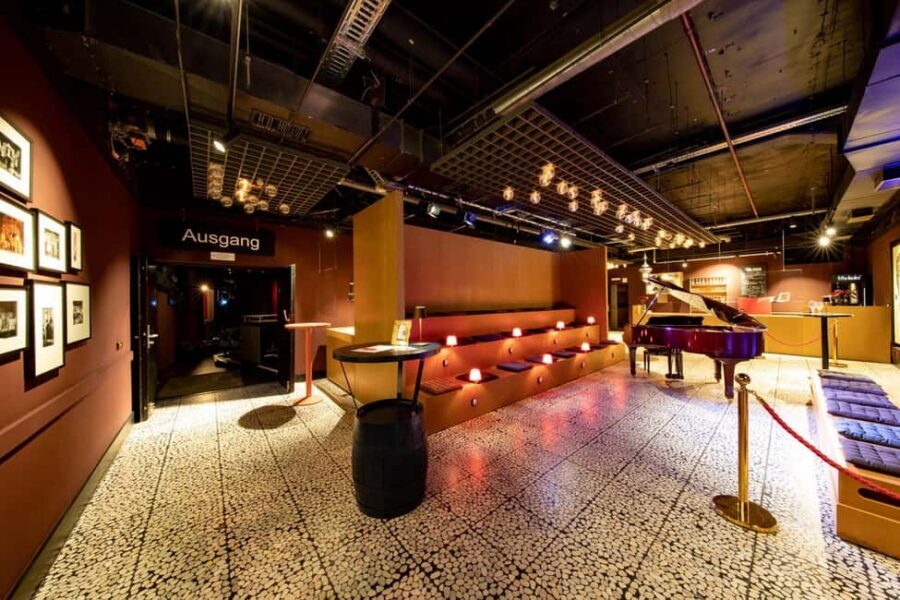
This one is easy to miss if you only picture a street-level theater door. The entrance is in the basement of the Europacenter, so give yourself a bit of buffer time to locate it confidently.
Because it’s a ticketed show, you’ll want to arrive with enough time to get settled before the performance begins. The venue asks you to exchange your voucher at the box office before the show starts, so don’t treat the voucher as something you can just wave at the door.
Practical tip: go in early enough to find your way, then focus on the room. In a cabaret theater, the atmosphere starts before the first line, and you’ll enjoy the show more if you’re not scrambling at the last minute.
The 2028 satire plot: debt, politics, and everyday costs
The plot is a vision of the future in 2028, with German politics front and center. The new German Chancellor is Wagenknecht, and the Vice Chancellor is Pistorius—names used directly in the script, not as vague archetypes. The big pressure point is national debt, which keeps climbing until ordinary life becomes part of the “numbers” joke.
The story zooms into details that make the satire feel real. Prices and corporate moves show up like punchlines: a cheese sandwich that costs 14 euros, BASF and Bayer moving to Asia, and VW and BMW tied to Tesla. Then the government’s credit rating takes a nosedive—mapped into the language of public anxiety. Half of all taxes going to interest payments becomes a recurring “wait, what?” moment.
The comedy engine kicks in when Vice Chancellor Pistorius proposes a single measure to fund election promises. The promises are bold and familiar at the same time: pensions at 55, free public transportation, and rent caps going back to levels tied to 1989. In the show, Berlin becomes the bargaining chip for a plan that sounds too good to be true.
Here’s what I think you’ll appreciate: the script uses absurd logic to point at real-world incentives. You’re meant to laugh at the setup, then notice how the characters justify the unthinkable. And when everything finally goes wrong, the show lands on a key reassurance: nobody really wants to sell Berlin. It’s both a plot twist and a political wink.
What the stage is really doing: sharp critique with tempo
This program is built for momentum. You get a “fast-paced cabaret” rhythm, which matters because political satire works best when you don’t have time to overthink it.
The tone stays clever. It’s not screaming for attention—it’s making you track multiple threads: government claims, economic pressure, and how people try to solve big problems with one clever idea. The pacing pushes you to connect the dots in real time, which is part of why the jokes feel topical instead of dated.
And when music comes in, it’s not just background. The songs help carry transitions and underline the ridiculousness of the plan. The result is a show that keeps changing gears without losing its central message.
Meet the creators and performers: Schrader, Henking, Stert
The cast is at the center of why this works. The three performers are Santina Maria Schrader, Mirja Henking, and Sebastian Stert, and they handle the fast turns between character, narration, and musical moments.
The show’s script is by Frank Lüdecke and Sören Sieg, and Frank Lüdecke is also the director. That combination matters because cabaret needs tight structure: jokes have to land, scenes have to shift quickly, and the music has to fit the story beats instead of interrupting them.
Music is by Luca Fazioli, with arrangements by Martin Rosengarten. In practice, you’ll feel the music doing three jobs: setting pace, adding emotional contrast, and making the satire stick. If you’ve ever watched political speeches drag on, this is the opposite. It uses rhythm so the critique stays memorable.
If you’re choosing whether this show matches your taste, the easiest check is this: do you enjoy humor that takes institutions seriously enough to roast them? If yes, the cast’s energy will likely be exactly your style.




Seating, small group feel, and the live-room reality
This program is ticketed for a small group, limited to 6 participants. That size helps the experience feel less like a crowded theater and more like you’re watching in an intimate room where the performers can read reactions.
You can choose a seat category, but not specific seats. That’s a normal theater tradeoff, but it matters for planning. In a small cabaret space, even a small shift in where you sit can change your view of stage action and proximity to the table area (if tables are part of your seating setup).
One practical drawback to keep in mind: this is a close-quarters environment. In one recent highlight about the experience, there was a complaint about hair from guests in front ending up in drinks. That doesn’t mean it’s guaranteed to happen, but it’s a reminder that cabaret rooms bring people close, so you might want to be mindful about drink placement and how you use shared table space.
Overall, though, the “close-up” factor is also the best part. Political satire lands differently when you feel it in the room instead of watching from far away.
Price and value: $53 for live, uncensored political cabaret
At $53 per person for a 2-hour program, you’re paying for something more specific than a generic show night. You’re getting:
- A dedicated anniversary performance tied to a real cabaret theater in Berlin
- Live, topical political satire presented close to the audience
- A fast pace with multiple performers and significant music
- A format that’s described as uncensored and built for real-time impact
When you compare that to costs for standard concerts or comedy club tickets, the value comes from focus. This isn’t “some entertainment.” It’s a clearly targeted night of Berlin-style political cabaret, centered on current social criticism and delivered live.
Also, the show duration—2 hours—helps you fit it into a Berlin itinerary without eating your whole evening. If you like compact cultural stops, this works well.
Berlin’s past and present: how the Wall-era shows up
Even though the storyline is set in 2028, the show connects to Berlin’s history. One clear thread you’ll likely notice is the way the script references the Wall era, especially through comparisons baked into policy jokes and the choice of what “levels” get set back to 1989.
That connection matters because Berlin audiences carry context differently. If you know the basics of post-Wall reunification and the political debates around social policy, you’ll catch more of the meaning behind the satire. And even if you don’t know every reference, you’ll still feel the craft: the show uses history as a measuring stick for the future it’s mocking.
If you’re the type who enjoys seeing a city’s current identity in conversation with its past, this is a strong way to do it. You’re not touring monuments as much as watching the city’s public nervous system turn into comedy.
Who should book this cabaret show (and who might want to skip it)
This works best for you if you:
- Enjoy political humor with sharp targets and clear opinions
- Want live Berlin performance in a small, close-feel room
- Like shows that mix speech and music instead of separating them
- Prefer topical satire over generic jokes
You might want to think twice if:
- Your German isn’t strong enough for nuance and fast punchlines
- You don’t enjoy uncensored political commentary
- You prefer quiet, low-stimulation entertainment
Because it’s performed in German and knowledge of German is required, language ability is the biggest filter. Cabaret often depends on wordplay, timing, and short transitions—so plan for that reality.
Also, the show’s humor is black. It uses panic and absurdity as tools, not as mere shock.
Should you book Ich hab’ noch einen Tesla in Berlin?
If you’re in Berlin for a few days and you want one night that feels distinctly like Berlin—thinking, joking, and criticizing in the same breath—this is a book-worthy choice. The format is tight, the cast is built for speed, and the 2028 setup gives you a storyline that stays coherent even as it gets chaotic.
The main reasons not to book are simple: you need German to get the full effect, and you should be comfortable with uncensored political satire. If those are fine, you’ll probably enjoy how the show turns big national questions into a near-hysterical comedy plan you can’t forget.
FAQ
Is the show performed in German?
Yes. The play is performed in German, and knowledge of German is required to follow the performance.
How long is the program?
The performance lasts 2 hours.
Where do I meet for the show?
The entrance to the theater is in the basement of the Europacenter.
Can I choose specific seats?
You can choose a seat category, but you cannot pick specific seats.
Do I need to exchange my voucher?
Yes. You need to exchange your voucher at the box office before the performance begins.
Is there a small group limit?
Yes. The experience is limited to 6 participants.