REVIEW · BERLIN
Berlin: History of the Third Reich Guided Walking Tour
Book on GetYourGuide →Operated by Sandemans Tours · Bookable on GetYourGuide
Nazi Berlin on your doorstep. In just 2 hours, this walking tour gives you a clear, street-level view of how the Third Reich took over power and then collapsed.
I especially like the way the tour starts at the Luftwaffe Air Force headquarters, where massive Third Reich architecture still survives the bombing.
The second thing I really value is the balance of hard details with context: you’ll move from Goebbels’ propaganda machine to the SS and Gestapo headquarters area and then face the Soviet Memorial tied to the Battle of Berlin. The main drawback is that this is emotionally heavy material, so go in ready for somber stops and a tone that doesn’t sugarcoat anything.
In This Review
- Key things to know before you go
- Where this Berlin walk fits in your trip
- Finding your guide by Brandenburg Gate in red
- Luftwaffe headquarters: when surviving buildings speak
- Goebbels’ propaganda ministry: the machine behind the message
- SS and Gestapo headquarters area: fear written into place
- Berlin Wall remnant on the same route: why memory matters
- The Soviet Memorial: 80,000 lives, honored with silence
- Hitler’s bunker site: standing at the end of the line
- Price and value for a 2-hour guided walk
- What kind of guide experience you can expect
- Who should book this tour
- Should you book this Third Reich walking tour?
- FAQ
- How long is the Berlin: History of the Third Reich guided walking tour?
- Where do I meet the guide?
- Is transportation included?
- What’s included in the price?
- Is the tour wheelchair accessible?
- What should I bring?
Key things to know before you go
A focused 2-hour route that concentrates on major Nazi sites instead of spreading you across the whole city
Intact architecture at the Luftwaffe HQ makes the history feel physical, not textbook-only
Basement remains and exhibitions at Prinz-Albrecht-Straße help explain how terror worked, day to day
A Soviet Memorial stop honors the 80,000 soldiers who died liberating Berlin
A mid-tour break gives you a breather partway through the walk
English live guide with storytelling styles that many people describe as patient and engaging
Where this Berlin walk fits in your trip

This is the kind of tour that helps you connect dots fast. Berlin can feel like a collection of monuments and museums if you move alone. With a guide, the city becomes a map of power: how Nazi leadership built control, how propaganda shaped public life, and how the war ended in total ruin.
The route is compact for a reason. You spend limited time walking, but you cover places that represent whole systems: air power headquarters, a propaganda nerve center, the terror apparatus tied to the SS and Gestapo, and the final ground where the Third Reich ran out of options. That is a lot to pack into two hours, and it works best if you want a structured overview rather than a long museum day.
Also, this tour has a break partway through, which matters when the topic is so intense. You’ll still be on your feet for a while, so comfortable shoes are the real MVP here.
You can also read our reviews of more walking tours in Berlin



Finding your guide by Brandenburg Gate in red
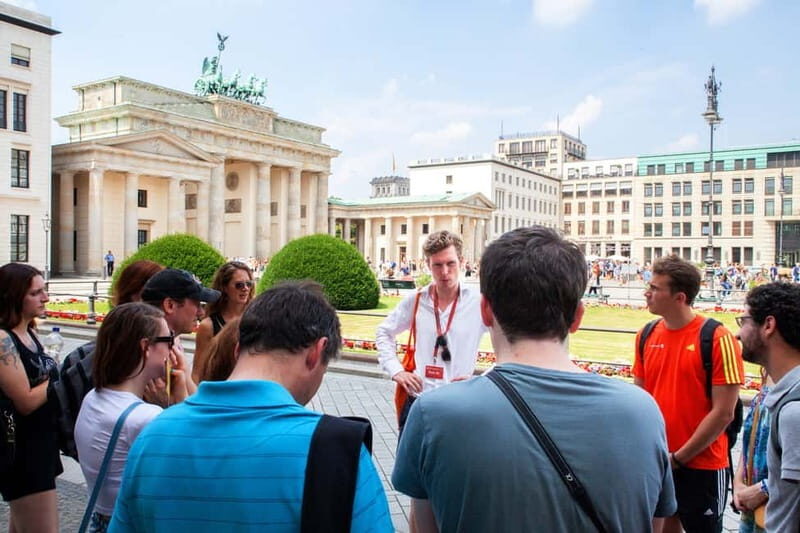
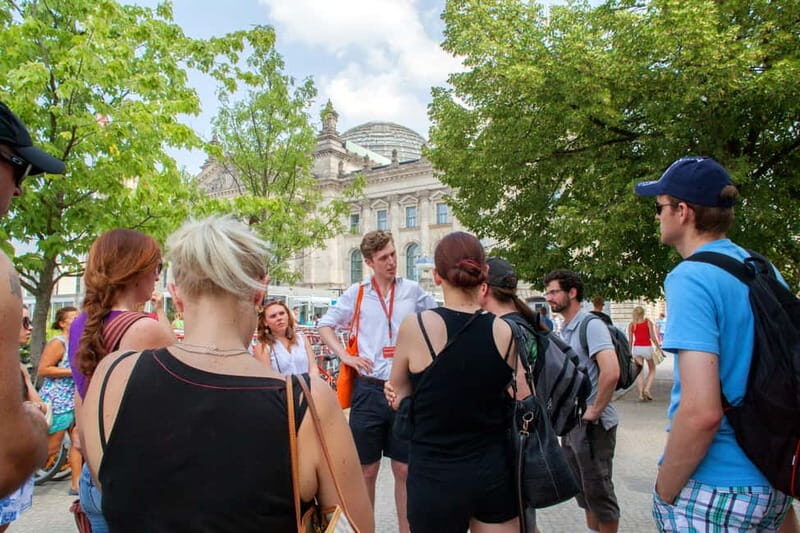
You meet in front of a Starbucks Café near Brandenburg Gate. Look for the local operator’s team in red t-shirts with red umbrellas. It sounds small, but it saves time and stress when you’re trying to get started quickly.
Because the meeting point is right by a major landmark, it’s easy to orient yourself. The guide then directs the walking portion from there, keeping things moving at a workable tempo. Many people also mention that guides manage groups well, including when group size is larger and participants need to be split into smaller clusters.
One practical note: you’ll want to arrive a bit early. This tour starts on schedule, and the fastest way to have a good experience is to start calm, not searching the sidewalk five minutes before departure.
Luftwaffe headquarters: when surviving buildings speak
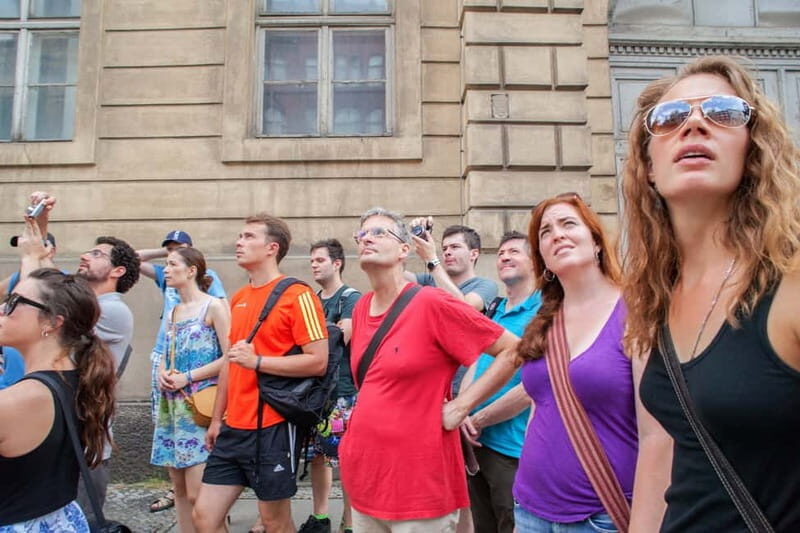
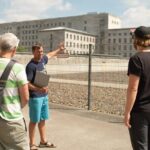
The opening stop is the Luftwaffe Air Force headquarters, a standout because it retains impressive Third Reich-era architecture. The tour focuses on why this place mattered, not just what it looks like. You’re looking at Hermann Goering’s massive base, and you’re seeing how state power wasn’t only political. It was also physical—built in stone, scale, and signage meant to signal authority.
Here’s why I think this first stop is smart for you: it anchors the story in something concrete. Before the talk turns to propaganda and terror, you get a sense of how the regime organized resources and priorities, especially around the war machine.
It also helps that the building survived allied bombing. That alone makes the history feel less distant. You can literally stand in Berlin and recognize the kind of structure a regime would rely on to keep moving its plans forward.
Goebbels’ propaganda ministry: the machine behind the message
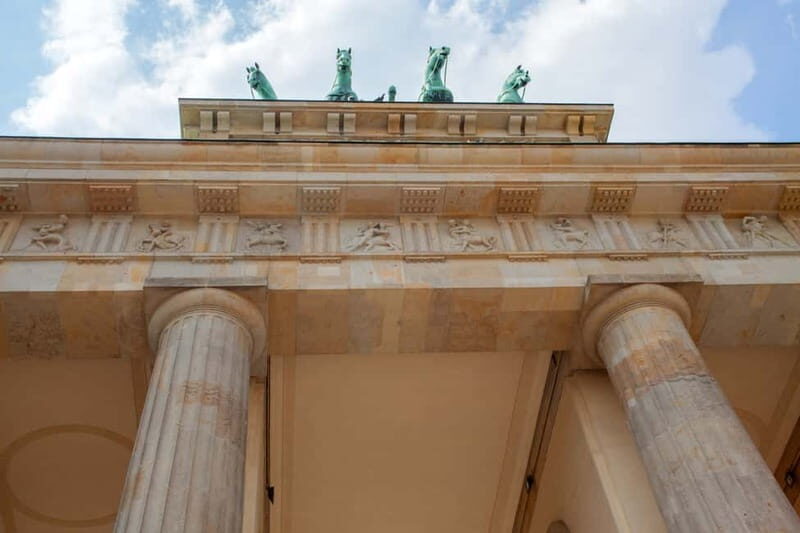
Next comes Josef Goebbel’s Propaganda Ministry. The site’s story is part of the lesson. Before the war, it served as the Berlin Press Office, then it was converted into the nerve center of Nazi propaganda.
For you, this section is where the tour earns its keep. Propaganda is often treated like background noise in history classes. On this walk, it becomes a tool of control: how the regime shaped what people saw, heard, and believed—once power was already seized.
If you’re the type who wants the “how” behind the “what,” this stop delivers. You’ll connect the dots between leadership decisions and daily reality. And you’ll see why propaganda isn’t just posters and speeches. It’s administration, personnel, and systems that make messaging repeatable and enforceable.
SS and Gestapo headquarters area: fear written into place
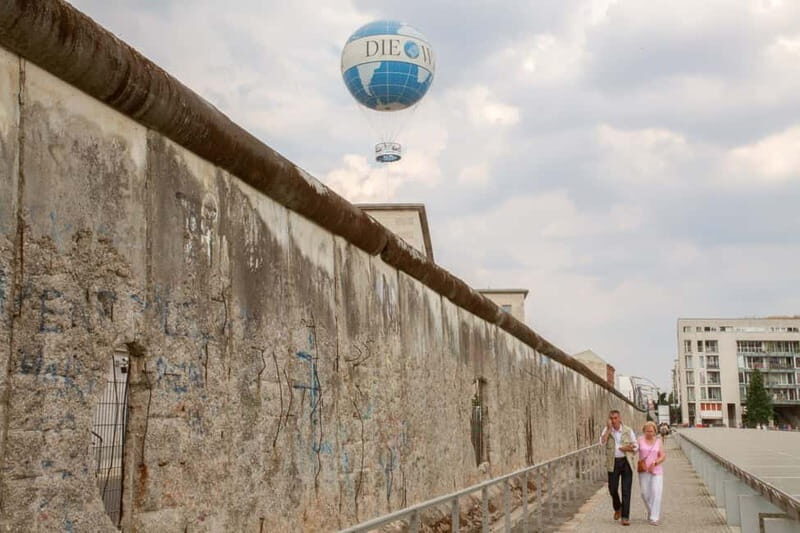
Then you move to what’s described as one of the most feared addresses in Nazi Germany: the SS and Gestapo headquarters area on Old Prinz-Albrecht-Straße. This is a tough stop, and the tour doesn’t treat it like a sightseeing photo op.
A key part here is that the area includes basement remains of the two buildings, now converted into an exhibition that documents the Nazis’ rise to power. That matters because basements are where power gets physical: confinement, interrogation, and control that isn’t meant to be seen.
You’ll also learn how the terror system worked as part of the larger dictatorship. It’s not just “bad people did bad things,” which is too simple. Instead, you get a guided explanation of how the regime created mechanisms that helped atrocities happen at scale.
You can also read our reviews of more guided tours in Berlin





Berlin Wall remnant on the same route: why memory matters
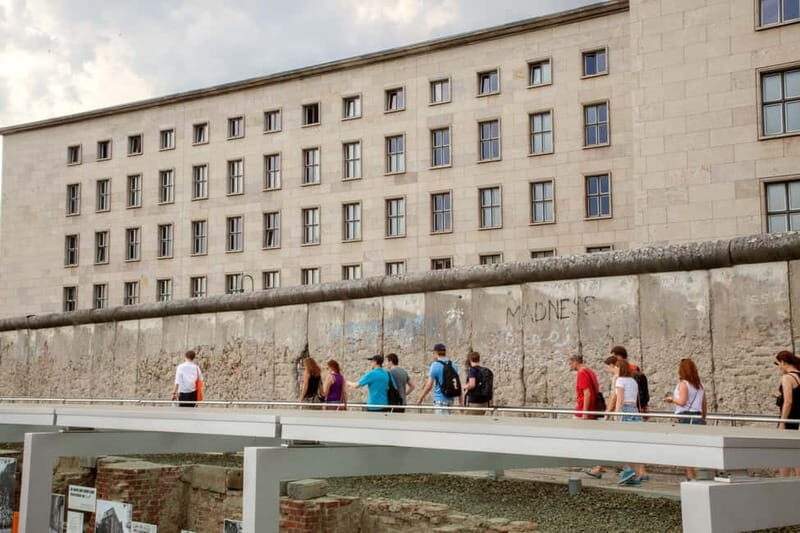
One reason this tour feels like more than a history lecture is that Berlin doesn’t keep its past in one museum box. While walking through the SS/Gestapo neighborhood area, you also pass one of the remaining stretches of the Berlin Wall.
That detail is valuable for your understanding. It reminds you that Berlin’s story didn’t end in 1945. The city kept rewriting itself—politically, physically, and emotionally. Seeing a Wall remnant right along a route tied to Nazi control helps you grasp how dictatorship leaves long shadows, and how later regimes also tried to manage people through division.
It also makes the walking format useful. A museum can explain chronology. Streets can show overlap. On this tour, you get both, and the connection makes the history easier to hold in your head.
The Soviet Memorial: 80,000 lives, honored with silence
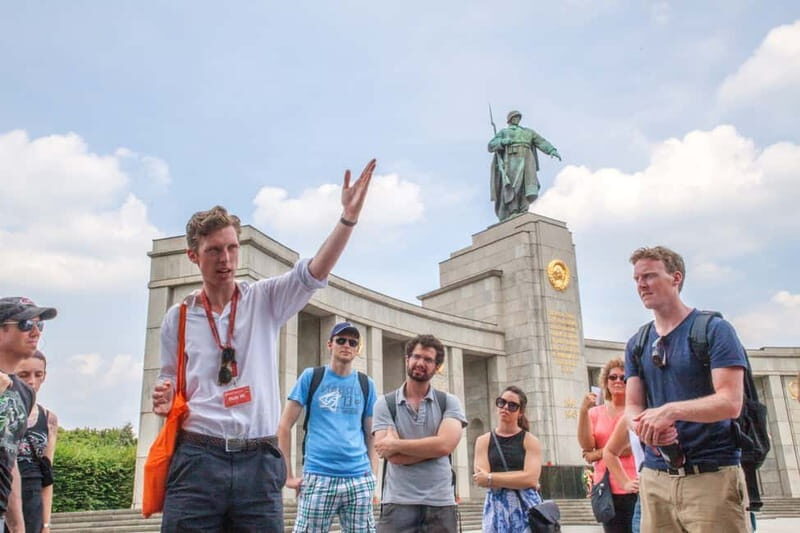
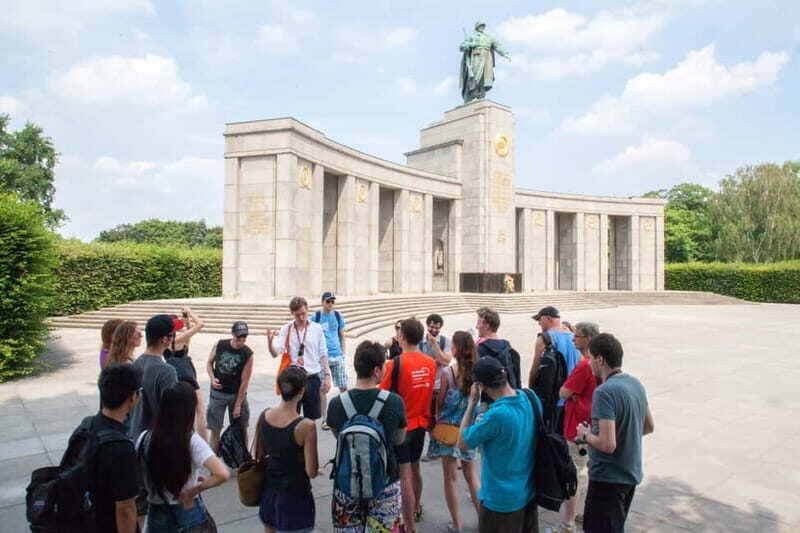
The tour then shifts to the Battle of Berlin through a Soviet Memorial stop. You’ll hear about the conflict’s staggering cost, including the 80,000 Soviet soldiers who lost their lives liberating the city.
The memorial is presented with 2 artillery pieces and 2 tanks, standing as quiet reminders. Even if you’re not the type to get emotional, this stop tends to change the atmosphere of the walk. That’s because the story isn’t only about Nazi crimes; it’s also about the human price of the war’s last, desperate months.
For you, this section is important for balance. It places Berlin’s Nazi story inside the broader catastrophe that hit civilians, soldiers, and cities across Europe.
Hitler’s bunker site: standing at the end of the line
Finally, you stand above the site of the former Führer bunker, the place where Nazi Germany ended as the Russian army closed in.
This is one of those stops where the guide’s job is not to sensationalize. It’s to explain what happened and why it mattered, without turning tragedy into spectacle. If your guide keeps a steady tone—and many people note that guides combine seriousness with clear storytelling—you’ll leave understanding the closing chapters of the Third Reich more clearly than you would from general accounts.
The physical location helps too. Even without entering a bunker, standing on the ground where the regime’s final stand happened can make the ending feel less abstract.
Price and value for a 2-hour guided walk
At $30 per person for a 2-hour walking tour, the price is usually fair value because you’re paying for a live guide who connects multiple sites into one coherent narrative. You’re not just buying entry into one building; you’re getting an ordered explanation across several historically significant locations.
That said, plan on what isn’t included. The tour notes entrance fees are not included, and you’ll also need to purchase an AB transport ticket for this tour. So your all-in cost is the ticket plus any entrance charges that come up at specific stops.
In practical terms, I’d call this good value if you:
- want a structured overview without committing to a full-day museum plan
- like walking the city while someone explains what you’re seeing
- care about understanding both ideology (propaganda) and mechanisms (SS/Gestapo)
What kind of guide experience you can expect
This is the part you can’t fully control, but you can choose based on patterns. Many people highlight guides such as Dani, India, Theo, Elizabeth, Marcel, and Hannah for storytelling that feels friendly, patient, and easy to follow—even when the subject matter is heavy.
Several comments also stress that guides answer questions and keep a workable pace. When the group gets large, you might be split into smaller groups so the guide can manage timing. And since the tour has a break partway through, the schedule tends to feel more human than a nonstop walk.
If you’re sensitive to intense content, that guide skill matters. The best tours in this topic manage tone carefully: clear history, respectful pacing, and space to process what you’re learning.
Who should book this tour
You’ll likely enjoy this tour if you want:
- a quick but structured understanding of the Third Reich in Berlin
- the practical experience of seeing key sites on foot
- a guide who explains the rise to power and how Nazi control worked
It may be less ideal if you prefer only upbeat or purely architectural highlights, since the route includes sites tied to terror and persecution. Even with a guided explanation, this walk is built around dark history. The emotional weight is part of the point.
Also, bring comfortable shoes and plan for weather. This is a walking tour in the open air, and a mid-tour break helps, but you still need a body that can handle the time.
Should you book this Third Reich walking tour?
If you’re trying to understand Berlin’s Nazi-era sites without getting lost in disconnected facts, I think this tour is a strong pick. The Luftwaffe HQ opening, the basement exhibition area connected to the SS/Gestapo, the Soviet Memorial for 80,000 fallen soldiers, and the Führer bunker site together make a tight story arc: rise, control, collapse.
Book it if you’re willing to handle serious material and you want a guide-led overview in just two hours. Consider choosing a different approach if you want only lighter themes or you’re not ready for somber stops.
FAQ
How long is the Berlin: History of the Third Reich guided walking tour?
The tour lasts 2 hours.
Where do I meet the guide?
Meet your guide in front of a Starbucks Café near Berlin’s historic Brandenburg Gate. Look for the team wearing red t-shirts and carrying red umbrellas.
Is transportation included?
No. You will need to purchase an AB transport ticket for the tour.
What’s included in the price?
You get a live guide and the walking tour.
Is the tour wheelchair accessible?
Yes, it is listed as wheelchair accessible.
What should I bring?
Wear comfortable shoes. There is also a break partway through the tour.