REVIEW · BERLIN
Hitler’s Berlin – the rise and fall (Small Group)
Book on Viator →Operated by On the Front Tours · Bookable on Viator
Berlin’s darkest history starts at the Brandenburg Gate. This half-day small-group walk connects the story of the Nazi rise and fall to places you can still stand in today, with mobile convenience and an English-speaking guide.
I love the expert WWII framing and the built-in rhythm for questions and reflection, which matters when the subject is this heavy. I also like that the stops are ticket-free during the walk, so you’re paying for interpretation and walking time, not add-on admissions.
One possible drawback: it’s a real walking tour in all weather. If you’re hoping for lots of sitting and long pauses, plan for chilly streets, uneven ground, and mostly standing time.
In This Review
- Key things that make this tour worth your time
- Why Hitler’s Berlin works best on foot (and in small groups)
- Price and value: is $54.44 a fair deal for 2.5 hours?
- What you’ll actually do on the tour day
- The route: nine stops that connect rise, terror, victims, and aftermath
- Stop 1: Memorial to the Sinti and Roma Victims of National Socialism
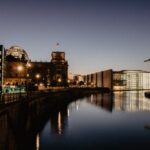
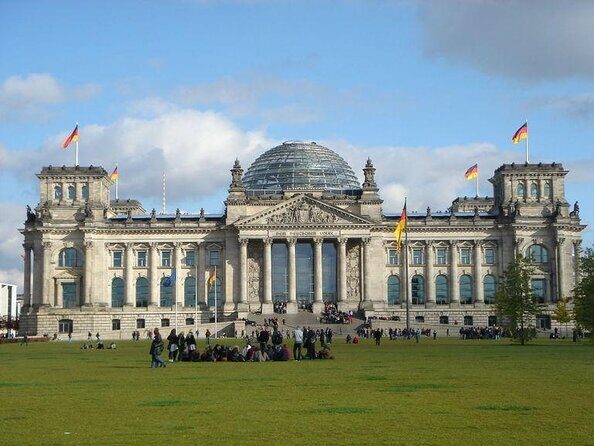
- Stop 2: Reichstag Building (German Parliament)
- Stop 3: Soviet Memorial Tiergarten
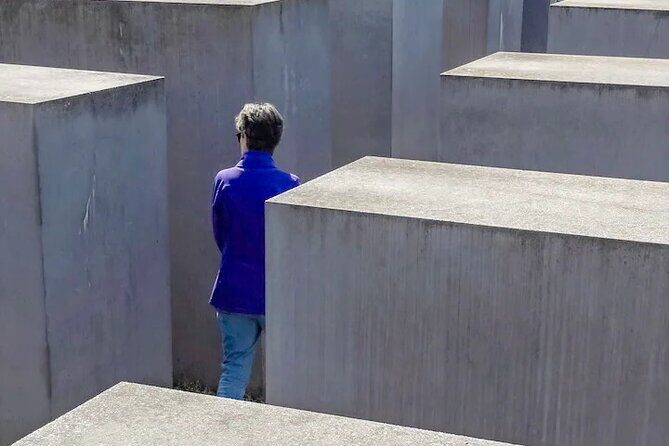
- Stop 4: The Holocaust Memorial (Memorial to the Murdered Jews of Europe)
- Stop 5: Monument to Homosexuals Persecuted Under the National Socialist Regime
- Stop 6: Führerbunker (Hitler’s final days)
- Stop 7: Johann Georg Elser Memorial
- Stop 8: Aviation Ministry of Berlin (Reichsluftfahrtministerium)
- Stop 9: Topography of Terror (Gestapo headquarters site)
- Then & Now photos: how the guide keeps the story grounded
- This tour’s tone: factual, sensitive, and not afraid of context
- Who should book this tour
- Practical tips to get more out of the walk
- Should you book Hitler’s Berlin – the rise and fall (Small Group)?
- FAQ
- How long is Hitler’s Berlin – the rise and fall (Small Group)?
- Where does the tour start and end?
- Is this a small-group tour?
- What language is the tour offered in?
- Do I need to bring tickets?
- Are admission fees included for the stops?
- Does the tour run in bad weather?
- Is food or drinks included?
- What about physical requirements?
- What is the cancellation policy?
Key things that make this tour worth your time
- A tight, story-driven route: from the Sinti and Roma memorial through Holocaust remembrance and the final days in the Führerbunker area
- Small group attention (max 15): you’re more likely to hear, ask, and follow the thread without getting lost
- Then & Now photos and historic maps: you get visual context for what changed, what stayed, and what was erased
- Sensitive handling of multiple victim groups: not only Jews, but also Roma/Sinti, homosexuals, and the broader wreckage of war
- A guided break at Topography of Terror: tea/coffee time plus restrooms in the middle of the action
- Free admission at major stops during the scheduled visits, keeping value straightforward
Why Hitler’s Berlin works best on foot (and in small groups)
Berlin is big, and Nazi-era sites are scattered enough that a casual self-guided plan can feel like a grab bag. This tour stays compact and turns the walking into a timeline. You’re not just collecting famous addresses; you’re building a mental map of how power shifted, how terror operated, and how remembrance takes shape.
The small-group size (up to 15) also changes the feel. It’s easier to hear the guide, easier to ask direct questions, and easier to keep the context straight when the subject matter spans ideology, government, battlefields, and memorial design.
You can also read our reviews of more tours and experiences in Berlin.


Price and value: is $54.44 a fair deal for 2.5 hours?
At around $54.44 per person for about 2 hours 30 minutes, the value mostly comes from what’s included. You get an expert local guide with an academic background in WWII history, plus guided stops at multiple major sites. You’re also getting tools like Then & Now photographs and historic maps, which make the stories easier to track than a lecture-style tour.
Also, the itinerary is structured so you spend time learning instead of hunting down admissions. Several stops are listed as admission ticket free during the visit window, which is a quiet but real cost saver in a city where museums can add up quickly.
The one “don’t assume” item: food and drinks are not included. The tour does include a scheduled break at Topography of Terror where tea or coffee is available, but you should still plan your own snack strategy if you’ll need more than that.
What you’ll actually do on the tour day
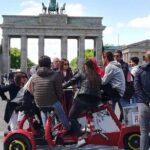
Expect a guided walk starting at Pariser Platz by the Brandenburg Gate and finishing at Topography of Terror on Niederkirchnerstraße. The route is short enough to keep moving, but concentrated enough that you’ll feel the weight of each stop.
Dress like you’re going outside for a while. The tour runs in all weather conditions, and you’ll want layers because Berlin can feel colder than it looks on a bright map. Moderate physical fitness is enough for the route, but it’s still a walking experience over city sidewalks and surfaces you can’t control.
The route: nine stops that connect rise, terror, victims, and aftermath
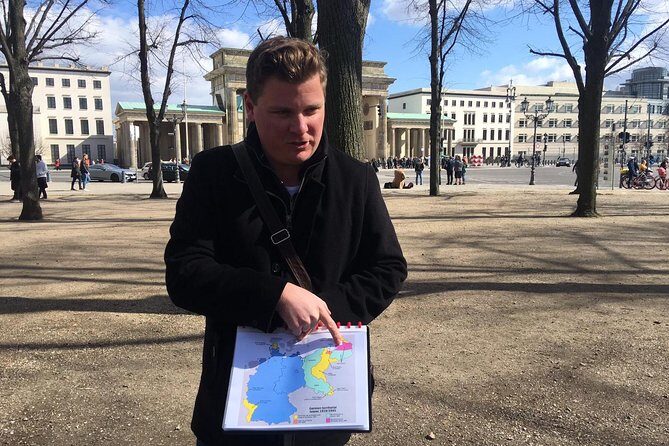
This tour’s biggest strength is how it refuses to tell just one story. It connects the Nazi rise to the machinery of repression, then pays attention to who was targeted and how Berlin memorializes that reality.
Stop 1: Memorial to the Sinti and Roma Victims of National Socialism
You start with the memorial dedicated to Roma and Sinti victims of the Third Reich. This matters because it sets a broader frame: Nazi persecution didn’t only target Jews. The guide also explains the cruel social philosophies that later fed into the Holocaust, so you understand the ideology as something planned, not random.
Even though the stop is brief, it can shift how you interpret everything that follows. You’re primed to notice patterns of dehumanization and state power, not just outcomes.


Stop 2: Reichstag Building (German Parliament)
Next comes the Reichstag. Here the focus is political mechanics: how the Nazi Party became able to seize power and how Hitler ended up as Führer of Germany.
If you’ve ever wondered how democracy can crack from inside, this is the stop that helps you connect the dots between election power and totalitarian control. It’s also one of the best places on this route to look up at the building and let your imagination do some work with the guide’s timeline.
Stop 3: Soviet Memorial Tiergarten
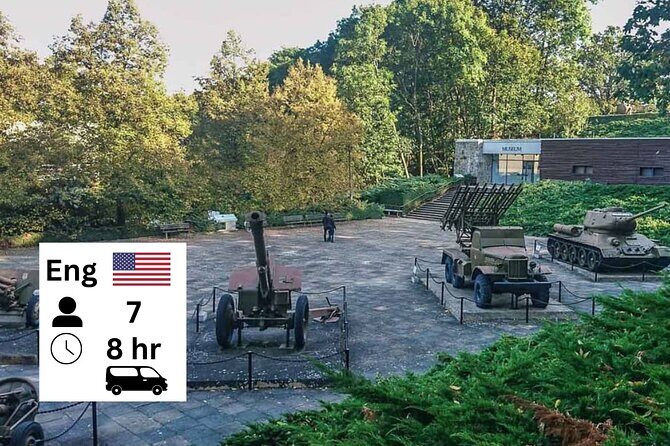
Then you move to the Soviet Memorial in Tiergarten. This is where the tour brings in the reality of the Battle of Berlin as the third bloodiest operation of WWII, and talks about both brutal fighting and post-war remembrance.
This stop widens the lens beyond Nazi crimes alone. You get a reminder that the war’s destruction wasn’t limited to one side’s suffering. The memorial setting also helps explain how memory can differ depending on who survived and who wrote the narrative afterward.
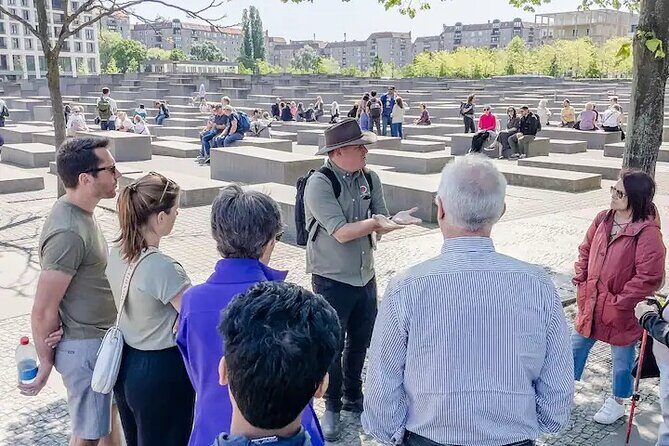
Stop 4: The Holocaust Memorial (Memorial to the Murdered Jews of Europe)
The tour turns to the Holocaust Memorial, focused on the murdered Jews of Europe. This stop is emotionally heavy, but the guide builds structure around it. The largest targeted group is part of the explanation, and there’s time to discuss what the memorial is asking you to think about.
What I like here is the inclusion of conversation. Instead of telling you what to feel, the guide creates space for you to process the meaning of the design and the message.
Stop 5: Monument to Homosexuals Persecuted Under the National Socialist Regime
Next is the monument for homosexuals persecuted under the Nazis. It’s short, but it’s important, because it shows how Nazi persecution extended into private lives and identities.
If you only know WWII history through the most famous chapters, this stop fills in an often-overlooked part of the harm.
Stop 6: Führerbunker (Hitler’s final days)
Then the tour moves to the Führerbunker area, where Hitler spent his final days during the war’s end stage.
This is one of those moments where the guide’s handling matters. Done well, the explanation keeps you focused on outcomes and structure, not voyeurism. You learn how a regime collapses—how ideology ends when reality catches up.
Stop 7: Johann Georg Elser Memorial
You’ll also stop at the Johann Georg Elser Memorial. This is a turning-point story: Elser’s role and the broader effort of others who tried to oppose the Nazi regime and even plan an assassination of Adolf Hitler.
It’s a helpful contrast to the parts of the tour focused on victims and repression. You leave with a clearer sense that resistance existed, even when it was dangerous and often unlikely to succeed.
Stop 8: Aviation Ministry of Berlin (Reichsluftfahrtministerium)
At the Aviation Ministry of Berlin, the guide explains the scale and power of Nazi administration. The building was constructed in 1936 for the German Ministry of Aviation, and it was led by Hermann Göring. At the time, it was described as the largest office building in Europe.
This stop gives you a sense of how regimes build bureaucratic strength through infrastructure—offices, ministries, and systems that make violence easier to organize.
Stop 9: Topography of Terror (Gestapo headquarters site)
The tour concludes at Topography of Terror, at the site where Gestapo headquarters once stood. This is where the tour often feels most direct: the place itself carries the weight of the state’s coercive power.
You also get a longer scheduled break here—about 20 minutes—for tea or coffee and to use the restrooms. It’s the right pacing moment. After all the memorials, you’ll likely want a reset before the final walk-out and your next plans.
Then & Now photos: how the guide keeps the story grounded
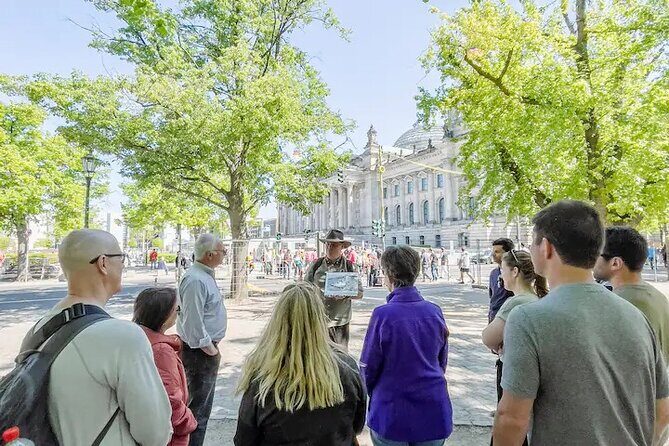
One of the most practical inclusions is the Then & Now photographs and historic maps. These tools help you connect the emotional impact of memorials with the hard reality of where things stood, moved, or vanished.
That matters because Berlin’s cityscape can confuse first-time visitors. Buildings get renovated, streets get renamed, and memory sites can look modern even when they mark something brutal and older. The photos and maps keep your sense of location accurate.
This tour’s tone: factual, sensitive, and not afraid of context
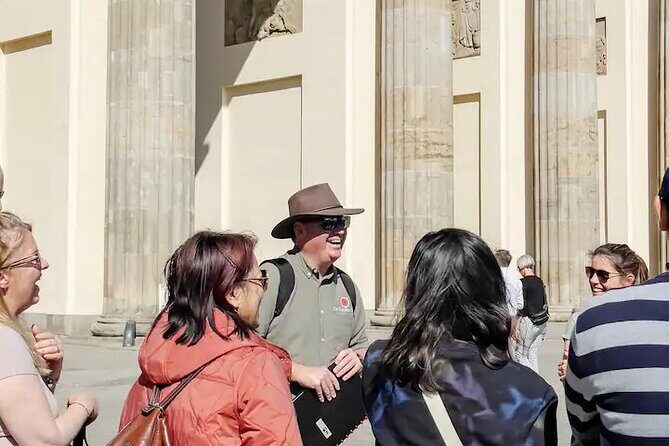
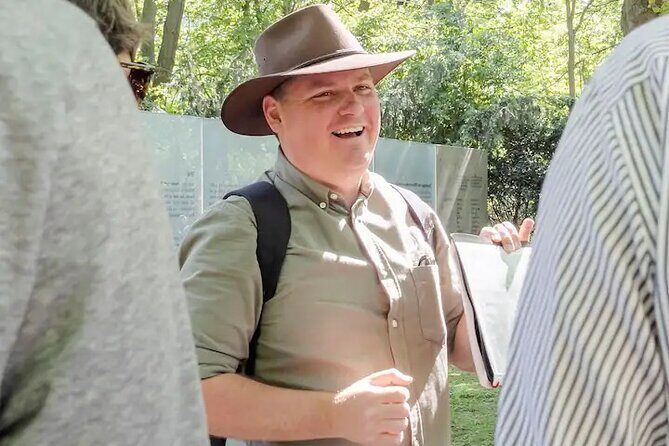
The topic is difficult. You should go in ready for a serious, careful delivery. The guide’s academic background in WWII history helps keep the narrative anchored in evidence and context, and the tour includes Q&A and opportunities for reflection rather than forcing everything into a fast script.
I also appreciate that the tour highlights how Germany and Berlin handle memory. You’ll see an emphasis on confronting actions directly, not softening them. It makes the experience feel adult and responsible, not performative.
Who should book this tour
This is a strong fit if you’re:
- a history buff who wants a concentrated Nazi-era storyline in a short time
- visiting Berlin for the first time and want your “most famous sites” to come with real context
- comfortable walking for about 2.5 hours and standing through short stops
- someone who prefers small-group questions over big-bus lectures
It may be less ideal if you:
- want a relaxed, sightseeing-only day
- need lots of frequent seating breaks
- struggle with emotionally heavy subject matter without decompression time
Practical tips to get more out of the walk

A few things can make this smoother:
- Wear comfortable shoes. The tour is compact, but the route still demands steady footing.
- Dress for cold and wind. Reviews included very cold conditions, and the tour runs in all weather.
- Plan for no full meal. Food and drinks aren’t included, though tea/coffee is part of the Topography break.
- Ask your guide about connections at the end. The tour finishes at Topography of Terror, and your guide can point you to the best next transit option.
Should you book Hitler’s Berlin – the rise and fall (Small Group)?
If you want an efficient way to understand how Nazism took hold and how Berlin remembers it, this is a smart booking. The combination of expert academic guidance, a small-group format, and the mix of memorials plus political and historical sites gives you a clearer picture than most quick “see the highlights” tours.
Book it if you appreciate structure: a timeline you can follow, stops you can revisit in your head later, and space to ask questions. Skip it only if you need a lighter tone, lots of sitting, or a food-forward experience. This is history you walk through—quietly, carefully, and with context.
FAQ
How long is Hitler’s Berlin – the rise and fall (Small Group)?
The tour runs for approximately 2 hours 30 minutes.
Where does the tour start and end?
It starts at Brandenburg Gate, Pariser Platz 10117 Berlin, Germany, and ends at Topography of Terror, Niederkirchnerstraße 8, 10963 Berlin, Germany.
Is this a small-group tour?
Yes. It has a maximum of 15 travelers.
What language is the tour offered in?
The tour is offered in English.
Do I need to bring tickets?
You’ll use a mobile ticket.
Are admission fees included for the stops?
Many stops are listed as admission ticket free during the visit, and the tour includes guided visits to key Nazi-era sites and memorials.
Does the tour run in bad weather?
It operates in all weather conditions, so dress appropriately. If it’s canceled due to poor weather, you’ll be offered a different date or a full refund.
Is food or drinks included?
No. Food and drinks are not included, though there is a break at Topography of Terror with time for tea or coffee and restroom use.
What about physical requirements?
You should have a moderate physical fitness level.
What is the cancellation policy?
You can cancel for free up to 24 hours in advance for a full refund. If you cancel less than 24 hours before the start time, the amount paid is not refunded.