REVIEW · BERLIN
Small Group Tour: “Wild Kreuzberg”
Book on GetYourGuide →Operated by BBT-Sightseeing & More · Bookable on GetYourGuide
Kreuzberg has a wild pulse. This small-group walk shows you Berlin’s street life and squatter-era leftovers in real places, from Kreuzberg markets to street history that still affects the neighborhood. Two things I really love are how the tour strings together everyday food culture with alternative scenes, and how it uses squatter-era spots like Bethanien and the Rauchhaus to explain what changed in Berlin after the wall fell.
One thing to keep in mind: it’s led by a German guide and it runs in all weathers. So bring good walking shoes and expect rain to be part of the plan, not a rare exception.
In This Review
- Key stops worth knowing
- Getting oriented at Kottbusser Tor and the U1 rails
- Adalbertstraße landmarks and the Kreuzberg Museum wayfinding pause
- Oranienstraße: SO36 street energy with markets and alternative clubs
- Oranienhöfen and the Home for the Blind: a meaningful coffee pause
- Museum of Objects and the story behind mass production
- Mariannenplatz to Bethanien and the Rauchhaus squat legacy
- Fontane-Apotheke and the walk through Görlitzer Park on old rail ground
- Oberbaumbrücke: a symbolic East–West finish
- Price and value: $24 for a 3-hour small-group street history
- Who this Wild Kreuzberg tour suits best
- Should you book Wild Kreuzberg?
- FAQ
- Where does the Wild Kreuzberg tour start?
- How long is the tour?
- How big is the group?
- What language is the tour guide?
- Is the tour affected by weather?
- Is food and drink included in the price?
Key stops worth knowing
- Kottbusser Tor (U1/U8): the square where daily life meets Kreuzberg nightlife, split by the U1 rails
- Oranienstraße and Oranienhöfen: former SO36 postal-district energy with a proper coffee pause
- Home for the Blind + coffee stop: a stop with meaning, not just sightseeing photos
- Museum of Objects: mass production history tied to everyday design
- Mariannenplatz → Bethanien + Rauchhaus: art-squat legacy in and around a former hospital
- Görlitzer Park + Oberbaumbrücke: park over former train-station ground, finishing at the East-West symbol
Getting oriented at Kottbusser Tor and the U1 rails
Your tour starts at 137 Skalitzer Straße, right in front of Gold Exchange and next to REWE. If you’re using public transit, aim for Kottbusser Tor (U1 and U8) and take the Skalitzer Straße exit. The meeting point is easy to find because the guide carries the operator’s logo sign.
Kottbusser Tor is one of those Berlin intersections where you can feel two cities rubbing shoulders. You’ll see the everyday rhythm first, with shops and restaurants packed tight around the Turkish market area. Then the tour’s pace nudges you toward the nighttime flavor Kreuzberg is known for. A practical detail that matters here: the square is literally divided by the overground rails of the U1 line, so you get a real sense of how infrastructure shapes the neighborhood.
This opening stretch is where the tour earns its name, Wild Kreuzberg. It’s not just a list of buildings. It’s a walk that teaches you to read the neighborhood like a map: where people gather, where they shop, and where Berlin’s past still shows up in the streets.
You can also read our reviews of more tours and experiences in Berlin.


Adalbertstraße landmarks and the Kreuzberg Museum wayfinding pause
As you move away from the station square, you’ll pass the Adalbertstraße skyscrapers. Even if the buildings aren’t what you’d call scenic, they work as a contrast point. Kreuzberg can feel like a patchwork of eras, and those higher, more imposing facades remind you this isn’t only low-key street life.
You’ll also stop at the Kreuzberg Museum. A museum stop on a street tour can go two ways: it can feel like a detour, or it can give you the missing context. Here, it’s meant to anchor what you’re seeing in the neighborhood right now—so when you later hear squat-scene references, they won’t feel like random trivia.
The main value of this section is orientation. You’re learning where you are and why this part of Berlin became such a magnet for alternative culture.
Oranienstraße: SO36 street energy with markets and alternative clubs
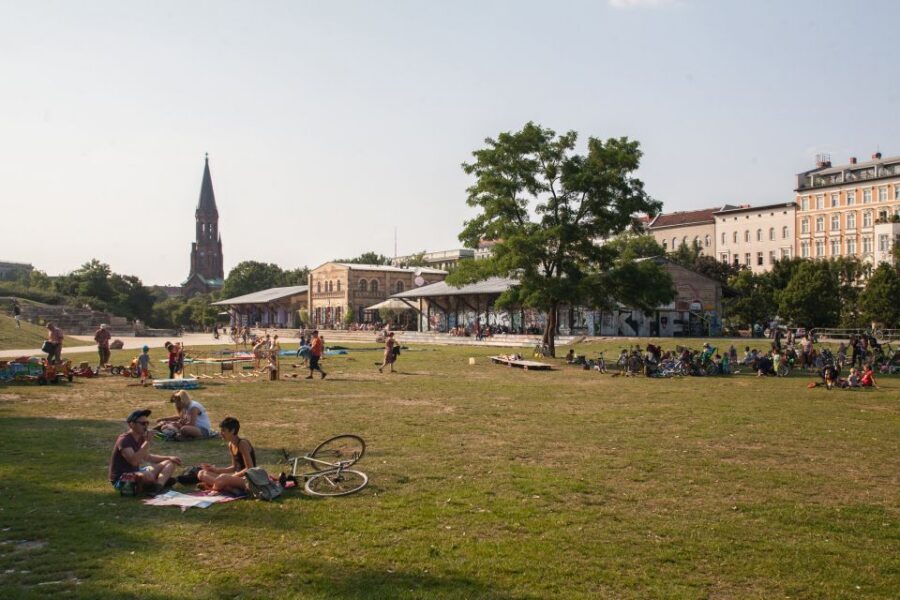
Next comes the heart of the walk: Oranienstraße. The tour frames it as the former SO36 postal district, and that matters because SO36 became shorthand for a particular kind of Berlin stubbornness—creative, confrontational, and very public about its identity.
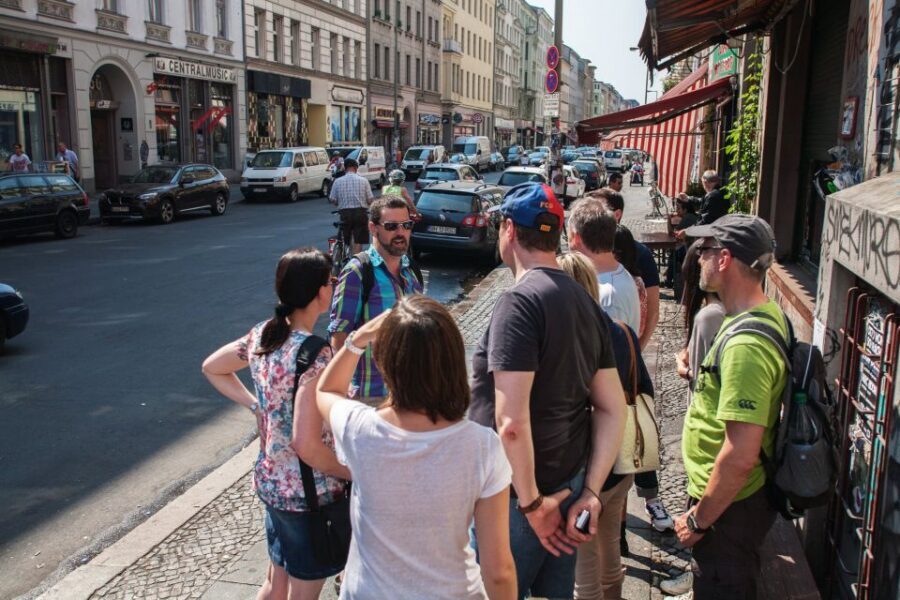
Along the way, you’ll pass the Sozialpalast and cross Heinrich-Platz later, but right now your focus is the street itself. Expect restaurants, bars, and shops with the kind of character you can’t get from postcards. It’s also where the tour’s geography clicks: you’re moving from the “station-square world” of Kottbusser Tor into a corridor of long-term street culture.
If you like wandering where people actually live and work, this section is your payoff. And because the group is small—min. 3, max. 12—you’re less likely to lose track of the guide’s explanations while you’re looking around.
Oranienhöfen and the Home for the Blind: a meaningful coffee pause
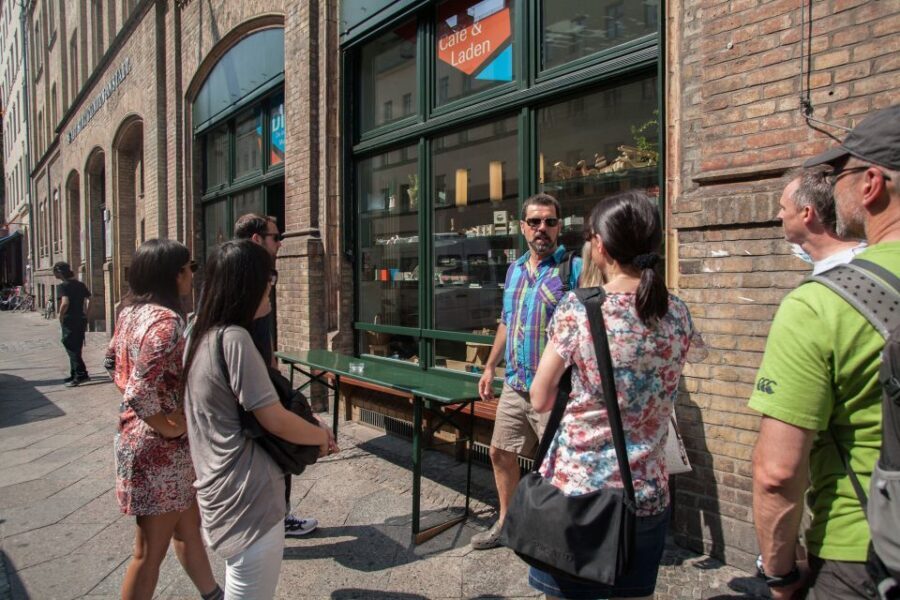
A standout stop is the Home for the Blind. This isn’t a grab-a-photo kind of stop; it’s positioned as a place to slow down and notice the human side of the neighborhood. After that, you’ll relax over a coffee in Oranienhöfen.
Why this works: walking tours can rush you into seeing everything without processing it. The coffee break gives you time to reset and think about what you just learned while the street noise fades a little. Oranienhöfen also feels like the kind of Berlin courtyard space where the neighborhood’s different layers share the same air—people doing errands, people meeting, and people lingering.
The tour includes the guided stop experience, but food and drink aren’t included, so you should plan for purchasing your own coffee. If you’d rather spend less, you can still use the stop to rest your legs and soak in the atmosphere, then decide on snacks or drinks after.
Museum of Objects and the story behind mass production
Next up is the Museum of Objects, focused on the history of mass production. This is a smart choice for a walking tour because it connects street life to how modern life got manufactured—literally.
Even if museums aren’t your main interest, this stop can change how you look at ordinary things. After all, Kreuzberg’s markets and shops are full of everyday products, from packaging styles to design choices. The museum stop helps you see those details as part of a bigger story, not random background.
What I like about this stop is the pacing logic. You’re still in the neighborhood, still surrounded by commerce and creative culture, but now you’re given a lens for understanding how the world you live in became standardized and sold.
Mariannenplatz to Bethanien and the Rauchhaus squat legacy
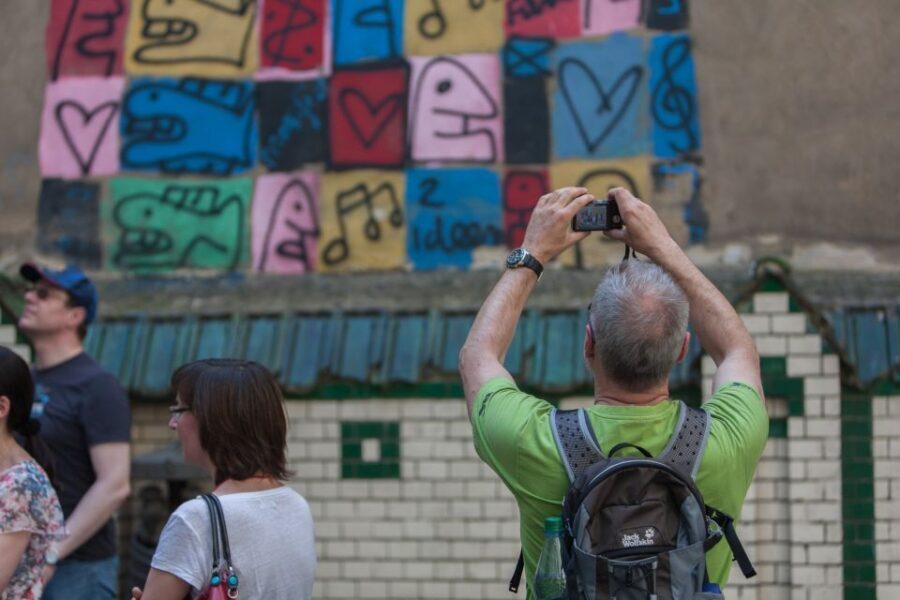
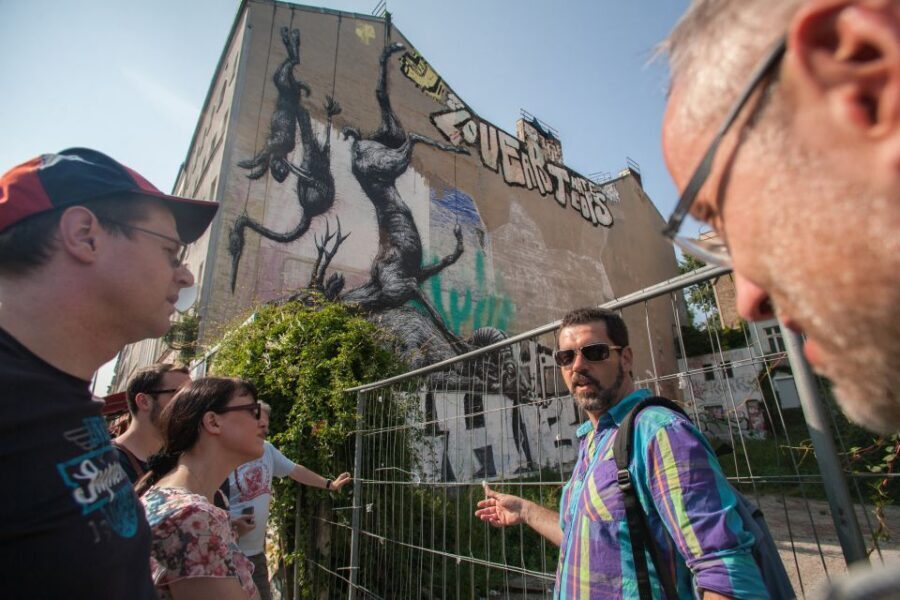
Around Mariannenplatz, the tour moves into Berlin’s post-squatter and alternative-art narrative with real physical anchors: Bethanien and next door the Rauchhaus.
Bethanien is described as an art squat in a former hospital. That combo—medical history turned into creative space—is the kind of Berlin transformation you can understand just by looking at how a building gets reused. The tour also guides you to see how the squatters’ life has traces around the Rauchhaus, another building tied to that alternative legacy.
This is one of the most praised parts of the tour experience because it’s where the walking history becomes tangible. You’re not only hearing about the past; you’re standing in places that still carry the leftover energy.
One tip for getting the most out of this section: keep your eyes up as well as on the street level. These buildings tend to show their “old job” in details, and you’ll get better at noticing when your guide is explaining what to look for.
Fontane-Apotheke and the walk through Görlitzer Park on old rail ground
As the tour continues, you’ll visit Fontane-Apotheke, a well-known pharmacy. A pharmacy stop might sound random, but in Kreuzberg it usually helps ground the tour in daily life. It’s the kind of place that keeps the neighborhood from becoming only art and activism. Berlin neighborhoods are strongest when they mix practical routines with cultural scenes.
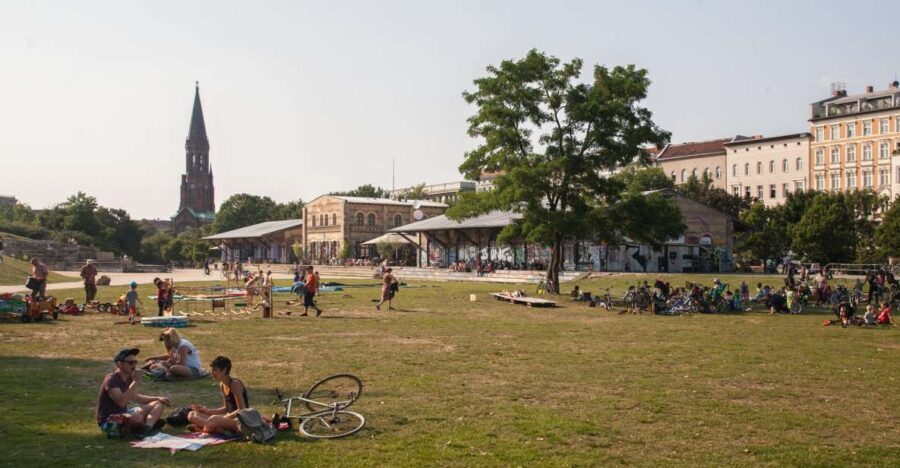
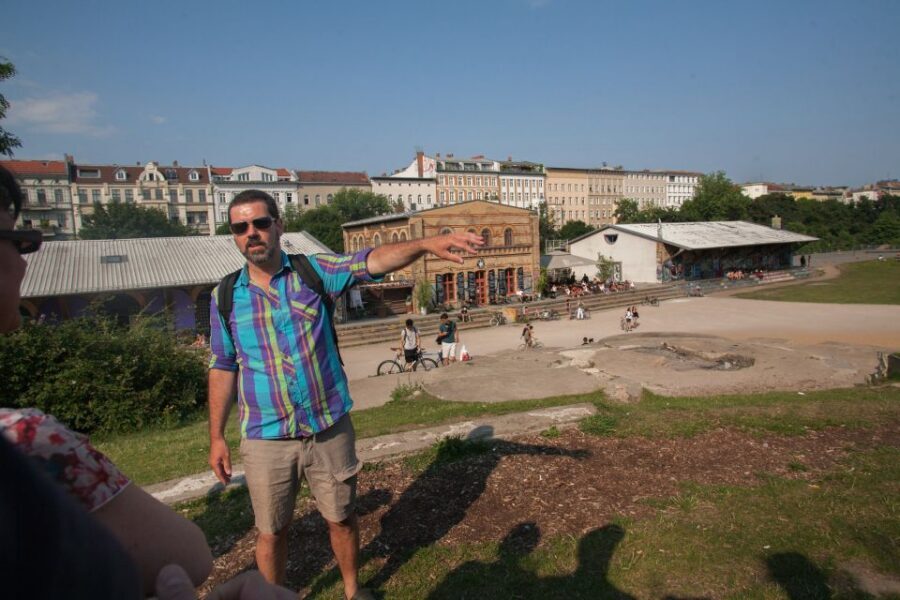
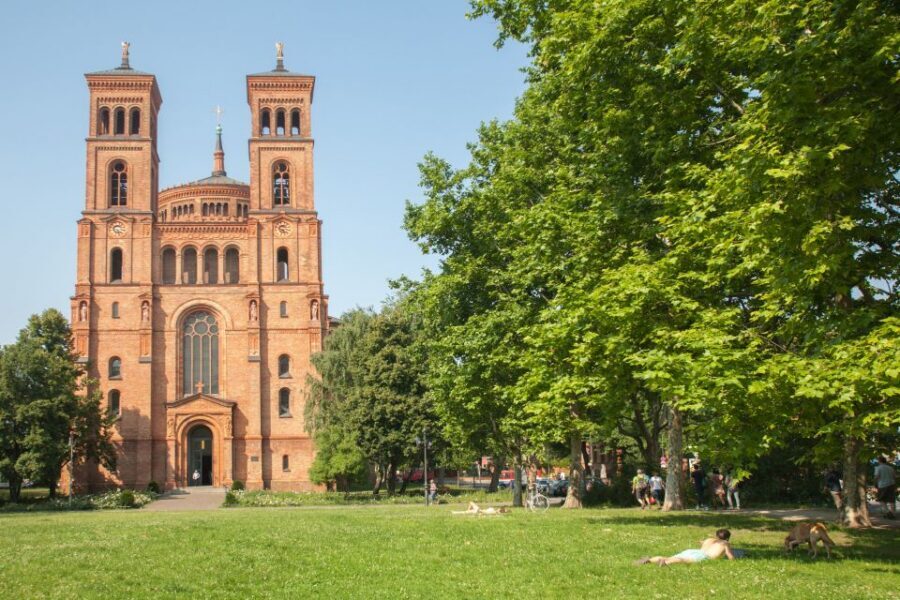
Then you’ll stroll through Görlitzer Park, which was previously a train station. This is the kind of detail that makes Berlin feel different from other European capitals. It’s not just parks and views; it’s repurposed space. So while you’re walking, the guide is also explaining why the park layout and location make sense in a former rail context.
This part is especially good if you enjoy casual walking between more story-heavy stops. It gives you a breather without turning the tour into a full detour.
Oberbaumbrücke: a symbolic East–West finish
The tour ends with a walk to Oberbaumbrücke. The guide frames it symbolically as a link between East and West Berlin.
This finish matters because you’ve spent the morning learning how Kreuzberg’s identity got shaped by layers of Berlin life—markets, architecture, alternative clubs, and reused buildings. Ending at Oberbaumbrücke gives that whole walk a final meaning: Berlin’s divide is in the geography, and the city’s reunification is still visible in how space is connected.
It also works as a visual climax. Even if you’re tired by then (you will be a bit after 3 hours), it’s a satisfying last chapter.
Price and value: $24 for a 3-hour small-group street history
At $24 per person for about 3 hours, this tour is good value—mainly because it’s not a huge bus-and-bowl of facts experience. The group size caps at 12, and that small-group format changes how you experience the walk. You can actually follow the guide while you look around, and you can ask quick questions without feeling like you’re interrupting a parade.
You also get a city guide, plus a rain poncho if necessary. That’s a quiet value perk in Berlin, where weather can switch from fine to annoyingly wet without warning. The only things not included are food and drink, so plan on bringing a bit of cash or card for your coffee stop (and anything else you want).
Overall rating sits at 4.8 from 189 reviews, and the strongest praise centers on guides delivering an individual, detail-rich tour. One guide named Ferenz has been singled out for offering very personal, interesting details about Kreuzberg, which is a good sign that the experience can feel more tailored than script-following.
Still, I’d keep one practical expectation clear: the guide is German. If you don’t understand German well, you might miss the nuance behind the squat-scene and museum context.
Who this Wild Kreuzberg tour suits best
This tour fits best if you like Berlin as a living street city—markets, courtyards, repurposed buildings, and neighborhoods that never try to be one-size-fits-all.
You’ll likely enjoy it if:
- you want a 3-hour walk that doesn’t feel like museum overload
- you enjoy neighborhood stories with specific place names (Kottbusser Tor, Oranienstraße, Bethanien, Görlitzer Park)
- you like history that connects to what you see on the sidewalk, not just what’s behind glass
- you’re comfortable walking and stopping often
You might hesitate if:
- you need an English-language guide (the tour is German)
- you’re not into walking in all weather
- you dislike any stops that lean more toward culture/history than scenic viewpoints
Should you book Wild Kreuzberg?
If you want one concentrated taste of Kreuzberg’s street culture—without spending your whole day on research—you should book this.
The best reasons to go are the mix: Kottbusser Tor’s energy, Oranienstraße’s SO36 identity, and the way the tour links everyday places like Fontane-Apotheke with bigger narratives like Bethanien and the Museum of Objects. Add in the coffee pause at Oranienhöfen and the finish at Oberbaumbrücke, and you get a route that feels like a story with stops, not a random loop.
Just go in expecting German narration and real walking. Bring comfortable shoes, and plan to buy your own coffee. If that fits your style, this is a strong way to understand why Kreuzberg still feels like Berlin’s wild side.
FAQ
Where does the Wild Kreuzberg tour start?
It starts at 137 Skalitzer Straße, in front of Gold Exchange and next to REWE. Your guide will have the tour operator’s logo sign. The nearest U-Bahn station is Kottbusser Tor (lines U1 and U8), using the Skalitzer Straße exit.
How long is the tour?
The tour duration is 3 hours. Starting times can vary, so check availability.
How big is the group?
The tour runs with a minimum of 3 participants and a maximum of 12.
What language is the tour guide?
The live tour guide is German.
Is the tour affected by weather?
Yes. The tour takes place in all weathers. On rainy days, the rain poncho is distributed.
Is food and drink included in the price?
No. Duties, city guide, and a rain poncho (if necessary) are included, but food and drink are not included.