REVIEW · BERLIN
Berlin: Berlin Wall Tour Berlin East West
Book on GetYourGuide →Operated by Regional Tours · Bookable on GetYourGuide
One of Berlin’s darkest lines is still here to walk. This Berlin Wall East-West tour turns the wall from a photo-op into family dramas, escape attempts, and everyday border life told in plain language. I love that it stays human—barbed wire and all—and I also love that you’ll see the most famous street tied to the Wall’s story, plus the death strip and a watchtower. The one watch-out: it’s a moving walk, so comfortable shoes really matter if you’re not used to spending time outdoors.
You’re not just learning dates; you’re getting a sense of how the Wall shaped daily routines in both East and West Berlin. The guide brings it down to real moments—brutal absurdities at the border and moments of fate you can’t imagine until you hear them. The possible drawback is simple: with a tight 75 minutes to 1.5 hours format, you’ll get a powerful arc, but you won’t have time for lots of extra detours.
In This Review
- Key highlights to look forward to
- Why this Berlin Wall East-West tour hits harder than a photo stop
- Your walk along the former border: barbed wire, escapes, and border life
- The death strip and watchtower: what you’re seeing and why it matters
- East vs West, told through people: everyday life and family dramas
- The guide matters: what you gain from a local Berliner storyteller
- 75 minutes of pacing: what to wear and what to expect on the ground
- Price and value: $223 per group up to 6
- Language choices: German public vs English/German private
- Practical tips to get the most from the Wall story
- Should you book this Berlin Wall East-West tour?
- FAQ
- What’s the price of the Berlin Wall East West tour?
- How long is the tour?
- What’s included in the ticket?
- Is food or drink included?
- What languages are available?
- Is the tour wheelchair accessible?
- Is a private group available?
- What should I bring and wear?
Key highlights to look forward to
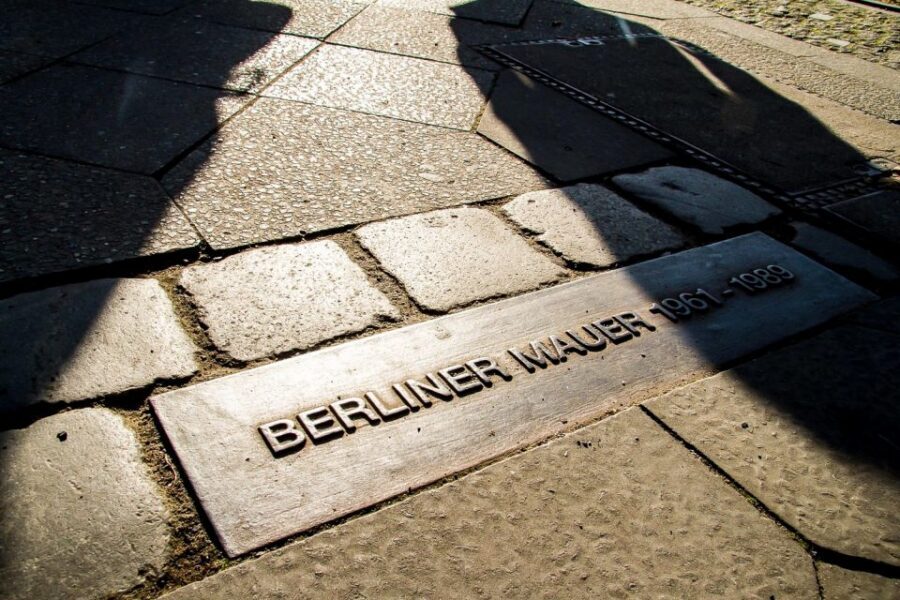
- Death strip and a watchtower: see the parts of the border system that made escape so brutally hard
- Escape stories, barbed wire, and family dramas: not just facts, but real human stakes
- A local Berliner voice: everyday life on both sides, explained from lived context
- The Wall’s most famous street: a must-see stretch with heavy meaning
- East-West border absurdities: how rules, control, and fear showed up in ordinary life
Why this Berlin Wall East-West tour hits harder than a photo stop
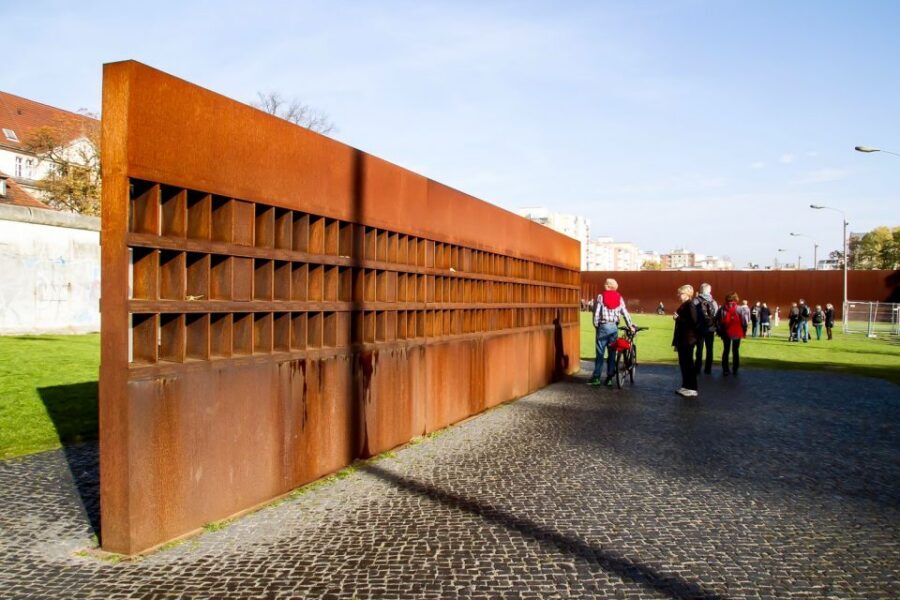
The Berlin Wall is everywhere in postcards, documentaries, and textbooks. But on this tour, it’s treated like a place where people actually lived, waited, hoped, and panicked. I like that the focus isn’t only on grand political speeches. You’ll hear about escape attempts, the family-level consequences, and the way the border system worked on a daily basis.
That’s the magic trick here: the Wall becomes understandable without being watered down. You’ll hear vivid narratives that connect the big symbol to small moments—how a street, a checkpoint, or a border line changed an ordinary day.
If you like history that feels close to the ground (not stuck in theory), this style works fast. You’ll walk, listen, and keep getting the sense that this wasn’t abstract oppression. It was control measured in seconds, footsteps, and choices.
You can also read our reviews of more tours and experiences in Berlin.


Your walk along the former border: barbed wire, escapes, and border life
Expect a guided walk that follows a story arc from how the Berlin Wall was experienced to what it did to daily life. The route is framed around the same things your brain will keep returning to later: escape attempts, barbed wire, the presence of border forces, and the emotional reality for people on both sides.
Along the way, the guide weaves in:
- What daily life felt like near the Wall in East and West Berlin
- How ordinary routines collided with brutal border restrictions
- The strange, unsettling contradictions—brutal absurdities—that popped up at the border
You’ll also get the sense that the Wall wasn’t just a wall. It was a system. It shaped behavior, family plans, and the meaning of distance. Even in a short tour window, you come away with the feeling that the border was constantly “active,” not just a static barrier.
Practical note: the tour is described as 75 minutes to 1.5 hours, so the pace is built for moving. You’ll want to stay present—this one rewards listening.
The death strip and watchtower: what you’re seeing and why it matters
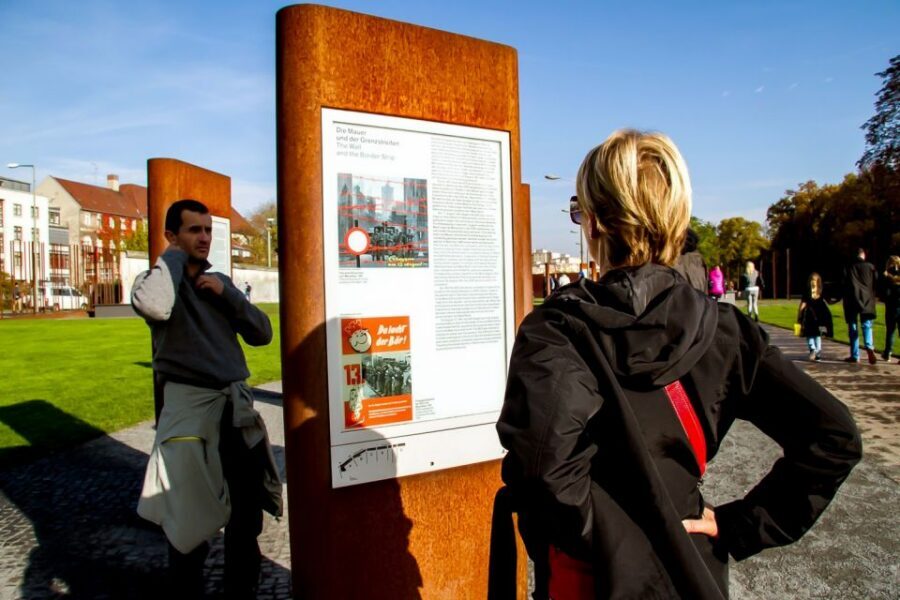
One of the most intense parts of the experience is being able to see elements like the death strip and a watchtower. Even if you’ve seen photos before, standing near the physical setup changes the whole scale of it. It stops being a concept and becomes a geometry of control.
Here’s what these features help you understand:
- The border design wasn’t accidental; it was engineered to prevent movement
- Visibility and distance mattered in life-or-death ways
- The “no man’s land” feeling wasn’t poetic—it was the lived reality
The watchtower is especially important because it makes the system’s logic visible. A tower implies constant observation. Add a controlled strip, and it becomes clear how people were boxed in before they even made a move.
I recommend treating these stops like a pause moment, even if you’re still walking. Let your mind catch up. The tour works best when you let the weight of the place land, instead of trying to speed-run it.
East vs West, told through people: everyday life and family dramas
The Wall divided Berlin—but the division also showed up in homes, friendships, routines, and family plans. This tour leans into that by focusing on everyday life and family dramas, not just the big political story.
That human angle is what makes the tour feel real. You start noticing how the same city could feel completely different depending on which side of the border you lived on. You’ll hear how the Wall changed what felt possible day-to-day—and how people had to live with the knowledge that escape attempts were both desperate and dangerous.
And then there are the moments of fate and the “what if” feelings that the guide brings up. The intent isn’t to sensationalize. It’s to help you understand how quickly plans could collapse and how much bravery (and fear) sat in the same space.
If you care about history that connects to ethics and daily life, this is the section that usually sticks with people long after they’ve moved on to the next attraction.
The guide matters: what you gain from a local Berliner storyteller
This tour is led by a live guide, and the standout theme in the experience is storytelling from a local voice. That matters because the Wall isn’t just an artifact in Berlin—it’s a shared memory with different emotions depending on the neighborhood and the generation.
In particular, the guide Tonio has been highlighted for explaining the material clearly and leading the walk in a way that keeps things moving. That’s a big deal on a short tour like this. You want your guide to connect the dots fast—without rushing past the meaning.
Also, the tour is available in English or German. So you can match the experience to your comfort level instead of feeling like you’re half understanding.
If you’re traveling with teens or younger adults, you’ll likely appreciate the way the narration keeps the focus on stories and not just lectures. And yes—good explanations help even when the weather isn’t cooperating. The tone stays serious, but the delivery doesn’t feel stiff.



75 minutes of pacing: what to wear and what to expect on the ground
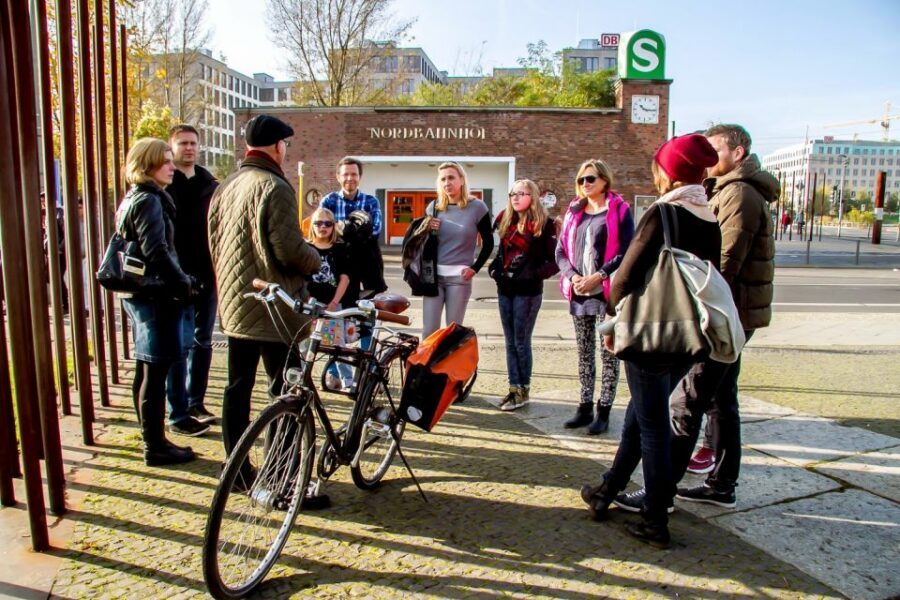
Because the tour runs about 75 minutes to 1.5 hours, you should plan for a brisk, focused walk with multiple story beats. This isn’t a sit-and-watch museum tour. It’s a walk-and-listen experience.
What to bring:
- Comfortable shoes
- A willingness to pay attention for the whole stretch
Timing matters too. The meeting point can vary depending on the option you book, so double-check your exact start location when you confirm. Once you’re with the group, you’ll stay on track for the full story arc without lingering too long.
If you’re prone to fatigue, consider choosing the tour when you’re most rested. The Wall story is heavy; you’ll enjoy it more if you’re not also dragging yourself around.
And one more thing: since food and drink aren’t included, plan to have a snack before or after, especially if you’re doing this as one of your main daytime activities.
Price and value: $223 per group up to 6
The price is listed as $223 per group up to 6. That’s a flat group rate, not a per-person ticket. So the value depends on how you’re traveling.
Here’s the practical way to think about it:
- If you’re a small group (friends, family, mixed ages), the cost can feel very fair because you’re splitting the group price.
- You’re paying for a live guide and a short, efficient 75–90 minute guided walk that concentrates on the most important Wall-related sights.
Compared to paying a higher per-person rate for a longer tour, this one can be a good fit if you want the emotional impact without locking up half your day.
One caution: it’s still a guided experience with specific themes. If what you want is total freedom to wander at your own pace for hours, this might feel a bit structured. If you want an organized story with the hardest-hitting points included, it’s a strong bargain.
Language choices: German public vs English/German private
You’ll see two main options:
- Public tour in German
- Private tours in German and English
If your German is limited, the private English option is the simplest way to get the full story without mental translating. And if you want more flexibility in pacing, questions, or group dynamics, the private group format is often the better match.
For families, language clarity is a big deal. When kids or teens are involved, understanding every key point is what keeps the experience from turning into background noise.
So my advice is straightforward: pick the language that lets you follow the story without straining.
Practical tips to get the most from the Wall story
This tour works best when you approach it like a narrative, not like a checklist.
A few things to help:
- Arrive ready to listen. The most important details come from the guide’s storytelling, not from reading a plaque.
- Keep an eye on the key sights: death strip, watchtower, and the Wall’s most famous street stretch.
- Plan your day around it. Since you’re walking and hearing heavy material, you’ll want something lighter after—coffee, a meal, and time to decompress.
And if you’re the type who likes to keep context nearby, consider pairing the walk with another Berlin Wall-related stop later in your trip. This tour gives you the emotional and human framework. Then other places make more sense.
Should you book this Berlin Wall East-West tour?
Book it if you want a tight, high-impact guided experience that connects the Wall to real life—escape attempts, family dramas, barbed wire, and everyday border absurdities—and you want the experience to be told by a local voice.
Skip it if you prefer long, self-paced wandering with lots of downtime, or if you only want a quick glance at the Wall with minimal storytelling.
If you’re traveling in a group of up to six, the $223 group rate can also be a smart way to access a live guide without paying a premium per person. Add the fact that the tour is wheelchair accessible, runs about an hour and a half, and includes the essentials with no food hassle, and it becomes an easy “yes” for most first-time visitors.
FAQ
What’s the price of the Berlin Wall East West tour?
The price is $223 per group, up to 6 people.
How long is the tour?
It lasts about 75 minutes to 1.5 hours.
What’s included in the ticket?
A live guide is included.
Is food or drink included?
No. Food and drink are not included.
What languages are available?
The tour offers English and German. Public tours are in German, and private tours are available in German and English.
Is the tour wheelchair accessible?
Yes, the tour is wheelchair accessible.
Is a private group available?
Yes, private group options are available.
What should I bring and wear?
Bring comfortable shoes, since it’s a walk along the Wall-related sites.