REVIEW · BERLIN
Private Walking Sightseeing Local Berlin Tour Guides up 15 Person
Book on Viator →Operated by Berlin-Rickshaw / Berlin-Excursions · Bookable on Viator
Berlin reads better from a rickshaw. This private 4-hour Berlin tour blends an e-rickshaw ride with hotel pickup/drop-off, plus stops at major landmarks from Alexanderplatz to the Reichstag. Two things I really like are the comfort details (bottled water and blankets) and the fact that your guide can shape the pace and focus. One thing to keep in mind: the Berliner Fernsehturm admission ticket is not included, and the stops are short by design.
I also like how the guides bring the city to life without turning it into a textbook. Reviews mention guides such as Levent and Levi as funny, friendly, and good at adjusting for people with mobility needs. If you’re traveling with a teen, a parent, or anyone who doesn’t want nonstop walking, this format makes a big difference.
The route hits both postcard Berlin and the heavier memorial sites. Just know you’re seeing a lot from the sidewalk and viewpoints, not doing museum deep-dives at every stop.
In This Review
- Quick hits
- What the e-rickshaw adds to a Berlin sightseeing day
- Price and what you’re really paying for ($174.22 per person)
- Where the tour starts: Fernsehturm and Alexanderplatz energy
- A real-world note on the Fernsehturm ticket
- Museum Island: the UNESCO stop that works even if you skip interiors
- What’s good about this approach
- The drawback to note
- Bebelplatz and Gendarmenmarkt: Germany’s story told through symbols
- Practical tip for these squares
- Checkpoint Charlie and Topography of Terror: the Cold War route with real weight
- Why this sequence matters
- A careful heads-up
- Potsdamer Platz to the Holocaust Memorial: moving from spectacle to reflection
- How to get more out of this stop
- Brandenburg Gate and the Reichstag: Berlin’s political center, from both sides
- Why the Reichstag area fits the day
- Guides, pace, and why the route feels easy
- Who this tour is best for
- Should you book it?
- FAQ
- How long is the Berlin tour?
- Is this tour private?
- What language is the tour offered in?
- Do they pick you up from your hotel?
- Do I need to buy tickets for the stops?
- What’s included in the tour ride?
- Is a mobile ticket provided?
- Is a guide included?
- Are tips included in the price?
- Can I cancel for free?
- What group size is this for?
Quick hits
- Private tour for your group (up to 15): No joining strangers, so your guide can slow down or speed up.
- E-rickshaw comfort: Bottled water and blankets are provided for the ride.
- Hotel pickup and drop-off: A real time-saver in central Berlin.
- Berlin’s “must-see” route: TV Tower, Museum Island, Gendarmenmarkt, Checkpoint Charlie, Holocaust Memorial, Brandenburg Gate, Reichstag.
- Mostly free stop-entry: The itinerary lists admission tickets as free for most stops, with only Fernsehturm marked as not included.
What the e-rickshaw adds to a Berlin sightseeing day
Berlin is a city of long avenues, separated neighborhoods, and “why is this street like this?” moments for first-time visitors. This tour uses an e-rickshaw so you still get the story behind the sights, but you’re not burning your day on constant walking.
The practical win is the comfort setup. You get bottled water and blankets, which matters because Berlin weather can flip faster than you expect—especially if you’re doing this early in the day. Even if you’re not cold, having that extra layer makes the ride feel smoother and more relaxed.
This tour is also private, not just “a guide with a mic.” With only your group aboard, you can ask for what you care about—architecture, Cold War history, or just the best photo angles. You’re not stuck listening to a generic script for a group you didn’t choose.
You can also read our reviews of more walking tours in Berlin



Price and what you’re really paying for ($174.22 per person)
At $174.22 per person for about 4 hours, this isn’t a cheap “hop-on hop-off” option. It’s closer to paying for: (1) private guide time, (2) a vehicle that changes how much ground you cover comfortably, and (3) a built-in route logic that threads major sites together.
How to judge the value:
- If it’s your first day in Berlin and you want quick orientation, this price can feel fair because you’re routing between far-apart areas without spending the whole day figuring out transit and pacing.
- If you have limited mobility or you just don’t want a long walking day, you’re paying to make the trip easier on your body.
- If you’ll be traveling with a group up to 15, the “private” aspect can feel like better value than you’d expect, especially with group discounts.
Also, you get options. The tour offers multiple lengths, from a 2-hour version to full-day possibilities. So if you don’t want the entire arc of the city, you can pick the duration that fits your stamina and your calendar.
Where the tour starts: Fernsehturm and Alexanderplatz energy
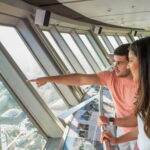
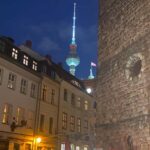
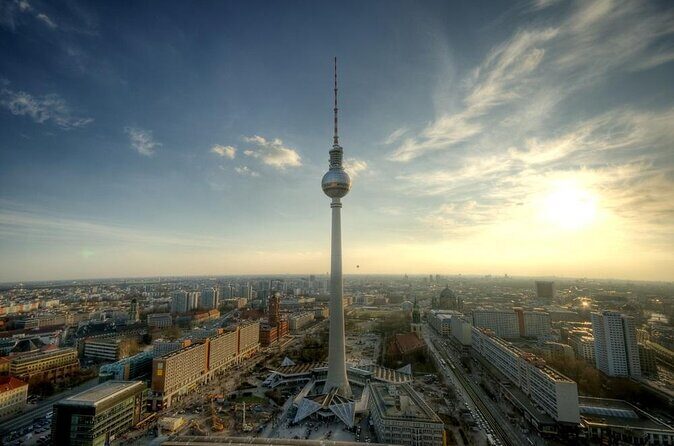
The tour kicks off at Berliner Fernsehturm, in the Alexanderplatz square area. The TV Tower is Germany’s tallest structure, and the setting is one of the city’s easiest launch points. This matters because your brain needs an anchor when you arrive in Berlin—one landmark you can orient around.
From here, you’re guided past key sights en route to Museum Island. The walk-and-ride flow includes stops and views around:
- Red Town Hall
- Marien Church
- Neptunes Brunn
- and then Museum Island
A real-world note on the Fernsehturm ticket
Admission for the TV Tower is marked as not included. If you want to go up inside, you’ll need to plan for that extra cost and the time it can add. If you’re mostly there for the exterior views and the symbolism of the skyline, you can still enjoy the start without committing to the ticket.
Museum Island: the UNESCO stop that works even if you skip interiors
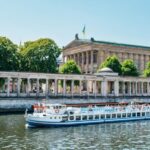
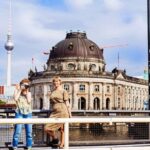
Museum Island is one of those places where even a short stop can be meaningful. It’s a UNESCO World Heritage Site, and it sits right in the flow between Berlin’s older ceremonial avenues and the city’s major cultural institutions.
The tour gives you time to look at the boulevard scene along Unter den Linden and capture major landmarks in view, including:
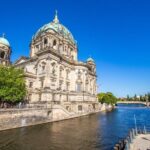
- Berlin Cathedral
- the unfinished reconstruction of the City Palace
- and museum names such as the Old Museum, Old National Gallery, Pergamon Museum, and Bode Museum
You can also read our reviews of more private tours in Berlin


What’s good about this approach
You don’t have to commit to a ticketed museum visit to feel like you’ve “arrived” in the historic heart of Berlin. The tour is designed for seeing the big picture. If you later want to come back for one specific museum, you’ll know where to aim.
The drawback to note
Because each stop is brief, you may not get the time you’d want for deep inside viewing. Think of this as a strong first layer of context, not a replacement for a museum day.
Bebelplatz and Gendarmenmarkt: Germany’s story told through symbols
After Museum Island, you move to Bebelplatz. The key theme here is memory. This square is linked to the Nazi book burning in 1933, and the tour includes the memorial that marks the event.
You’re also in the middle of the Forum Fridericianum area, where you can see a cluster of institutions—State Opera, Humboldt University, and the State Library—and the first Catholic Church in Berlin, St. Hedwig’s Cathedral. That mix of education, religion, and public life is why Bebelplatz feels like more than a single monument. It’s a crossroads.
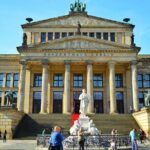
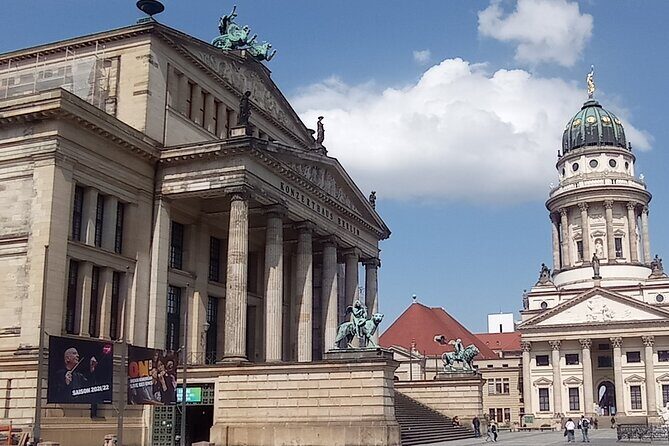
Then you head to Gendarmenmarkt, one of Berlin’s most beautiful squares. Here, the story shifts from dark memory to architectural symmetry. You’ll see the former Royal Concert Hall and two domes on either side:
- the German Dom on the south side
- the French Dôm on the north side
Practical tip for these squares
Squares like these are where photos often look better when you pause for 2 minutes longer than you think. With a private guide, you can ask for a specific camera position and take your time, even if the scheduled stop is short.
Checkpoint Charlie and Topography of Terror: the Cold War route with real weight
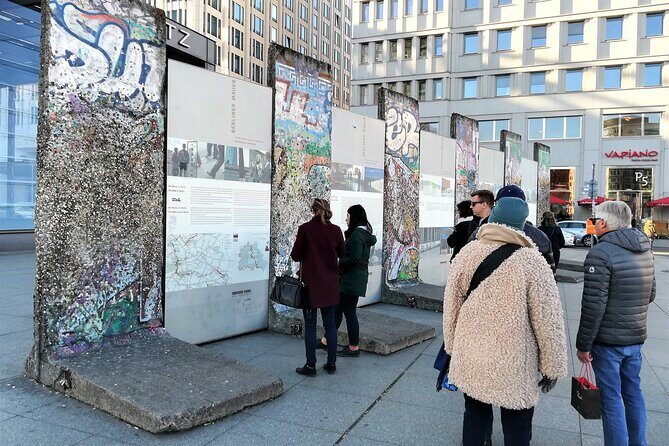
Now you’re in the part of Berlin that people remember long after the trip. The tour goes to Checkpoint Charlie, one of the most famous border crossings of the Berlin Wall era. The description even notes how the situation nearly escalated to a wider conflict—this is the kind of place where the history is never just “background.”
Why this sequence matters
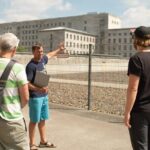
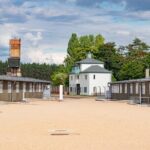
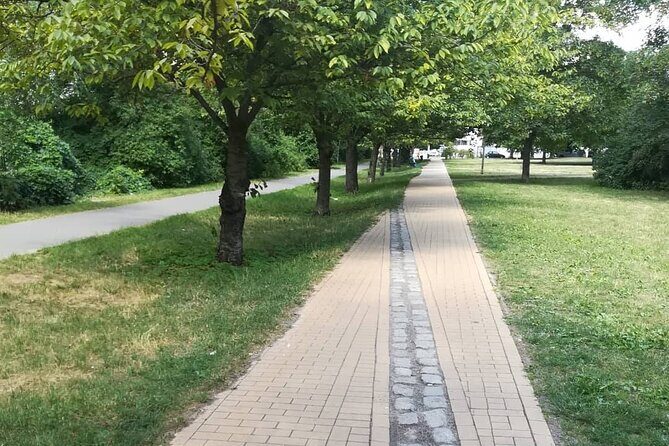
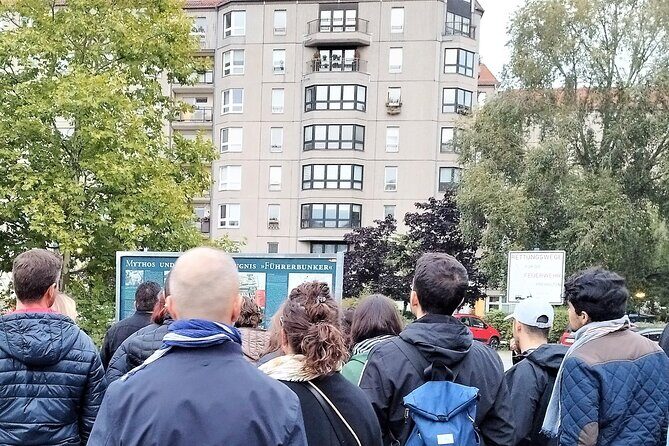
Checkpoint Charlie gives you the famous image. Then Topography of Terror places you on the former border strip with original wall elements and the documentation center focused on National Socialism. It’s also tied to the former headquarters of the SS and Gestapo. Right there, you get context from the ground level rather than from far-away museums.
The stop also includes mention of Martin-Gropius-Bau, which has hosted exhibitions by notable artists such as Ai Weiwei and David Bowie. You also see the Prussian Parliament in front, which helps underline how many different eras share the same Berlin space.
A careful heads-up
These are heavy sites. If your group prefers lighter stops, you can still enjoy the tour, but plan for the mood shift. A private setting is helpful because you can take a slower pace if someone needs it.
Potsdamer Platz to the Holocaust Memorial: moving from spectacle to reflection
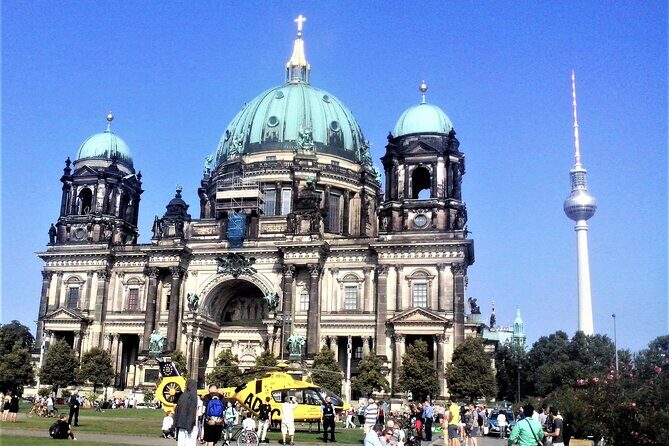
Next comes Potsdamer Platz, described as Europe’s largest construction site ever since. Even if you already know Berlin is about reinvention, this stop makes it concrete. You’ll see an ensemble of skyscrapers and futuristic-feeling buildings, including the Sony Center.
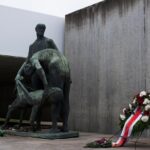
From there, the route goes to the Memorial to the Murdered Jews of Europe (the Holocaust Memorial). It opened in 2005 and commemorates the murder of more than 6 million Jews during National Socialism.
How to get more out of this stop
This is one of those places where you’ll understand it more if you don’t rush. Even with a short scheduled viewing time, I’d treat this as a “stand and feel it” moment rather than a “walk through for photos.” Berlin memorials can be physically quiet but emotionally loud.
Brandenburg Gate and the Reichstag: Berlin’s political center, from both sides
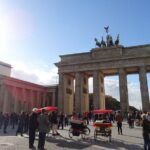
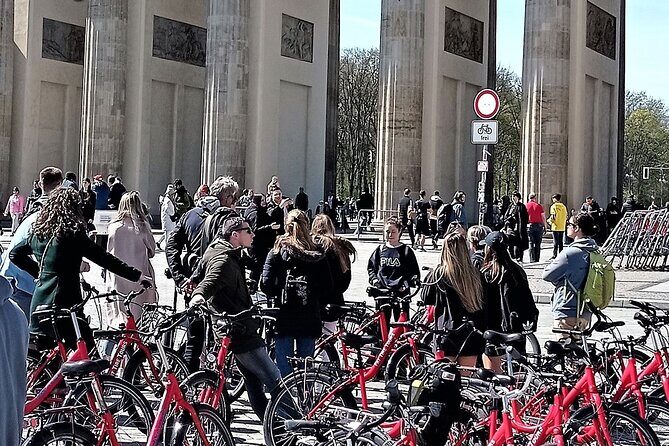
The tour ends with the biggest postcard finish: Brandenburg Gate. It’s one of Berlin’s most famous landmarks, and it works as a visual conclusion because it connects earlier parts of the route to Berlin’s modern identity.
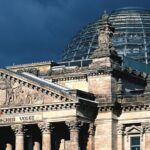
Then you reach the Government District area around the Reichstag/Bundestag and the Chancellery. The tour description includes the Memorial to the Murdered Sinti and Roma, and this is important context: Berlin’s memorial landscape is not one-story or one-group. It’s multiple reckonings layered into the same political center.
Why the Reichstag area fits the day
After seeing the border and the memorial trail, ending at the government district feels logical. You’re watching Berlin’s story go from confinement and division toward the institutions that shape modern Germany.
Guides, pace, and why the route feels easy
One of the best parts of this tour is how the guide style shows up in the day-to-day experience. Reviews highlight guide friendliness and humor, and they also emphasize help for people who need a more comfortable sightseeing pace.
Names that came up include Levent and Levi, and their shared strength in the feedback is simple: they make the information feel human. That shows up in little moments, like adjusting to how your group is doing, or adding interesting side places between the obvious highlights.
Some ride reports also mention routes through areas where cars can’t go easily and park sections. That’s a big deal in Berlin. It can mean you see the city from a more “lived-in” angle, not just from the main roads everyone uses.
Who this tour is best for
This is a strong fit if:
- it’s your first day in Berlin and you want fast orientation
- you want a private guide to tailor the pacing to your group
- you don’t want a long walking-only day
- you want both famous sights and the memorial sites on the same route
- you’re traveling with teens or a mixed-age group
It might be less ideal if your plan is to spend hours inside museums or if you want a stop-by-stop deep dive. This tour is built for momentum and context, not long ticket lines everywhere.
Should you book it?
Yes, if you want a guided Berlin intro that covers the major landmarks without dragging your feet. The comfort (blankets and water), the hotel pickup/drop-off, and the private pacing make it a smart choice for a 4-hour overview. If you’re specifically set on going up the Berliner Fernsehturm, factor in the extra ticket cost and consider whether you want a longer day to slow down after that.
If you’re the type who likes to plan every museum hour, you might prefer adding a separate museum visit later. But as a first-week-in-Berlin “get your bearings fast” tour, this format is hard to beat.
FAQ
How long is the Berlin tour?
It’s listed at about 4 hours.
Is this tour private?
Yes. It’s a private tour/activity, and only your group participates.
What language is the tour offered in?
The tour is offered in English.
Do they pick you up from your hotel?
Yes. Pickup is offered, with hassle-free pickup and drop-off at your central Berlin hotel.
Do I need to buy tickets for the stops?
The Berliner Fernsehturm stop is listed as Admission Ticket Not Included, while other listed stops are marked as free.
What’s included in the tour ride?
The tour includes bottled water and blankets with the e-rickshaw ride.
Is a mobile ticket provided?
Yes, a mobile ticket is included.
Is a guide included?
Yes. The tour includes a guide certified according to DIN EN15565.
Are tips included in the price?
No. Tips are not included.
Can I cancel for free?
Yes. You can cancel up to 24 hours in advance for a full refund.
What group size is this for?
It’s a local Berlin tour guide service that allows a group size of up to 15 people.