REVIEW · BERLIN
Private Berlin City Center Walking Tour
Book on Viator →Operated by Nadav Tours - Gablinger Berlin Tours · Bookable on Viator
Berlin hits hard when you know the stories. This private, hotel-pickup walk strings together big-name sights with clear context and space for questions, without the usual Berlin-getting-lost stress.
I love the easy start: your guide meets you at your hotel lobby, so you waste less time locating the first stop. I also love the format—short, focused moments at each landmark—so you can pack in a lot of orientation in about four hours.
One thing to keep in mind: with many stops squeezed into the day, the pace can feel quick. Wear comfortable shoes, and be ready to move from place to place.
In This Review
- Key things I’d bank on before you book
- Hotel pickup and a guided route that keeps you oriented
- Price and value: one group price, up to 15 people
- How the walk builds Berlin’s story, not just a photo list
- Brandenburg Gate: the big-name starting point
- Reichstag Building: seeing the seat of power through its past
- Holocaust Memorial: a stop that’s about interpretation and weight
- Fuhrerbunker: the last-days story and the suicide question
- Aviation Ministry of Berlin: Göring’s building and the East German layer
- Topography of Terror: a Berlin Wall piece plus the division story
- Checkpoint Charlie and Gendarmenmarkt: the contrast break
- Bebelplatz and Unter den Linden: walking along the threads
- Neue Wache: remembering all victims, and how regimes used it
- Deutsches Historisches Museum and Museum Island: architecture and context at a glance
- Humboldt Forum and Berliner Dom: city-palace history and cathedral presence
- Lustgarten: the calm pause in the middle of big stories
- Practical walking tips for a 4-hour Berlin center tour
- Should you book this private Berlin highlights walk?
- FAQ
- How long is the Private Berlin City Center Walking Tour?
- What does the tour cost?
- Is it a private tour?
- Do you offer hotel pickup?
- What language is the tour in?
- Are admissions included for the stops?
- What is the meeting point?
- Can I cancel for a refund?
Key things I’d bank on before you book
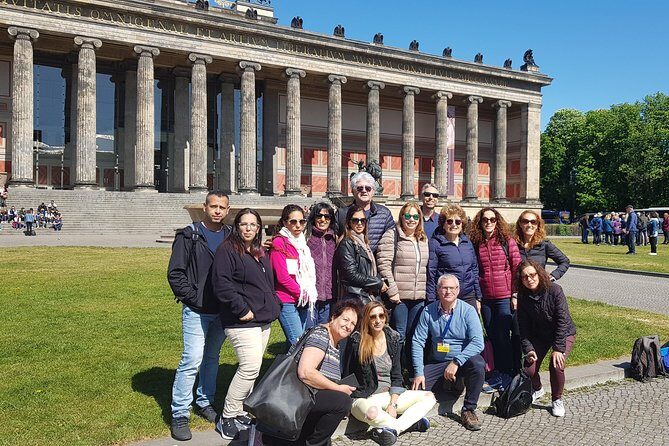
- Hotel-lobby pickup saves you from the first-stops scramble
- Private group only (up to 15) means the guide can slow down or speed up for your people
- English-guided, flexible route helps you fit your interests into limited time
- A start-to-finish hits-the-icons plan covers the German story from multiple angles
- No add-on tickets at the stops listed keeps costs simpler for a 4-hour walk
Hotel pickup and a guided route that keeps you oriented
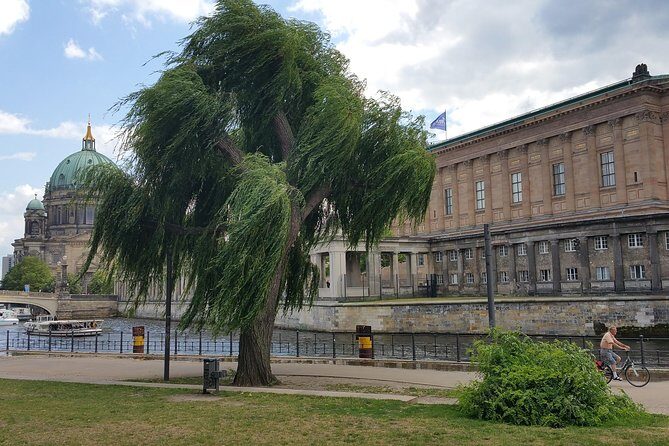
This is the kind of tour that treats your time like it matters. If you’re staying in Berlin’s city center, you can often go days without needing a transit card or a complicated plan. The big win here is the meeting setup: pickup is offered from the lobby of your hotel, and the guide handles the “where do we start?” part.
That means you can use the first minutes of the tour for something useful, not for studying your phone like it’s a second job. It also helps families and mixed-age groups. One reason this tour scores so well is that it works for different generations in the same group—people can ask questions, and the guide can tailor the pace.
The tour runs about 4 hours. With that time box, the guide’s job is to keep the narrative moving while giving you enough time to stand in the right places and actually look.
You can also read our reviews of more walking tours in Berlin



Price and value: one group price, up to 15 people
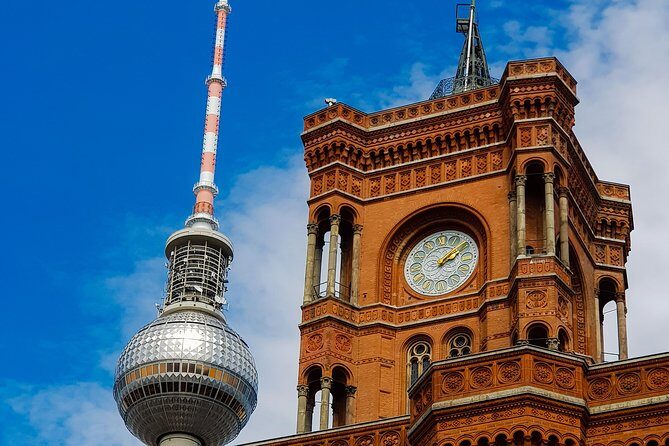
The price is $397.38 per group (up to 15 people). That means the cost isn’t really about whether you’re traveling solo versus two people—it’s about how many people you pack into your private group.
If you’re traveling with a small group, this can feel like better value than a per-person walking tour, because you’re buying a guide’s attention for the whole time. If you’re traveling with a bigger crew (up to 15), it becomes one of those deals where everyone gets to share the guidance, not just the person who remembered to bring the map.
Also, there’s no sign that you’ll hit surprise costs for admissions at the stops listed. The stops are shown with free admission tickets, and the tour includes all fees and taxes. You’ll still want to budget for food and drinks (not included), but the sightseeing cost side stays predictable.
One practical note: the tour is commonly booked about 41 days in advance on average. If your dates are firm, I’d book sooner rather than later.
How the walk builds Berlin’s story, not just a photo list
What makes this tour feel different is the way it connects famous sites to meaning. You’re not just told what something is. You’re led into why it mattered, and what people have taken from it since.
And because it’s private and flexible, the guide can adjust the emphasis to your group. That’s a real advantage in Berlin, where people come for different reasons: some want the fall of the wall story, others want the WWII aftermath, and others want the modern city layer.
The tour hits a high concentration of top-tier landmarks—so you get the quick orientation most first-timers need—while still leaving room for interpretation. It’s a good fit if you’re short on time and want to avoid the “I saw it, but I don’t know what I’m looking at” feeling.
Brandenburg Gate: the big-name starting point
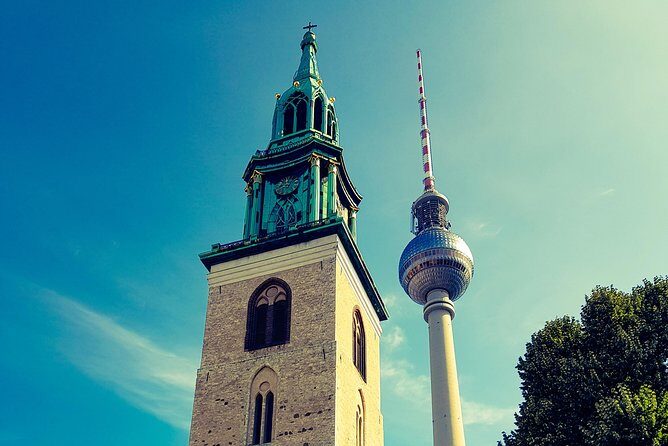
You begin at Brandenburg Gate, where the guide sets the tone by walking you through its history and significance. It’s a smart first stop because it gives you a reference point for everything else you’ll see that day.
This is one of those landmarks that almost everyone recognizes. The benefit of starting here is that you don’t have to “figure out” what the gate represents before you move on. You get that meaning early, which makes the rest of the walk click faster.
Time on site is about 10 minutes, so you won’t get stuck in one place. You’ll be looking, listening, and getting ready to move.
Reichstag Building: seeing the seat of power through its past

Next up is the Reichstag Building. You’ll view it and hear its history across the years. Even if you’ve seen photos before, this is a useful stop because the guide can connect the building to the larger political story that shaped Berlin.
Again, it’s brief—around 10 minutes—but the goal is orientation. In four hours, the tour can’t turn into a museum marathon. It does something more practical: it helps you understand why these buildings keep appearing in Berlin conversations.
Tip: don’t rush the viewpoint. Give yourself a few seconds just to look around. When you’re standing there after hearing the context, the place suddenly feels less abstract.
You can also read our reviews of more city tours in Berlin





Holocaust Memorial: a stop that’s about interpretation and weight
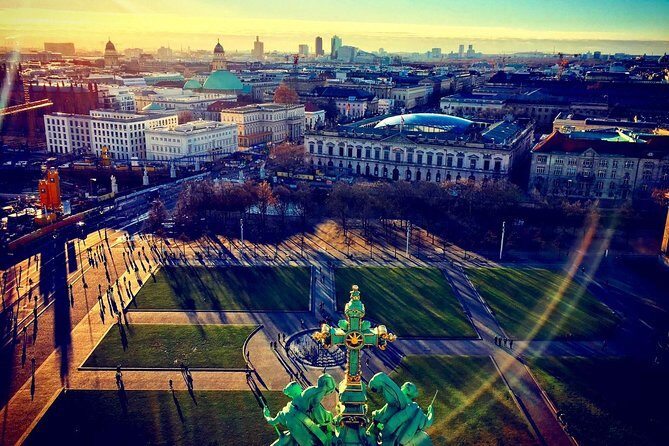
At the Memorial to the Murdered Jews of Europe, you’ll walk through the memorial and discuss its significance. You’ll also hear about the context of its creation and the various interpretations people have of what it represents.
This is a different kind of stop. It’s not about checking a landmark off. It’s about learning how remembrance works—how a space can hold meaning, and how different people take away different things from the same setting.
The time is also about 10 minutes, which can feel short for a site like this. The upside is that you won’t be rushed out of the emotional space immediately—you’ll get guided framing first, which helps you understand what you’re seeing before you have to move on.
Fuhrerbunker: the last-days story and the suicide question
Then the tour moves to Fuhrerbunker, where you’ll see where Hitler’s bunker was and discuss the events of the last days of the war, including whether Hitler did or did not commit suicide.
That last detail matters because it signals how this tour handles sensitive history: it doesn’t pretend there’s only one simple answer. You’ll hear the discussion rather than being left with a single slogan.
Time here is about 10 minutes. That means you’ll get the essentials and the framing, not a lecture that goes for hours. If your group loves heavy, detailed history, you might want to schedule extra time on your own after the walk.
Aviation Ministry of Berlin: Göring’s building and the East German layer
At the Aviation Ministry of Berlin, you’ll hear how the building was constructed as Herman Göring’s Aviation Building. You’ll also learn how it served as the House of Ministries under the government of the GDR (east Germany).
This stop is one of the best examples of why a guided tour helps in Berlin. Buildings often feel like standalone architecture when you look at them quickly. With a guide, you start seeing layers—who used the building, what it meant at the time, and why it shows up in the city’s story.
It’s about 10 minutes of explanation plus viewing time. That’s enough to turn the exterior into something more than just a nice facade.
Topography of Terror: a Berlin Wall piece plus the division story
The tour includes Topography of Terror twice, which makes sense because there’s a lot packed into this area.
You’ll see an original piece of the Berlin Wall and hear how it came up, plus the background for the division of Berlin and Germany after WWII. Since there are two stops here (both around 10 minutes), you get more than one angle: a specific physical reminder, then the wider story around why the division happened and what it meant afterward.
If you want a quick but meaningful grounding in Berlin’s split era, this is one of the tour’s strongest sections. And because the tour is guided, you’re less likely to miss the point of what you’re looking at.
Checkpoint Charlie and Gendarmenmarkt: the contrast break
After the heavy stops, you move toward the classic city-center sights.
You’ll see Checkpoint Charlie, then move to Gendarmenmarkt. These are still historical, but the vibe changes. This is where Berlin becomes easier to move through—more open views, more “standing in the city” energy.
Time is about 10 minutes per stop. That’s enough to take in the setting and understand why each place has stayed famous, without turning the day into one long, intense march.
Bebelplatz and Unter den Linden: walking along the threads
Next, the tour heads to Bebelplatz, where you’ll discuss events tied to the square, then to Unter den Linden, the avenue. This is the kind of pairing that works well in a short tour: you get both a specific site and a sense of where Berlin’s important street life runs.
Both stops are around 10 minutes. The guide uses the time to keep the city legible for you—so you can later understand how different parts of the center connect.
Neue Wache: remembering all victims, and how regimes used it
At Neue Wache, you’ll visit Berlin’s central memorial for all victims throughout German history. The guide explains when and within what context the building was built, and how each regime used it for its own purposes. You’ll also talk about the complexity of the culture of remembrance in Germany given its difficult history.
This stop is a standout for people who care about how memory changes over time. It’s not just a memorial as a fixed object. It’s a reminder that societies interpret, rename, and repurpose places—sometimes in ways that reflect the power of the day.
Time is about 10 minutes, so you get guided framing and a chance to reflect, then you move on while it’s still fresh.
Deutsches Historisches Museum and Museum Island: architecture and context at a glance
You’ll also see Deutsches Historisches Museum, with discussion of the building’s history and architecture. Then comes Museum Island, where you’ll see the site and hear about its history.
These stops can be a double win. Even if you’re not planning to enter museums, you learn how the architecture and location fit into Berlin’s role as a center for memory and learning.
Time is about 10 minutes for each segment. That keeps the tour from turning into a museum day, but it still gives you enough context to decide later if a ticket day is worth it.
Humboldt Forum and Berliner Dom: city-palace history and cathedral presence
Two more major “wow” stops land in the second half.
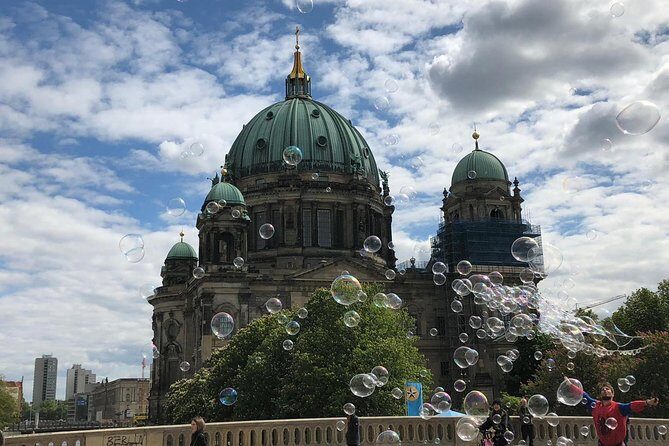
At the Humboldt Forum im Berliner Schloss, you’ll discuss the history of the Berlin City Palace. Later, you’ll see Berliner Dom, where the guide discusses the history of the site. These are big visual landmarks, and having a guide helps you see beyond the postcard angle.
The palace and the cathedral represent different eras and different messages Berlin wants to project. Even with short stop times, you’ll walk away with a clearer sense of how the city chose what to build, rebuild, or emphasize.
If you like architecture and you hate wasting time reading labels on your own, this part is very satisfying.
Lustgarten: the calm pause in the middle of big stories
You’ll also stop at Lustgarten, where the guide discusses the history of the site.
This is a nice change of pace. After multiple memory-heavy stops, a square can feel like breathing room. Even if your attention span starts to fray, a short guided explanation helps you keep the story thread.
Time is about 10 minutes, which keeps it from becoming a long detour.
Practical walking tips for a 4-hour Berlin center tour
Berlin can be great on foot, but it can also be a lot of steps in one day. Plan for walking comfort as the main requirement.
Here’s how I’d prep:
- Wear comfortable shoes. The tour is short per stop, but the total movement adds up.
- Bring water. Food and drinks aren’t included.
- Keep your phone charged. You’ll have a mobile ticket, so you don’t want to be hunting for signal at the wrong moment.
- Have a short list of interests. If your group is more politics-focused, or more remembrance-focused, tell the guide early so they can steer the flexible parts of the walk.
One more plus: since the tour is near public transportation and includes hotel-lobby pickup, you’re not trapped in one weird corner of the city. Berlin is easy to navigate when you have a good starting plan.
Should you book this private Berlin highlights walk?
I think you should book this if you want a guided first-time orientation that still takes history seriously. The tour is especially good when you’re balancing multiple needs at once—sightseeing, context, and not spending your precious hours hunting streets.
You should consider a different option if you want slow, deep time in only one or two sites. This tour spreads the focus across many landmarks, so it gives breadth more than long-form analysis.
My final take: the mix of major sights, structured storytelling, and the flexibility for different people makes this a strong choice for a short visit. If your group values getting the meaning behind the iconic places, you’ll leave feeling like Berlin finally made sense.
FAQ
How long is the Private Berlin City Center Walking Tour?
It lasts about 4 hours (approximately).
What does the tour cost?
It costs $397.38 per group, up to 15 people.
Is it a private tour?
Yes. It’s private, meaning only your group participates.
Do you offer hotel pickup?
Yes. Pickup is available from the lobby of your hotel.
What language is the tour in?
The tour is offered in English.
Are admissions included for the stops?
The tour includes all fees and taxes, and the listed stops show admission tickets as free.
What is the meeting point?
The start point is Scheidemannstraße 5, 10557 Berlin, Germany, and the activity ends back at the meeting point.
Can I cancel for a refund?
Yes, you can cancel for free up to 24 hours in advance of the experience start time for a full refund.