REVIEW · NUREMBERG
Stein: Public guided tour of the “Old Mine” museum
Book on GetYourGuide →Operated by A.W. Faber-Castell Vertrieb GmbH · Bookable on GetYourGuide
A pencil museum that feels like factory plumbing. The Old Mine guided tour at Faber-Castell’s site in Stein turns lead-mine production rooms into an easy-to-follow look at how pencil-making worked in the 19th and 20th centuries. I really like that you’re not just looking at objects—you’re walking through the kind of spaces where the process happened, including historic rooms along the Rednitz River.
What I liked most was the clear explanation of how pencil lead is made using old exhibits and how the guided format ties the story to the building itself. One thing to keep in mind: at 1.5 hours, the pace is busy. If you want to read every small sign or linger over photos, some details may slip by.
This tour is also very practical in a good way. You get a live English or German guide, plus a souvenir and a 15% store discount on the day of your visit (Mon–Fri). Still, some of the premises are historic and not barrier-free, so plan on real walking and wear sturdy shoes.
In This Review
- Quick hits before you go
- Why the Faber-Castell Old Mine in Stein feels different from a typical museum tour
- Getting your timing right: meeting at Faber-Castell Visitor Center and 1.5 hours on-site
- Inside the Old Mine museum: two floors of lead mine production rooms
- The building itself matters: 1848 on the Rednitz and layered rooms through the years
- Castle as Press Camp: seeing the castle setting as part of production
- Pace, reading, and why 1.5 hours is both enough and not enough
- Sturdy shoes and long walking: what to expect with historic, not-barrier-free spaces
- Price and value: $14 for the Old Mine tour, souvenir, and Mon–Fri store discount
- Who should book the Stein Old Mine guided tour (and who might skip it)
- Should you book the Old Mine tour in Stein?
- FAQ
- How long is the guided Old Mine tour?
- Where do I meet the guide?
- How much does the tour cost?
- What languages are offered?
- Is the tour barrier-free?
- What is included with the ticket?
- Do I get a discount in the store?
- Do I need a booking?
- What’s the cancellation policy?
- Can I reserve now and pay later?
Quick hits before you go
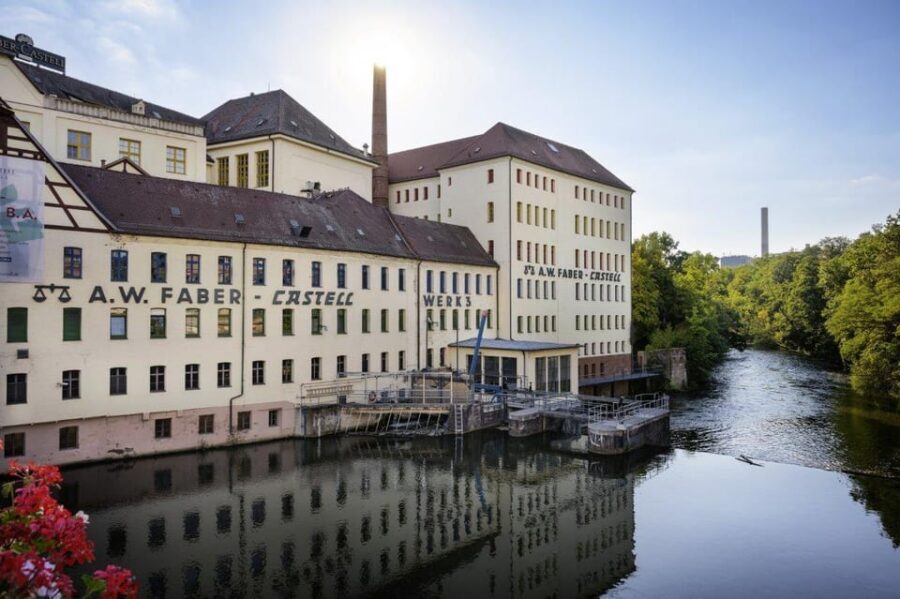
- Old Mine museum in Stein: two floors focused on lead-mine production from the 19th and 20th centuries
- Historic building on the Rednitz: the west-bank structure dates to 1848 and is a listed site
- Special tour theme: Castle as Press Camp, connecting the castle setting to production
- Live guide (German/English): some content may be shown in its original language
- Value extras: souvenir included, plus 15% off in the store at the castle (Mon–Fri)
Why the Faber-Castell Old Mine in Stein feels different from a typical museum tour
Most pencil-related stops are basically vitrines and labels. This one works differently because you’re touring an industrial site—historic production rooms, laid out over time. You’ll be inside the kind of building where the story isn’t abstract. It’s physical.
The Old Mine museum in Stein near Nuremberg focuses on lead-mine production. That matters because pencil lead wasn’t always the same simple, modern supply chain. In the late 1800s and into the 1900s, production was more labor, more stages, and more risk—yet the core idea still links to what happens today. When a guide points out what looks different now versus then, it clicks fast: the tools may change, but the goal stays consistent.
I also like the way the site itself becomes part of the lesson. The museum is in a west-bank building from 1848 along the Rednitz River, and the rooms come from different eras. That means you’re not walking through one “time capsule.” You’re moving through an actual, evolving complex—levels and rooms layered together, not pretending the past was neat.
And yes, it’s fun. There’s a slightly humorous feeling in learning how something as ordinary as writing starts with very non-ordinary work.
You can also read our reviews of more guided tours in Nuremberg


Getting your timing right: meeting at Faber-Castell Visitor Center and 1.5 hours on-site
Your tour starts at the Faber-Castell Visitor Center. Plan to arrive with a few minutes buffer so you’re not sprinting in the courtyard at the worst possible moment.
The guided visit runs about 1.5 hours. That length is a sweet spot if you like explanations but also hate slow museum pacing. You get enough time to understand the overall production process and how the exhibits are arranged across two floors. You do not get time to fully absorb every label, photo, or fine print at a crawl.
Languages are German and English with a live guide. You might see some content in the original language, so if you’re sensitive to small text, just be ready for that. If you’re an independent reader type, bring that energy—but expect the guide to steer the pace.
Practical tip: wear shoes you’d trust on cobbles and uneven historic floors. The premises aren’t barrier-free, and you’ll be walking longer distances than you might expect from a 1.5-hour ticket.
Inside the Old Mine museum: two floors of lead mine production rooms
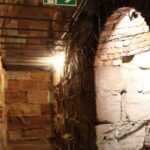
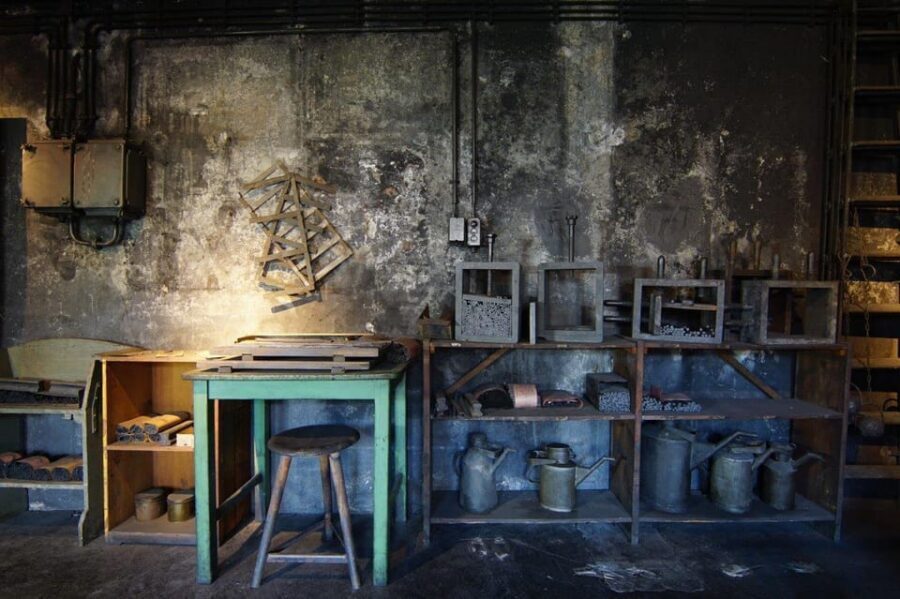
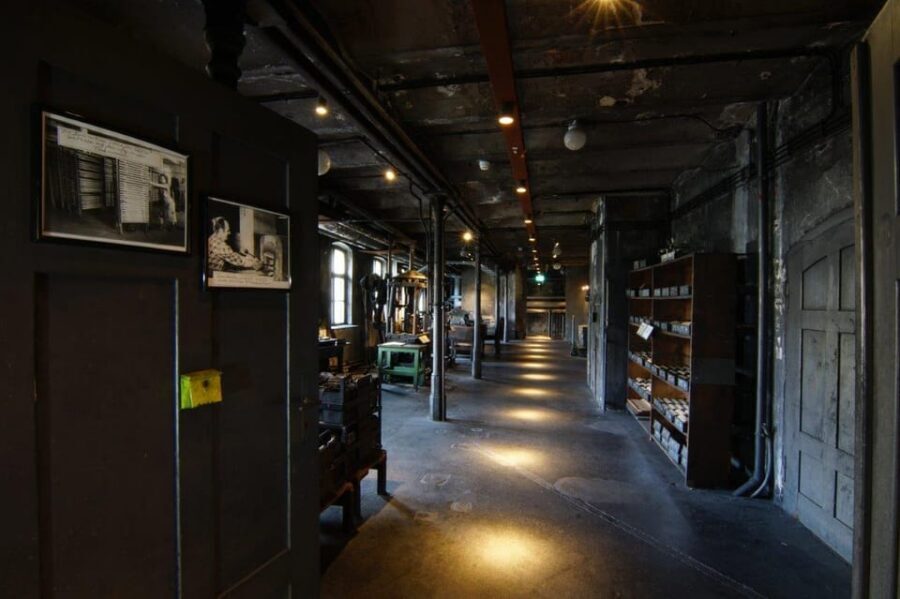
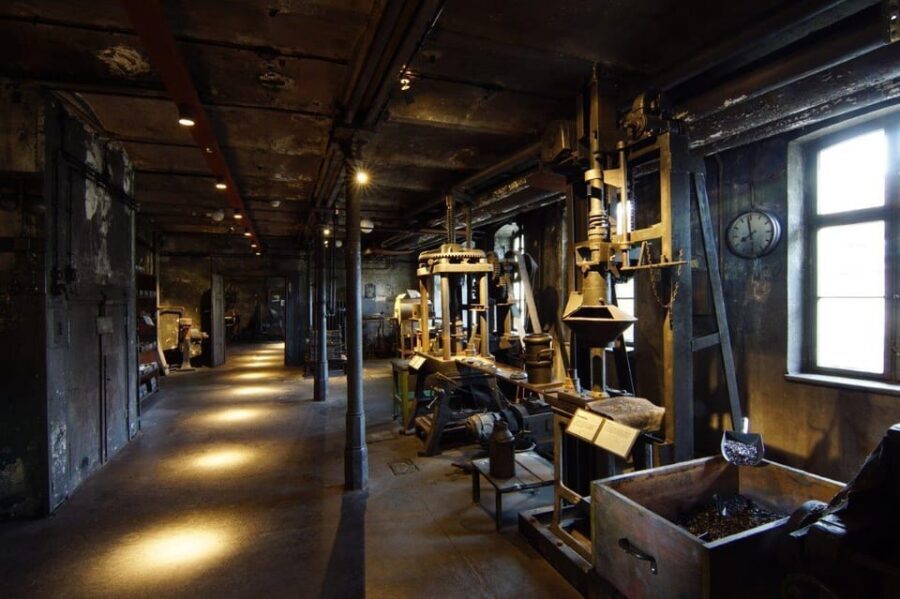
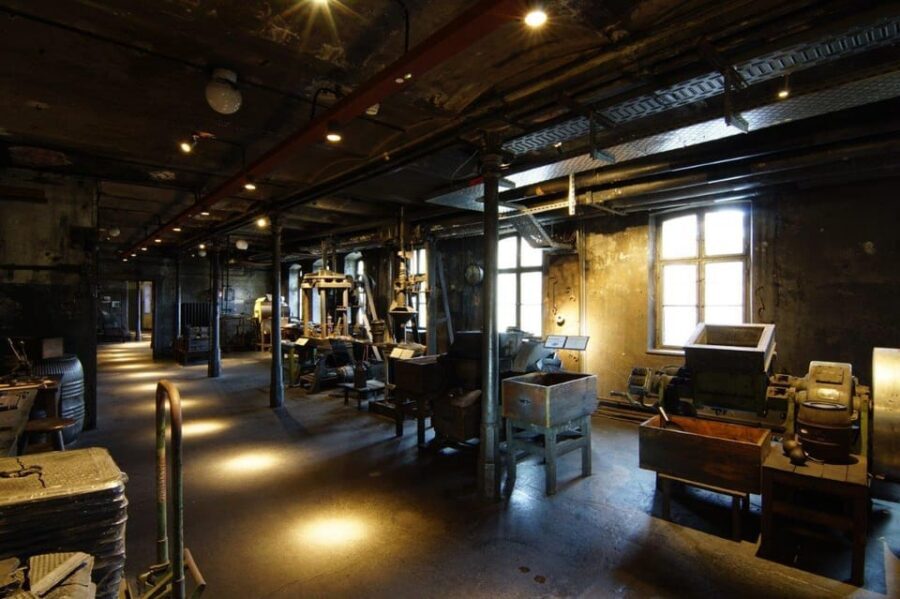
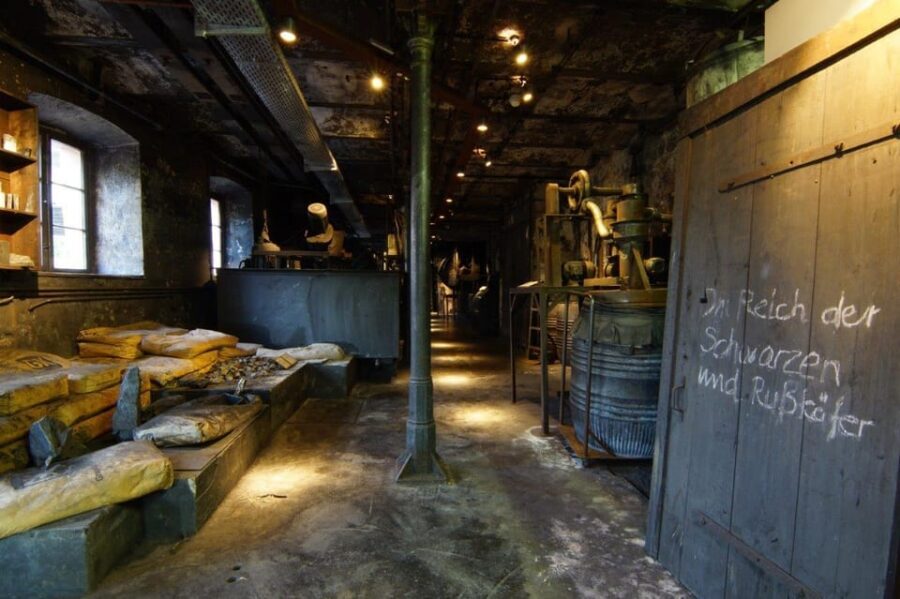
The heart of the experience is the guided walk through the Old Mine museum’s production rooms. The focus is on lead-mine production in the 19th and 20th centuries, brought to life through the historic rooms and old exhibits. The museum covers the story across two floors, so you’ll see how the process was staged—not all happening in one single “magic room.”
What you’ll get from the two-floor layout is an easier mental map of manufacturing. You’ll stop often enough to understand what each space is meant to explain. Then you’ll move on and connect it to the next step. This is the kind of structure that works well if you don’t already know how pencils are made. You leave with a clearer sequence in your head.
One theme the tour emphasizes is that production today still shares a basic similarity with the past. That’s valuable because it avoids pure nostalgia. You’re not just admiring an antique workshop; you’re learning why the modern process exists in the first place.
What to watch for: the museum uses the building’s layout to make the story feel grounded. A historic West-bank structure from 1848 forms part of a nested set of levels and rooms from different eras. In plain terms, you’ll likely feel like the building is teaching you, not just the displays.
The building itself matters: 1848 on the Rednitz and layered rooms through the years
This is one of those tours where architecture quietly supports the message. The museum sits in a listed building dating from 1848 on the west bank of the Rednitz. The complex is described as a nested ensemble of levels and rooms from different eras.
Translation for your travel brain: you’re walking through a site that has had multiple “chapters.” That gives you a stronger sense of industrial continuity. It also helps explain why some areas feel different from others—not everything is uniform, because the site isn’t.
If you like authenticity, this matters more than you might think. A museum in a modern building can be neat, but it often feels like the story got boxed away. Here, the spaces help you understand scale and workflow. Even without seeing machines moving, the layout and rooms make it easier to imagine the work happening.
Also, because it’s a historic site, don’t count on wheelchair-style ease of movement. Some premises aren’t barrier-free and you should plan for longer walking.
Castle as Press Camp: seeing the castle setting as part of production
The special guided tour centers on the theme Castle as Press Camp. That’s not just a clever title. It signals that you’re looking at the castle/campus not as a pretty backdrop, but as a production environment—where pressing, work routines, and industrial order shaped daily life.
Even if you don’t know anything about Faber-Castell’s industrial past, the guide’s job is to connect the theme to what you’re seeing. You’ll get a narrative thread that links exhibits to the way the site functioned. That makes the tour feel more coherent. You’re not just collecting facts—you’re following a story about how a major brand’s manufacturing ecosystem worked.
This kind of thematic framing is a good value add. It helps you understand why you’re standing in certain rooms and what role they played in the broader process.
You can also read our reviews of more museum experiences in Nuremberg

Pace, reading, and why 1.5 hours is both enough and not enough
The biggest practical issue is pace. The tour is thoughtfully organized, but it doesn’t pause for marathon reading. If you’re the type who reads every sentence on every sign, you’ll notice a tension between “listen to the guide” and “stop and study the details.”
Some text and materials may be shown in original language. And even when signs are in English or German, small prints and photo-heavy displays take time. At 1.5 hours, you may not get the slow, photo-by-photo appreciation you’d want.
So here’s the approach I’d recommend:
- Listen for the guide’s main points first.
- If a specific exhibit catches your eye, then give it extra attention briefly.
- After the tour, if you still want more, use the store and museum space time (if available) to browse at your own speed.
That way you get both the big story from the guide and the optional deep interest in what you personally find cool.
Sturdy shoes and long walking: what to expect with historic, not-barrier-free spaces
The site includes historic areas and is not barrier-free. That means you should expect longer walking distances and uneven surfaces. You’ll be happier if you:
- wear sturdy shoes
- keep comfortable socks ready
- plan for stairs or tighter routes that sometimes come with older factory/castle buildings
This isn’t a knock on the tour—it’s just good travel physics. The whole point is to experience the spaces where production happened. That kind of authenticity usually comes with real-world walking.
If you rely on mobility aids, I’d treat this as a “check it carefully” option. The information I have is that the premises aren’t barrier-free, so the safe move is to evaluate whether you can handle the physical route.
Price and value: $14 for the Old Mine tour, souvenir, and Mon–Fri store discount
At around $14 per person for about 1.5 hours, the value is strong if you like guided explanations and want more than a quick self-tour. You’re paying for a guided walk through a focused subject—lead-mine production—and you also get extras.
Included with your ticket:
- the guided museum tour (about 1.5 hours)
- a souvenir
- 15% off in the store at the castle on the day of your tour, Monday through Friday
That store discount can turn the ticket into a practical purchase plan. If you were already thinking of buying pencil-related gifts (or supplies), the 15% can soften the overall cost quickly. The souvenir is also a nice bonus since it’s included rather than added at the end.
One more value point: the guide works in German and English, which helps you get full meaning instead of just guessing from labels. Even if some materials are in original language, the live guide makes the story easier to follow.
Who should book the Stein Old Mine guided tour (and who might skip it)
Book this tour if you:
- love the idea of industrial history tied to a real working brand site
- want to understand how pencil lead is manufactured, not just see pencils on a shelf
- like a guided pace that teaches you the main steps and the “why,” without requiring you to be a technical expert
You might skip it if you:
- want a long, quiet museum stroll where you can read every exhibit line and take your time for photos
- strongly prefer barrier-free access and want to avoid historic stairs/uneven routes
Should you book the Old Mine tour in Stein?
I’d book it if you want one high-value stop that mixes industrial storytelling with a setting that’s genuinely historic. The 1.5-hour format is efficient. You’ll leave with a clearer sense of how lead-mine production worked in the past and how it connects to the pencil world today.
Even if you’re not a pencil-nerd, the tour theme and the building layout make it more than a narrow hobby stop. It’s a smart cultural detour when you’re in Bavaria and want something real, tactile, and surprisingly easy to understand.
FAQ
How long is the guided Old Mine tour?
The tour runs for about 1.5 hours.
Where do I meet the guide?
You meet at the Faber-Castell Visitor Center.
How much does the tour cost?
The price is listed as $14 per person.
What languages are offered?
The live guide is available in German and English.
Is the tour barrier-free?
No. Some parts of the premises are historic and not barrier-free, and you should plan for long walking distances.
What is included with the ticket?
Your ticket includes the guided tour of the Old Mine museum (about 1.5 hours), a souvenir, and the 15% store discount tied to your tour day.
Do I get a discount in the store?
Yes. You receive 15% off in the store at the castle on the day of your tour, Monday through Friday.
Do I need a booking?
Booking is required for the starting location and also for returning, and the activity notes indicate you should check starting times.
What’s the cancellation policy?
You can cancel up to 24 hours in advance for a full refund.
Can I reserve now and pay later?
Yes. The option to reserve now and pay later is listed for this activity.
If you want, tell me what day/time you’re considering and whether you prefer German or English, and I’ll help you plan how to fit this stop into a Stein or Nuremberg-area day.