REVIEW · MUNICH
Munich Old Town – Guided Walking Tour in English
Book on GetYourGuide →Operated by Walkative Tours · Bookable on GetYourGuide
Munich can feel like a postcard, then history kicks in. This English walking tour threads Old Town landmarks with Bavaria’s beer story and the darker roots of the 20th century. You’ll start at St. Peter Church and follow a tight narrative past places like Hofbräuhaus, then into the power center of the Bavarian kings. One thing to consider: the tour spends time on heavy topics like the Nazi rise, so it’s not all frothy fun.
I especially like how the guide shapes big ideas into street-level scenes. In one version of the experience, Alex turned Hofbräuhaus lore into easy-to-remember stories, including the Aloisius character people spot there. Another highlight I like is the way you get local food context without turning it into a food tour, like what to look for around Viktualienmarkt and classics such as Leberkase sandwiches.
A possible drawback: the route is focused and fast, and the included “knightly figure fights” carillon moment may feel like a letdown if you’re expecting major sights every minute.
In This Review
- Key things I’d watch for on this Munich Old Town walk
- Your 150-minute orientation to Munich’s Old Town (and why it’s worth the time)
- Meeting point at St. Peter Church and what to do if weather goes sideways
- Marienplatz and the Town Hall stage: Munich’s civic center in two acts
- Hofbräuhaus: where Bavaria’s beer culture gets its storyline
- Odeonsplatz and the National Theater: power, culture, and the city’s face
- Max Joseph Platz and the Bavarian kings’ residences: where the ruling class lived
- Munich’s light and dark history: from Roman beginnings to the 1923 Beer Hall Putsch
- The guides: storytelling talent matters more than you think
- What you should do after the tour (so it sticks)
- Who this tour is best for
- Should you book Munich Old Town: Guided Walking Tour in English?
- FAQ
- What’s the duration of the Munich Old Town guided walking tour?
- Where is the meeting point?
- Is the tour in English?
- How much does the tour cost?
- Is hotel pickup included?
- What happens if I want a private or smaller tour?
- Is payment required at booking?
- Can I cancel and get a refund?
Key things I’d watch for on this Munich Old Town walk
- Hofbräuhaus beer culture explained in plain terms, not just a photo stop
- Marienplatz landmarks framed by how Munich grew into its role in Bavaria
- Wittelsbach-era power brought to life through the palaces and residences you pass
- Light and dark history together: from Roman roots to Nazi beginnings
- Joseph Ratzinger’s Munich connection mentioned in the context of his early work
- A quick carillon moment that’s memorable mainly if you like quirky city traditions
Your 150-minute orientation to Munich’s Old Town (and why it’s worth the time)
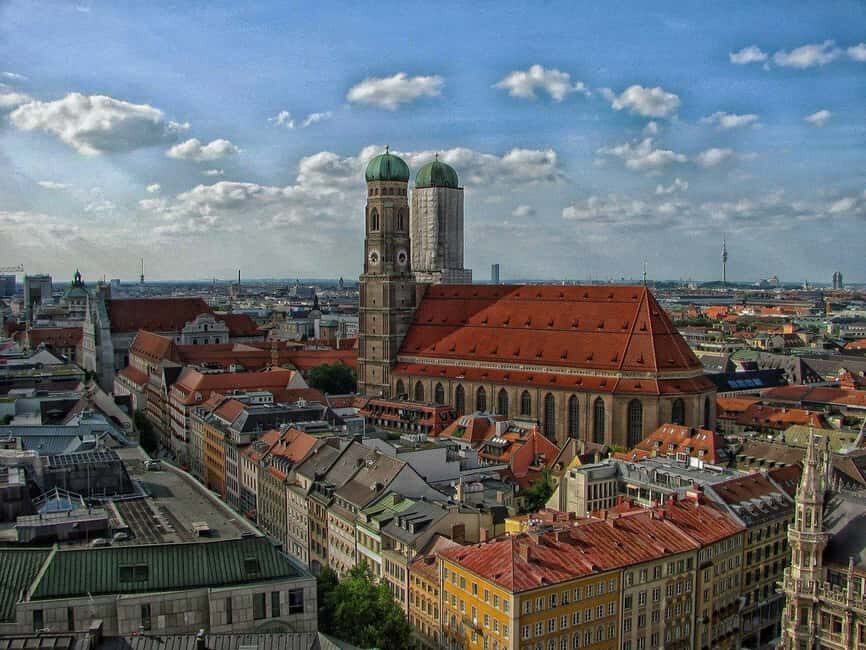
If you have only a short window in Munich, a guided walk can do what maps and guidebooks struggle with: it connects the dots. This is a 150-minute tour built around a narrative, so you’re not just collecting buildings. You’re learning why they matter, then seeing them in the order that makes the city’s story click.
The price is listed at $29 per person, and that’s often where walking tours win. You’re paying for an expert local guide and a structured storyline, not for a bus ride or an entrance fee. And because it’s in the center, you can keep the rest of your day flexible for self-guided wandering, lunch, or a later beer stop.
This isn’t a “choose-your-own-adventure” route. It’s more like someone showing you the movie version of Munich—useful, fast, and designed to give you context you can carry into the museums or beer halls later.
You can also read our reviews of more walking tours in Munich
Meeting point at St. Peter Church and what to do if weather goes sideways
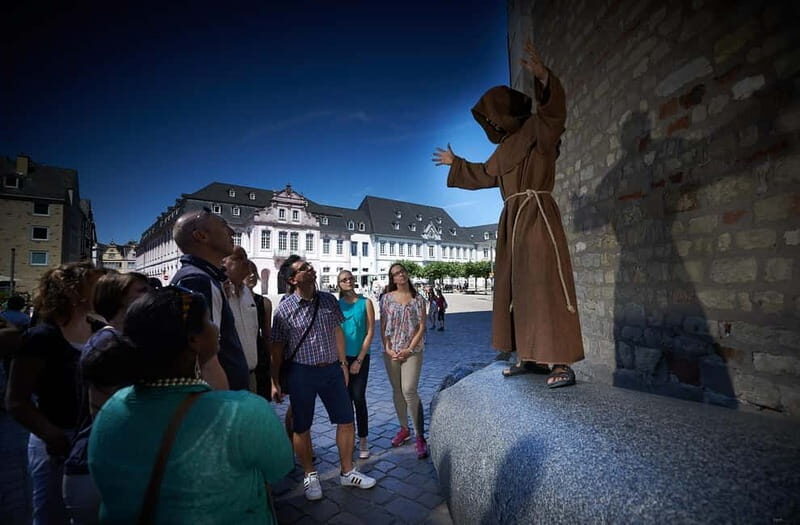
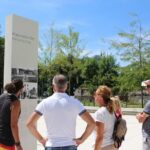
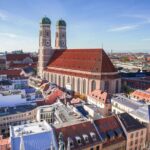
You meet at the main gate of St. Peter Church, with the guide holding a yellow umbrella of Walkative. That’s a solid setup because St. Peter’s area is a natural landmark, and the yellow umbrella makes it hard to miss the right group.
Weather in Munich can swing quickly. The tour runs on foot, so plan like you’re sightseeing all day: comfortable walking shoes, a layer for cold air, and a light rain plan. In the colder months, the city can be slick and bright at once, so traction and warm hands matter more than you’d think.
Marienplatz and the Town Hall stage: Munich’s civic center in two acts
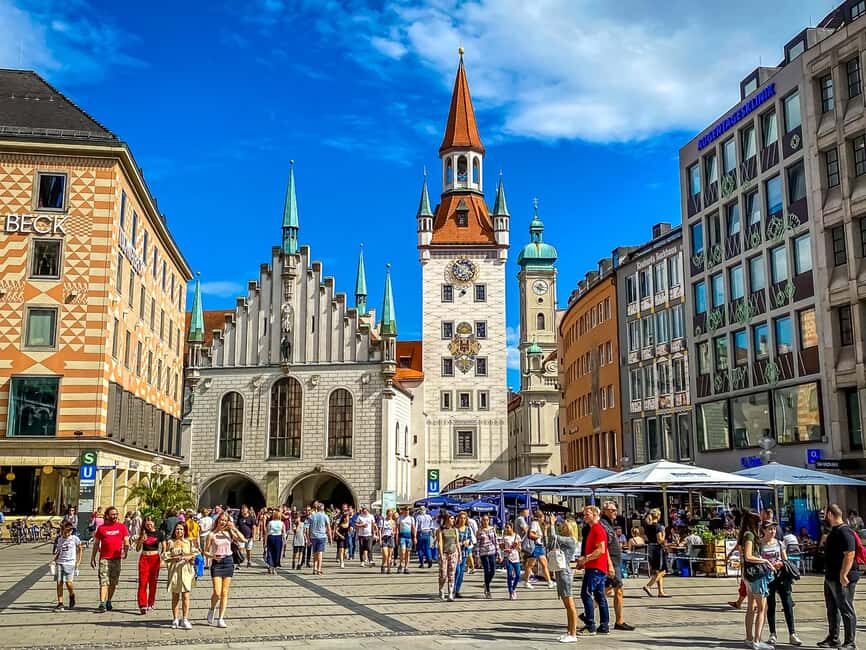
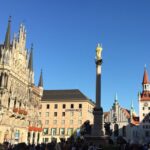
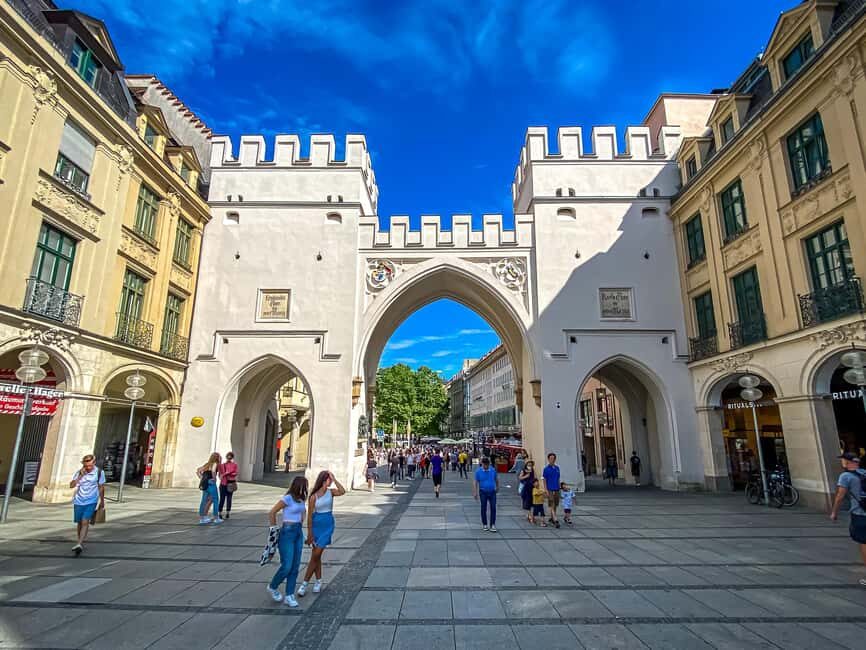
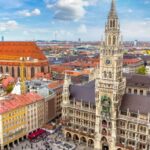
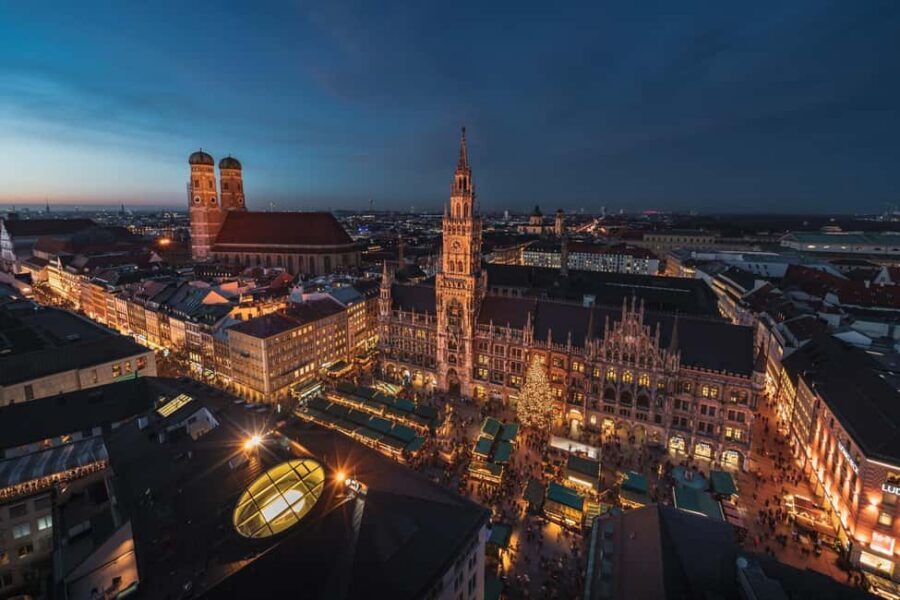
Your walk includes Marienplatz, Munich’s main square, and you’ll see both the New and Old Town Hall (as the tour frames them in the story of Munich’s growth). This is one of those places where the architecture looks impressive from one angle, then starts making sense when you hear why it was built that way.
Why it’s valuable on a first pass: Marienplatz is where Munich’s “show” and Munich’s “power” meet. On a sunny day, it’s a photo magnet. On a cloudy day, it becomes a place to understand how the city plans public life—markets, ceremonies, and civic identity—around a central stage.
If you like photographing squares and towers, you’ll probably enjoy the stops here. If you prefer quiet corners, you’ll still get something useful: the guide’s framing helps you spot details you might otherwise skim over.
Hofbräuhaus: where Bavaria’s beer culture gets its storyline
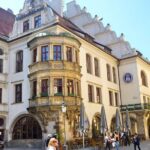
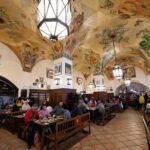
The tour’s beer anchor is Hofbräuhaus. This isn’t treated like a simple “look at the hall” moment. The guide explains how Bavaria developed its beer culture—so the place becomes a social institution, not just a famous name.
This is where I found the most “ah, that’s why” moments. For example, one guide (Alex, in one version of this experience) helped people understand the Aloisius lore people associate with Hofbräuhaus. It’s the kind of detail you can’t easily get from a signboard, but it makes your later conversations about Munich more fun.
You should also know the tour’s overall tone: it connects the celebratory side of beer culture with the real historical weight that shaped Munich in the 20th century. That contrast is part of why the tour feels more honest than a pure sightseeing loop.
Also, if you’re hungry afterward, keep this in mind: the walk helps you understand what to look for in classic food stops. One traveler highlighted learning about Leberkase sandwiches at Viktualienmarkt, plus how schnitzel and pork knuckle fit into the wider Munich comfort-food tradition. You won’t leave stuffed, but you’ll leave with a better sense of what to chase next.
Odeonsplatz and the National Theater: power, culture, and the city’s face
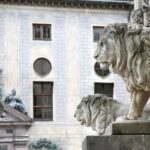
Next you move into the “public prestige” zone with Odeonsplatz, plus National Theater and State Opera. These stops sit in a part of Munich where you can feel the city’s self-image—art and institutions placed like milestones on a path of influence.
Why I think these are smart stops on a walking tour: if your only exposure to Munich is beer halls and museums, you can miss how the city uses cultural buildings to project authority and identity. The tour gives you a way to see those buildings as part of the same story that later connects to politics and rulers.
If you’re into classical music, theater architecture, or simply “why does this city look like it cares about design,” these moments will land. Even if you’re not, the guide’s framing makes them easier to interpret from street level.
You can also read our reviews of more guided tours in Munich

Max Joseph Platz and the Bavarian kings’ residences: where the ruling class lived
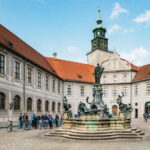
One of the most satisfying parts of this tour is the shift from civic squares to the residences connected with the Bavarian emperors and kings. You’ll pass Max Joseph Platz and see the tour’s focus on royal residence areas (the guide brings in how Bavarian rulers shaped the city’s centuries-long direction).
This is the kind of section where the walking pace helps. If you’re trying to absorb Munich on your own, you can easily get lost in the “pretty buildings” stage. Here, you’re being shown how the city’s physical layout ties to its leadership.
A good note for your expectations: you’re not going to be touring inside palaces in this time window based on the details provided. You’ll get the street-level “where and why” picture. That’s still valuable, especially if you plan to return later for a ticketed visit.
Munich’s light and dark history: from Roman beginnings to the 1923 Beer Hall Putsch
This tour’s spine is the idea that Munich is both celebratory and haunted. You’ll hear the story of Roman beginnings, then the long stretch of rule under the Wittelsbachs (700 years), and how the unification of Germany by Bismarck fits into the bigger picture.
Then comes the heavy part, and the guide is clear that this is essential context. You’ll learn about how Nazism was born in Munich, with the Beer Hall Putsch of 1923, and the role of Adolf Hitler, including that he was behind bars afterward and wrote Mein Kampf. The intent isn’t shock value. It’s understanding how political violence tied itself to real places.
The tour also connects other historical threads you might otherwise miss. You’ll see mention of where Joseph Ratzinger (later Pope Benedict XVI) worked while he was still an archbishop. That’s a reminder that the same city can generate both darkness and reform-minded spirituality—often within overlapping institutions.
A balancing note: the tour includes a brief mention of an attraction some people find disappointing—the knightly figure fights in the city carillon. If you hate “quirky” audio-visual moments, you’ll still come away with plenty of stronger stops. Just don’t plan your day around the carillon bit.
The guides: storytelling talent matters more than you think
The format depends on the guide, and the proof is in the names you’ll hear from different groups. People have raved about guides like Jean, who was described as engaging and sensitive when covering complex events, and Patrick, praised for pairing site history with practical advice on where to eat and how to enjoy the city.
Other guides you may encounter include Alex, Noel (and Noel Byrnes), Lima, Karl, Brigite, Patricia, Jan, and Charles. The common thread in these comments is how well guides handled questions and kept the pace comfortable while still covering a lot of ground.
For you, this matters because Munich Old Town is dense. A good guide doesn’t just say facts. They show you what to notice next: why Marienplatz is not just a square, why Hofbräuhaus is not just a tourist trap, and why the political story is tied to street corners.
What you should do after the tour (so it sticks)
After 150 minutes, you’ll likely feel two things at once: you’ll be oriented, and you’ll want to keep learning on your own. Here’s how to use that advantage.
- Return to your favorite square or building zone (Marienplatz is a great second visit) and see it without the narration.
- Use the beer-culture context to pick your own Hofbräuhaus approach—whether you just want to peek in later or plan a proper beer stop that matches the story you heard.
- If you’re hungry, follow the food directions your guide’s framing points you toward. A highlight that came up in the tour discussions is Leberkase at Viktualienmarkt, alongside other Bavarian classics like schnitzel and pork knuckle.
Most importantly: keep an eye on how the city’s “celebration” and “memory” sit side by side. Munich does that better than most places. Once you see the pattern, you’ll notice it everywhere.
Who this tour is best for
You’ll probably love this if:
- you want a first-time Munich orientation in a short time window
- you like walking tours with a clear storyline, not random “look at this church” stops
- you’re comfortable hearing both the cheerful Bavaria image and the real political history behind the city
You might rethink it if:
- you want a purely light, party-focused Old Town experience
- you dislike historical programming that includes Nazism and the Beer Hall Putsch
Should you book Munich Old Town: Guided Walking Tour in English?
My take: if this is your first trip to Munich, book it. The value is in the structure—150 minutes that gives you context for landmarks you’d otherwise treat as isolated stops. The tour also earns trust by covering both sides of Munich’s story, and by using real, specific places instead of vague summaries.
If you’re the type who likes to understand a city before eating and photographing your way through it, this is the move. If your priority is only entertainment and you’d rather keep history minimal, you can pick a lighter walking tour instead.
Either way, at $29 and with the narrative guiding the route, it’s a practical way to get your bearings fast and make the rest of your Munich day feel smarter.
FAQ
What’s the duration of the Munich Old Town guided walking tour?
The tour lasts 150 minutes.
Where is the meeting point?
You meet at the main gate of St. Peter Church. The guide will be waiting with the Walkative yellow umbrella.
Is the tour in English?
Yes. The live guide language includes English (and German as well).
How much does the tour cost?
The price is listed as $29 per person.
Is hotel pickup included?
No, hotel pickup and drop-off are not included.
What happens if I want a private or smaller tour?
This tour joins a general walking tour model. If you want a smaller private tour, you can contact the supplier before booking to help organize it.
Is payment required at booking?
You can reserve now and pay later, keeping your plans flexible. You pay nothing today to hold your spot.
Can I cancel and get a refund?
You can cancel up to 24 hours in advance for a full refund.