REVIEW · MUNICH
Munich Old Town Walking Tour
Book on Viator →Operated by Radius Tours GmbH · Bookable on Viator
Munich’s Old Town is compact, but the stories are huge. This 2-hour walking tour strings together the key landmarks you’ll want on day one, with a local guide who keeps the pace moving and the explanations clear. You’ll pass big hitters like Frauenkirche and Marienplatz, then finish near Odeonsplatz so you can keep exploring right after.
I like that you get a tight highlights loop without any extra ticket hassle at the stops that are listed as admission-free. I also like the human touch: guides such as Dan, Adrian, Patrick, Aileen, Maria, and Timmy get praised for turning facts into street-level storytelling, with humor and a good sense of timing.
The main drawback to plan for is simple: it’s a lot of stops in a short time. On busy sidewalks, it can get hard to hear if the group stretches out, so bringing your “watch and listen” mindset matters.
In This Review
- Key things that make this Munich walking tour work
- Starting at Radius Tours: your quick “where am I” fix
- Karlsplatz to Frauenkirche: the city’s center line, explained
- Rathaus-Glockenspiel and Marienplatz: why this clock square feels alive
- Viktualienmarkt plus a Hofbräuhaus peek: the Munich food-and-beer lesson
- St. Peter’s Church: the oldest structure in the Old Town loop
- Alter Hof and Residenz Munich: Wittelsbach power in stone
- Odeonsplatz finish: wrap up with an easy next step
- How the guides shape the experience (and why that matters)
- Pacing, crowds, and what to do if you hate walking in groups
- Price check: what $27.81 gets you in real terms
- Tips so you get more out of every stop
- Should you book this Munich Old Town walking tour?
- FAQ
- How long is the Munich Old Town Walking Tour?
- Is the tour offered in English?
- Where do I meet the tour and where does it end?
- Do I need to pay for admission tickets at the stops?
- What is the group size?
- What happens if the weather is bad, or if I need to cancel?
Key things that make this Munich walking tour work
- Start from Radius Tours on Dachauer Str. 4, so you’re in the action fast
- Frauenkirche + St. Peter’s give you two very different “Munich church” perspectives
- Rathaus-Glockenspiel at Marienplatz shows you why the clock square is the city’s magnet
- Viktualienmarkt is a food-and-beer stop, not just a photo break
- Wittelsbach sights connect Bavarian power to the streets you’re walking
- Small group size (max 25) keeps it manageable for questions and regrouping
Starting at Radius Tours: your quick “where am I” fix
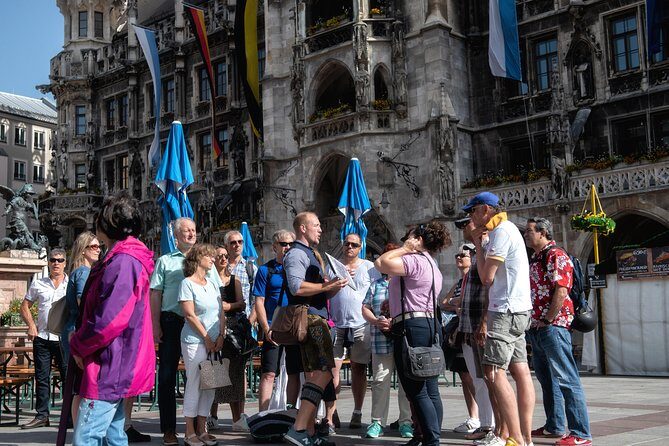
Your tour begins at Radius Tours, Dachauer Str. 4, in a spot that’s easy to reach with public transportation. Meeting right by the city’s central grid helps, because you can walk off the tour later with a clear sense of direction rather than feeling stuck in the maze of streets.
One thing I appreciate is that the tour is designed to feel like an on-foot orientation. You’re not just ticking off sights; you’re learning how the Old Town’s layout connects from square to square, then from church to market to royal buildings. That means you’ll know what you want to revisit later, and what you can skip.
And yes, it’s short: about two hours. If you’re arriving in Munich and want a “starter pack” that doesn’t eat your whole day, that’s a big part of the value.
You can also read our reviews of more walking tours in Munich

Karlsplatz to Frauenkirche: the city’s center line, explained
After meeting your guide at Radius Tours, you head toward Karlsplatz (Stachus), the start of the city center. This is a good opening move because it sets the rhythm: you’re stepping into the flow of Old Town right away, not walking miles just to get going.
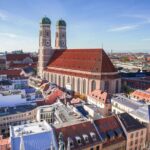
Then comes Frauenkirche, the famous cathedral church of Munich. The tour pauses here long enough for scale to land in your brain. It’s built for big gatherings, and you really notice that once you’re standing where people flow in and out.
Practical note: Frauenkirche is a major photo stop, but you’ll get more out of it if you listen for what your guide points out as you stand there. Many people focus only on the exterior, but the route’s whole purpose is to give you context for why this building matters in the city’s identity.
Rathaus-Glockenspiel and Marienplatz: why this clock square feels alive
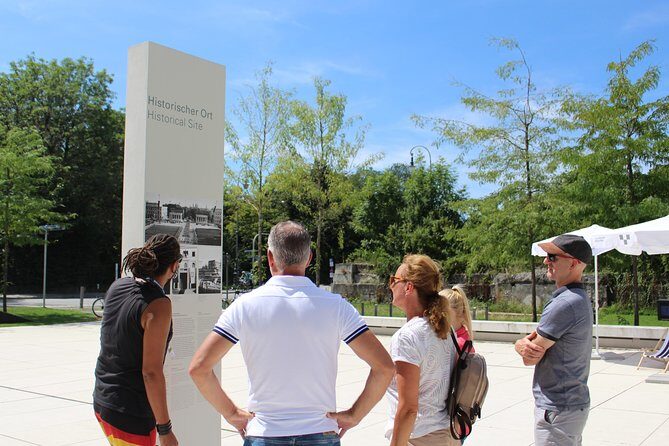
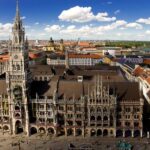
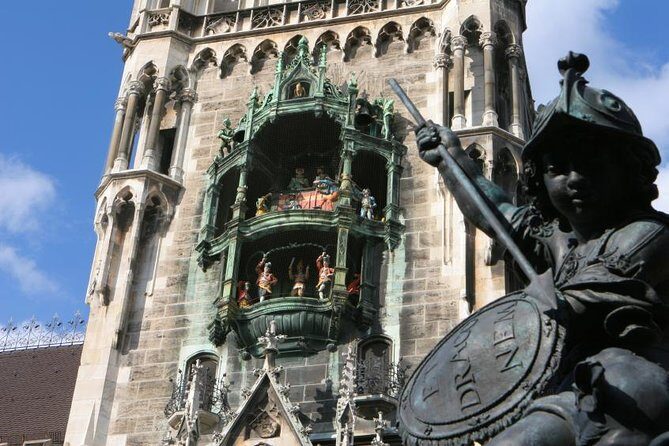
Next you reach the Rathaus-Glockenspiel, the famous carillon on the Rathaus. The point here isn’t just to see it once; it’s to understand what you’re watching. The tour explains that the events shown link back to the 1500s, which turns the clock into a mini time machine instead of a random spectacle.
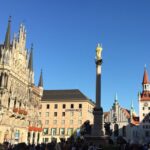
Your stop at Marienplatz is longer than you might expect, because it’s the heart of Munich’s public life. This is where locals come through, meet, shop, and hang around. When the Glockenspiel performs, the square tightens up fast, so having a guide who knows the rhythm helps you avoid standing in the wrong spot at the wrong moment.
If your timing lines up, you may catch the show. One review detail stuck with me: the dancing characters are said to total 32, which is a nice reminder that the “little clock show” is actually a crafted performance, not just music and movement.
Viktualienmarkt plus a Hofbräuhaus peek: the Munich food-and-beer lesson
Then the tour shifts gears to Viktualienmarkt, often described as Munich’s biggest and best-known market. This is not a quiet museum stop. It’s lively, layered, and full of the everyday flavors that help Munich feel like a real place instead of a postcard.
You’ll have time here, and your guide frames what you’re looking at: how markets work as social spaces, why the beer garden culture fits so naturally, and how to read the market’s energy without feeling overwhelmed.
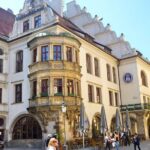
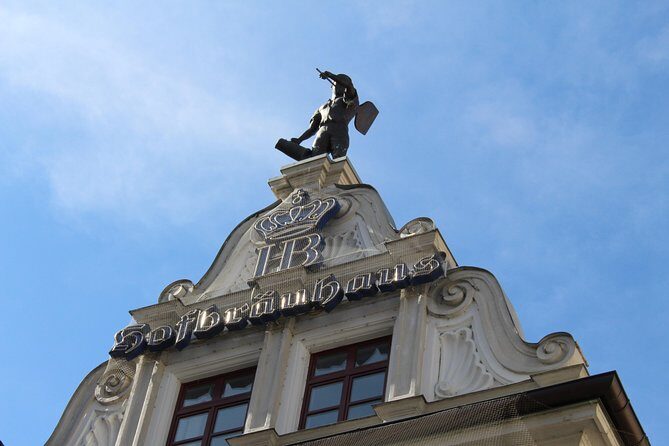
The highlights also mention a peek into Hofbräuhaus, which matters if you’re trying to understand Munich’s beer identity beyond the word Oktoberfest. Even if you’ve seen beer halls in other cities, Munich’s old-town beer culture has its own logic, and this quick look gives you a foothold before you choose where to eat or drink later.
If you want value from this stop, come ready to notice. Watch where people linger, how vendors display, and how the market connects directly to the city’s central squares. That mental map makes your next meal feel easier.
St. Peter’s Church: the oldest structure in the Old Town loop
After the market energy, you return to a calmer but still meaningful landmark: St. Peter’s Church. The tour frames it as the oldest structure of Munich, which gives it a different weight than newer-looking buildings you’ll see later.
This is a great spot for understanding continuity. Your route links old civic squares with religious architecture, and St. Peter’s helps you see how deep the city’s story goes beneath the surface bustle.
Even if you don’t go inside every time, just listening for the “why this place endured” angle makes the stop more than a photo moment.



Alter Hof and Residenz Munich: Wittelsbach power in stone
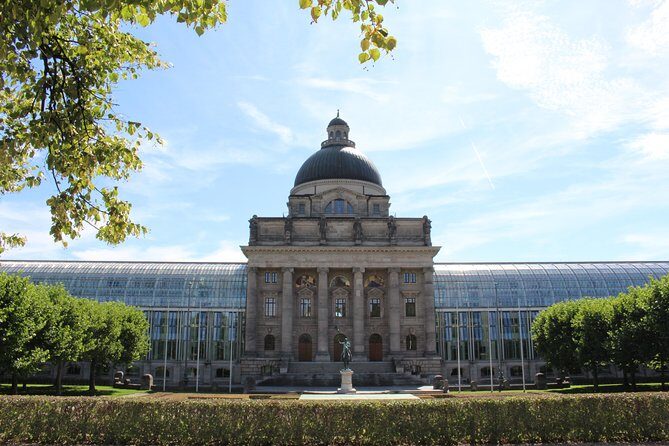
The walk continues to Alter Hof, described as the first residence of the royal Wittelsbach family. This matters because Munich’s royal story isn’t floating in theory. It’s physically tied to the streets you’re walking.
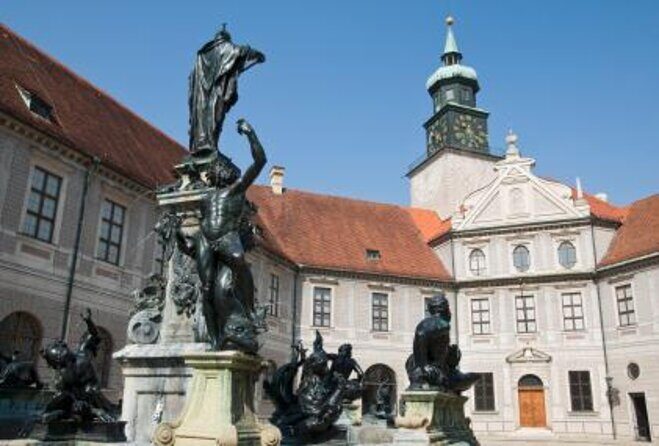
Then you reach Residenz Munich, the famous residence of the Wittelsbach royal family. This is one of those stops where context changes everything. Without explanation, it can feel like a big palace complex you pass by. With explanation, you start to see how power, ceremony, and city development shaped what you’re standing near.
Guides on this tour line are repeatedly praised for storytelling that doesn’t dump 50 dates in your lap. People specifically mention things like pacing being right and the ability to ask questions. That usually shows up here, because royal-building stops are where many guides either overdo details or somehow make it click. The fact that this tour gets high marks suggests they tend to keep it readable.
If you want to turn this into a longer day later, these are your obvious “come back” targets.
Odeonsplatz finish: wrap up with an easy next step
The tour ends at Odeonsplatz at the north end of the city center. This is a smart finish because it’s not a dead end. It sets you up to keep exploring Old Town without feeling like you have to backtrack across the same blocks.
Also, the mapped end point is shown as Marienplatz, so don’t stress if your own navigation app suggests something slightly different. The real point is you’re finishing close to the core where buses and foot traffic keep moving.
If you’re building an itinerary, think of this tour as your morning or early-day foundation. Then you can plan a longer lunch nearby, or choose one or two specific sites to revisit with fresh questions.
How the guides shape the experience (and why that matters)
This tour’s rating is high, and a consistent theme is the guide factor. Names that come up again and again in feedback include Dan, Adrian, Patrick, Aileen, Maria, Mark, Anna, Timmy, Iain, Michelle, Leon, Bernd, Elisabeth, and Dani.
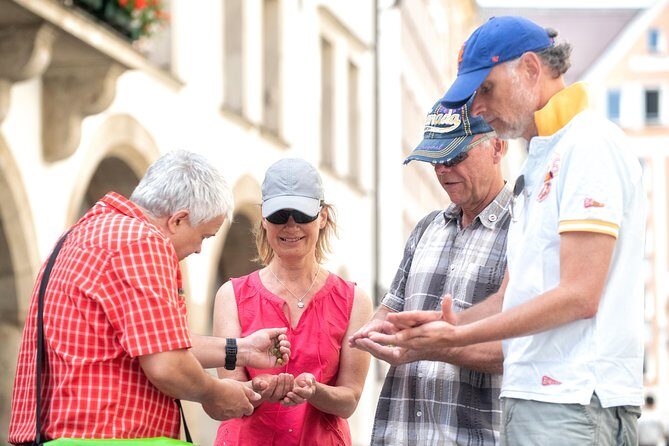
What you can infer from that pattern is practical: you’re paying for more than a route map. You’re paying for someone to connect the dots between buildings, explain what you’re seeing, and keep the walk moving without turning it into a lecture. Humor is also mentioned often, which sounds minor, but it helps you stay alert in crowds.
One more detail from feedback that you can use: guides teach small local bits that make Munich feel personal, like pointing out a lion’s nose to rub for luck and telling you why it matters. Those small moments are exactly what you remember later.
Pacing, crowds, and what to do if you hate walking in groups
This tour is about 2 hours and can include up to 25 people, which is manageable, but it still means street noise can swallow quiet parts of the story. If you’re sensitive to that, pick a spot near the guide when you stop. Also, keep your phone away during the explanations so you can actually hear.
The upside is that the stops are frequent but not rushed. Many highlights get short pauses (like Karlsplatz and Frauenkirche), then slightly longer time at places where listening and watching both matter (like Marienplatz and Viktualienmarkt).
One practical thought for families: if kids get bored easily, assign them a job before you start, like spotting the weirdest detail on each building or counting the market stalls. The route has enough variety to keep attention if you help kids focus.
Price check: what $27.81 gets you in real terms
At $27.81 per person for about two hours, the deal works best if you want orientation plus stories. The value is amplified by two things:
1) The stops listed include admission-free entries for the major landmarks on the route. That means you’re not stacking extra costs just to see what you came for.
2) You’re getting a professional local guide, not just a self-walk audio system. For a first trip, that human explanation usually saves you time and disappointment.
One more planning advantage: the tour is often booked around 37 days in advance on average. If you’re traveling during peak season or on a weekend, booking earlier gives you more schedule options.
Tips so you get more out of every stop
Here’s how to make this tour feel like it pays off long after the last square:
- Show up with comfortable shoes. You’re walking the Old Town, and the route includes several landmark changes close together.
- Listen at the Glockenspiel and Marienplatz moments. That’s where you’ll understand what matters and what’s just decoration.
- Use Viktualienmarkt as a lunch scouting tool. You don’t have to eat there, but it’s a great place to figure out what you’re hungry for.
- Take note of Wittelsbach stops. If royal buildings are your thing, this route will point you toward what to prioritize later.
- Ask one question early. A good guide will steer your curiosity and tailor what you notice afterward.
If you want to build a simple day plan: do this tour early, then pick a single landmark to revisit after you’ve had lunch and your brain has rebooted.
Should you book this Munich Old Town walking tour?
Book it if you want a fast, well-paced way to understand Munich’s Old Town without spending hours researching. It’s a smart pick for a first visit, especially if you care about hearing why landmarks matter, not just seeing them.
Skip it or adjust your expectations if you hate crowds and loud streets, or if you’re looking for a long, slow wander with lots of optional entry tickets. This is a highlights loop in a short time window.
If you’re flexible with your schedule and you want a guide-driven route through Frauenkirche, Marienplatz, Viktualienmarkt, St. Peter’s, Alter Hof, Residenz, and Odeonsplatz, this one is a solid bet for getting your bearings fast and building a better Munich itinerary.
FAQ
How long is the Munich Old Town Walking Tour?
It lasts about 2 hours.
Is the tour offered in English?
Yes, it is offered in English.
Where do I meet the tour and where does it end?
You meet at Radius Tours, Dachauer Str. 4, 80335 München. The walk ends at Odeonsplatz, and the mapped end point is shown as Marienplatz.
Do I need to pay for admission tickets at the stops?
The listed stops include admission tickets marked as free, so you generally won’t need to buy extra tickets for the sights on the route.
What is the group size?
The tour has a maximum of 25 travelers.
What happens if the weather is bad, or if I need to cancel?
The experience requires good weather. If it’s canceled due to poor weather, you’ll be offered a different date or a full refund. Free cancellation is available up to 24 hours in advance for a full refund.