REVIEW · MUNICH
Nuremberg Guided Day Trip from Munich by Train
Book on Viator →Operated by Radius Tours GmbH · Bookable on Viator
Nuremberg in a single day sounds intense. It works, though, because this Munich to Nuremberg day trip by train pairs round-trip rail with a guided walking tour that moves from medieval landmarks to the Nazi Rally Grounds. I like the clear structure of the day—major stops, guided context, and a rail schedule that gets you back to Munich in the evening. I also like that the tour is in English with a specialist-style guide who ties scenes together instead of listing facts. One watch-out: this is a full, on-the-move itinerary, and some people report feeling rushed or short on downtime.
The big payoff is understanding how one city can look so medieval on the surface, while the 20th century left huge scars underneath. You’ll see the historic center around Nuremberg’s city hall, get time at the Imperial Castle, and then step into the Reichsparteigelände with a guide explaining what happened there and why it mattered. If you’re hoping for a slow day of wandering, I’d plan to bring realistic expectations and keep your comfort needs (pace, hills, crowds) in mind.
In This Review
- Key highlights you’ll actually care about
- Munich to Nuremberg by train: the day’s real rhythm and timing
- Meeting at Radius Tours and staying together all day
- Nuremberg’s Old Town stops: city hall, markets, churches, and the medieval feel
- Kaiserburg (Imperial Castle): short time, big payoff
- The Third Reich story at the Nazi Rally Grounds (Reichsparteigelände)
- About the Documentation Centre: not included
- Lunch, shopping, and how much free time you should assume
- Train comfort, crowds, and coping if the day goes sideways
- When trains get canceled or delayed
- What the guide quality really changes (and why the tour can feel fast)
- Who this Nuremberg day trip is best for
- Price and value: does $95.34 make sense for this packed day?
- Should you book this Nuremberg guided day trip from Munich?
- FAQ
- How long is the Munich to Nuremberg guided day trip?
- What time does the tour start, and where do I meet?
- Is round-trip train travel included?
- Is the tour guided in English?
- Is food included in the price?
- Does the tour include the Nazi Party Documentation Centre admission?
- How large is the group?
- What is the cancellation window for a full refund?
Key highlights you’ll actually care about
- Round-trip regional train from Munich is included, so you can spend your energy on the city instead of planning connections.
- Old Town Nürnberg guided walking covers the city hall area, market stops, and standout medieval architecture.
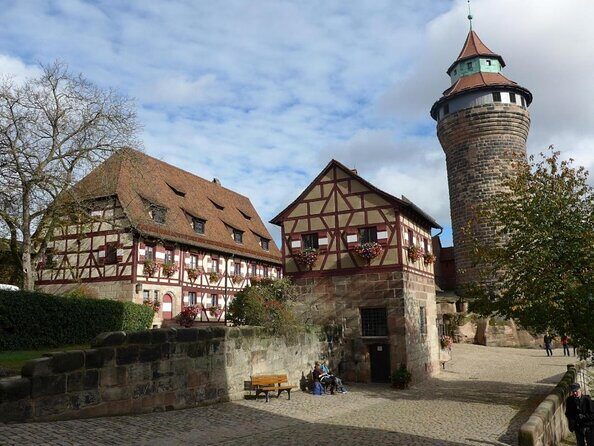
- Kaiserburg (Imperial Castle) stop adds views and the feel of Nuremberg’s fortified past.
- Reichsparteigelände guided visit connects the places to the broader story of the Third Reich.
- Small group size (up to 25) makes it easier to keep track of the group during train and street transitions.
- The Nazi Party Documentation Centre is not included, so don’t rely on it as part of the ticket.
Munich to Nuremberg by train: the day’s real rhythm and timing
This tour is built around one simple idea: use the train time efficiently and spend your hours in Nuremberg walking. You meet in central Munich and then take a regional express-style route to Nuremberg for the main sightseeing block. The whole outing runs about 8 hours 30 minutes, with the train ride to Nuremberg clocking in at about 1.5 hours.
That matters because you’re not trying to do a city break with jet-lag math or a complicated “out-and-in” transport puzzle. You’re doing a straight rail day with a guided flow: meet, depart, walk the old streets, visit the major historical sites, then return.
One more timing note: the tour start time is 10:30 am, which gives you late-morning momentum rather than an early sunrise hustle. Still, it’s a full day, and the schedule leaves less room for long sit-down lunches than you might hope—so think quicker meals, not leisurely ones.
You can also read our reviews of more guided tours in Munich

Meeting at Radius Tours and staying together all day
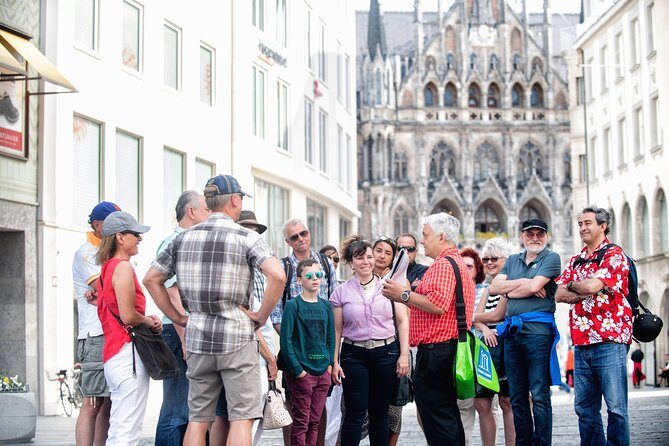
You’ll start at Radius Tours, Dachauer Str. 4 (80335 München) in central Munich. The meeting point is the tour office area, and then the group walks over to the station together. You’ll want to show up with enough buffer so you’re not sprinting to catch the group transition.
A few practical reasons this matters:
- You’ll be moving between transit and walking segments, so it helps if you know where your group is supposed to regroup.
- The group size can be up to 25, and during train moves, that’s big enough to feel “managed,” but not big enough that you can easily ignore the leader.
- Some reviews praise how guides keep people organized between trains and city stops, but other reviews criticize fast pacing and limited waiting—so your best bet is to stay close and follow the meeting instructions.
Also, you’ll receive a mobile ticket, and the tour is offered in English. Service animals are allowed, and it’s described as suitable for most travelers—though the city layout and the castle stop do mean you’ll be on your feet and up hills.
Nuremberg’s Old Town stops: city hall, markets, churches, and the medieval feel
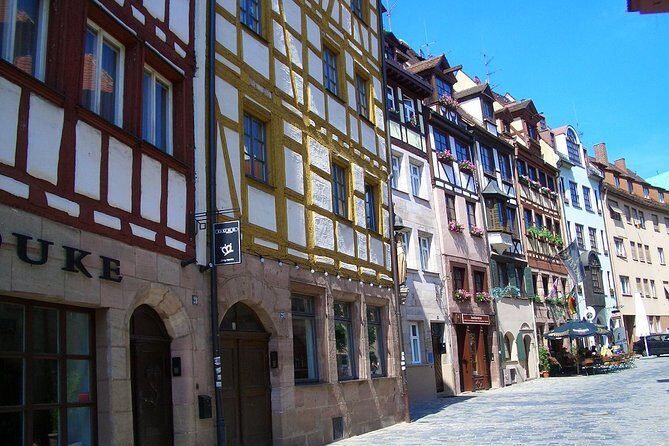
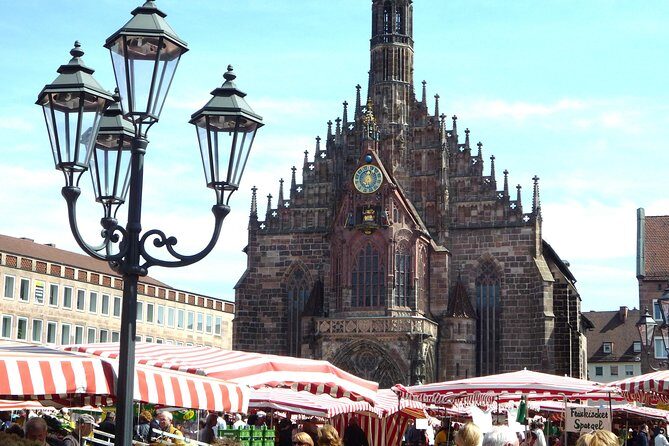
Once you reach Nuremberg, the tour turns into a guided walking exploration of the historic center. A key anchor here is a stop at the Nürnberger Rathaus (city hall area), with about 1 hour focused on the old-town core. This is where you start to get the city’s “how it grew” story, not just a list of buildings.
Along the way, you’ll also pass notable sights that shape the medieval streetscape, including:
- A 14th-century fountain on the main market area
- An older church featured as one of the city’s longstanding religious landmarks
These are the kinds of stops that sound small until you realize Nuremberg’s identity is built on details like street-scale monuments and long-lived institutions. With a guide, you’re not just looking at stone—you’re learning why these sites survived, changed, or became symbols.
Kaiserburg (Imperial Castle): short time, big payoff
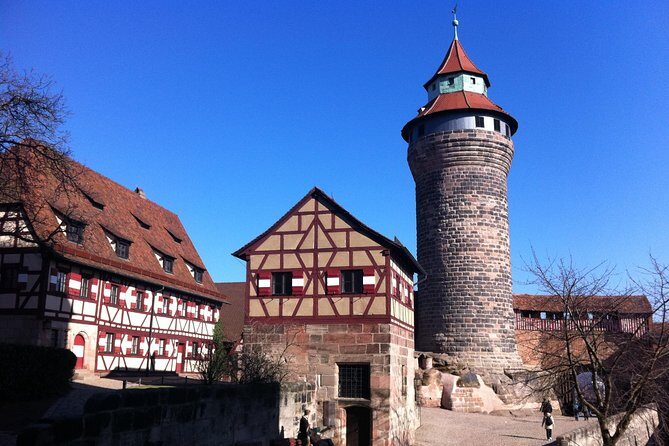
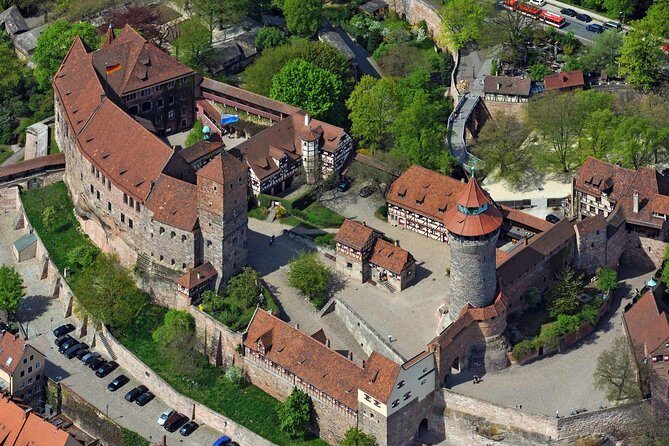
The tour includes Kaiserburg Nurnberg, Nuremberg’s Imperial Castle—a medieval fortification with serious presence. The castle segment is about 30 minutes, so you won’t get a long, deep wandering session. But you will get the essentials: the fort’s role in the city and the feel of a stronghold dominating a hillside city.
This is also where you’ll likely feel the physical reality of the day. Nuremberg is built on hilly terrain, and the castle area is uphill by nature. If you have joint issues or breathing concerns, plan on taking it slower, wearing supportive shoes, and treating this stop as the one that demands the most from your body.
The Third Reich story at the Nazi Rally Grounds (Reichsparteigelände)
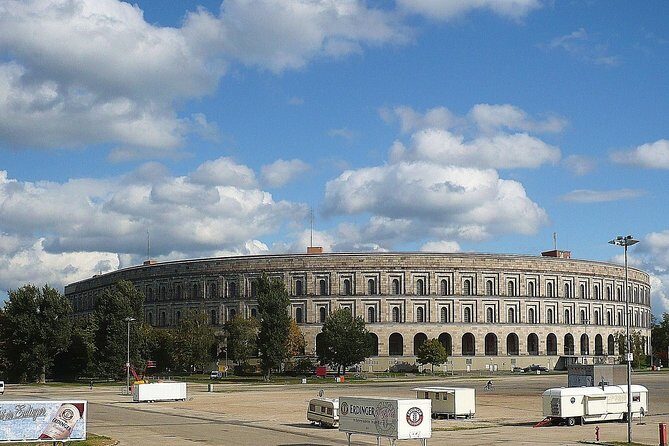
Then comes the tour’s heavier chapter: Nuremberg’s role as a major center for the Third Reich. The experience here is not meant to be sightseeing-as-aesthetic. You’ll visit the Nazi Party Rally Grounds (Reichsparteigelände) with a guide who provides context about what the sites were used for and how the Nazi program used space and spectacle.
This is one of the reasons the guided format matters. Without explanations, you can stand on the grounds and still miss the point. With the guide, the places start to connect to the broader story—how power was staged, how propaganda was designed, and how architecture and planning were used as tools.
A few more Munich tours and experiences worth a look


About the Documentation Centre: not included
One important expectation-setting item: the Nazi Party Documentation Centre is not included. That means you should not assume you’re getting museum-style indoor interpretation as part of this exact tour. If you want that additional layer, you’ll likely need to arrange it separately.
In practice, the Rally Grounds visit can still be moving and informative, but it’s a good idea to think of the tour as a guided introduction on the site itself, not a full museum day.
Lunch, shopping, and how much free time you should assume
The tour price does not include food and drinks, so you’ll need to plan your own lunch. The schedule includes set sightseeing blocks—especially the Old Town walking time and the castle stop—so your meal likely happens in the gaps rather than as a long sit-down event.
Here’s the honest way to handle this: don’t count on a leisurely lunch window. Some people say they had enough time to eat; others felt lunch and independent exploring time were too tight. That usually comes down to two factors: guide pace and real-life train timing.
Practical advice:
- Bring a snack or plan for quick service food near market areas so you’re not hunting when the group needs to move.
- If you’re sensitive to walking pace, tell yourself in advance that this is not a “wander for hours” itinerary.
- Wear clothes you can move in. The castle stop and the general walking add up.
Shopping is possible, but it’s not the main purpose of the day. If you want to browse shops calmly, you’ll likely need to be flexible about where your day fits that in.
Train comfort, crowds, and coping if the day goes sideways
Between Munich and Nuremberg, you’re using regional rail. Regional trains can mean less comfort than high-speed options, and they can also get crowded. One common piece of practical advice from the experience: consider getting seats when you can, because some groups reported standing for long stretches on return.
I’d also pack for train reality:
- Bring a book or downloaded content, because train time is part of the total experience.
- Wear layers; air systems can vary by train type and day.
- Keep your basics ready (water bottle, phone battery, a light snack), since food is not part of the tour price.
When trains get canceled or delayed
This tour depends on the rail system, so delays do happen. One review highlighted a scenario where trains didn’t cooperate and the guide still tried to make the best of the day, including a refund for the original tour arrangement. That’s not something you can plan for, but you can prepare mentally: if there’s a disruption, the leader’s ability to adapt becomes the difference between a frustrating day and a manageable one.
If this is a concern for you, you can reduce stress by:
- Checking morning train status before you leave Munich.
- Arriving early at the meeting point.
- Staying attentive to regroup cues, especially before leaving the train station.
What the guide quality really changes (and why the tour can feel fast)
This is one of those tours where the guide can make it feel either “structured and clear” or “too rushed.” The positive feedback tends to share a similar theme: guides bring strong storytelling across time periods, from medieval Nuremberg to WWII-era sites, and they keep the group moving while still explaining why each stop matters.
Specific guide names that came up positively include:
- Sarah, praised for stepping up when train issues disrupted plans
- Jason, praised for organizing transitions and providing practical food recommendations
- Paul, repeatedly praised for engaging storytelling and careful group care
- Elisabeth, praised for focusing on the long arc of Nuremberg’s history
- Geoff, praised for patience when moving through transit and site changes
On the flip side, some critical notes focus on pace and time pressure. A recurring theme is that some days may feel like the leader moves quickly between stops, which can shrink independent time in Old Town and at the station. A couple of reviews also mention instances where people felt left behind or separated when a train situation changed. Those are not universal experiences—but they’re a fair reason to choose this tour with eyes open.
My take: if you like guided history and you’re comfortable keeping up, this format can be a good value. If you want maximum free time or you’re a slow walker, you may prefer a different pacing (or plan additional independent time after).
Who this Nuremberg day trip is best for
This tour fits best if you want a guided, structured day that touches the big landmarks without needing to plan transit yourself. I’d point you here if you:
- Want a Third Reich context visit to the Rally Grounds with on-site explanations
- Like medieval city cores and want the historic center and castle in one shot
- Prefer a group day over DIY navigation from Munich
- Are okay with lots of walking and short stop durations
You might want to rethink if you:
- Need lots of downtime for shopping or long lunches
- Are very sensitive to walking hills (Nuremberg’s terrain is real, and the castle stop is uphill)
- Expect a museum-level documentation center experience as part of the price (it is not included)
Price and value: does $95.34 make sense for this packed day?
At $95.34 per person, you’re paying for two big ingredients: guided interpretation and the convenience of round-trip rail from Munich. You also get a walking tour component that’s designed to connect the medieval city with the WWII-era sites, which is hard to replicate unless you’re comfortable building your own itinerary plus finding the right on-the-ground context.
What you’re not getting:
- Food and drinks
- Admission to the Nazi Party Documentation Centre (explicitly not included)
So the value question becomes: are you okay paying for a guided route and train convenience rather than spending that money on independent site time and lunch? For most history-focused visitors, the answer is yes—especially if you’d otherwise struggle to line up guided context at the Rally Grounds.
One last value note: because guide quality can shape how rushed the day feels, try to pick your comfort level carefully. Many people praised the organization and storytelling, but a minority felt the pacing or time allocation was too aggressive.
Should you book this Nuremberg guided day trip from Munich?
Book it if you want a single-day, train-based history tour that hits both medieval Nuremberg and the Nazi Rally Grounds with guided explanations, all while you avoid the hassle of figuring out transport yourself. Bring comfortable shoes, plan for quick meals, and keep expectations realistic about free time.
Skip or swap to a slower option if your ideal day includes long lunch breaks, wandering without a timer, or if you’re worried about hills. This is a “see a lot, move often” day.
If you do book, my best advice is simple: stay close to the group, be ready for pace changes, and treat the guide’s context as the main attraction—not just the photo stops. That’s where the day usually earns its worth.
FAQ
How long is the Munich to Nuremberg guided day trip?
It runs about 8 hours 30 minutes.
What time does the tour start, and where do I meet?
It starts at 10:30 am at Radius Tours, Dachauer Str. 4, 80335 München.
Is round-trip train travel included?
Yes. The tour includes the return rail journey from Munich.
Is the tour guided in English?
Yes, it’s offered in English with a fully guided tour by a fluent English speaker.
Is food included in the price?
No. Food and drinks are not included, so you’ll buy your own meals.
Does the tour include the Nazi Party Documentation Centre admission?
No. Admission to the Nazi Party Documentation Centre is not included.
How large is the group?
The tour has a maximum of 25 travelers.
What is the cancellation window for a full refund?
You can cancel up to 24 hours in advance for a full refund.