Munich can feel like a lot at once, especially at noon. This tour keeps it tight and walkable while you learn how the city’s landmarks connect—starting in the center and moving spot to spot with a guide who brings the stories to life. I love that you get a private, limited group experience with a real local voice, and I also love how the route hits big icons like the Frauenkirche and St. Peter’s Church without turning it into a marathon. One thing to consider: you’ll be on your feet for about 2 to 3 hours, and the pace assumes moderate walking fitness.
The stops are chosen for a reason. You hear about the Glockenspiel’s legends, you get the background behind town-hall moments, and you end with views from St. Peter’s and a short look at Ohel Jakob Synagogue. My only caution for first-timers: Munich’s center can be busy, so showing up on time matters if you want photos without rushing.
Key things you’ll love about this tour
- Easy central meetup near Marienplatz, with the tour set up for quick, low-stress orientation
- Private for your group (up to 10 people), so you can ask questions and keep moving at a human pace
- Iconic sights with built-in stories like the Frauenkirche, town halls, and St. Peter’s tower views
- A real market stop at Viktualienmarkt, where the guide steers you toward local specialties and drinks
- St. Peter’s Church included admission, plus a climb-up reward: big old-city views
- A clear English-led format, with mobile tickets and a schedule that stays on track
In This Review
- Munich’s Essential Walking Route Starts at Marienplatz
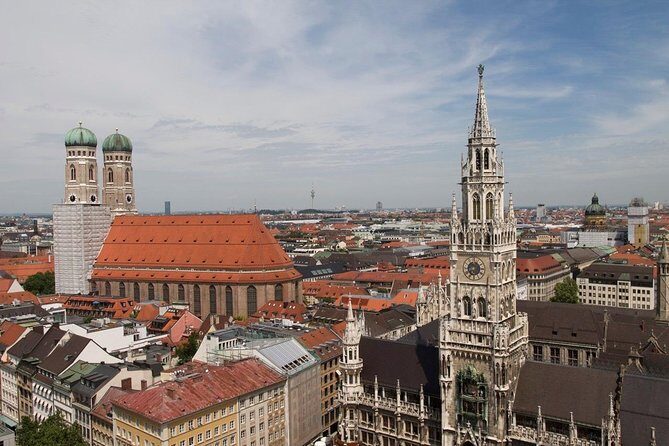
- Frauenkirche: Brick Gothic and the Devil’s Aha Moment
- Neues Rathaus and the Glockenspiel You Can Follow Without Guessing
- Old Town Hall: Lottery Lore and the Night of Broken Glass
- Viktualienmarkt: Snack Time That Actually Helps You Understand Munich
- St. Peter’s Church: Romanesque-to-Gothic-to-Baroque in One Place
- Ohel Jakob Synagogue: A Quick Stop That Adds a Different Side of Munich
- Price and Group Size: Is $360.42 Worth It?
- Who This Tour Fits Best (and Who Might Want Something Else)
- Should You Book This Munich Walking Tour?
- FAQ
- How long is the Munich walking tour?
- Is this a private tour?
- What language is the tour offered in?
- Are there admission fees for the stops?
- Where does the tour start, and what time does it begin?
- What happens if weather is bad or I need to cancel?
Munich’s Essential Walking Route Starts at Marienplatz
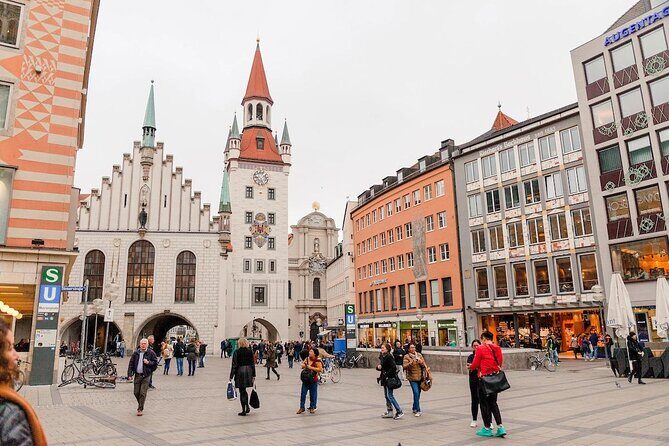
This is the kind of tour that helps you get your bearings fast. You start in Munich’s central area at 12:00 pm, and from there the day turns into a clean sequence of landmarks that you can actually wrap your head around. The private setup matters here. With a group capped at up to 10, the guide can slow down when you ask something interesting, instead of barreling forward for speed.
You also get an English-speaking guide, and you use a mobile ticket. That’s not just convenience. It helps you avoid the common vacation problem of hunting for tickets while everyone else already moved on.
Frauenkirche: Brick Gothic and the Devil’s Aha Moment
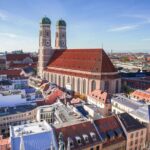
The tour’s first stop is the Frauenkirche (Munich’s famous brick cathedral). You get about 45 minutes, and admission is free for this stop—so it’s an efficient way to anchor your whole visit.
What I like about this stop is how instantly it sets the tone for Munich’s look and personality. The cathedral’s silhouette is one of those city signatures, and the stories around it add a little theater to the architecture. The tour even nods to the legend that even the devil was astonished—a phrase you’ll hear echoed because people remember this building.
What to do with your time here: take a quick look first, then let the guide’s explanation reframe what you’re seeing. If you rush, you miss the point.
Possible drawback: this is a popular spot in the center, so you may feel a bit of crowd pressure depending on the day and time.
You can also read our reviews of more walking tours in Munich

Neues Rathaus and the Glockenspiel You Can Follow Without Guessing
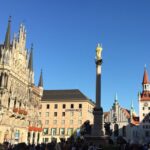
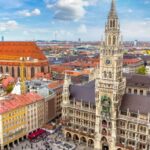
Next up is the New Town Hall, the Neues Rathaus, with a 30-minute stop and free admission. This is where your tour shifts from architecture to legend and everyday civic life.
The highlight is the Glockenspiel: you’ll hear and see it, and you’ll get the story it’s tied to, including a theme of marriage and the legendary Scheffler dance. That matters because the clock has meaning beyond being a show. The tour helps you understand why people pause their walking route for this moment.
Practical tip: if you want photos, position yourself early and keep an eye on crowd flow. The spectacle is time-based, so your best shots come from being ready rather than scrambling.
Why this stop is valuable: it gives you a feel for how Munich keeps celebrating itself—public art, timing, and tradition all in one small space.
Old Town Hall: Lottery Lore and the Night of Broken Glass
The Old Town Hall is a short 20-minute stop, again with free access. It’s quick, but it’s packed with explanations that turn the building from background scenery into a timeline.
The tour points out earlier lottery traditions connected to the town hall, and it also references the Night of the broken glass beginning here. You also hear about the Moriekendancer and how dancing traditions have continued since the late Middle Ages.
Even if you’re not a “fact collector,” these details help you read the city. When you know the building mattered for public ceremonies, you’re more likely to notice why it’s placed where it is and why it looks the way it does.
Watch-outs: because the stop is brief, if you’re the type who likes to linger and wander on your own, you’ll need to manage your expectations.
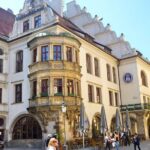
Viktualienmarkt: Snack Time That Actually Helps You Understand Munich
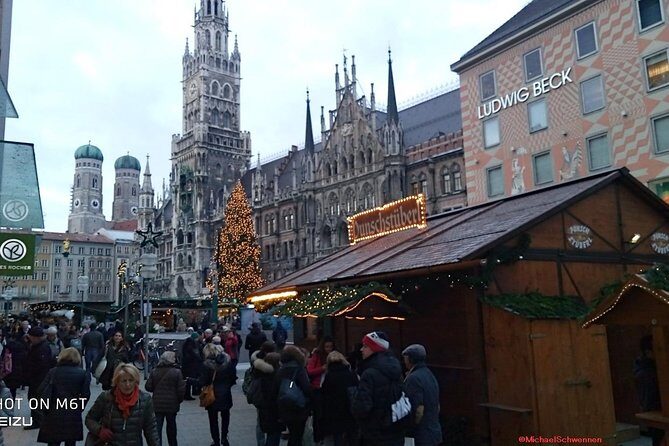
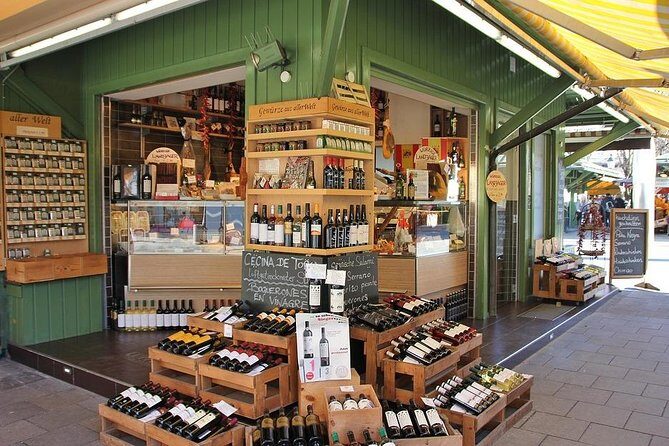
After the town-hall storytelling, the tour moves to Viktualienmarkt, with about 1 hour on-site. This is the part where you get to shift from monuments to people and daily life.
The market stop is described as tasting, smelling, and enjoying local products—along with local specialties like soup, bread, coffee, and beer. Even if you don’t buy everything, the point is that the guide gives you an easy path through the chaos of stalls.
I especially like this kind of stop on a walking tour because it gives you a break that doesn’t feel like downtime. Market time is a chance to think about what you just learned. Munich’s public buildings and civic stories connect to the everyday economy that keeps a city running, and markets are the most direct way to see that.
Possible drawback: markets can be crowded, and tastes vary. If you’re not interested in sampling food or drinks, you might treat this as a sightseeing break rather than a centerpiece.
St. Peter’s Church: Romanesque-to-Gothic-to-Baroque in One Place
Then comes the big religious landmark with real payoff: St. Peter’s Church. You’ll spend about 45 minutes, and this time the admission is included.
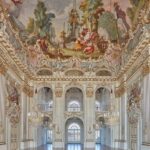
What makes St. Peter’s Church so interesting is that it’s not stuck in one style. The tour frames it as the first church built in Munich, then highlights how it was shaped over time: starting with Romanesque influence, moving into Gothic, and later being baroqued with ceiling paintings and a great high altar.
And yes, there’s a view reward. From the tower, you get a great panorama over old Munich. This is the moment where the walking tour stops being just about facts and becomes a memory you can look at.
What you’ll probably appreciate: seeing how the city layered styles on top of itself. It’s a very Munich lesson—build, rebuild, and keep going.
Consideration: tower views mean time on your feet again, and in busy hours the line or climb can feel slower than you expect. Keep that in mind if you have tight plans afterward.



Ohel Jakob Synagogue: A Quick Stop That Adds a Different Side of Munich

The final sight on the main route is Ohel Jakob Synagogue on Saint Jakobs Square. You’ll get about 15 minutes, with free admission.
This is a shorter stop, but it matters because it adds a different thread to the story of the city. The tour notes that the newer synagogue resembles the Temple in Jerusalem—so you’re seeing how architecture can carry identity and memory across time.
Why a 15-minute stop works here: the building can be more than enough to create contrast after town halls and churches. It gives you a fuller picture of what Munich includes, without stealing too much time from the rest of your itinerary.
Price and Group Size: Is $360.42 Worth It?
This tour costs $360.42 per group, with a cap of up to 10 people. That price structure is the main value question.
Here’s how it shakes out in real life: if you bring a full group of 10, you’re effectively paying about $36 per person. If you have fewer people, the per-person cost climbs fast—so it’s best when you’re traveling with friends, family, or you can share with a small set of fellow travelers in your orbit.
What you get for that group price:
- a private English-speaking guide,
- a walking route built around key landmarks,
- included admission for St. Peter’s Church,
- a market hour where the guide steers you toward local specialties and options.
Also, the feedback you’ll find on this tour points hard to one thing: the guide makes the schedule work. The descriptions of the pacing—time to ask questions, time to take photos, and a plan that fits an afternoon—are exactly what you want when you only have a limited window.
If you’re the kind of traveler who likes context over just snapping pictures, this is the kind of tour that earns its cost quickly.
Who This Tour Fits Best (and Who Might Want Something Else)
This tour fits best if you want:
- a tight route through the center,
- help understanding what you’re looking at without getting lost,
- a structured way to see Munich’s top icons in 2 to 3 hours.
It’s also a strong option for anyone who values flexibility. With a small private group, your guide can answer questions and adjust small details without derailing the overall plan.
You might consider a different style of tour if you:
- hate walking and prefer long sit-down museum time,
- want a super deep dive into one theme for hours,
- plan to spend the afternoon purely at shops and parks rather than sightseeing.
Should You Book This Munich Walking Tour?
Book it if you want the fast, smart way to connect Munich’s big landmarks—cathedrals, town halls, market life, and a synagogue—into one coherent story. The route is built for an afternoon start at 12:00 pm, and the pacing is designed to keep the day from turning into a slog.
Skip or swap if you’re traveling with very limited walking stamina or you’d rather go self-guided. This tour rewards curiosity more than speed, and the best experiences come when you let the guide’s stories reframe what you see.
If you want a high-value, small-group overview that actually helps you understand Munich as you walk through it, this is a solid yes.
FAQ
How long is the Munich walking tour?
The tour runs about 2 to 3 hours.
Is this a private tour?
Yes. It’s private, and only your group participates, with up to 10 people.
What language is the tour offered in?
The tour is offered in English.
Are there admission fees for the stops?
Most stops list free admission (Frauenkirche, New Town Hall/Neues Rathaus, Old Town Hall, and Ohel Jakob Synagogue). St. Peter’s Church admission is included.
Where does the tour start, and what time does it begin?
It starts at Marienplatz, 80331 München, Germany, and the start time is 12:00 pm. It ends back at the meeting point.
What happens if weather is bad or I need to cancel?
The tour requires good weather. If it’s canceled due to poor weather, you’ll be offered a different date or a full refund. You can cancel up to 24 hours in advance for a full refund.