REVIEW · HAMBURG
CSI St. Pauli – Crime Scene St. Pauli
Book on GetYourGuide →Operated by Landgang St. Pauli · Bookable on GetYourGuide
A dark case meets real street corners. This CSI-style St. Pauli tour uses a crime-plot approach to explain how Hamburg’s entertainment district worked from the First World War through around 1990. I like that it mixes street history with specific cases, including the murder of Werner Mucki Pinzner, and I also like the way it connects law and order to the practical realities on the ground, from raids to dodgy bars. One possible drawback: it’s a slow-and-story kind of experience, so if you need nonstop movement and loud, easy-to-hear English, plan accordingly.
You’re guided through the darker side of St. Pauli, with attention on how crime was defined and policed over time. You’ll hear about the Spartacus League and their infamous raids along Reeperbahn, plus how pimps kept operations under the radar while trouble brewed in the nightlife scene. The tour is priced at $31 per person for 90 minutes, which is a sensible value if you want context and narrative more than facts-on-a-board tourism.
This is also a tour with adult themes. It focuses on murders and the evolution of prostitution, including what changed in the way it was persecuted and handled. If that subject matter doesn’t fit your comfort level, you may prefer something lighter in St. Pauli.
In This Review
- Key things you’ll notice on CSI St. Pauli
- St. Pauli’s Crime Trail: What the Tour Really Focuses On
- Starting at Millerntorplatz: Getting Oriented Fast
- Law and Order in St. Pauli: Why the Policing Story Matters
- Spartacus League and Reeperbahn Raids: A Political Angle on Crime
- Mucki Pinzner: The Murder Case as a Story Spine
- Prostitution Then and Now: Pimps, Control, and Risk
- Crime Scenes and Gang Meeting Points: How the Story Gets Specific
- Languages, Group Size, and Pacing: Planning for a Smooth 90 Minutes
- Price and Value: Is $31 Worth It?
- Who Should Book CSI St. Pauli (and Who Should Skip It)
- The Company Behind It: Landgang St. Pauli
- Should You Book? My Practical Take
- FAQ
- How long is the CSI St. Pauli tour?
- Where does the tour meet?
- How much does it cost?
- What languages are available?
- Does the tour run in bad weather?
- Is the tour wheelchair accessible?
- Is it a private group?
- What is the minimum group size?
- What cancellation options are available?
Key things you’ll notice on CSI St. Pauli
- Mucki Pinzner’s murder case is a core anchor for the story of crime and punishment in the district
- Spartacus League raids on Reeperbahn bring a dramatic political layer to the nightlife history
- Law and order over time: you’ll see how enforcement methods and definitions shifted from WWI to about 1990
- Prostitution then and now: the tour ties social reality to how policing and risk worked
- Private-group pacing with a live guide (you’ll move together as a small group)
St. Pauli’s Crime Trail: What the Tour Really Focuses On
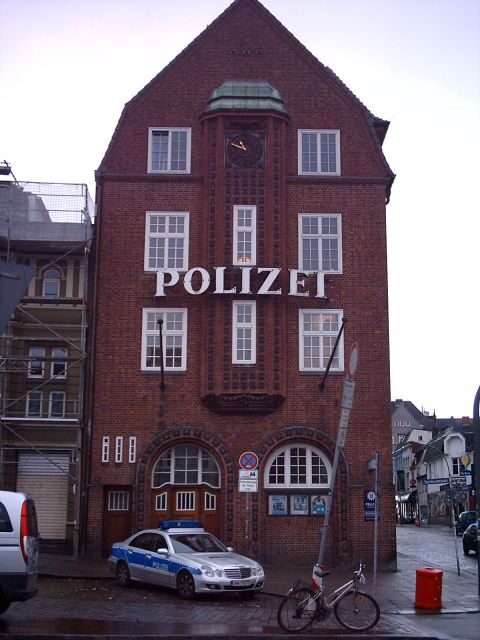
CSI St. Pauli is built around one idea: the streets of Hamburg’s entertainment district didn’t just host nightlife. They also shaped crime, and the authorities responded in ways that changed across decades.
In 90 minutes, the guide walks you through a timeline of sorts: from the First World War era to around 1990. The tour doesn’t try to be a general overview of the neighborhood. Instead, it keeps returning to crime as a lens—how cases were framed, who got targeted, and why certain groups could operate longer than you’d expect.
If you like tours that connect history to human behavior—workarounds, power, fear, and the rules people lived under—this format makes sense. You’ll get a story with cause and effect, not just a list of names.
And yes, the tone is meant to be dark. Expect murders, gang meeting points (as presented by the guide), and the practical side of prostitution history. This isn’t a costume-theme ghost walk. It’s crime-as-society.
You can also read our reviews of more tours and experiences in Hamburg.



Starting at Millerntorplatz: Getting Oriented Fast
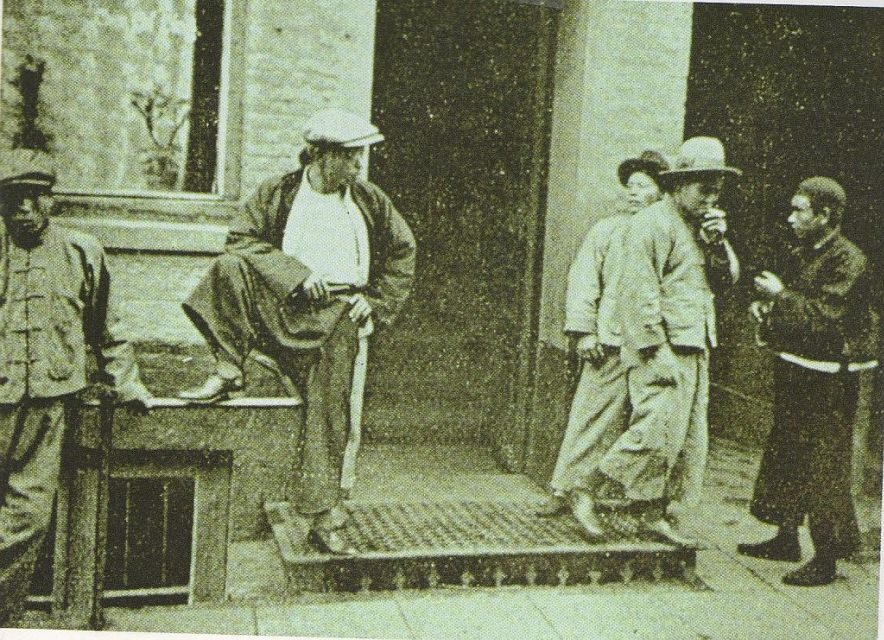
The meeting point is Millerntorplatz 1, Hamburg, right by Five Guys. That detail matters because this part of Hamburg can be busy and noisy. Starting near a clear landmark helps you avoid the typical pre-tour scramble.
Once you’re with the guide, you follow a trail through St. Pauli. There’s no need to be a Hamburg expert before you go. What you need is the willingness to listen and connect dots: when the guide points out a place, you’ll also hear why that spot mattered for raids, gangs, or conflict.
Practical note: the tour takes place in any weather. Comfortable shoes are the best “bring this” item. Even if you’re not doing major sightseeing elsewhere, the walking here is part of how the story lands.
Law and Order in St. Pauli: Why the Policing Story Matters
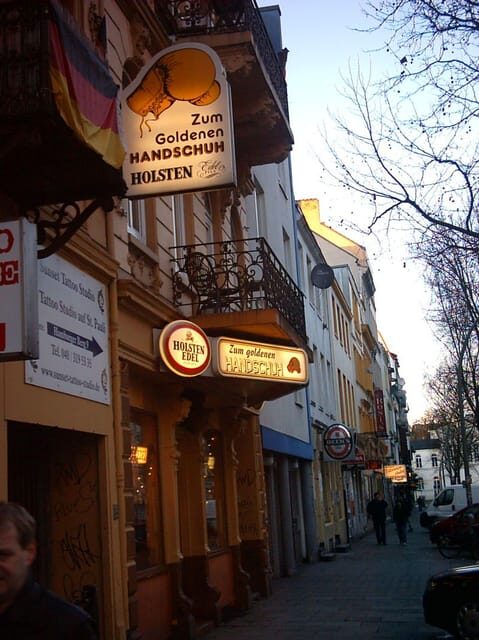
A lot of neighborhood tours stop at the vibe—what it looks like today, what it feels like at night. CSI St. Pauli goes one step deeper. It explains law and order in St. Pauli and how enforcement was shaped by the times.
You’ll hear how persecution worked differently depending on the period, and how the authorities defined crime. That’s not just academic. It helps you understand why some cases became headline events while other trouble stayed routine, hidden, or displaced.
This is also where the tour’s value shows. When you hear about raids and gang meeting points in the context of how policing evolved, you stop viewing crime as random. You start seeing patterns: incentives, loopholes, and pressure points.
If you’re the kind of traveler who likes to know the “rules of the game” behind a place, this section will click.
Spartacus League and Reeperbahn Raids: A Political Angle on Crime
One of the tour’s most interesting threads is the Spartacus League and their infamous raids along Reeperbahn. That matters because it shifts the story beyond street-level wrongdoing into organized action and conflict.
Reeperbahn is one of the world’s best-known nightlife streets, but the tour doesn’t treat it like a simple party strip. It frames it as contested space—where power struggles played out and where raids weren’t random hits. They were part of a larger struggle over control and public order.
As the guide connects the raids to the way crime was pursued, you’ll get a sense of how big movements and street realities collided. That blend is what keeps a crime tour from feeling like sensationalism.
Mucki Pinzner: The Murder Case as a Story Spine
Werner Mucki Pinzner is one of the named figures in the tour, and his murder is highlighted as a key case. That’s useful because it gives the narrative a spine. Instead of floating across decades with no anchors, you track real names and outcomes as the timeline moves.
Murder stories can easily become either too graphic or too vague. Here, the tour positions the case within the larger system: how crime was defined, investigated, and handled during different periods.
If you’re curious about the mechanics of enforcement—why certain crimes drew attention, and how the district’s informal networks interacted with formal systems—Pinzner’s case is a good focal point.
Just keep in mind the tone stays on the darker side. This is history with edges.






Prostitution Then and Now: Pimps, Control, and Risk
The tour’s other major emphasis is the evolution of prostitution. You’ll hear background on how it developed and how it was policed or prosecuted across the long stretch from WWI to around 1990.
What makes this section feel grounded is the practical framing: the guide explains how sly pimps could stay under the radar while still working the nightlife ecosystem, including dodgy bars. That kind of detail turns a broad topic into something you can visualize—how power operated, how risk was managed, and why certain arrangements could survive even when authorities were paying attention.
The tour also asks you to compare then and now. You won’t leave with a tidy “everything is the same” conclusion, but you will walk away with a better sense of continuity: human incentives don’t vanish, and enforcement priorities shift with politics and culture.
This is one of the most educational parts for many people because it ties social history to street reality. It also helps you interpret St. Pauli’s modern entertainment identity as something shaped by older systems.
Crime Scenes and Gang Meeting Points: How the Story Gets Specific
A strong sign of a well-built walking tour is specificity. This one does that by pointing out various crime scenes and meeting points of local gangs, as presented by the guide during your walk.
You should expect a mix of narrative and direction: the guide doesn’t just say there was trouble; they connect it to place. Standing in a real location while someone explains what happened there (and how groups used the area) is the moment when a historical subject stops feeling abstract.
The drawback of this approach is also obvious: without heavy signage or a museum setting, you’ll rely on the guide’s explanations for clarity. That’s why your listening matters. If you’re traveling with friends who talk a lot, give the guide your focus for best results.
Languages, Group Size, and Pacing: Planning for a Smooth 90 Minutes
This is a live guided tour with German and English available. It runs for 90 minutes, and it’s described as a private group experience.
“Private group” here usually means you’re not part of a large crowd sliding past at breakneck speed. That can be great for questions and attention. It also means pacing may depend on the guide and the group. There’s a minimum of 2 persons, with fixed dates, so it’s designed to run when there are enough people to make the tour work.
Based on a recent negative experience on the topic of English delivery and timing, I’d add one practical suggestion: if you’re counting on English and you care a lot about precise wording, consider choosing the German option when you can’t risk misunderstandings. If you’re traveling with a mixed language group, ask how the guide handles your language needs.
Price and Value: Is $31 Worth It?
At $31 per person for a 90-minute guided walking tour, the value depends on what you want from St. Pauli.
Here’s what you’re paying for:
- a live guide (not self-paced content),
- a structured crime narrative that links murders, raids, and prostitution history,
- and a route-based experience with place-specific crime scenes and gang meeting points.
If your goal is to understand why St. Pauli has the reputation it has—why order and disorder tangled there—this price looks fair. You’re not just buying entertainment. You’re buying interpretation, and that’s hard to do on your own.
If your goal is casual sightseeing or a light, funny evening walk, then any crime-and-prostitution theme will feel like the wrong match for the money, because you’ll be paying for a specific tone and subject matter.
Who Should Book CSI St. Pauli (and Who Should Skip It)
This is a solid fit if you:
- enjoy crime history and social history more than postcard views,
- want context behind Hamburg’s entertainment district,
- like tours that connect events (like Pinzner) and organized activity (like the Spartacus League) to real locations.
It may be a weaker fit if you:
- want a purely upbeat neighborhood tour,
- dislike discussions of prostitution and related policing themes,
- need a fast-moving format with lots of time to freestyle on your own.
Also, if you’re sensitive to pacing issues, you’ll want to keep an eye on the practical side of walking—because this is still a city walk, even when the focus is storytelling.
The Company Behind It: Landgang St. Pauli
The experience provider is Landgang St. Pauli. That’s helpful for you as a traveler because it signals this is an established local operator rather than a one-off pop-up tour idea.
The guide availability includes German and English, and you’ll be with a live person for the full story. If you’ve ever done tours where the audio and script do all the work, you’ll probably appreciate the opposite here.
Should You Book? My Practical Take
I’d book CSI St. Pauli if you want a sharper understanding of St. Pauli than what you’ll get from typical nightlife-walk tours. For many people, it’s the sweet spot: 90 minutes, a clear theme, and specific story anchors like Mucki Pinzner and the Spartacus League raids.
Skip it if you’re searching for gentle sightseeing, because the content is intentionally dark and it tackles adult topics. Also, plan your expectations around language clarity and pacing, since a guide’s delivery can make or break a story-heavy walk.
If you’re the type who likes to read a neighborhood like a crime scene—following how people, law, and opportunity shaped each other—then this is a strong use of your time in Hamburg.
FAQ
How long is the CSI St. Pauli tour?
It lasts 90 minutes.
Where does the tour meet?
Meet at Millerntorplatz 1, Hamburg, in front of Five Guys.
How much does it cost?
The price is listed as $31 per person.
What languages are available?
The live guide offers German and English.
Does the tour run in bad weather?
Yes. It takes place in any weather.
Is the tour wheelchair accessible?
Yes, it is wheelchair accessible.
Is it a private group?
It’s offered as a private group experience.
What is the minimum group size?
The tour requires a minimum of 2 persons.
What cancellation options are available?
You can cancel up to 24 hours in advance for a full refund.