REVIEW · BERLIN
Berlin: walking tour about Charité
Book on GetYourGuide →Operated by Secret Tours Berlin · Bookable on GetYourGuide
Medical Berlin starts with one grim plague building. This Charité walking tour strings together 300 years of medicine in a way that feels grounded in real streets, not just dates and names. You’ll hear how the institution grew from an early plague house into one of Europe’s key university hospitals.
Two things I especially like: the guide connects big thinkers like Rudolf Virchow and Robert Koch to what you’re standing near, and the tour includes a true “medicine temple” moment at the Animal Anatomical Theatre. One possible drawback: you won’t tour clinical areas, and access is limited to what’s viewable on the outside plus specific teaching spaces.
If you’re fine with a smart street-level history walk (with some dark chapters included) and you don’t need to step into hospital wards, this is a strong 2-hour use of your time in Berlin.
In This Review
- Key things to know before you go
- The point of a Charité tour: medicine, power, and people
- Meeting at Charité Tower: quick setup, clear start
- The walk along Luisenstraße and the university campus
- Seeing Charité from outside without losing the story
- The famous physicians: Virchow, Behring, Koch, Sauerbruch
- The darker chapter: Nazi-era collaboration and moral context
- The “medicine temple” inside the Animal Anatomical Theatre (TAT)
- How long is it, and what pace should you expect?
- Price and value: $27 for a focused, high-impact site story
- Who this tour is best for
- Should you book the Berlin Charité walking tour about Charité?
- FAQ
- Where is the meeting point for the Charité walking tour?
- How long is the tour?
- What language is the tour guide?
- Does the tour go inside the Charité Bed House?
- Are the hospital grounds accessible during the tour?
- Will you visit the Animal Anatomical Theatre (TAT)?
- How much does the tour cost?
Key things to know before you go

- Plague-house origins to modern university medicine: you get the through-line from the 18th century to Charité’s present role
- Nobel-level names, explained in context: Rudolf Virchow, Emil von Behring, Robert Koch, and Ferdinand Sauerbruch
- A “medicine temple” visit: you’ll see the Animal Anatomical Theatre (TAT) and go inside it
- Berlin medical history has bright and ugly pages: you’ll hear about Nazi-era collaboration
- Limited access by design: Charité Campus Mitte isn’t open for group tours, so plan on outside views
The point of a Charité tour: medicine, power, and people

Berlin didn’t just produce scientists. It built institutions that changed what medicine could do, and who had the authority to define illness and treatment. That’s why a Charité walk hits differently than a typical “history of medicine” lecture. You’re walking through the same kind of environment that shaped researchers’ work—university buildings, teaching spaces, and the hospital complex that grew over centuries.
In this tour, you follow the life-and-death stories Charité carries, starting from the 18th century when the site’s early purpose was tied to plague containment. Then the story shifts into the rise of Berlin as a science powerhouse, where famous physicians and researchers could turn observations into real breakthroughs—and institutions into long-term influence.
This is also where you get the full picture. The tour isn’t only about triumph. It includes the dark period when doctors in the institution collaborated with the Nazi regime. If you want sanitized history, this won’t be your match. If you want accurate context, it’s exactly the sort of material that makes the science feel real.
You can also read our reviews of more walking tours in Berlin



Meeting at Charité Tower: quick setup, clear start

You’ll start at the Charité Tower, right at the crossroads of Schumannstraße / Charitéplatz / Charitéstraße. It’s a straightforward meeting point, and the tour is set to start on time. That matters here because this is a tight 2-hour format—no long waits, no casual meandering.
From the start, you’ll get outside views of key hospital buildings, including the Charité Bed House (seen from outside). That outside look is useful because Charité is more than one building. It’s a complex system that grew, reorganized, and expanded, and the guide helps you read those changes like a map.
Practical tip: wear shoes you trust. You’ll be walking along city streets and the university campus area. It’s not a marathon, but you’ll still want solid grip and comfort.
The walk along Luisenstraße and the university campus
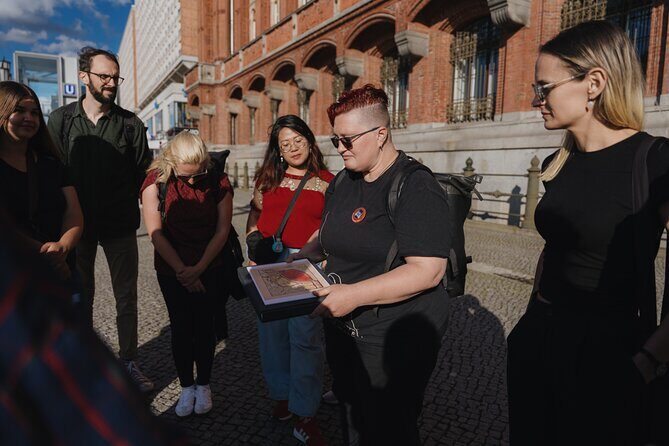
After you get your bearings, you’ll head along Luisenstraße and cross through the university campus area. This part of the tour is where the “place” starts to do its job.
The city streets around Charité aren’t just scenery. They connect the hospital’s public presence with the academic world that fed it—students, researchers, and teaching facilities. As you move, the guide points out how the institution’s evolution shaped how medicine was taught and practiced. You’ll also hear interesting facts about Berlin’s sometimes obscure medical history—moments that don’t sound important until you realize they influenced how institutions operated later.
If you’re a first-timer in Berlin, I like this approach: you learn something big while getting a bit of a campus walk. It’s more functional than museum time, and it’s easier to keep your attention for a full 2 hours because the story is tied to actual visible landmarks.
Seeing Charité from outside without losing the story
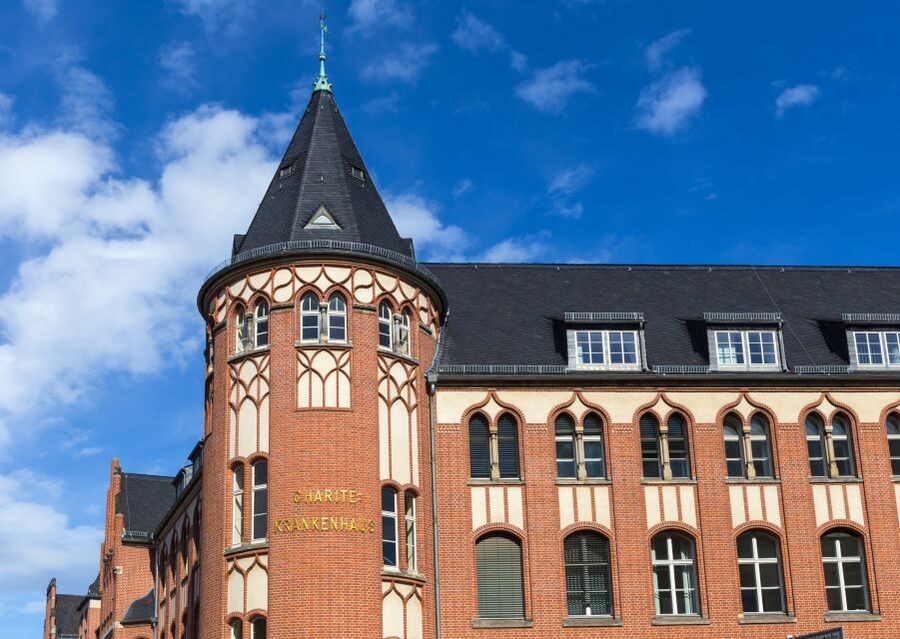
A common question is whether you’ll get inside the main hospital. The answer is no for some parts, and yes for others—and understanding that upfront helps you set expectations.
You won’t go inside the Charité Bed House. And the Charité Campus Mitte grounds are not accessible for group tours. Instead, the tour stays focused on what you can view and the teaching buildings you can enter.
For me, that limitation doesn’t ruin the experience. It forces the guide to do something helpful: explain the “why” behind what you’re seeing. When you can’t roam freely inside a medical site, the value has to come from interpretation—how the building layout reflects how medicine evolved, and how the institution’s research and teaching mission changed over time.
So think of this as a street-level and campus-level reading of Charité’s role in European medicine, with one key teaching interior stop later on.
The famous physicians: Virchow, Behring, Koch, Sauerbruch
The tour’s strongest storytelling moments come when the guide ties major scientific names directly into the timeline you’re walking through.
You’ll hear about Rudolf Virchow, a figure strongly associated with how people thought about disease. You’ll also get Emil von Behring, known for major medical advances linked to immunology-era thinking. Then the tour brings in Robert Koch, a name that belongs in any serious conversation about infectious disease research. And finally, there’s Ferdinand Sauerbruch, another major Berlin physician whose work became part of the broader story of modern medicine.
What makes this section work for you is not just hearing names. The guide connects those figures to the institutional context—why Charité mattered for the kind of research and teaching that helped those people shape medicine.
And because this tour is built around walking the site and its adjacent teaching spaces, the names feel less like a textbook list. You start to understand why Berlin could attract and retain such talent: the institutions weren’t passive backdrops. They were active engines.





The darker chapter: Nazi-era collaboration and moral context
You should be ready for a serious topic. The tour includes discussion of times when doctors collaborated with the Nazi regime.
This isn’t just an add-on. It’s part of the institution’s real history, and the guide uses it to explain how medicine can get entangled with ideology and power. If you care about medical ethics (or you’re simply paying attention to how institutions behave under pressure), you’ll probably appreciate that the tour doesn’t pretend the story is only scientific success.
If you’re coming expecting an upbeat “science greatest hits” tour, adjust your mindset. This is still a well-paced walk, but it’s honest.
The “medicine temple” inside the Animal Anatomical Theatre (TAT)
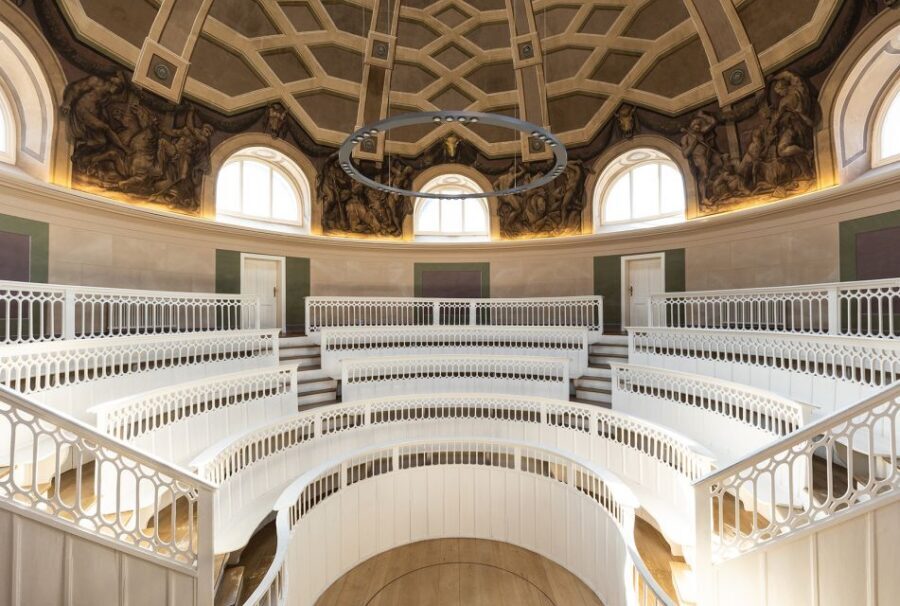
The tour’s standout physical moment is the visit to a mysterious-sounding teaching space: Berlin’s oldest surviving teaching building, known as the Animal Anatomical Theatre (TAT).
This is where the phrase medicine temple makes sense. You’re going from outside hospital views into a preserved teaching environment tied to how anatomy and medical education were carried out. The atmosphere is different. You’re not just learning about what medicine did—you’re seeing how medicine was taught and displayed.
One practical note: the TAT reserves the right to adjust opening hours at short notice because of closed events. It’s also closed on public holidays. So if your dates include public holidays, you might want to plan extra time or be ready for the possibility that the interior visit could be affected.
Still, when it’s open, this stop is the reason the tour feels more than a narrative. It gives your brain a “hold on, I can picture the teaching setup” moment.
How long is it, and what pace should you expect?
It’s a 2-hour guided walk. That length is ideal if you want real content but you don’t want your whole day pulled into one site.
The structure helps: outside views first (including the Charité Tower area and the Bed House), then the campus walk, then the internal teaching stop at the end. You end back at the meeting point.
Because the tour is only two hours, you can treat it like a mini-syllabus. You’ll get the broad timeline—plague origins, institutional rise, Nobel-level names, and the ethical dark chapter—without feeling like you need to take a semester’s worth of notes.
Language note: the live guide speaks German. If you’re comfortable following German for a couple hours, this should be fine. If not, you might still catch key names and main ideas, but you’ll likely miss some nuance.
Price and value: $27 for a focused, high-impact site story
At $27 per person for a 2-hour guided tour, you’re paying for a very specific kind of value: expert explanation tied to a place that’s hard to access freely.
You’re not being charged for museum ticketing or broad hospital entry (because those areas aren’t available for group tours anyway). Instead, the value is in how the guide turns limited access into a coherent story: you see the outside hospital shapes, then you get one important interior teaching visit at the TAT.
For people who like context—how science institutions grow, and how they can behave ethically or unethically—this is good value. For people who want lots of time inside multiple buildings, it might feel short or constrained due to access limits. But for most visitors, the mix of campus walking plus the TAT stop hits a sweet spot.
Who this tour is best for
This works especially well if you’re:
- a history or science fan who likes your facts tied to physical locations
- curious about why Berlin became a research magnet in medicine
- interested in learning major physician names in their institutional context
It’s less ideal if you:
- want a deep hospital-ward experience or free-roaming access across the hospital grounds
- need a tour in English (this one is German)
If you’re the kind of traveler who likes “I understand the place now” souvenirs, you’ll probably enjoy this one.
Should you book the Berlin Charité walking tour about Charité?
I’d book it if you want a compact, smart way to understand Charité as an institution—how it started, why it mattered, who drove key medical ideas, and how the story includes real moral ugliness. The tour’s access model makes sense: you get outside views of the hospital complex and you do get an inside stop at the Animal Anatomical Theatre, which is not something you’d casually stumble into on your own.
Skip it (or at least reconsider) if you’re expecting lots of hospital interior access or you can’t follow a German guided explanation for 2 hours. Also, if your visit falls on a public holiday, keep in mind the TAT may be closed.
If you’re flexible and you’re ready for a thoughtful mix of science and ethics, this is a solid use of time in Berlin.
FAQ
Where is the meeting point for the Charité walking tour?
The tour starts in front of the Charité Tower at the crossroads of Schumannstraße / Charitéplatz / Charitéstraße.
How long is the tour?
The tour lasts 2 hours. Starting times vary, so you’ll need to check availability.
What language is the tour guide?
The live tour guide speaks German.
Does the tour go inside the Charité Bed House?
No. The tour does not go inside the Charité Bed House.
Are the hospital grounds accessible during the tour?
No. The hospital grounds (Charité Campus Mitte) are not accessible for group tours.
Will you visit the Animal Anatomical Theatre (TAT)?
Yes, the tour includes a visit to the Animal Anatomical Theatre (TAT). Its opening hours can change at short notice due to closed events, and it is closed on public holidays.
How much does the tour cost?
The price is $27 per person.