REVIEW · MUNICH
Munich in the 3rd Reich and WW2 private walking tour
Book on Viator →Operated by Dark History Tours · Bookable on Viator
Munich has two faces, and this walk shows both. You’ll trace how the city’s post-WWI crisis fed extremist power, then follow the path toward the 1945 collapse at street level, with a private English guide who keeps the story tied to real places.
I really love how the guide brings scenes to life with photos, memorabilia, and props, so the history doesn’t stay abstract. I also like that you get a private format for your group of up to 6, which means more time for questions and fewer awkward pauses.
One consideration: this is heavy subject matter, and it’s still a walking tour. You’ll cover a moderate amount of walking and it runs in all weather, so wear proper footwear and plan for cold or wet conditions.
In This Review
- Key things to know before you go
- 3rd Reich and WWII Munich by Foot: why this private format works
- From Isar Gate to Odeonsplatz: how the route builds the story
- Post-WWI trauma, the Treaty of Versailles, and how extremism takes root
- Origins of the Nazi Party, the birthplace of the SS, and the Beer Hall Putsch
- Kristallnacht, Holocaust origins, and why propaganda turned lethal
- Nazi Party Headquarters, the Munich Pact, and the Odeonsplatz endgame
- Allied bombing, the fall to US forces, and what 1945 meant on the ground
- Your guide can make or break the tour: Taff, Kevin, and Joanne
- Price and what you’re really buying: private attention for a small group
- Practical stuff that matters: walking time, beerhall break, and weather
- Who should book this WWII Munich tour
- Should you book this tour?
- FAQ
- FAQ
- Where does the tour start and end?
- How long is the tour?
- Is this tour private?
- How many people are in a group?
- What is the language of the tour?
- Does it include a break during the walk?
- How much walking is involved?
- Will the tour run in bad weather?
- How do I get the ticket?
- Where can I meet the guide if I am not at the start point?
- What is the cancellation policy?
Key things to know before you go
- Private group up to 6 means your guide can slow down for your interests and questions
- English mobile ticket keeps check-in simple, and the tour is built around a real street route
- Expect a beerhall break tied to the history, with an option to swap to a cafe if you prefer
- The tour’s chapters cover the Nazi rise, major turning points, and the city’s wartime end
- Plan for all-weather walking with sturdy shoes and warm layers
- Built for WWII history fans, but the story is explained clearly for non-experts too
3rd Reich and WWII Munich by Foot: why this private format works
Munich is famous for churches, lederhosen, and the whole Oktoberfest scene. But the city also served as a powerful stage for the Nazi rise—politically, ideologically, and symbolically. This tour is interesting because it doesn’t treat WWII as a distant timeline. It treats it like a chain of decisions that happened in specific places, by specific people, in a city you can still walk through today.
The private setup is a big deal. With a small group and one guide, you’re not just hearing facts—you’re getting the context that helps you connect them. In the feedback I saw patterns repeat: guides like Taff (David Simon), Kevin, and Joanne were praised for using visuals (photos, memorabilia) and for keeping the pace engaging without turning the material into a lecture marathon.
The tour’s best value isn’t just that it covers the big names. It’s that it explains why those events mattered and how Munich became a home base for the movement. You don’t leave with a list of dates. You leave with a better sense of how the city’s choices and public mood shifted over time.
You can also read our reviews of more walking tours in Munich
From Isar Gate to Odeonsplatz: how the route builds the story
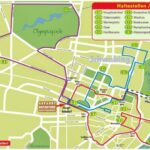
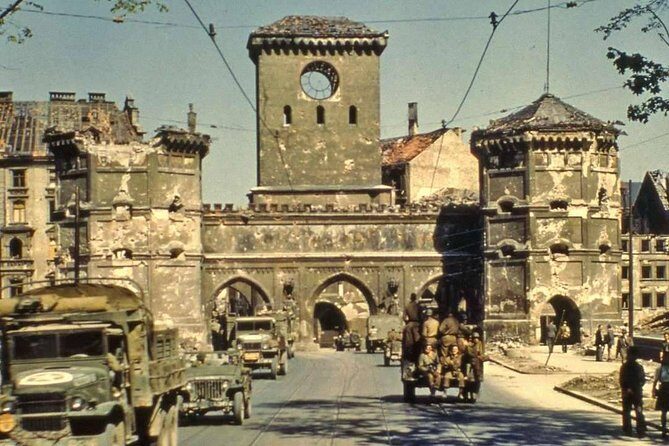
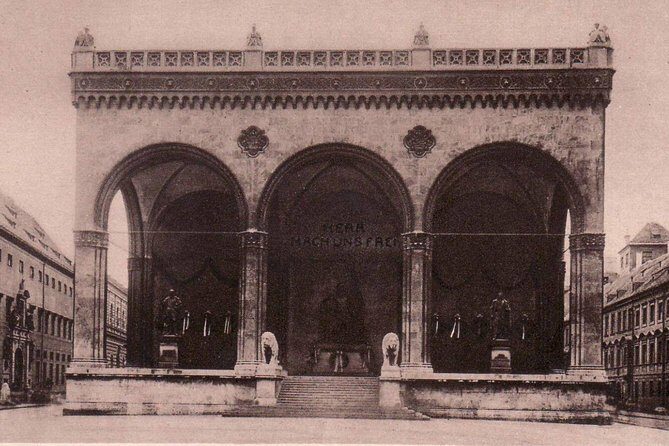
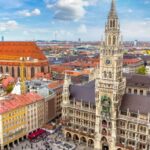
The tour starts at Isar Gate, Tal 50, 80331 München, and finishes at Odeonsplatz, Odeonspl. 3, 80539 München, near the Residenz and just a few minutes from Marienplatz. That endpoint matters because the Odeonsplatz area is tied closely to some of the movement’s most important public moments.
Even without a car or bus, the walking route is designed to feel like a narrative arc. You begin with the background that shaped Germany after the Great War: social strain, economic breakdown, and the political unrest that made extreme ideas easier to sell. As you move through the central parts of town, the focus shifts toward the Nazi movement’s origins and early street-level power grabs.
By the time you’re finishing around Odeonsplatz, you’re in the part of the story where the Nazi Party’s leadership and propaganda machinery becomes central. The last stretch tends to tie earlier themes to later outcomes—bombing, collapse, and what it meant when US forces took the city in 1945.
If you’re the type who likes to see how a story changes scene-to-scene, this route format is a win. If you’re hoping for a super short walk or a mostly-seated experience, you may find the moderate walking a bit demanding. But the distance is intentional: it gives you time to absorb each chapter as you move.
Post-WWI trauma, the Treaty of Versailles, and how extremism takes root
One of the tour’s stated goals is to cover the Great War and the Treaty of Versailles, and this is where the guide’s storytelling really earns its keep. If you only know WWII as a sequence of battles, the prequel can feel distant. Here, you get the cause-and-effect version: how defeat, resentment, and instability created fertile ground for extremist politics.
You’ll also hear how Munich fit into that national chaos. The material explains that after World War I, Germany—and Munich in particular—was turbulent and unstable. In that environment, political extremism grew quickly, and Munich even saw a moment described as a short-lived Soviet Republic. That kind of local context helps explain why the city could switch rapidly between moods and movements.
This chapter also sets you up to understand the Nazi Party’s emergence under Adolf Hitler. Instead of presenting Nazism as something that appeared out of nowhere, you get a timeline that shows how people, propaganda, and opportunity aligned.
For me, the strongest takeaway from this early section is that it’s not just history. It’s a lesson in how quickly societies can fracture when economies fail and political institutions look weak.
Origins of the Nazi Party, the birthplace of the SS, and the Beer Hall Putsch
After the post-war setup, the tour moves into how the Nazi movement organized itself—and how it turned ideas into power. You’ll cover the origins of the Nazi Party, plus the birthplace of the SS. Even if you already know the names, this part helps you understand the logic of the system: how a political party tried to become a total authority, not just an electoral contender.
Then comes one of the tour’s heavy-hitter chapters: the Beer Hall Putsch. The idea is to show how early attempts at seizing control shaped the movement’s strategy and reputation. This is where Munich history stops being background and starts acting like a hinge point. Events like this weren’t just symbolic. They helped define who the Nazis were to supporters, opponents, and the wider public.
What I like about the way guides handle this is that they often connect the dots between ideology and street reality. You’re not just hearing that violence and coercion mattered. You’re seeing how the movement built its public profile around confrontation and spectacle.
One practical note: because the topics are intense, ask your guide questions if you need clarity. In a private tour, it’s usually easy to steer the conversation toward what you find most confusing—like the gap between propaganda language and real-world outcomes.
Kristallnacht, Holocaust origins, and why propaganda turned lethal
The tour explicitly includes Crystal Night and the origins of the Holocaust. That’s a brutal topic, and it’s also one of the most important parts of the whole experience. This section is valuable because it explains the jump from targeted persecution to organized mass violence—showing how escalating brutality was treated as policy, not chaos.
The tour framing helps you avoid the common trap of learning the Holocaust as a separate universe from earlier Nazi years. Here, it’s presented as the result of steps that followed the movement’s rise in Munich and beyond.
In the conversations I’ve seen guides have with groups, one thing keeps coming up: strong use of visuals. Guides such as Taff (David Simon) were praised for having pictures and memorabilia that supported historical sites, which can make it easier to understand what you’re seeing and why it matters.
A small tip: if you’re sensitive to heavy material, give yourself a moment during the walk. The tour does allow a break in a beerhall associated with this history, and you can also ask to take a break in a cafe instead. Refreshments aren’t included, but the pause is built in.
You can also read our reviews of more private tours in Munich

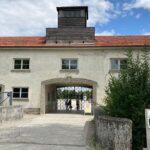
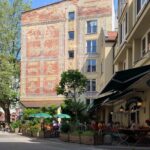

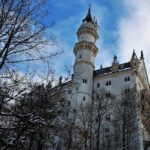
Nazi Party Headquarters, the Munich Pact, and the Odeonsplatz endgame
A major highlight on the tour agenda is the Nazi Party Headquarters and the signing of the Munich Pact. This is where the tour’s location choice really pays off. As you approach the finishing area at Odeonsplatz, the story tightens: you’re moving toward the places linked with leadership, public legitimacy, and international decisions.
The Munich Pact topic is especially important for understanding the road to wider war. You get the sense that Europe’s attention to appeasement and political maneuvering didn’t stop aggression—it often enabled it to move forward.
This part of the tour is also where the private format helps most. People tend to have lots of questions here: What did leaders think they were doing? How did propaganda shape public acceptance? How did decisions in one place get translated into actions elsewhere? With one guide and your small group, those questions don’t feel like interruptions—they’re part of the tour.
If you’re a visual learner, you’ll likely appreciate the guide’s references to historical evidence, including photos and period material mentioned in the feedback. That kind of support keeps the story grounded while you walk through the modern city.
Allied bombing, the fall to US forces, and what 1945 meant on the ground
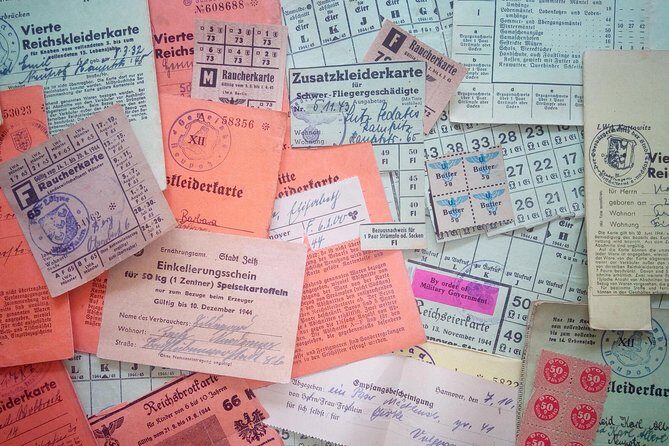
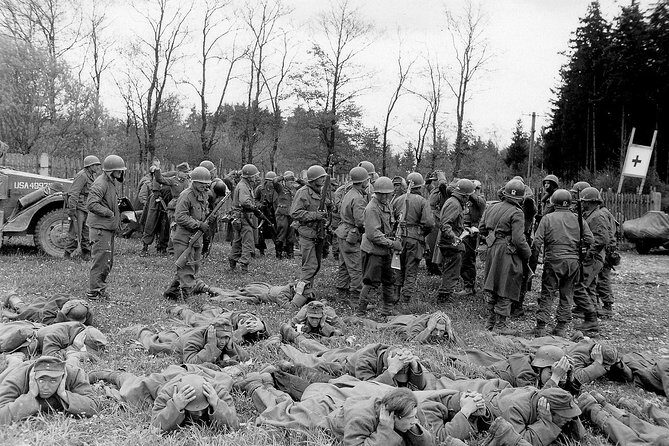
The tour covers the Allied bombing campaign and how the city fell to US forces in 1945. This is the closing chapter that connects everything you learned earlier to the final outcome.
Even when you know WWII broadly, this section can feel clarifying because it turns the idea of collapse into a local experience. Munich isn’t only a name on a map now. It’s a city that faced destruction and then changed hands as the war shifted.
By the time you hit the end at Odeonsplatz, you should feel the full arc: instability after World War I, the Nazi rise and consolidation, the escalation of persecution and violence, then the war’s destructive end.
You may find this portion emotionally heavy, but it’s also where the tour becomes most grounded in consequences. History stops being a story about plans and policies and becomes a story about outcomes people lived through.
Your guide can make or break the tour: Taff, Kevin, and Joanne
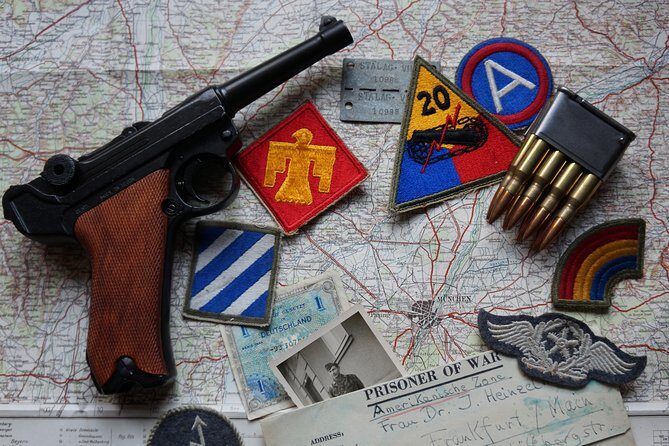
This is one of those tours where the guide’s delivery matters a lot. In the feedback patterns, the top praise focused on how guides made the material feel alive and interactive, not just recited.
Guides like Taff (David Simon) were described as using photos supporting historical sites, and also as being able to adapt the route when needed. One example from the feedback: on a snowy December 24th, the guide arrived on time and still delivered the tour with energy. When the group asked to shorten things because of the cold, he adapted without losing core substance.
Other names also came up: Kevin and Joanne were praised for keeping the pace engaging and for making the history feel understandable. One review highlighted that an 11-year-old stayed interested, which tells me the guide didn’t treat the group like adults only—they explained complex events without talking down.
Some guides were even praised for acting out parts of the story. That’s not for everyone, but if you like history with a bit of theater, it can help you remember key moments.
If you’re booking for serious history study, you’ll probably get what you want here. If you’re booking for family or mixed interests, the ability to keep teens and first-timers engaged is a real plus.
Price and what you’re really buying: private attention for a small group
The price is $423.44 per group, for up to 6 people, for about 3 hours 30 minutes to 4 hours 30 minutes. That sounds like a lot until you compare what you’re getting: one professional guide, private time, and the ability to stop and ask questions as the story changes.
Here’s the value math that usually helps: if you’re traveling as a pair, this still may be pricier than a shared group tour, but you gain something hard to price—direct attention. If you’re traveling with up to four more people, the per-person cost drops quickly and you get an experience that feels custom.
Also, the tour includes professional guidance but not a packed set of extras. It includes the guide and the private format, and it uses a walking route rather than adding bus costs. In other words, your money mostly goes into the storytelling and the guide’s ability to explain hard material clearly.
For your best value, show up with a couple of interests in mind. For example: origins of the Nazi Party, how the SS fitted into the system, Munich Pact context, or how the war ended in the city. With private time, your guide can spend more time on the parts you care about instead of sticking rigidly to a generic script.
Practical stuff that matters: walking time, beerhall break, and weather
This is a walking tour with a moderate amount of walking, and it operates in all weather. The practical takeaway is simple: wear good shoes and dress for the day, not for optimism. Cold, wet conditions can make a 4-hour walk feel longer, so plan layers.
You’ll meet at Isar Gate and finish at Odeonsplatz. There’s also pickup mentioned for either Hauptbahnhof or Marienplatz, depending on what your schedule looks like. So if you’re arriving by train, you won’t be stuck crossing the city before you even start.
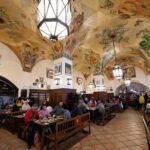
During the tour, there’s generally a break in a beerhall associated with this history. If you’d rather be in a cafe, tell the guide. Refreshments aren’t included, so treat this like a chance to warm up and reset, not a free stop.
If you’re bringing a phone, the tour uses a mobile ticket, so have it accessible. And because it’s a private activity, your group is the only group with the guide.
Who should book this WWII Munich tour
Book this tour if:
- you want a Third Reich and WWII Munich walking tour that connects events to specific places
- you like questions and back-and-forth with one guide
- you appreciate visual aids like photos and memorabilia props
- your group includes at least one person who’s serious about history, since the topics are intense
You might think twice if:
- you need a short, easy stroll with minimal walking
- your group isn’t comfortable with heavy, painful history topics
- you’re traveling during severe weather and don’t want to be outside for several hours (the tour runs anyway, so you’ll be outdoors)
Should you book this tour?
If you’re choosing between a generic overview and a tour that tries to explain how Munich became a political engine for catastrophe, I’d lean yes. The private group size, the structured chapters (Treaty of Versailles through the 1945 fall), and the guide support with photos and props are exactly what make this experience feel worth your time and money.
My advice: pick the date and weather window that lets you walk comfortably. Then go in with curiosity, not just curiosity about Nazis, but curiosity about how societies slide from instability into organized violence. This tour gives you that “how did it happen” answer in a way that fits the streets of Munich.
FAQ
FAQ
Where does the tour start and end?
It starts at Isar Gate, Tal 50, 80331 München, Germany, and ends at Odeonsplatz, Odeonspl. 3, 80539 München, Germany.
How long is the tour?
The duration is listed as about 3 hours 30 minutes to 4 hours 30 minutes.
Is this tour private?
Yes. It’s a private tour/activity, and only your group will participate.
How many people are in a group?
The group size is up to 6 people.
What is the language of the tour?
The tour is offered in English.
Does it include a break during the walk?
There is generally a break in a beerhall associated with this history. If you prefer a cafe break, you can tell your guide. Refreshments are not included.
How much walking is involved?
It involves moderate walking, and it is done on foot without a car or bus.
Will the tour run in bad weather?
Yes. It operates in all weather conditions, so dress appropriately.
How do I get the ticket?
You receive a mobile ticket.
Where can I meet the guide if I am not at the start point?
Pickup is either in the main train station (Hauptbahnhof) or the main square (Marienplatz), depending on the arrangement.
What is the cancellation policy?
Free cancellation is available. You can cancel up to 24 hours in advance for a full refund, with cut-off times based on the local time of the experience.