REVIEW · MUNICH
Fall in Love with Munich in a Private Old Town Walking Tour
Book on Viator →Operated by Victoria – Key to Munich · Bookable on Viator
Munich has layers, and this walk shows them. This private old-town tour with Victoria, Key to Munich, gives you personalized attention and entrance fees included, so your time goes to stories on the streets, not ticket lines.
It’s also a stop-packed 2 hours, so if you prefer lingering in one spot for a long time, you may feel gently rushed.
In This Review
- Key highlights to expect on this walk
- A private old-town walk that starts at the city’s gate
- Isar Gate: medieval walls, funny legends, and why Munich began here
- Sterneckerbräu and Dürnbräugasse: everyday streets meet heavy history
- Hofbräuhaus München: the royal brewery story and what you’ll spot inside
- Pfistermühle and Alter Hof: pretzels, royal courtyards, and Munich’s odd legends
- Dallmayr Delikatessenhaus and Schäfflerstraße: royal taste and a pest-containment dance legend
- Frauenkirche: the devil’s footprint and the wind story you can look for
- Marienplatz: Fischbrunnen, sausage stories, and the Glockenspiel finale
- What makes Victoria’s guiding style work (and why it shows in the details)
- Price and value: what $157.28 buys for up to 6 people
- Who should book this tour, and who might prefer something else
- How to plan your day for this 2-hour route
- Should you book this Munich private old-town walk?
- FAQ
- How long is the tour?
- Is this tour private?
- Where does the tour start and end?
- What language is the tour offered in?
- What’s included in the price?
- Are food and drinks included?
- Is there an admission fee for the stops?
- Do I need to print anything?
- What is the cancellation policy?
Key highlights to expect on this walk
- Isar Gate first: medieval fortifications, founding legends, and time-bending Bavaria lore
- Hofbräuhaus on the inside: the main hall look, beer tradition details, and the beer angel
- Dark-and-light Munich in one route: you’ll hit early Nazi history context and everyday tavern life
- Frauenkirche details worth slowing down for: devil’s footprint and the story of year-round wind
- Marienplatz finale: Fischbrunnen, wallet washing, Butchers’ Jump, and the Glockenspiel
- Family-friendly pacing: Victoria adjusts for mixed ages and even helps with mid-tour breaks
A private old-town walk that starts at the city’s gate
If Munich feels like a place you already know from photos, this tour flips that. You start at Isar Gate, then the story keeps moving—medieval defenses, royal power, beer culture, and the public squares that still shape daily life. The route is built so each stop answers the question: why does this building matter?
I like that it’s private for up to 6 people. That matters in old towns where the group bottlenecks can ruin your rhythm. With Victoria, you can ask questions, set your pace, and get recommendations that fit how you actually travel.
You’ll cover a lot, but it won’t feel like a checklist. The tour is timed for comfort, and in real life that means she’s good at keeping everyone engaged—even when you’ve got a long day behind you.
You can also read our reviews of more walking tours in Munich


Isar Gate: medieval walls, funny legends, and why Munich began here
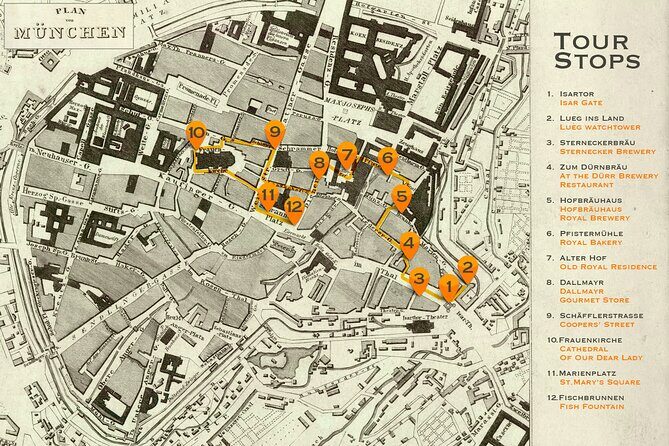
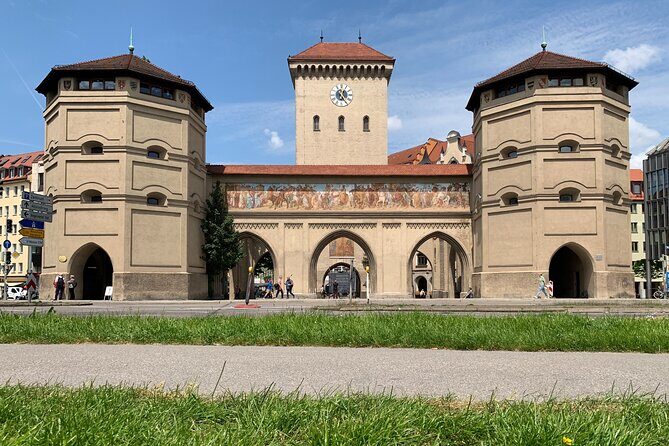
You meet under the central arch of Isar Gate (Tal 50) and step into the medieval story of Munich’s fortifications. This is not just a gate photo moment. You’ll hear about the hidden-looking remains of the main city wall and how Munich’s early identity formed.
One of the fun parts here is how Victoria layers legend onto architecture. You’ll get the legend of the city’s foundation, plus a story about how trade in a single product helped Munich grow into a metropolis. That’s the kind of connection that makes the rest of the walk easier to follow.
You’ll also learn about Munich’s most beloved comedian and a museum hosted by the Isar Gate towers. And yes, there’s even a playful Bavarian twist about time running backwards. It’s light, but it sets the tone: Munich isn’t one mood—it’s many.
Sterneckerbräu and Dürnbräugasse: everyday streets meet heavy history
Next comes a pivot that you should be ready for. At Sterneckerbräu, you’ll stop at the place tied to Adolf Hitler’s first public speech and what that meant for his path into the German Workers’ Party. You’ll also hear how the building developed into a key Nazi Party location.
This isn’t handled as a horror-show tour. It’s more like context: how public spaces can become political stages. If you’re sensitive to the topic, plan to take a breath and let your guide frame it clearly. The goal is understanding, not shock.
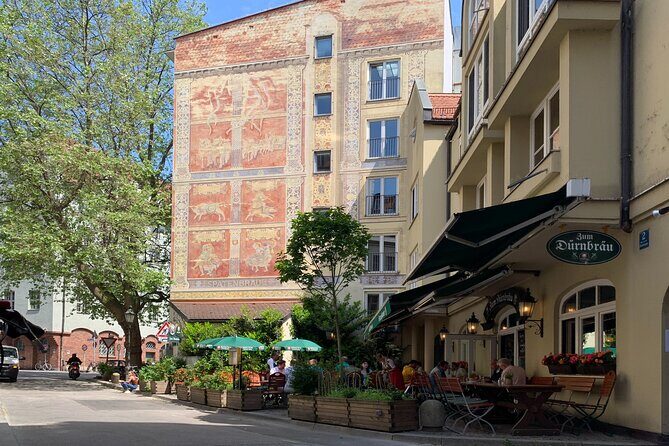
Then the walk shifts back to the quieter side of old Munich at Dürnbräugasse, where you pass by the oldest tavern in town. You’ll get the story of how it survived through centuries and kept its status for more than half a millennium. That’s the contrast I love here: the same streets can hold both the dramatic and the ordinary.
Hofbräuhaus München: the royal brewery story and what you’ll spot inside
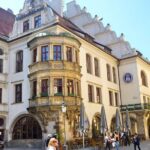
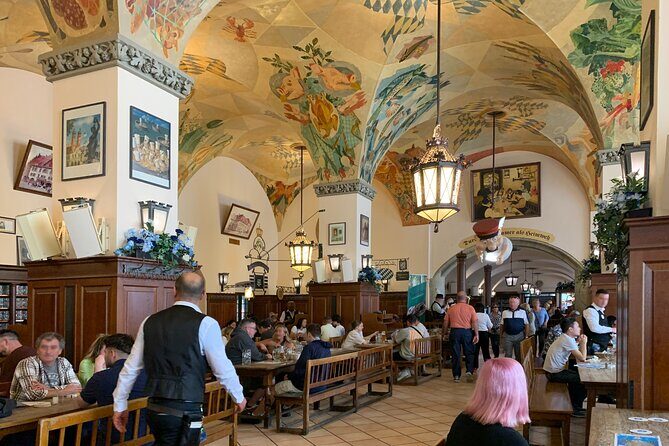
Hofbräuhaus München is the big magnet for most people, but this stop works because you don’t treat it like a theme park. You’ll visit the former royal brewery that became one of the world’s best-known beer halls, and you’ll get centuries-old context along with a guided look around.
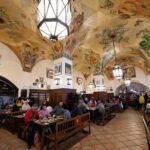
You’ll go inside the main hall and pay attention to details most people miss: the interior design, the pattern of the regular tables, and even how beer mugs of regular guests are stored in special cells. That kind of tradition helps you understand why this place stays busy year after year.
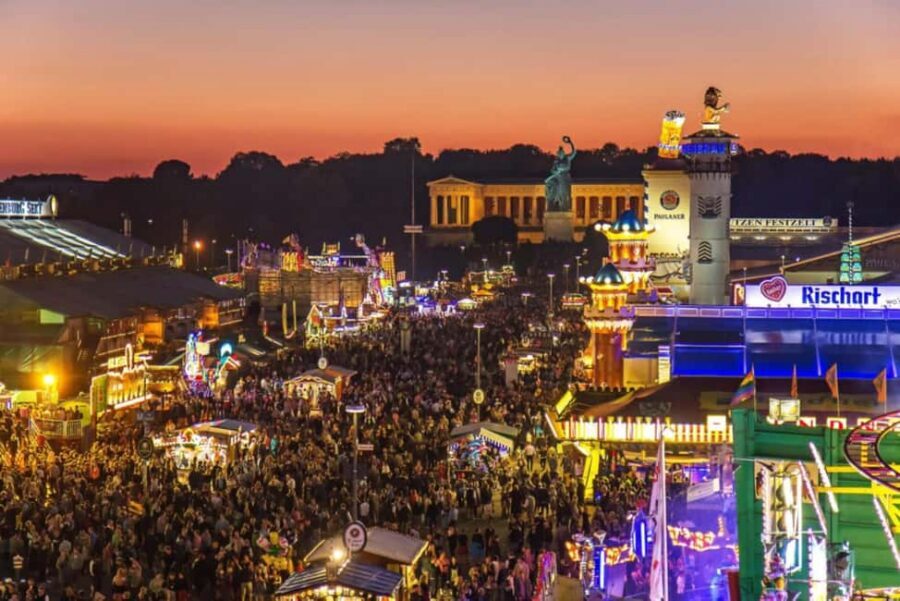
Victoria also connects the stop to broader Bavarian brewing culture: the beer purity law, the evolution of beer tradition, and how Oktoberfest fits into the bigger story. You’ll hear about Munich beer gardens too, so you’re not only learning about one building—you’re learning the system that created it.
And yes, you’ll meet the beer angel. It’s a small moment, but it’s exactly the kind of local detail that makes your photos feel like more than just landmarks.
Pfistermühle and Alter Hof: pretzels, royal courtyards, and Munich’s odd legends
After the beer hall, the route slows into food-and-power stories.
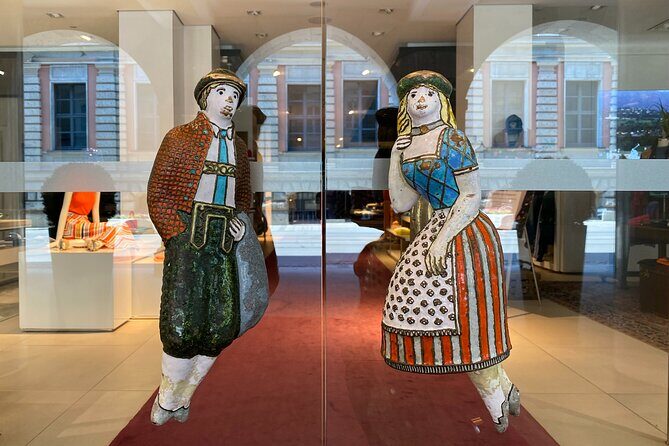
At Restaurant Pfistermühle, you’ll sight the former royal bakery. Victoria tells you the legend of the pretzel and its symbolic connection to Munich. Even if you think you already know pretzels, these origin stories usually change how you look at the food. It becomes part of the city’s identity, not just a snack.
Then you move to Alter Hof, where you’ll visit the inner courtyard of the first residence of the Wittelsbach royal family in Munich. This is where the tour leans into the deeper “how power lived” side of the city. You’ll hear the legend of the Royal Zoo and how it unexpectedly connected to Holy Roman Emperor Louis IV.
You’ll also learn how Munich’s flag got its colors. It’s one of those trivia points that feels small until you realize it’s tied to state identity and old political symbolism. This is the kind of stop that’s great if you like learning why something looks the way it does.
You can also read our reviews of more private tours in Munich





Dallmayr Delikatessenhaus and Schäfflerstraße: royal taste and a pest-containment dance legend
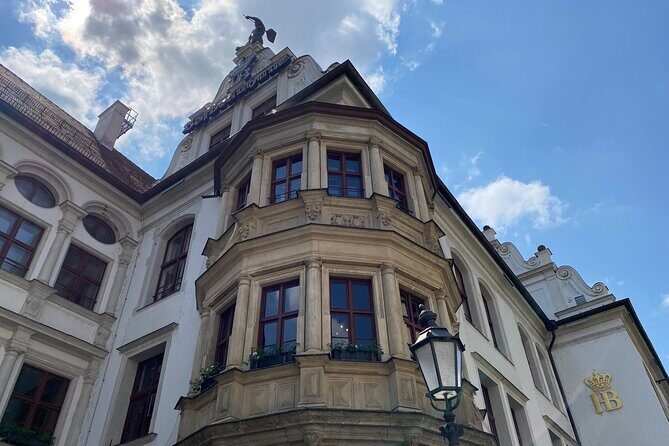
Two quick cultural detours make the walk more interesting.
At Dallmayr Delikatessenhaus, you’ll pass a historical gourmet store with longstanding royal tradition. Victoria explains how it began with court ties and how it became one of the largest delicatessen companies in Europe. If you’re a coffee person or a foodie, this stop plants ideas for later—where to shop and what kind of gifts make sense.
Then you cross Coopers’ Street at Schäfflerstraße. Here you’ll learn Munich’s famous legend about the 16th century pest containment and a traditional dance performed in the Bavarian capital even after the fact. It’s not a museum exhibit; it’s a street legend that explains why local rituals become part of the city’s memory.
Stops like this matter because they show how Munich remembers. It’s not only plaques and museums. Sometimes it’s stories told through street names and public rituals.
Frauenkirche: the devil’s footprint and the wind story you can look for
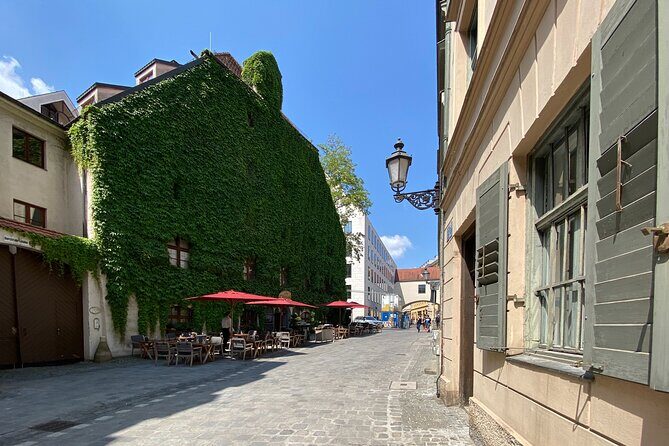
Now you reach Munich’s cathedral moment: Frauenkirche. You’ll visit and learn the legend behind its construction, plus how it relates to what you’ll see inside.
Victoria points out two details that give you something specific to watch for. One is the devil’s footprint, a famous feature people talk about but often don’t understand without context. The other is the story of wind around the cathedral all year, regardless of season.
That wind legend is one of those local explanations that feels odd until your guide connects it to the building’s behavior and the ways people interpret what they observe. Even if you keep an open, skeptical mind, the result is still useful: you’ll look at the cathedral more actively instead of treating it as a quick stop.
If your legs feel tired around here, this is a good place to slow down. It’s visually rewarding, and the guided context makes the time feel “spent,” not just “passed.”
Marienplatz: Fischbrunnen, sausage stories, and the Glockenspiel finale
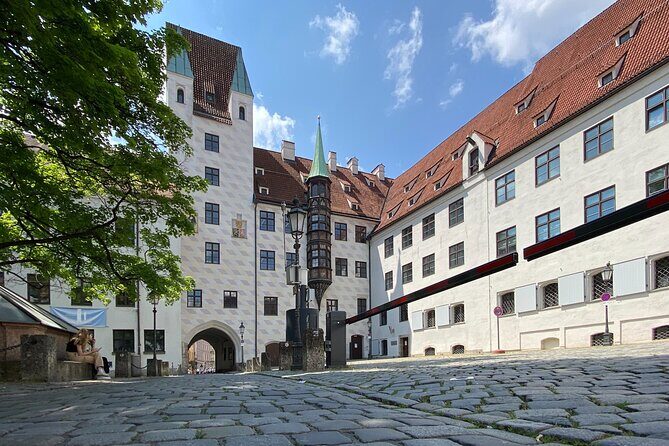
You finish at Marienplatz, the central square of Munich and the heart of the old town. This is the smart ending because once you get your orientation, you can keep exploring on your own with fewer false turns.
Victoria shows you Fischbrunnen (Fish Fountain) and ties it to local traditions like wallet washing and Butchers’ Jump. You’ll also learn the spot where Munich’s white sausage was invented, with the circumstances behind that claim. Even if you don’t eat right away, these stories give you a reason to notice the square in a different way.
The guide also walks you through St. Mary’s Square and the grand buildings flanking it: the New and Old Town Halls. Then comes the Glockenspiel, Munich’s world-famous mechanical clock, which reenacts two major scenes to carillon tunes.
After a route like this, Marienplatz becomes less like a destination and more like your jumping-off point. It’s where you can decide what you want next—more beer hall time, a museum you’ve heard about during the walk, or a slow sit-down meal guided by the recommendations you’ll get at the end.
What makes Victoria’s guiding style work (and why it shows in the details)
A good walking tour can throw facts at you and call it a day. This one works differently. Victoria is built for storytelling with structure: she keeps the route logical, ties buildings to people, and uses visuals on an iPad (photos and maps) to help you track what you’re seeing.
That matters because old towns can feel confusing fast. You look at a façade, but without context it’s just stone. With this approach, the same façade becomes a clue—about trade, power, politics, or daily life.
The tour is also flexible in the way that actually counts. In real-world terms, that means it can accommodate different ages and energy levels. If you’ve got a baby, older relatives, or just arrived after travel, the pace adjustments and mid-walk breaks help you stay comfortable instead of grumpy.
And if you like taking photos, you’ll also appreciate that the guide is ready to help with group pictures when timing allows.
Price and value: what $157.28 buys for up to 6 people
The price is $157.28 per group (up to 6) for about 2 hours. That sounds simple, but the value is in what you’re getting for that time.
First, entrance fees are included. Many sight-focused walks forget that small costs add up. Here, the tour lists free admission tickets as part of stops, which means you’re not paying extra just to see the key interior moments.
Second, the tour is private. You don’t have to share your attention with strangers or wait for the group to catch up. In Munich’s old town, that can be the difference between a relaxed stroll and a crowded march.
Third, you get insider recommendations—restaurants, shopping, and further sights. That’s not fluff. In a city like Munich, the difference between a mediocre meal and a great one often comes down to one smart suggestion on the first day.
Also, this tour is typically booked about 71 days in advance on average. That’s a hint that it’s in demand. If your dates are firm, don’t wait until the last minute.
Who should book this tour, and who might prefer something else
This tour is a great fit if you want a first pass at Munich’s old town that connects the dots. It suits couples, small families, and mixed-age groups, especially if you appreciate guided pacing and you like hearing both everyday city culture and the political chapters that shaped it.
It’s also ideal if you have limited time. Two hours is short enough to fit into a busy travel schedule, but long enough for real orientation—starting at Isar Gate and ending at Marienplatz.
If you prefer slow, unstructured wandering and you hate history that includes World War II-era context, you may not love the mix. The route includes a stop tied to early Nazi history, so consider your comfort level in advance.
How to plan your day for this 2-hour route
Wear comfortable shoes. This is a walking tour through stone streets and between major squares, so your feet will do most of the work.
Bring a light layer. Bavaria weather can shift quickly, and cathedrals and beer halls can feel different inside versus outside.
If you’re hungry, plan to eat after. Food and drinks aren’t included, and the tour time is focused on sights and stories.
Also, if you want to take full advantage of the ending, do it strategically. Start with this tour early enough that you can use the recommendations you’ll get, then plan your next stops around them.
Should you book this Munich private old-town walk?
Yes, if you want an organized introduction to Munich that still feels personal. The private size, entrance fees included, and Victoria’s storytelling style are a strong combination for first-time visitors.
Book it if you like learning how places got their meaning—from medieval walls and royal courtyards to Hofbräuhaus and the exact mechanics and legends around Marienplatz. If you’re traveling with mixed ages, it’s especially reassuring that the guide is used to adjusting pacing.
Skip it only if you want a slow day with no heavy historical moments, or if you prefer spending most of your time in one museum rather than moving between multiple landmarks.
FAQ
How long is the tour?
The tour runs for about 2 hours.
Is this tour private?
Yes. It’s a private tour/activity, and only your group participates. The group size is up to 6.
Where does the tour start and end?
The tour starts at Isar Gate (Tal 50, 80331 München) and ends at Marienplatz (80331 München).
What language is the tour offered in?
The tour is offered in English.
What’s included in the price?
The tour includes a digital map of the itinerary, the guide, the 2-hour private walking tour, insider tips and recommendations, and admission tickets (entrance fees are included).
Are food and drinks included?
No. Food and drinks are not included.
Is there an admission fee for the stops?
Entrance fees are included as part of the tour experience, and the itinerary lists admission ticket free at the stops.
Do I need to print anything?
No. You’ll receive a mobile ticket.
What is the cancellation policy?
You can cancel for a full refund up to 24 hours in advance of the experience’s start time. If you cancel less than 24 hours before, the amount paid is not refunded.