REVIEW · DUSSELDORF
Düsseldorf: MedienHafen Tour
Book on GetYourGuide →Operated by Visit Düsseldorf · Bookable on GetYourGuide
Architecture changes fast in Düsseldorf’s MedienHafen, and this 2-hour walk makes it readable. I especially love the chance to see Frank O. Gehry’s twisted buildings up close, then compare them to the clean geometry of the Rhine Tower. The guide also explains how the district flipped from warehouses to a future-facing quarter.
One thing to plan for: rough weather can cut the outing short, and a past booking stopped after an hour because of conditions.
You start at Apollo Varieté, right under the Rheinkniebrücke at Apollo-Platz 1, and you’ll also get a city museum visit to tie the buildings to the broader story. The tour runs in German or English, and private groups are available if you want more control over the pace.
In This Review
- Key things to know before you go
- MedienHafen in 2 Hours: what you’re really seeing
- Apollo Varieté to Rhine Views: starting smart under Rheinkniebrücke
- Warehouses to a new district since the 1980s
- Gehry’s twisted buildings: why the shape feels like motion
- The Landtag’s open design: architecture with a political mood
- Rhine Tower as the visual anchor of the district
- The city museum stop: putting buildings into a human timeline
- Guide quality, pacing, and how to handle audio or weather
- Price and value: $222 per group up to 10
- Who should book this MedienHafen tour
- Should you book the Düsseldorf MedienHafen Tour?
- FAQ
- How long is the Düsseldorf MedienHafen Tour?
- Where do I meet the tour guide?
- How much does the tour cost?
- What’s included in the tour?
- Which landmarks will the tour cover?
- What languages are offered?
- Can I book a private group?
- Is free cancellation offered?
- Can I reserve now and pay later?
Key things to know before you go
- Gehry on the walking scale: the MedienHafen’s signature twisted forms are a centerpiece, not a distant photo spot
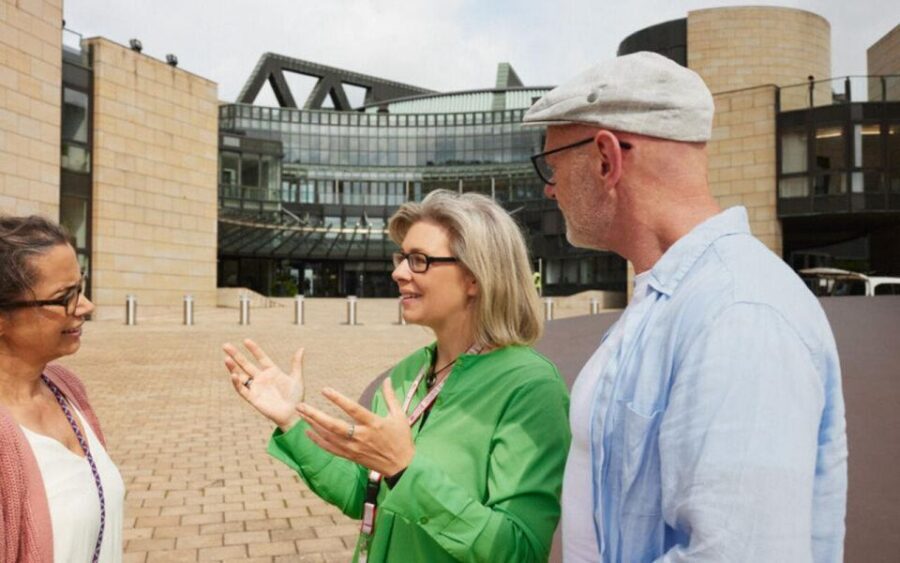
- Landtag and symbolism: you’ll see the open design of the state parliament and learn why it’s more than just shape
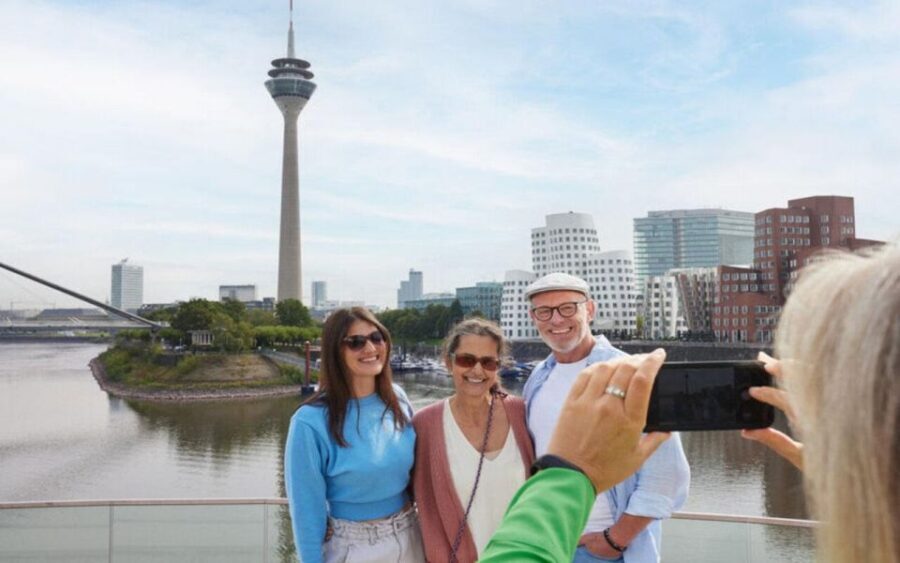
- Rhine Tower as the visual anchor: it’s treated as a standout reference point during the walk
- Context beyond facades: the visit includes a city museum stop so the architecture has a place in the story
- Guide energy can vary: one guide was praised for charm and clarity, while another session had pacing or volume issues
MedienHafen in 2 Hours: what you’re really seeing
MedienHafen is Düsseldorf’s version of a fast-moving construction site, just with world-class design and a strong point of view. In the span of 2 hours, you’ll go from the Rhine-side industrial vibe—warehouses used to dominate here—into a district that feels designed for constant change.
What makes this tour worth your time is the mix of big landmarks and the explanation of why they came when they did. You’re not just ticking off buildings; you’re learning how planning, industry, and modern architecture rewired the neighborhood since the late 1980s.
If you like urban change—how cities reinvent themselves without erasing their past—you’ll get a lot out of the way the guide ties form to history. And if you’re mostly an architecture person, you’ll still appreciate the setting and the “why” behind the eye candy.
You can also read our reviews of more tours and experiences in Dusseldorf.

Apollo Varieté to Rhine Views: starting smart under Rheinkniebrücke
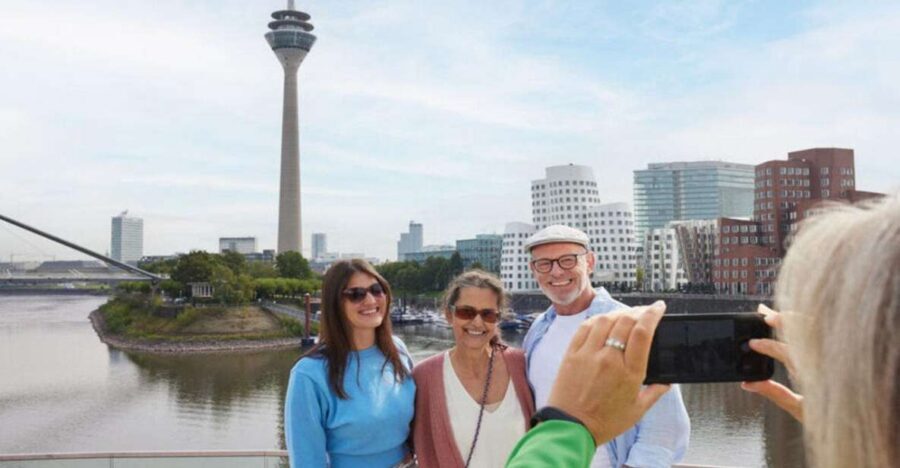
The meeting point is the entrance to Apollo Varieté at Apollo-Platz 1, below the Rheinkniebrücke. That location matters because it gets you into the district immediately, rather than spending your limited time just getting oriented.
This is a walk-first tour. So I’d treat it like an architecture stroll: comfortable shoes, a layer for Rhine winds, and your phone charged for quick reference photos. You won’t need museum-level patience, but you do need enough attention to follow the guide’s story as you move between contrasting designs.
Starting here also helps you get perspective fast. You’re near the water-and-city junction where the MedienHafen’s industrial roots and new forms overlap, so the “before and after” feeling hits quickly.
Warehouses to a new district since the 1980s
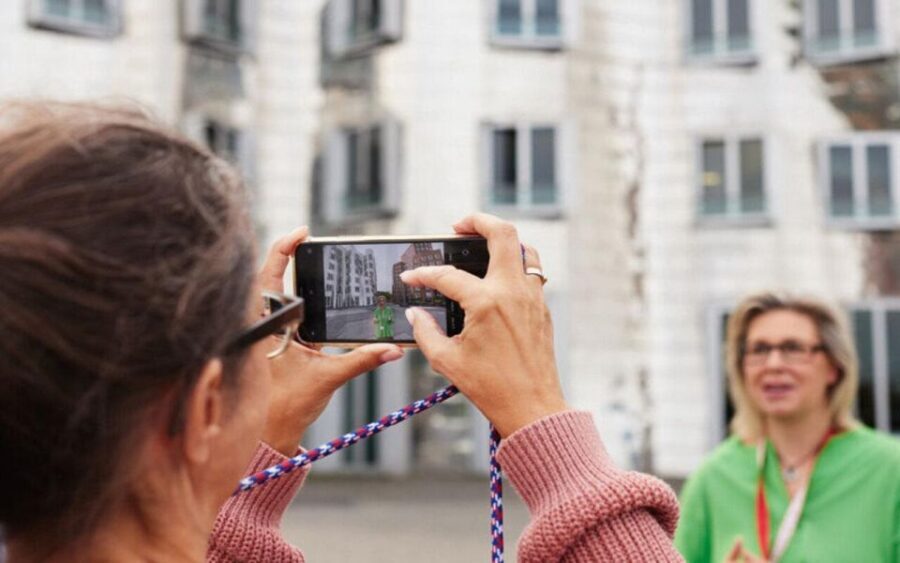
The tour’s main thread is simple: this area used to be mostly warehouses, then it began transforming into a modern district that never really stops evolving. That shift wasn’t just about new buildings. It changed the district’s rhythm, what people expect to find here, and how the city performs around the Rhine.
What I like about that framing is that it prevents you from treating the architecture as random. When you hear about how the MedienHafen moved into a permanent state of change, the Gehry forms and the other modern landmarks feel logical instead of trendy.
It also gives you an easy lens to use on your own after the tour. When you look at buildings on the Rhine side later, you’ll start asking the right questions: what problem did this solve, what did it replace, and why did the design language turn so futuristic?
Gehry’s twisted buildings: why the shape feels like motion

Frank O. Gehry’s buildings are a centerpiece of this tour, and that makes sense. Gehry’s work doesn’t sit still. From different angles, you feel like the materials and curves are shifting, even when the building isn’t moving.
On a walking tour, that matters because you’re not stuck with a single front view. You’ll see how the twisting forms behave when you change your position—more like a sculpture walk than a static photo stop.
I also like that the tour places these Gehry buildings next to other types of design, instead of letting them become the whole story. When you compare the expressive twists of Gehry with the more openly symbolic design of the Landtag (state parliament), you start understanding the neighborhood’s design range.
If you’re an architecture fan, this is the kind of tour where the best photos usually come from paying attention to angles, not just aiming for a wide shot.
The Landtag’s open design: architecture with a political mood
You’ll also see the Landtag, the state parliament building. The guide’s angle here is that the open design isn’t only an aesthetic choice—it’s symbolic.
That’s a valuable distinction. It turns the building from a background landmark into a statement about transparency, civic life, and public identity. Even if you don’t care about politics, you can still read the architecture as a message about how the city wants to represent itself.
The tour’s approach helps you see why modern civic buildings often look different from older government architecture. Older styles often signal authority through mass and distance. “Open” designs aim for visibility and connection, at least in their intent.
As you walk, you’ll likely start noticing how the tour uses contrasts: twisted private-sector design language over here, and an openly designed civic symbol over there. That contrast is the point.


Rhine Tower as the visual anchor of the district
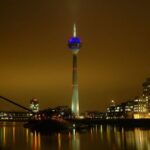
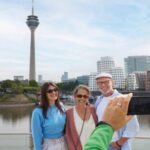
Then you hit the Rhine Tower, described as literally a cut above the rest. That phrasing captures a real travel truth: towers are how you measure a city. They create a reference point you can see from far enough away to keep orienting you.
Even during a short 2-hour walk, the Rhine Tower helps you “lock in” the district’s scale. You can look back at earlier buildings and judge how much the area has changed around that focal structure.
I like the way the tour treats it as more than a photo moment. It works as a stop that reinforces the neighborhood’s identity: the MedienHafen isn’t just architecture on the ground. It’s a whole skyline idea, with vertical structure anchoring the modern character.
If the day is bright, the tower and surrounding forms can give you easy visual comparisons. On cloudier days, you’ll still get value by focusing on lines and angles.
The city museum stop: putting buildings into a human timeline
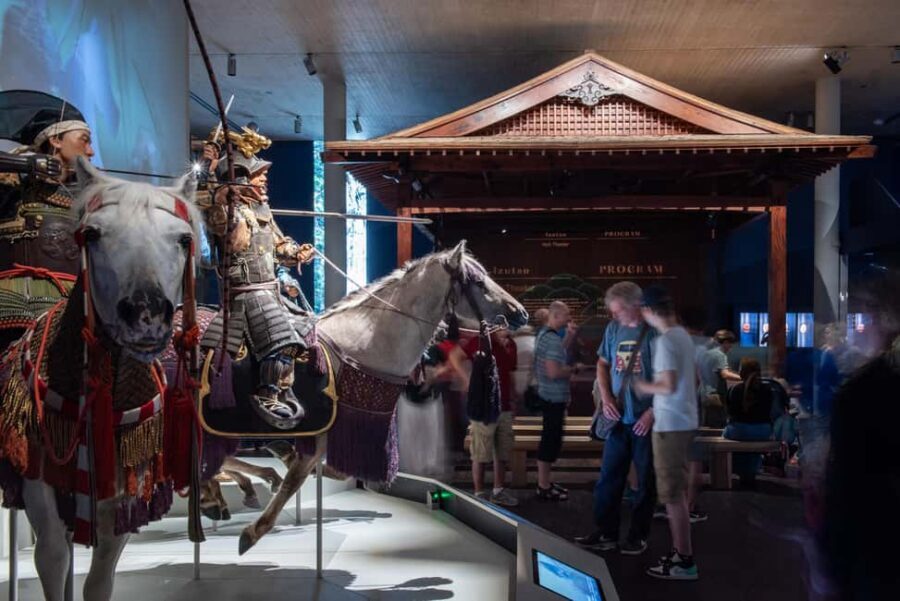
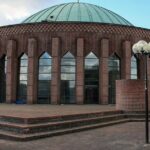
This experience includes a city museum visit, which is a smart addition. Architecture tours can sometimes turn into a series of exterior impressions. The museum component helps you understand what those impressions mean in the context of the district’s development.
From your point of view, this is the part that turns images into knowledge. You’ll see how the MedienHafen’s transformation fits into larger patterns—industrial use shifting over time, then space being reimagined with design-forward planning.
I also find museum stops improve the rest of the walk. Once you’ve got the timeline in your head, the buildings start reading like chapters rather than separate attractions.
Since your total time is only 2 hours, the museum portion is probably short. So you’ll want to be ready to focus on the big story beats instead of trying to read every label.
Guide quality, pacing, and how to handle audio or weather
A tour like this lives or dies on the guide’s ability to connect design details to a clear narrative. The tour provides live guidance in German and English, which helps a lot if you’re picky about understanding every step.
Still, guide delivery can vary. One booking noted that a guide’s voice wasn’t carrying well without stronger projection, which can be frustrating when you’re trying to hear key explanations between stops. Another booking praised a guide named Alma for being highly competent and charming, with a way of giving you a fresh view of the harbor’s architecture.
Here’s my practical advice: if sound is a concern, position yourself where you can hear most clearly rather than drifting to the back. And if the weather is changing—wind off the Rhine or sudden rain—keep an eye on the group’s pace. One past group had to stop after about an hour due to weather conditions, so plan your day with flexibility.
This isn’t a fault of the neighborhood. It’s just the reality of an outdoor architecture walk near the water.
Price and value: $222 per group up to 10
The price is $222 per group up to 10 people for a duration of 2 hours. That structure can be a great deal if you’re traveling with others, because you’re sharing the cost across your group.
If you fill the group size near 10, you’re effectively looking at about $22 per person. If you’re a smaller group, it’s less cheap per person—but you still get the benefit of a focused 2-hour guided route plus the museum visit.
What makes the price feel fair is the combination: you’re getting access to multiple major design landmarks—Landtag, Gehry buildings, Rhine Tower—plus a museum component that gives the architecture context. That’s more than a quick exterior walk.
If you’re solo, consider whether the tour time fits your schedule. This is best when you want a shortcut through the district’s most important ideas, not when you want total freedom to wander for hours.
Who should book this MedienHafen tour
This is a strong match for you if:
- you like modern architecture and want a structured way to see it quickly
- you’re curious about how cities reinvent industrial areas
- you want both outdoor views and a museum context stop within the same outing
- you prefer a guided explanation over figuring everything out alone
It’s also a good choice if you’re visiting Düsseldorf for a short stay and want one single experience that hits the district’s “signature” buildings.
If you dislike walking or you need lots of time to linger at stops, the tight 2-hour window may feel rushed. And if your main goal is museum time, this isn’t that kind of day.
Should you book the Düsseldorf MedienHafen Tour?
I’d book it if you want a compact, architecture-forward walk that also explains why the MedienHafen looks the way it does. The pairing of Gehry’s twisted forms, the Landtag’s open civic symbolism, and the Rhine Tower’s skyline anchor gives you a clear set of contrasts. Add the city museum stop, and you get more than exterior photos—you get context.
Skip it only if you’re the type who needs long pauses at each stop, or if you already have a museum-heavy day and don’t want a mixed outdoor/indoor schedule.
Given the group pricing up to 10, it can also be a smart way to travel with friends without paying per person for every hour of your guide’s time.
FAQ
How long is the Düsseldorf MedienHafen Tour?
The tour lasts 2 hours.
Where do I meet the tour guide?
Meet at the entrance to Apollo Varieté, Apollo-Platz 1, below Rheinkniebrücke.
How much does the tour cost?
The price is $222 per group for up to 10 people.
What’s included in the tour?
You get a tour guide, and the experience includes a city museum visit.
Which landmarks will the tour cover?
You’ll see the Landtag (state parliament), Rhine Tower, and Frank O. Gehry buildings in the MedienHafen area.
What languages are offered?
The live tour guide is available in German and English.
Can I book a private group?
Yes, private group options are available.
Is free cancellation offered?
Yes. You can cancel up to 24 hours in advance for a full refund.
Can I reserve now and pay later?
Yes. You can book your spot and pay nothing today.