REVIEW · BERLIN
Berlin: 7 Lakes Boat Tour through the Havel Landscape
Book on GetYourGuide →Operated by Reederei Lüdicke · Bookable on GetYourGuide
A boat trip through Berlin’s water history beats most museum afternoons. This 3.5-hour cruise links Berlin and Potsdam and lets you see the UNESCO-listed Havel route from the water.
I love how the live, German commentary ties together what you’re seeing: Prussian-era grandeur, postwar border echoes, and peaceful nature all in one ride. I also like the timing—long enough to feel like a real outing, short enough that you won’t burn your whole day.
One possible drawback: it’s in German, so if you don’t read German, you’ll rely mostly on the visuals. Also, there’s no included food—just onboard purchasing, and you can’t bring your own food and drinks.
In This Review
- Key things I’d plan around
- A 3.5-hour cruise that connects Berlin to Potsdam
- Where you board at Anlegestelle Spandau (Lindenufer)
- Grunewaldturm and Imcheninsel: nature protection you can actually see
- Schwanenwerder and Wannsee: villas, gardens, and the power of a view
- Pöhlesee and Stölpchensee: quiet lake moments between landmarks
- Griebnitzsee to Babelsberg Palace: formal grandeur meets the waterline
- Glienicke Bridge (Agent’s Bridge): where history crosses the water
- Jungfernsee and the Church of the Redeemer: border memories in a calm setting
- Pfaueninsel and Peacock Island: a pleasure-palace fairy-tale, minus the fantasy
- Kladow harbor and your return to Lindenufer
- Price and value: is $30 a good deal for this much ground?
- Who this boat tour is best for (and who should skip it)
- Practical tips for getting the most from the deck
- FAQ
- How long is the Berlin 7 Lakes boat tour?
- Where does the boat depart?
- Is food included on the boat?
- Is there a toilet on the boat?
- What language is the live commentary?
- Is bringing food and drinks allowed?
- Should you book this tour?
Key things I’d plan around
- UNESCO Havel sights: you’re not just cruising water, you’re following a recognized historical route
- Cold War landmarks by the water: you’ll pass the famous Agent’s Bridge and other East/West reminders
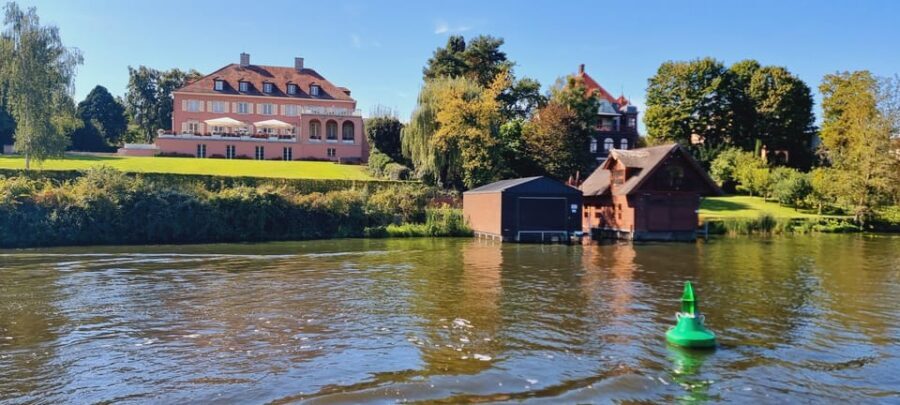
- Wannsee villas and important buildings: Villa Lemm, the House of the Wannsee Conference, and Villa Liebermann are all part of the view
- Potsdam’s palacefront on the water: Babelsberg Palace and Park show up right along the cruise line
- A strong comfort mix: live commentary plus a toilet on board helps the 3.5 hours feel easy
- Buy-onboard refreshment only: you’ll want a plan for drinks since food isn’t included
A 3.5-hour cruise that connects Berlin to Potsdam
This is a straightforward outing with a clear payoff: you leave Spandau on the Havel, cruise through the lake chain toward Potsdam, then head back along the river. The whole experience is designed around line-of-sight history—castles, palaces, bridges, churches, and villa gardens—seen in motion rather than from a fixed viewpoint.
At about 3.5 hours, it hits a sweet spot for a day in Berlin. You get enough time to absorb different “moods” of the region: open lake water, formal gardens, and the solemn reminders of how Berlin and Germany were split. And because the boat covers distance for you, you don’t have to hop between multiple areas to get the same kind of overview.
Value-wise, at $30 per person, it’s priced like a solid sightseeing ticket rather than a premium tour. For that kind of money, the big win is the combination of live commentary and the sheer variety of landmarks packed into one continuous ride.
You can also read our reviews of more boat tours in Berlin
Where you board at Anlegestelle Spandau (Lindenufer)
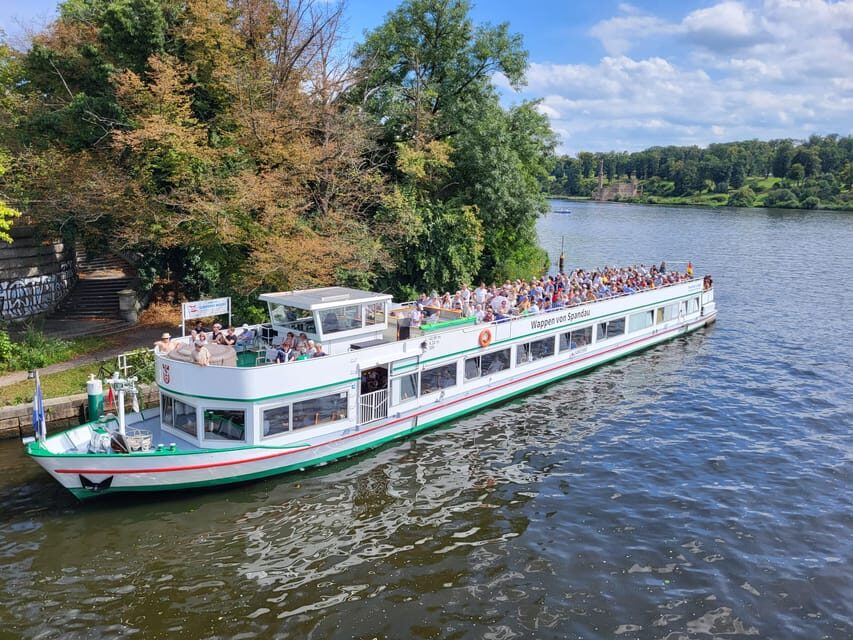
You’ll start at Anlegestelle Spandau (Lindenufer). The boat departs from the Lüdicke shipping company on the Lindenufer, behind the Spandau town hall on the Havel.
This matters because you’ll want to show up with enough buffer time to find the dock area and get seated before departure. Also, since the commentary is live and you’re listening while you’re moving, boarding smoothly helps you start “on time” in your head, not scrambling.
If you’re planning a day with other Berlin stops, I’d treat this cruise as your middle anchor. It’s long enough to count as a major segment of your day, but not so long that it eats your evening.
Grunewaldturm and Imcheninsel: nature protection you can actually see
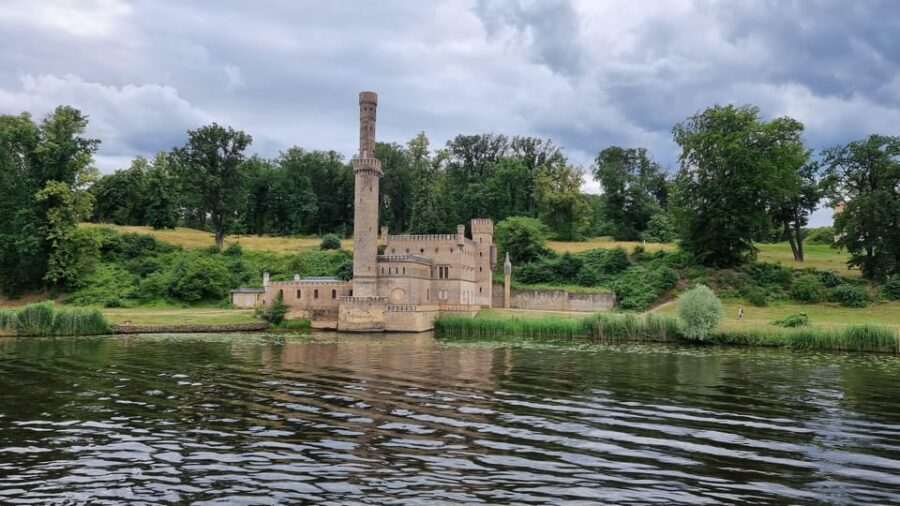
Right from the beginning, the cruise heads past Grunewaldturm. This is the moment you realize the trip isn’t only about buildings. You’re also cruising through protected shoreline areas and preserved nature spots around the Havel system.
Soon after, you glide past Imcheninsel, one of Germany’s smallest nature reserves. Seeing a tiny protected island from a moving boat gives you a different perspective than hiking to a viewpoint. Instead of walking for access, you get a moving “window” into a place that’s meant to stay calm and protected.
For me, this early nature segment is a breather. It sets expectations: yes, there are palaces and villas ahead, but the Havel route also has quieter edges that make the history feel less like an indoor slideshow.
Schwanenwerder and Wannsee: villas, gardens, and the power of a view
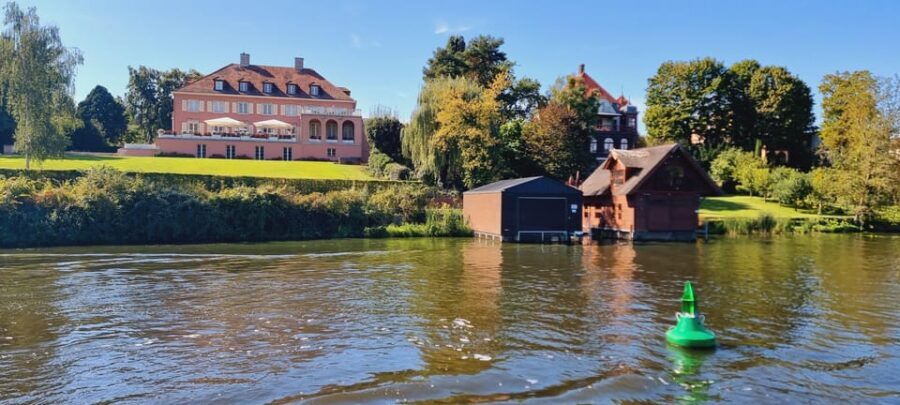
As you move along the chain toward Schwanenwerder, you start seeing the kind of waterfront estate living Germany does so well: villas, structured gardens, and long sightlines across the water. This stretch is where the cruise shifts into more “recognizable postcard” territory.
When the boat reaches Wannsee, it gets especially compelling because you’re in the area associated with major historical and cultural sites. You’ll pass the House of the Wannsee Conference and also see famous residences tied to the area, including Villa Lemm and Villa Liebermann am Wannsee.
What I like about this portion is that the scenery and the history reinforce each other. The villas aren’t just pretty buildings floating in the distance. They sit within the setting where people gathered and where political and cultural life unfolded. You’re watching the waterfront ecosystem that made the area attractive in the first place.
Pöhlesee and Stölpchensee: quiet lake moments between landmarks
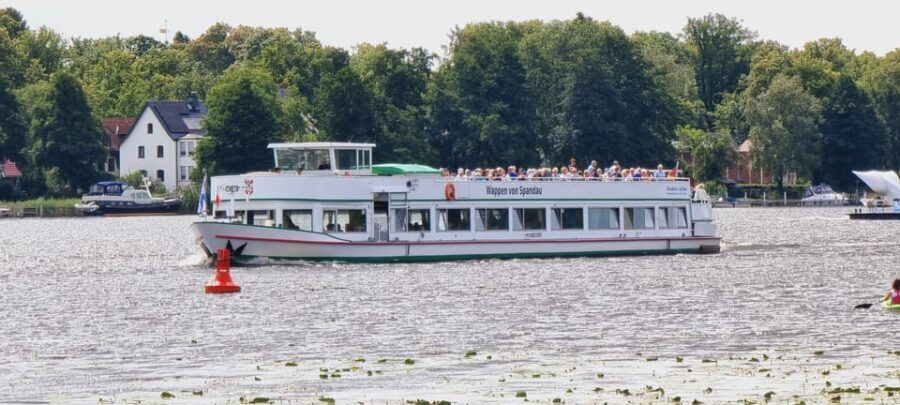
Between the big stops, the boat carries you past Pöhlesee and Stölpchensee. These don’t come with as many headline-name buildings on your side of the glass, and that’s exactly why they work.
This is where you can relax your brain for a minute. The lakes give you space to notice the way shorelines bend, how built structures sit beside trees, and how the region changes from one pocket of water to the next. If you’ve been sightseeing all day in Berlin, this portion helps you reset without losing momentum.
If you’re the type who loves “in-between” moments—transitions, scenery shifts, and gentle breathing room—this is the section you’ll remember.

Griebnitzsee to Babelsberg Palace: formal grandeur meets the waterline
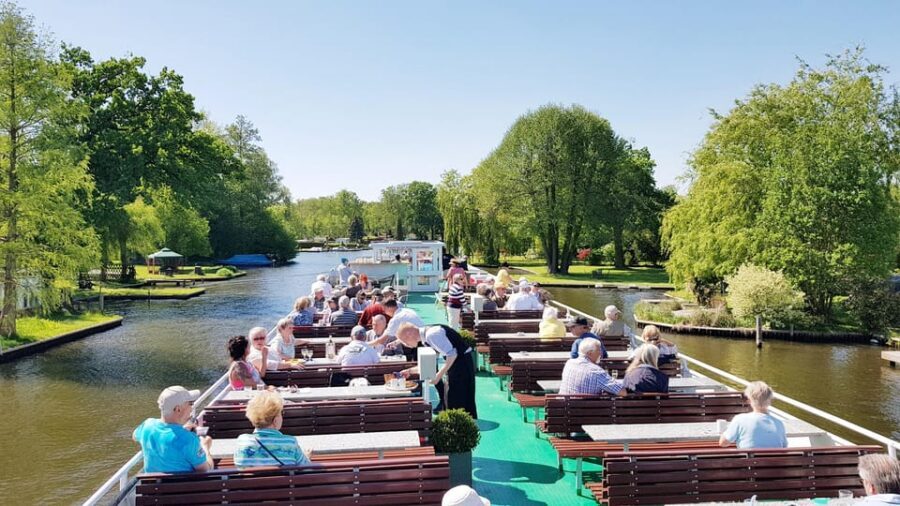
As you continue, Griebnitzsee becomes another turning point. Then you reach Babelsberg Palace and Park, which sit right along the water and feel made for this kind of cruise.
Seeing Babelsberg Palace from the water changes how you read it. Up close on land, you’d focus on rooms and facades. From the boat, it becomes about proportions—how the palace meets the lake, how the grounds frame the view, and how the architecture holds its shape while everything else moves past.
This is also the time to look for details that are easy to miss when you’re standing still. From the deck, you can often catch the relationship between palace grounds and the curve of the shoreline, which gives you a fast “orientation picture” for later.
Glienicke Bridge (Agent’s Bridge): where history crosses the water
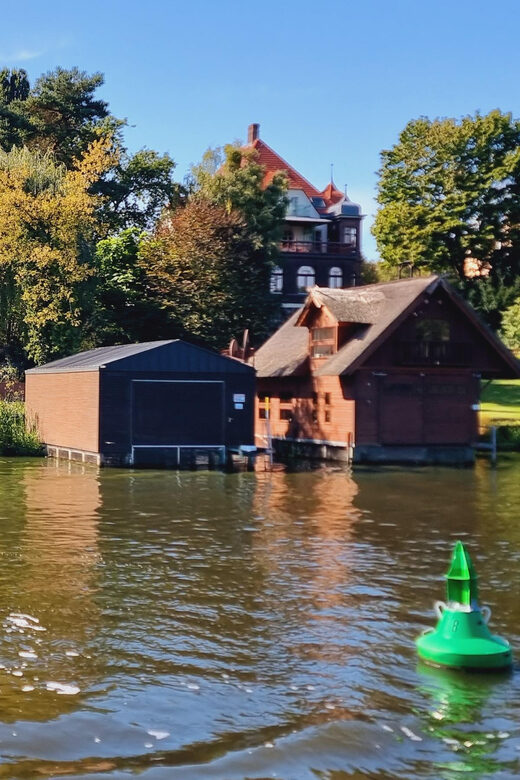
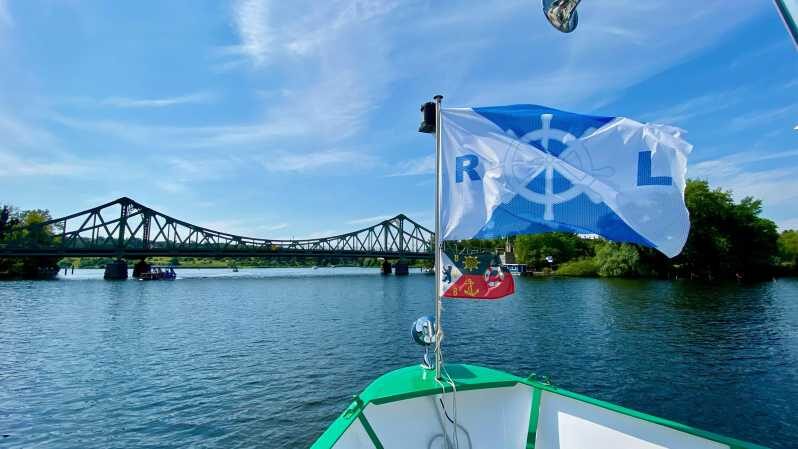
Then comes one of the most dramatic parts of the entire route: you sail under Glienicke Bridge, famously called the Agent’s Bridge. This is where Cold War history lands hard, because the bridge is an actual crossing—built to connect places that were anything but connected in spirit.
What makes this moment work is its simplicity. You don’t need extra context to recognize the significance once you’re in front of it. The bridge’s role as a crossing is obvious, and the river-and-bridge framing makes the story feel physically close.
If you want one “anchor photo” for your trip, this is it. The view angle from the water gives you both the bridge structure and the surrounding water geometry.
Jungfernsee and the Church of the Redeemer: border memories in a calm setting
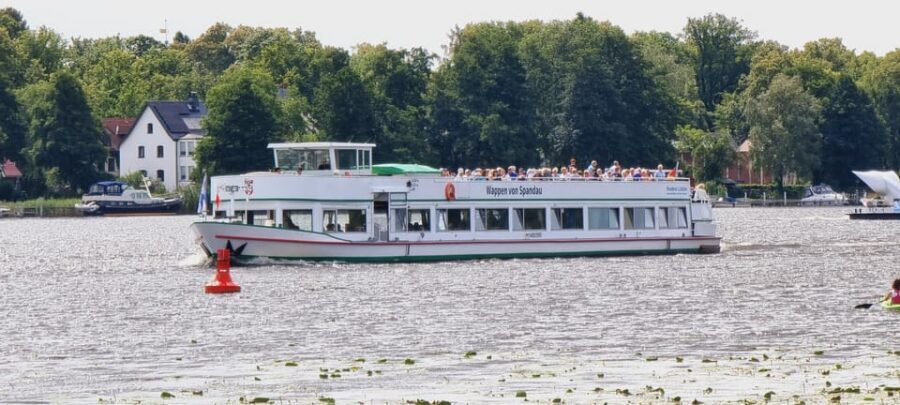
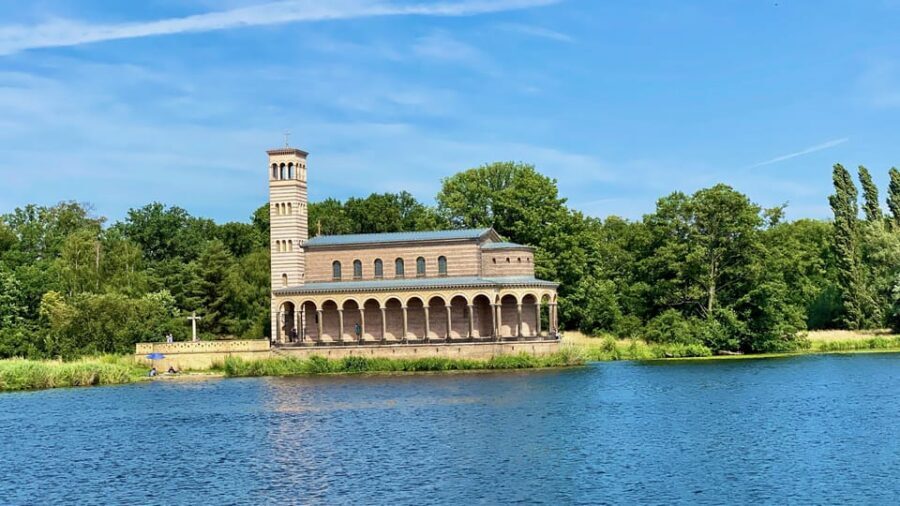
After Glienicke, the cruise reaches Lake Jungfernsee, where the atmosphere shifts from palacefront spectacle into more reflective territory. You’ll also pass the Church of the Redeemer in the former border area between East and West.
That’s a key point: this isn’t history sitting far away behind ropes. You’re seeing it as part of the river corridor itself. The water acts like a timeline, and the church shows how religious landmarks and border-era realities can share the same visual space.
This segment works best if you slow down mentally. Give yourself a minute to look, not just photograph. When you do, the setting feels quieter, and the historical weight becomes more noticeable.
Pfaueninsel and Peacock Island: a pleasure-palace fairy-tale, minus the fantasy
Next up is Schloss Pfaueninsel, also known as the pleasure palace on Peacock Island. You’re moving, but the island concept still reads instantly: an isolated-feeling spot that suggests leisure, court life, and a kind of planned escape.
From the boat, the appeal is that you get the “island effect” without needing a separate ticket or ferry. You can register the scale and the separation that makes the island special, then continue onward before the rest of your day gets complicated.
If you’re on a tight schedule, this is one of those built-in payoffs: you get the look and the setting in the same motion as everything else.
Kladow harbor and your return to Lindenufer
The cruise continues onward toward Kladow, Spandau, and eventually returns to Lindenufer at Anlegestelle Spandau. The route closing matters because it helps you connect what you’ve just seen with your starting point.
By the end, you’ll likely notice patterns: where landmarks cluster, where the shoreline opens up, and how the water route stitches different districts together. That’s the real value of staying on the same boat for the whole loop—you’re building a mental map, not just collecting isolated views.
And since a toilet is on board, the return leg stays comfortable enough that you can focus on the sights instead of the logistics.
Price and value: is $30 a good deal for this much ground?
For $30 per person, I think the value is strong, assuming you’re comfortable with German-language narration. The tour delivers:
- live commentary during the whole ride
- a 3.5-hour cruise experience (so you’re not stuck in a short “blink and it’s done” format)
- major landmark density along a single route: Grunewald area features, Wannsee sites, Babelsberg Palace, Glienicke Bridge, and more
Food and drink aren’t included. But drinks/snacks are available to purchase on board, and you can’t bring your own food and drinks. That’s not a dealbreaker—just plan like a sensible adult and buy something onboard if you need it.
If you’re trying to pack Berlin into a few tight days, this cruise is a practical way to see more than you could reasonably walk between.
Who this boat tour is best for (and who should skip it)
I’d book this if you:
- want a high-view sightseeing day without changing transport every hour
- enjoy history tied to place, not just facts in a textbook
- like the mix of big-name landmarks and calmer lake scenery
- can handle German live commentary (or you’re happy to go visual-first)
I’d skip it if you:
- need an English guide or an English narration track, because the commentary language is listed as German
- hate tours where you mainly glide past sites rather than stopping to wander around
Practical tips for getting the most from the deck
Because a lot of the experience is visual, your comfort matters. Dress for cool lake air even when Berlin feels mild, and keep your phone/camera ready for those bridge-and-palace angles.
Also, make your own pace for the listening. If the German narration is hard to follow at points, don’t panic. Let landmarks do the heavy lifting. You’re seeing recognized UNESCO waters, Cold War-linked sights like Glienicke Bridge, and villa-heavy stretches around Wannsee—that combination works even when your ear catches only every third sentence.
If you’re bringing a drink, remember: you can’t bring food or drinks from outside, but you can buy onboard.
FAQ
How long is the Berlin 7 Lakes boat tour?
The cruise lasts about 3.5 hours.
Where does the boat depart?
It departs from Anlegestelle Spandau (Lindenufer) on the Havel, from the Lüdicke shipping company behind the Spandau town hall.
Is food included on the boat?
No. Food and drink aren’t included, but you can purchase them on board.
Is there a toilet on the boat?
Yes, there is a toilet on board.
What language is the live commentary?
The live commentary is in German.
Is bringing food and drinks allowed?
No—food and drinks are not allowed. (You can buy drinks and food onboard.)
Should you book this tour?
If you want one ticket that connects Berlin’s waterfront to Potsdam’s palaces and Cold War landmarks, this is a smart pick. The live German commentary and the variety of named sights along one continuous route make the time feel efficient, and the pricing is reasonable for what you get.
Book it if you’re comfortable with German narration and you like seeing history from the water. Skip it only if you need English guidance or you expect lots of stop-and-walk time, because this tour is primarily a moving panorama.