REVIEW · LUBECK
Lübeck: Architecture and Local Craft Private Guided Tour
Book on GetYourGuide →Operated by Hamburg Tours · Bookable on GetYourGuide
A single brick building can tell a whole city. This private walk through Lübeck’s Hanseatic brick architecture pairs big-name sights with the small details behind them, from the medieval street plan to the craft of making bricks. Two things I love: the way it connects architecture to everyday life, and the focus on the city’s UNESCO-listed Gothic brick identity.
You’ll also get a clear, human guided flow—walking streets, stopping where buildings change, then tying it together with stories about Lübeck residents. One consideration: it’s 90 minutes, so you’ll want comfortable shoes and an interest in architecture/history rather than a long food-and-snack break.
In This Review
- Key highlights you’ll actually notice
- Why Lübeck’s Brick Gothic Feels Like a Time Machine
- Meeting at the Holstentor: Your Route Starts to Make Sense
- Hanseatic Streets: Medieval Expansion, Sagging Houses, and Gable Changes
- Market Square Power Play: Rathaus and Ratskirche St. Marien
- Buddenbrockhaus to Glockengießerstraße: Passages and Courtyards
- A Local Merchant’s House and the Brick-Making Story
- Holstentor Again: Closing the Loop on Lübeck’s Icon
- Church Time and Optional Entrance Fees
- Price and Timing: Is $277 Worth 90 Minutes for Up to 8?
- Who This Lübeck Architecture Tour Fits Best
- Should You Book This Lübeck Architecture Tour?
- FAQ
- Where is the meeting point for the tour?
- How long is the Lübeck architecture and local craft private tour?
- Is this a private tour, and how many people can be in the group?
- What languages are available for the guided tour?
- Are there entrance fees for churches?
- Can I cancel for a refund?
Key highlights you’ll actually notice
- Holstentor orientation: a landmark start that makes the whole city feel readable
- UNESCO Gothic brick architecture: what makes Lübeck’s style different and why it mattered
- Market square anchors: Rathaus and Ratskirche St. Marien set the tone fast
- Glockengießerstraße lanes: passages and courtyards that explain how space worked
- Brick-making insight: why mastering the craft shaped Lübeck’s growth
- Private group pace: questions welcome, and the guide can steer the emphasis
Why Lübeck’s Brick Gothic Feels Like a Time Machine
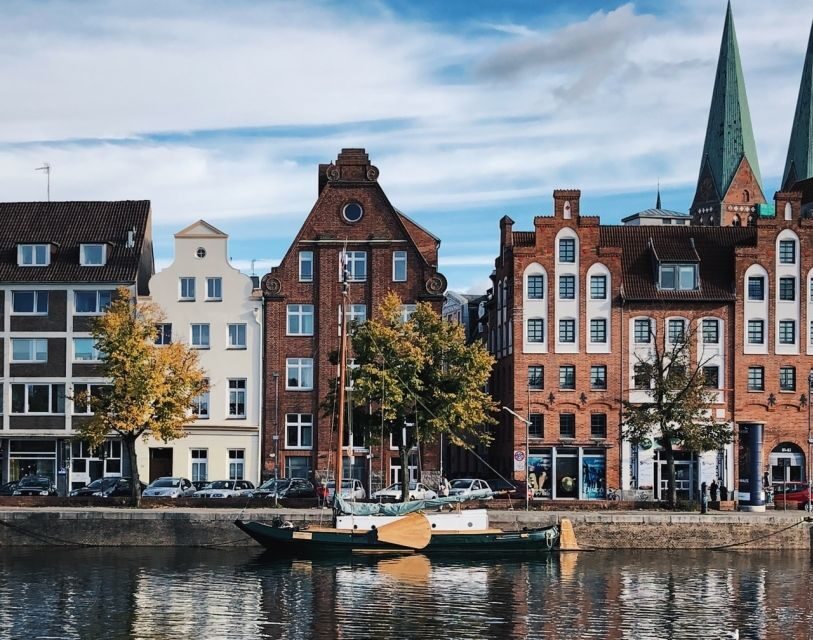
Lübeck is famous for its brick Gothic, but this kind of tour makes the fame make sense. You don’t just look at pretty facades—you learn what the buildings were trying to do, and what problems they had to solve. The result is that the city starts to feel built by real people with real limits.
I especially like how the guide frames Lübeck’s story through architecture materials. Brick isn’t just a visual style here; it’s tied to trade, labor, and know-how. And because this walk includes churches and town buildings, you get both the official look of power and the lived-in look of commerce.
If you’re expecting a pure photo sprint, this might feel a bit slower. But if you enjoy stopping, looking up, and understanding what you’re seeing, you’ll get a lot more out of 90 minutes.
You can also read our reviews of more guided tours in Lubeck
Meeting at the Holstentor: Your Route Starts to Make Sense
You meet at the Holstentor—right at the entrance of the Holstenstor. That’s a smart first move, because it gives you a landmark you can constantly use as a mental reference. Once you’re oriented, the rest of the Old Town stops feeling random.
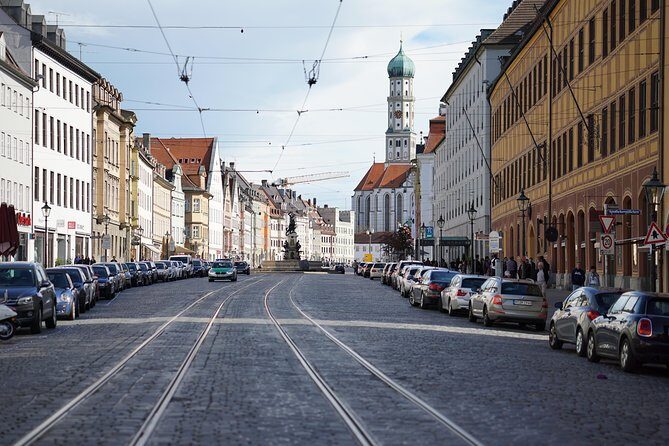
From there, you head onto Lübeck’s streets with your local guide. The walking rhythm is built around observations: how buildings relate to the street, how architectural features evolved, and how the city’s layout reflects medieval planning. Even early in the walk, you’ll likely notice that Lübeck is a city of edges—gates, squares, lanes, and corners that funnel you toward the next big view.
It’s also a good starting point for a private group. Your guide can adjust pacing and question time without worrying about a bus schedule.
Hanseatic Streets: Medieval Expansion, Sagging Houses, and Gable Changes
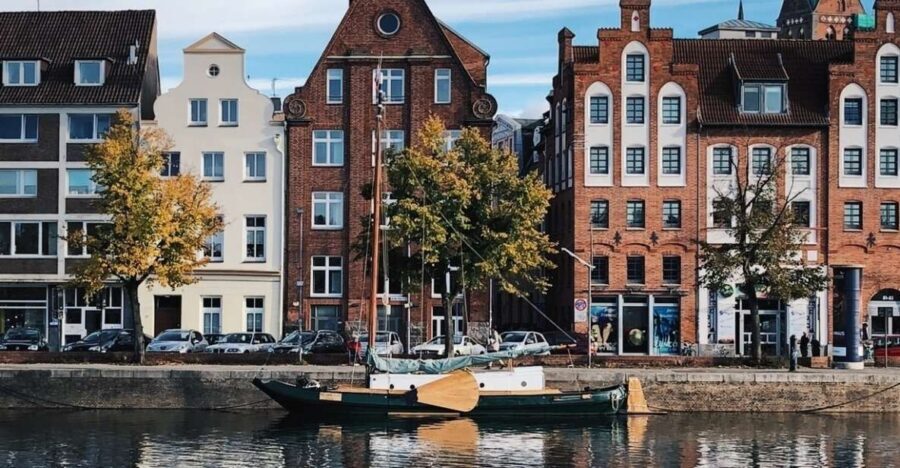
A big theme of the tour is how Lübeck’s original street system shaped what came next. You’ll learn how the city grew, including how construction areas were expanded in the Middle Ages. That matters, because Gothic brick architecture didn’t happen in a vacuum—it had to fit into an evolving city grid.
You’ll also hear about practical building issues, like sagging houses. That might sound grim, but it’s actually one of the most interesting ways to understand old cities: structures respond to their environment over time. When you learn what caused settlement and how later changes were made, the buildings start to look less like museum pieces and more like durable work-in-progress projects.
Another detail you’ll pick up involves modern gable alterations. Lübeck’s skyline isn’t frozen. Architectural character evolved as styles and needs changed, and the guide helps you spot those transitions without turning the walk into a history lecture.
Market Square Power Play: Rathaus and Ratskirche St. Marien
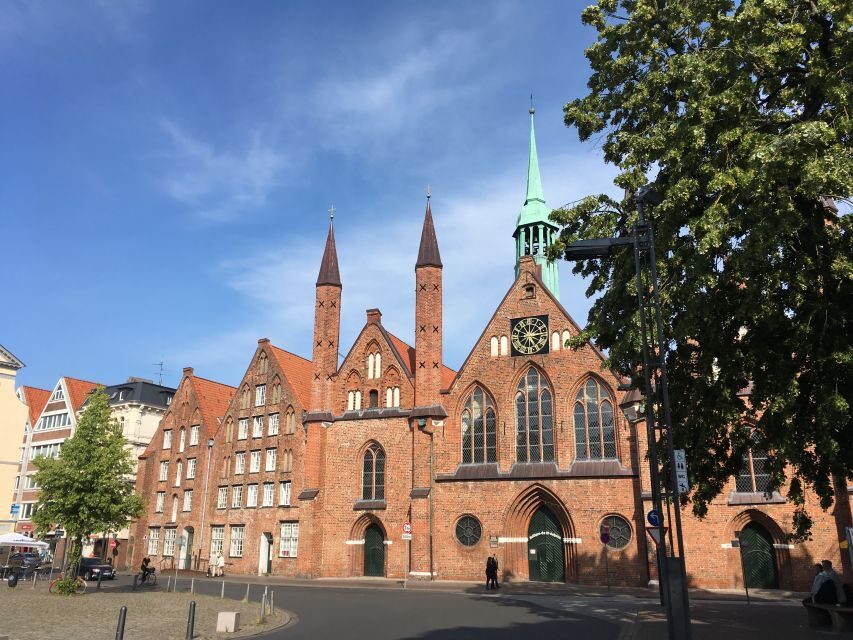
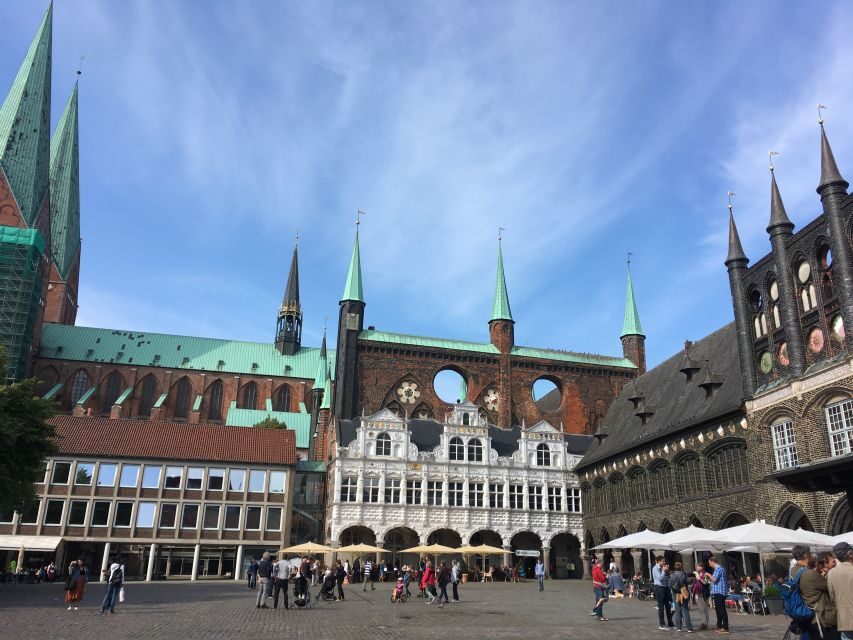
Next up is a stroll through the town market place—one of the easiest places to feel the city’s balance of civic authority and religious importance. Here, you can marvel at the Rathaus and then focus on the famous Ratskirche St. Marien (St. Mary’s Church).
This stop works because it’s not just about admiring church architecture from the outside. You’ll learn how these major structures fit into Lübeck’s rhythm of public life. A market square isn’t only commerce; it’s where power shows up in plain sight—through design, scale, and location.
I also like that the tour connects churches with the broader theme of Lübeck’s world-famous Gothic brick architecture. Once you see the churches as part of the same architectural language as the town buildings, everything clicks. The city stops being a set of separate landmarks and becomes a coherent style.
If you’re the type who likes a “main stage” stop early in a tour, this is it.
Buddenbrockhaus to Glockengießerstraße: Passages and Courtyards
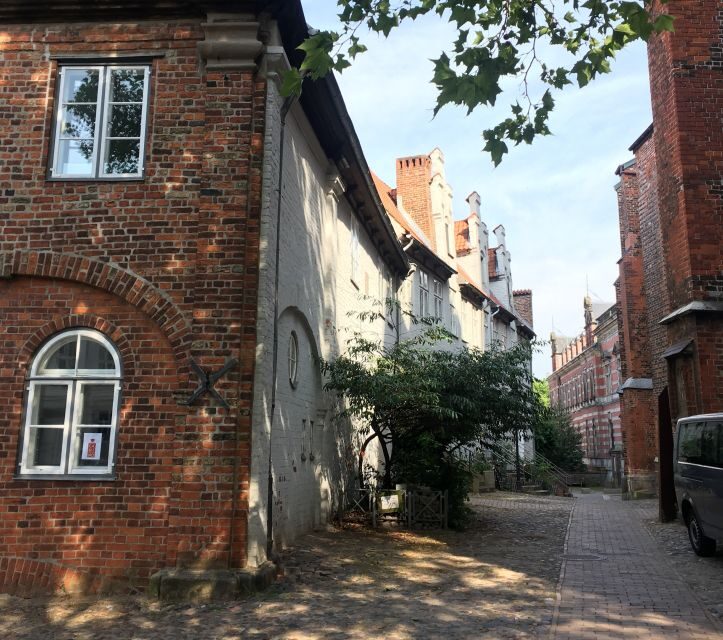
After the market square, the tour passes through the Buddenbrockhaus. From there, you reach Glockengießerstraße, where the vibe shifts from open square to tucked-in spaces.
This is where Lübeck gets fun. You’ll see several passages and courtyards, and the guide explains their history and construction. These are the kinds of details that most people walk past without a second glance, but with guidance they become part of how the city worked—how people moved, where life unfolded, and why certain spaces were shaped the way they were.
One practical reason I like this portion: it breaks up the big-monument feeling with smaller, human-scale architecture. You’ll get “stop and look” moments, then “wait, how does this fit together?” moments. It’s ideal if you enjoy understanding urban design, not just buildings.
And because it’s private, you can linger a bit if something catches your eye—like a courtyard entrance or a passage that changes the sightline.
You can also read our reviews of more private tours in Lubeck
A Local Merchant’s House and the Brick-Making Story
One of the most valuable parts of the tour is a stop at a local merchant’s house. This isn’t just a pretty facade moment. You’ll listen for insight into brick-making and why mastering this craft was so important to Lübeck and its inhabitants.
That’s a key “why” behind the whole city. When brick-making is part of the local advantage, it affects everything: what gets built, how fast it can be built, and how consistent the architectural style becomes. In other words, you’re not only learning about buildings—you’re learning about an industry that helped shape Lübeck’s identity.
This segment also makes the walking feel more grounded. Instead of treating architecture like decoration, you’re seeing it as skill, infrastructure, and economic power. If you’ve ever wondered how a style spreads across a city, this is the answer in brick form.
Holstentor Again: Closing the Loop on Lübeck’s Icon
The tour includes a trip to the mighty Holstentor, one of Lübeck’s most iconic landmarks. Since you start there, it helps tie the experience together: you can compare what you saw at the beginning with what you understand now.
By the time you’re heading toward the final landmark moments, you usually feel a shift. The city’s layout feels more logical. The churches feel less random. The brick details feel intentional instead of decorative.
If you like tours that end with a clear “I get it now” feeling, this one delivers that.
Church Time and Optional Entrance Fees
Church buildings are a major focus, but you should plan for the fact that entrance can be optional. Church entrance fees are listed as optional, at 2.00 EUR.
So here’s how to think about it: if you’re happy staying outside and enjoying views and exterior architecture, you can keep costs simple. If you want the interior perspective too, budget a small add-on. The guide will likely help you decide based on what you care about most that day.
Even without paying for interiors, you’ll still learn a lot about why these churches matter in Lübeck’s brick Gothic story.
Price and Timing: Is $277 Worth 90 Minutes for Up to 8?
At $277 per group (up to 8 people) for 90 minutes, this is priced for a private, targeted experience rather than a budget walking tour.
Here’s how I’d judge the value. You’re paying for:
- A professional local guide
- A guided route that hits major architecture cues (Holstentor, market square, church focus, and Glockengießerstraße passages)
- Context that turns “I saw a church” into “I understand why this city looks this way”
If you’re traveling solo, you’re effectively buying a guide’s attention and a structured walk. If you’re traveling with a small group, it can feel like a fair deal because the cost spreads out while you keep the private pace.
Timing matters too. The tour can start any time between 9AM and 7PM, based on preference. That flexibility helps you fit Lübeck into a day that already includes trains or connections.
If you’re short on time but want the city to make sense fast, this is a strong match.
Who This Lübeck Architecture Tour Fits Best
This private guided tour suits you best if you:
- Love Gothic brick architecture and want the story behind it
- Enjoy walking city streets and reading architectural clues
- Prefer a guide who answers questions and keeps things coherent
- Want a focused 90-minute overview rather than a slow, all-day plan
It may be less ideal if you’re mostly there for beaches, nightlife, or lots of dining stops. This is a craft-and-architecture tour—centered on buildings, design choices, and what shaped them.
Also, if you want to maximize photo opportunities, go in with an eye for details: facades, gables, brick patterns, and those lesser-known passage/courtyard spaces.
Should You Book This Lübeck Architecture Tour?
I’d book it if you want Lübeck to feel readable in a short time. The combination of Holstentor orientation, market square anchors like Ratskirche St. Marien, and the craft story behind brick-making gives you more than a checklist of sights.
I wouldn’t book it if you’re looking for a food-heavy experience or a long wandering day with no structure. But if your goal is to understand Lübeck’s Gothic brick identity—and see it through the eyes of someone who knows the city—this private tour is a smart use of your time.
FAQ
Where is the meeting point for the tour?
Your guide meets you at the Holstentor. Wait directly at the entrance of the Holstenstor.
How long is the Lübeck architecture and local craft private tour?
The tour lasts 90 minutes.
Is this a private tour, and how many people can be in the group?
Yes, it’s a private group. The price is listed per group up to 8 people.
What languages are available for the guided tour?
The guide offers live tour commentary in English and German.
Are there entrance fees for churches?
Church entrance fees are optional and listed as 2.00 EUR.
Can I cancel for a refund?
Yes. You can cancel up to 24 hours in advance for a full refund.