REVIEW · LUBECK
Lübeck: Backyards and Town Houses Private Guided Tour
Book on GetYourGuide →Operated by Hamburg Tours · Bookable on GetYourGuide
Medieval Lübeck has backdoors to secrets. This private 90-minute guided walk zooms in on Lübeck’s backyards and Gothic brick townhouses, with the kind of small details you’d miss on your own. I especially like how the guide explains the city’s medieval planning, from house signs and gables to church towers. And the highlight for me is the angel pit story, where the guide clears up what that name is really about.
One thing to consider: the tour is guided in German only, so you’ll want at least a basic comfort with the language to catch the details.
In This Review
- Key Things You’ll Notice on This Lübeck Tour
- Starting at Holsten Gate: the tour’s rhythm and best approach
- Gothic brick, gables, and house signs: what you’re really looking at
- The backyards and townhouses: why these courtyards feel like a different world
- Church towers, St. Jakobi, and the city’s Middle Ages timeline
- The angel pit and street lamps: the details that make the tour stick
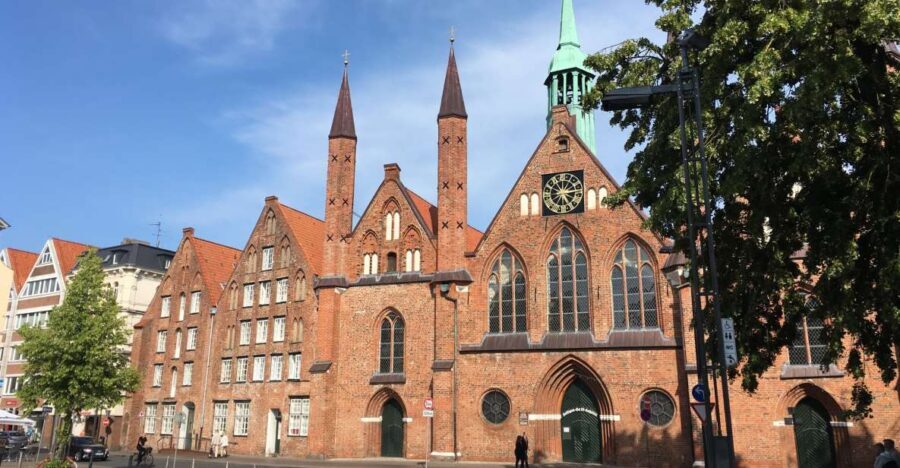
- Ending at Heiligen-Geist-Hospital and its little turrets
- Price and value: what $259 per group really buys
- Who should book this private Lübeck backyards tour
- Should you book this Lübeck backyards and town houses tour?
- FAQ
- Where is the meeting point for the tour?
- How long is the Lübeck backyards and town houses private guided tour?
- Is this tour private?
- What language is the guide?
- Is food or drinks included?
- What does the tour include?
- Can I choose the start time?
Key Things You’ll Notice on This Lübeck Tour
- Holsten Gate start point: you begin right in the heart of the old town’s medieval approach.
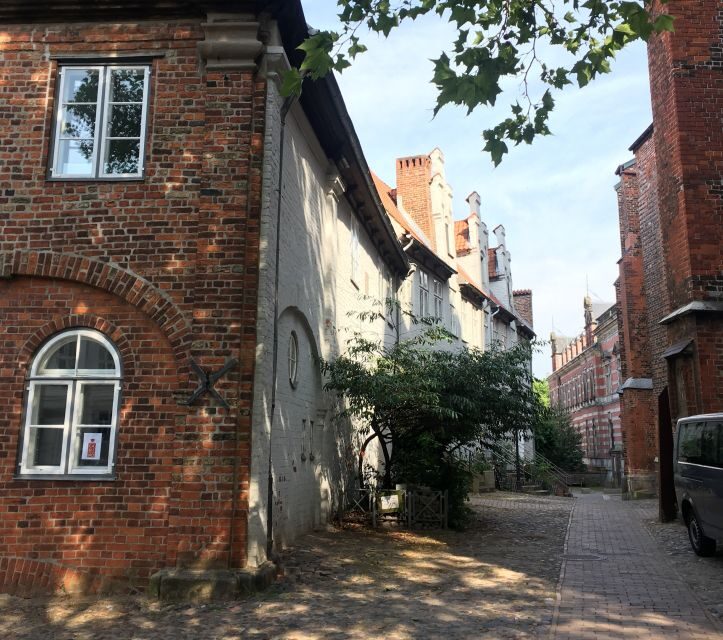
- Townhouse backyards you can actually walk through: small courtyards, alleyways, and low passages that show how people lived.
- House signs, gables, and street cues: the guide points out the visual language of a Hanseatic city.
- Church towers that shaped Lübeck: you get orientation in time by seeing the skyline features.
- The angel pit myth-busting: the name sounds religious, but the explanation is practical and historical.
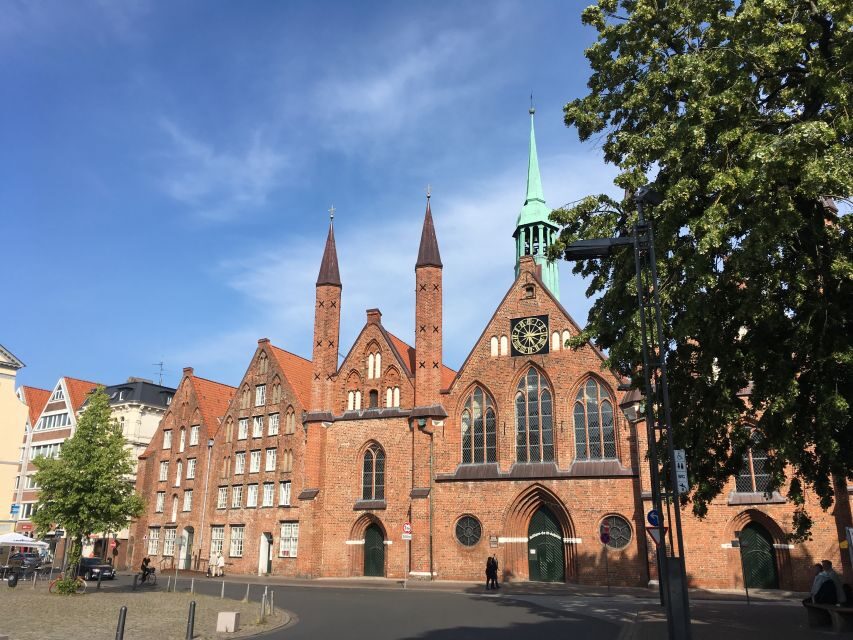
- Heiligen-Geist-Hospital and its little turrets: the tour finishes in a striking piece of medieval civic life.
Starting at Holsten Gate: the tour’s rhythm and best approach
You’ll meet your guide at Holsten Gate, one of the big medieval entrances into Lübeck’s old town. From there, the tour doesn’t wander at random. It moves like a guided “map” of the city’s original logic—streets, corners, and tight connections that were designed for a working trading city, not just sightseeing.
I like that the meeting point is easy to find and the walk begins immediately. You’re not spending the first part figuring out where to go. In about 90 minutes, you’ll cover enough ground to feel you understand Lübeck’s old town plan, without turning it into a full-day sprint.
Because this is a private group (up to 6), the pace tends to feel human. It’s built for questions and back-and-forth, not a rushed group shuffle. That matters in Lübeck, where the most interesting stuff is often down a narrow side passage or behind a courtyard gate.
You can also read our reviews of more guided tours in Lubeck

Gothic brick, gables, and house signs: what you’re really looking at
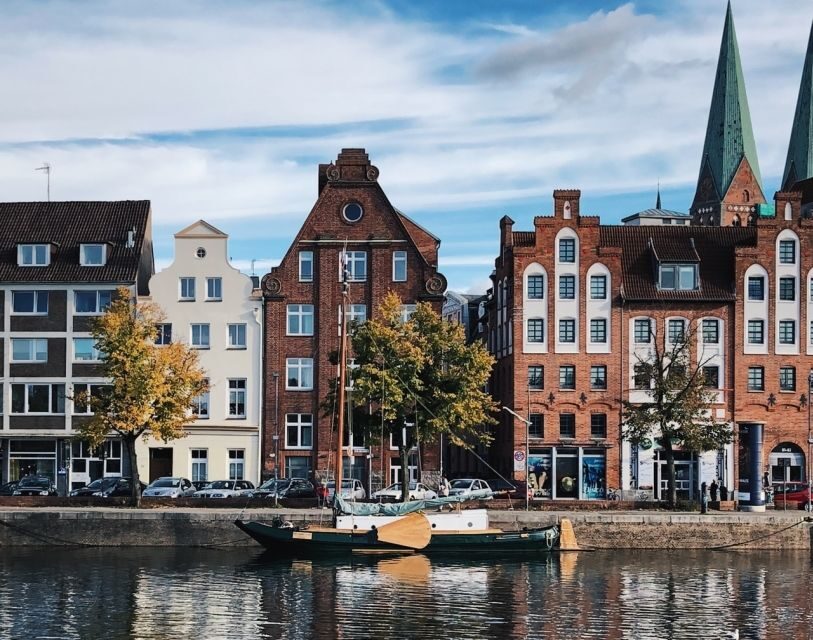
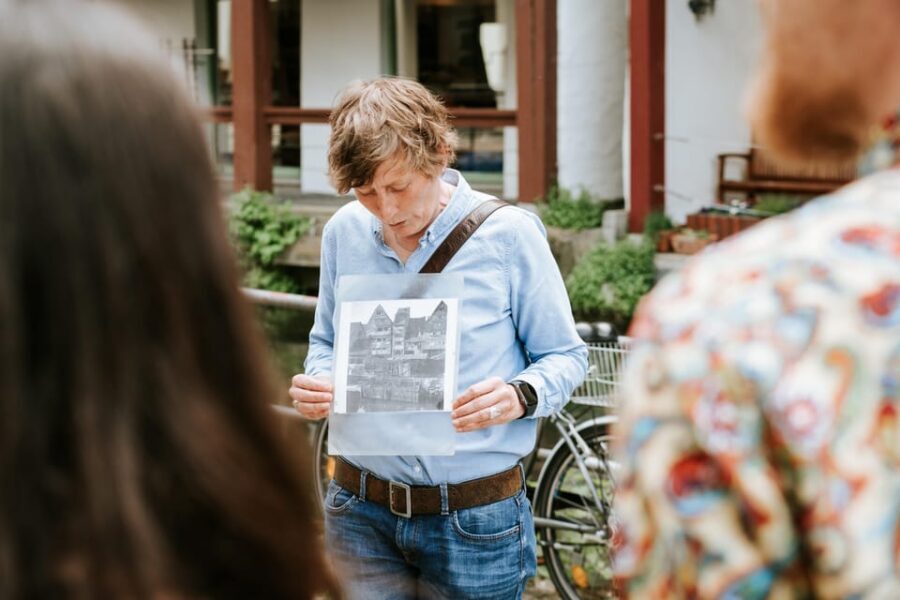
Once you’re on the streets, you’ll notice how consistently Lübeck communicates through architecture. The city is known for its Gothic brick style, and this tour uses that fact as more than decoration. The guide shows you how the buildings look the way they do because Lübeck grew as a Hanseatic trading hub—dense, practical, and competitive.
A big part of the fun is paying attention to house signs and gables. In many medieval cities, you won’t find numbered addresses. Instead, properties used distinctive markings. You’ll learn how these features helped residents and visitors find places, and they also acted like early branding for trades and families.
You’ll also pass what feels like a corridor of rooftops and narrow street walls—exactly the kind of sight that makes you slow down without being forced to. If you like architecture and urban design (even a little), this portion makes the city feel readable. You start seeing the clues the guide is pointing at.
The backyards and townhouses: why these courtyards feel like a different world
This is the signature part of the experience: the tour takes you into the small spaces that sit behind the “public” street view. You’ll walk through small courtyards, alleyways, secluded spots, and low passages, and that change in scale is the point.
On a normal visit, Lübeck’s old town looks romantic from the street. On this tour, you also get the reality of how townhouses connect to private outdoor space. Those courtyards are where daily life happened—places for light, air, work, and storage, all shaped by the tight urban layout.
It’s also where you feel Lübeck’s medieval planning most clearly. The city isn’t just pretty. It’s engineered for density. By the time you’ve walked a few of these connections, you understand why the streets are narrow and why buildings crowd so closely. You’re watching a city work the way it was designed to work.
Practical note: you’ll be moving through tight lanes and passageways. That’s part of the charm, but it means comfortable shoes are worth it. This tour isn’t about rolling in with perfect posture and expecting smooth, open streets the whole time.
Church towers, St. Jakobi, and the city’s Middle Ages timeline
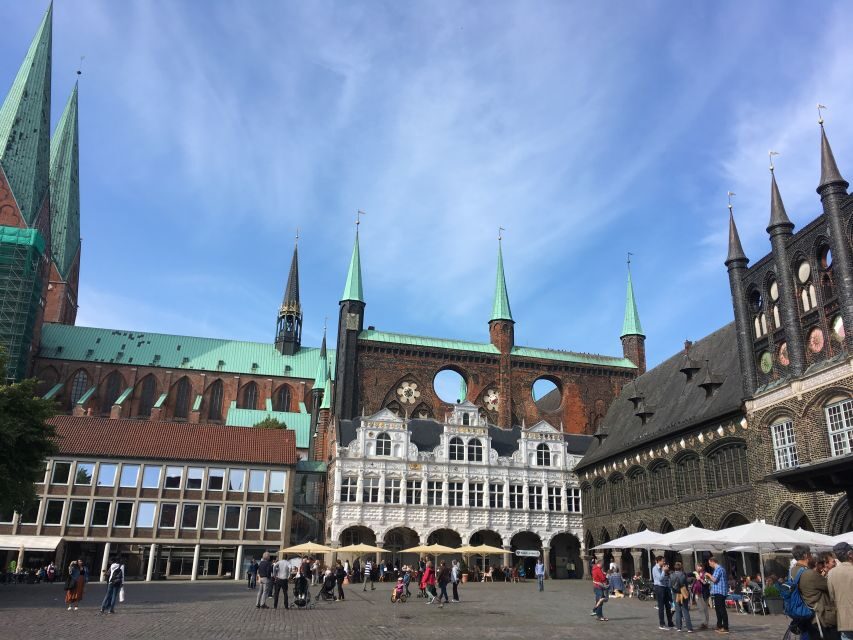
Lübeck’s skyline has a way of organizing time. During the walk, you’ll see church towers that have shaped how the city looks since the Middle Ages. Instead of treating churches as separate attractions, the tour uses them as waypoints—like vertical markers in the horizontal old town maze.
You’ll also come to the pilgrim church of St. Jakobi. The guide frames it as more than a stop for photos. In a Hanseatic city, churches weren’t just spiritual landmarks. They were also social anchors and part of how people oriented themselves in the urban grid.
If you’ve visited other German towns, you may notice a pattern: the church tower is often your “big reference point.” Here, that idea comes alive because Lübeck’s streets and buildings are packed so tightly that towers become a navigation tool, not just scenery.
By the time you’ve seen a few of these tower views and learned how they influenced the city’s look over centuries, Lübeck stops feeling like a single postcard and starts feeling like a place with layers you can trace.
The angel pit and street lamps: the details that make the tour stick
This is where the guide’s stories turn into real understanding. You’ll hear about the historical angel pit and why the name has nothing to do with heavenly messengers. It’s one of those moments where you catch yourself thinking you know what something means—and then the explanation makes it feel more grounded and real.
The value here isn’t just trivia. It’s learning the difference between a catchy name and the thing it actually refers to in everyday life. In medieval cities, lots of sites were named in ways that sound symbolic later. The guide helps you see how those names formed and why they stuck.
You’ll also discover what’s special about the city’s street lamps. That might sound small until you remember what lamps meant before modern lighting: safety, direction, and the ability to move and work after dark. When the guide connects an everyday object to the historical context, Lübeck becomes more than architecture. It becomes a city designed for real people, including at night.
This section is also a good reason to choose the private format. The guide can slow down when something catches your interest—whether it’s a story behind a name or the practical “why” behind a feature.
You can also read our reviews of more private tours in Lubeck

Ending at Heiligen-Geist-Hospital and its little turrets
The tour finishes at Heiligen-Geist-Hospital, where you can admire the striking little turrets. Ending here is smart, because hospitals weren’t only places of care—they were part of the city’s civic identity.
By the time you reach the hospital, you’ve already spent the walk learning how Lübeck’s medieval life worked: density, planning, and the way public landmarks punctuated everyday movement. The turrets give you that final “wow,” but the better win is what they represent: Lübeck’s old town wasn’t just traders and towers. It also had organized social care built into its urban fabric.
It’s a fitting end because it ties together the day’s themes—city structure, community spaces, and the medieval mindset you’ve been stepping through in backyards and narrow passages.
Price and value: what $259 per group really buys
The tour costs $259 per group (up to 6 people) for 90 minutes. If you do the simple math, the per-person cost ranges roughly from $259 if you’re solo (not the best match for a group-price deal) down to about $43 per person if you fill all 6 spots.
That pricing structure usually makes the most sense for:
- Friends or couples traveling together
- Small families where everyone can keep the pace
- A group of architecture/history fans who want the guide’s interpretation, not just the street views
Because it’s private, you’re paying for access to the guide and the time it takes to navigate Lübeck’s backyards efficiently. You’re also paying for context—the kind of explanation that turns a pretty street into something you can actually read.
If you’re visiting Lübeck for a short window and want your time to count, this kind of guided focus can be a strong value. You’re not trying to “cover everything.” You’re learning the logic behind the city’s most distinctive spaces.
Also, the tour format seems well-liked: the overall rating is very high, and the written feedback points to a consistently interesting, well-adjusted experience. The themes that come up are clear: people feel they got thoughtful guidance and a tour that held attention.
Who should book this private Lübeck backyards tour
You’ll likely enjoy this tour most if you like any of these:
- Medieval town planning and how cities “fit together”
- Architecture fans who notice details like gables, signs, and brickwork
- People who enjoy small spaces—courtyards, passages, and hidden-in-plain-sight lanes
- Travelers who prefer a guided story over wandering with an audio app
It’s also a solid choice if you want a concentrated visit. Ninety minutes is long enough to get real texture, short enough that you can continue exploring afterward on your own at a relaxed pace.
On the other hand, if you don’t speak German, you may miss the finer points. The tour is explicitly German, and a lot of the payoff here is interpretation—names, symbolism, and explanations tied to specific places.
Should you book this Lübeck backyards and town houses tour?
I think this tour is worth booking if you want Lübeck to feel like a lived-in medieval city, not a scenery set. The backyards and townhouses portions are the main reason. They give you access to the scale and layout you usually can’t appreciate from the street.
Book it if you’re comfortable exploring tight old-town lanes for a short stretch and you don’t mind that the guide communicates in German. It’s also a great pick for small groups—group pricing makes it feel fair and it adds flexibility to the pace.
Skip it only if you’re expecting a long, slow, museum-style explanation with no tight walking, or if language will be a barrier. In those cases, you might prefer a tour designed for your language comfort.
If you can handle the language and you enjoy details, this is one of the more direct ways to understand Lübeck’s UNESCO-worthy medieval layout—and to see why the city feels almost enchanted without needing to manufacture the mood.
FAQ
Where is the meeting point for the tour?
Meet your guide at Holsten Gate.
How long is the Lübeck backyards and town houses private guided tour?
The tour lasts 90 minutes.
Is this tour private?
Yes. It’s a private group tour, priced for a group size of up to 6 people.
What language is the guide?
The live guide is German.
Is food or drinks included?
No. Food and drinks are not included.
What does the tour include?
You get a professional city guide.
Can I choose the start time?
The tour can start any time between 9:00 AM and 7:00 PM, based on your preference. Your guide will contact you after booking to schedule the exact time.