Most cities show you the postcard angles. Lübeck shows you the back corridors and hush-hush courtyards that made everyday life work in the Middle Ages. I love how the route stays off the usual main drag and trades big squares for narrow passages and courtyard surprises. I also like the way the guide connects the buildings to real daily needs, like crowded housing and how the Hanseatic boom forced people to build upward and sideways. One drawback: this tour is in German, so if your German is shaky, you’ll want to rely on visuals and be comfortable following along only part-time.
You’ll start outside the old city at the Burgtor area, then follow your guide into small spaces most people walk past without noticing. It’s a light, entertaining pace for 1.5 hours, with a group size that feels friendly enough for questions. If you want a long, monument-heavy tour, this one may feel too short and too “small-scale.”
In This Review
- Key Points at a Glance
- Meet at the Burgtor: Starting Your Lübeck Courtyard Walk
- Why Lübeck Built Narrow, Crooked Corridors
- Courtyards You Won’t Find by Wandering
- Workers’ Stalls and the Housing Behind the Look
- The Hanseatic League Story, Told in Walking Order
- Monastery Courtyards: A Different Mood Inside the Same City
- Merchant and Shipper Widows: Housing After Loss
- How to Get the Most Out of a 1.5-Hour Walking Tour
- Price and Value: Is $20 Worth It?
- Who This Tour Fits Best
- Should You Book the Lübeck Courtyard Tour Through k3 stadtführungen?
- FAQ
- Where do I meet the guide for the Lübeck courtyard tour?
- How long is the tour?
- Is the tour available in English?
- How much does it cost?
- Is the group small?
- What will I see during the tour?
- Can children join?
- Is free cancellation available?
- Can I book without paying right away?
Key Points at a Glance
- Hidden courtyards and corridors: tight paths, small spaces, big stories
- Hanseatic League context: why Lübeck grew so fast in the Middle Ages
- Practical medieval housing: how narrow, crooked corridors solved space problems
- Monastery courtyards: calmer, quieter historic corners to compare with merchant life
- Worker housing details: understanding the small stalls and how people lived
- German-led guide: lively interpretation, best for German speakers
Meet at the Burgtor: Starting Your Lübeck Courtyard Walk
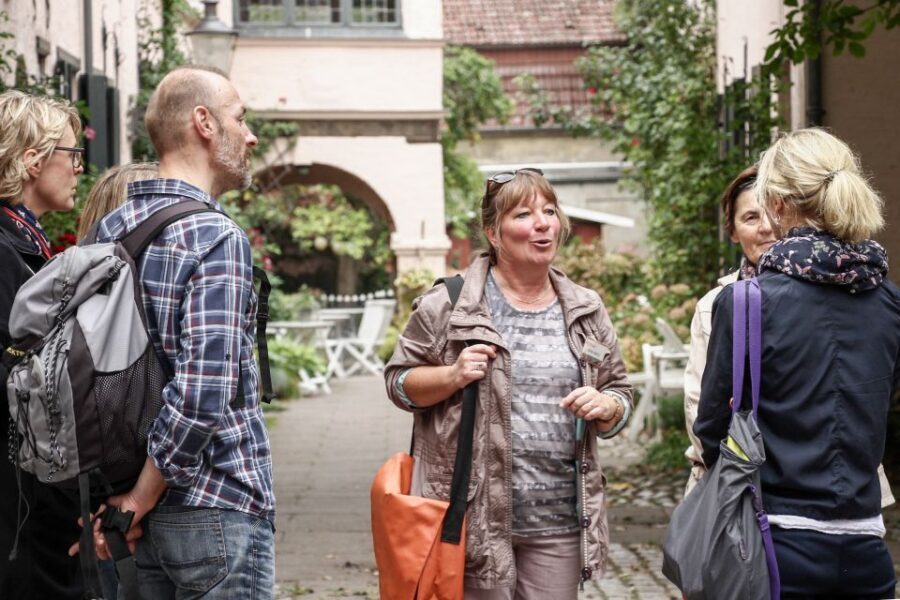
The tour begins at the Burgtor, at Burgtorbrücke 2, outside the city. Look for your guide wearing an orange bag with the k3 logo. It’s a smart setup. You start at a recognizable landmark, but you’re not wasting time on big-picture sightseeing.
From there, the walk is designed to “zoom in.” You’ll go from broader streets into tighter lanes and then into places you’d miss if you were just meandering. That’s the whole point: Lübeck’s fame isn’t only its skyline. It’s how people carved livable space into small parcels over centuries.
You can also read our reviews of more tours and experiences in Lubeck.



Why Lübeck Built Narrow, Crooked Corridors
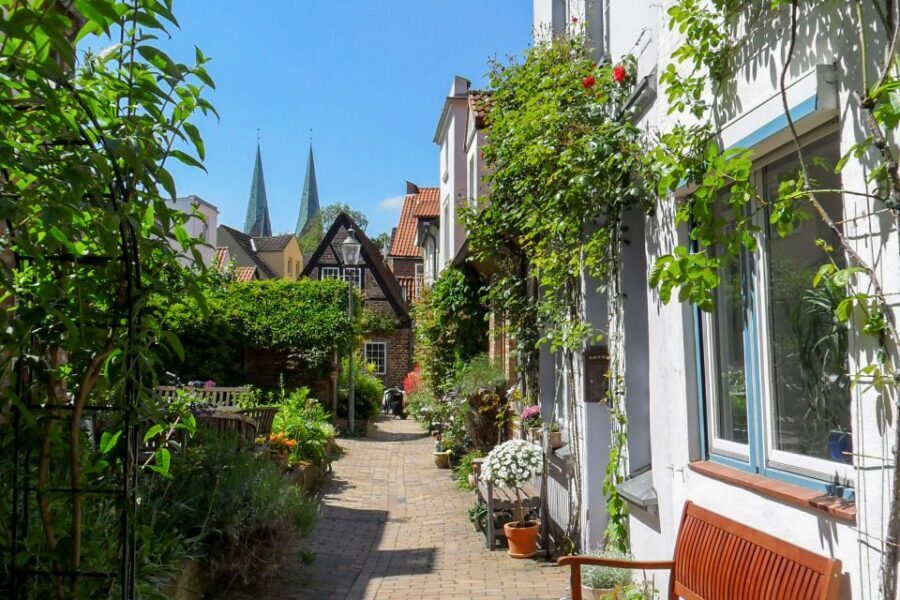
One of the most interesting parts of the experience is the explanation behind the odd-looking layout. Lübeck didn’t just grow—it surged. The Hanseatic boom pulled more people toward the city, and the population increase forced a housing crunch.
So you’ll learn why living space had to be created between existing front buildings. Picture buildings pressed close together, with corridors that bend and twist instead of stretching straight. These tight passageways weren’t quirks for decoration. They were a survival strategy. The city solved the problem by using what was available: narrow strips of land and vertical growth.
As you walk, the architecture stops being abstract. You start reading the city like a map of constraints: where the space tightened, where access mattered, and where families needed to get in and out without wasting valuable frontage. It’s the kind of lesson that sticks because you’re seeing the evidence in real time.
Courtyards You Won’t Find by Wandering
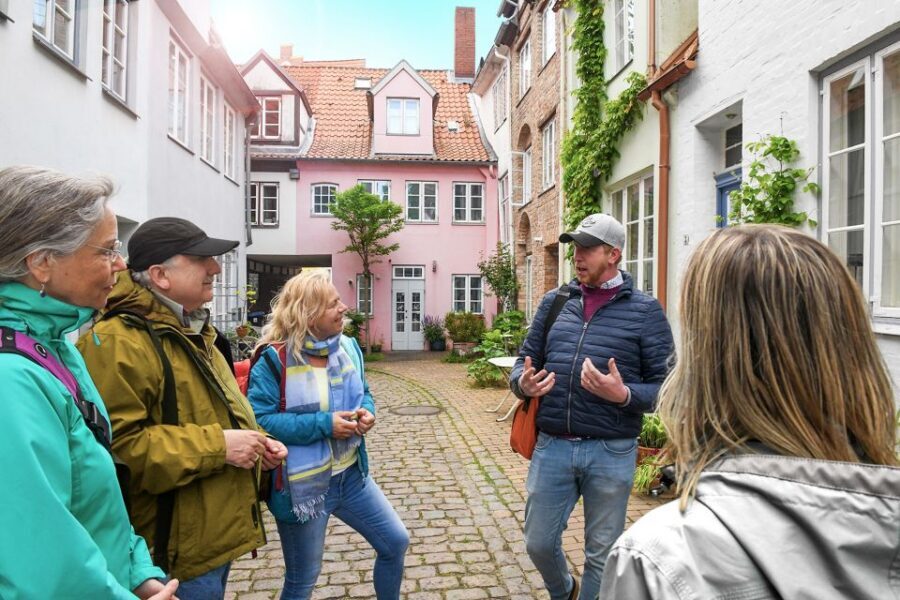
If you only visit Lübeck’s big sights, you’ll miss the “in-between” spaces that make the city feel intimate. This tour routes you through beautiful courtyards and corridors that are tucked away and easy to overlook.
These courtyards do two jobs. First, they’re practical: they bring light and air into dense areas. Second, they’re social: they’re the semi-private stage where daily life happened beyond the street. The guide’s commentary helps you understand what you’re seeing, so you’re not just taking photos of pretty stone walls and doorways.
I like that the tour doesn’t rush past these spots as quick photo stops. You slow down long enough to notice details: the way passageways connect, the shape of the courtyard, and how the buildings face inward. That inward focus is very Lübeck.
And yes, you’ll notice how different it feels compared with walking through broad tourist lanes. It’s calmer, more human-scale, and oddly satisfying. It’s like stepping into a puzzle box where each turn explains the last.
Workers’ Stalls and the Housing Behind the Look
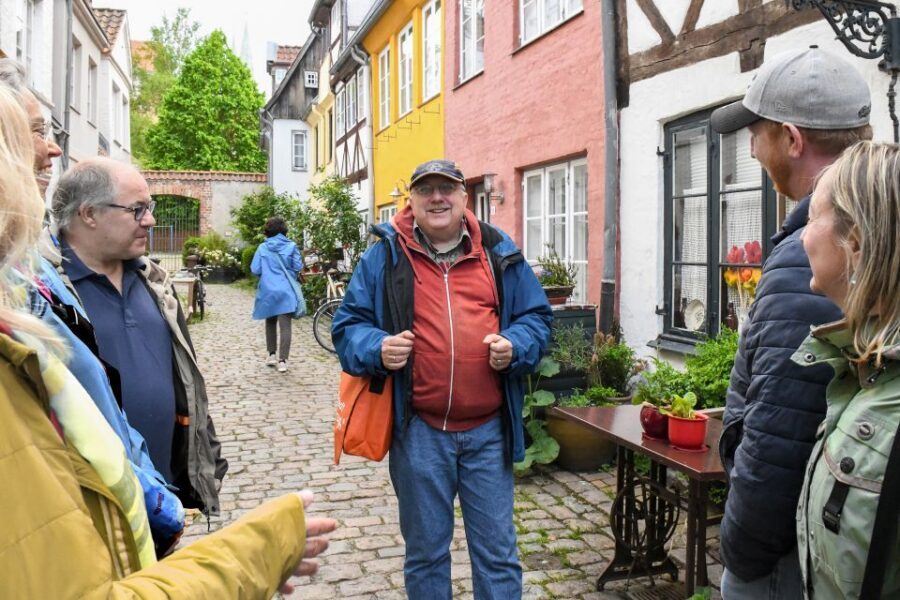
A big value here is learning how people lived—not just how wealthy merchants wanted things to look. The tour points out small stalls where workers used to live, and it connects these spaces to the city’s growth.
This is where the guide’s storytelling matters. Buildings tell you a lot, but you need context to avoid guessing wrong. You’ll get the context. You learn how the medieval economy shaped daily routines, and how housing adapted to the number of people squeezed into the same footprint.
Even if you’re not a history buff, this part is useful because it changes how you read old cities. Instead of thinking of medieval architecture as a museum piece, you start seeing it as infrastructure for work, family, and survival.
The Hanseatic League Story, Told in Walking Order
The Hanseatic League comes up for a reason. Lübeck wasn’t a random medieval town. It became a major node in trade networks, and that trade meant more people, more commerce, more movement—and more need for housing and storage.
On this tour, the Hanseatic story doesn’t live in a lecture hall. It’s tied to what you’re walking past. That’s what makes it work. You learn how the city’s trade power connected to its physical layout.
You also hear why population growth drove changes quickly enough that the city’s fabric looks slightly improvised in places—narrow corridors, crooked routes, and built-in solutions between existing structures. It’s not chaos. It’s adaptation.

Monastery Courtyards: A Different Mood Inside the Same City
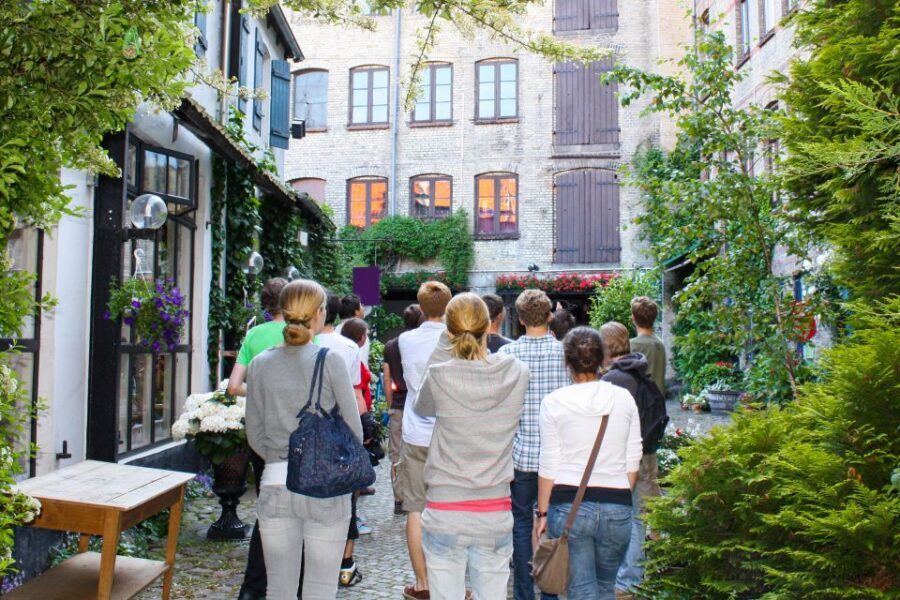
Midway through the walk, you’ll see monastery courtyards. This is a nice contrast. Merchant and shipping life was loud and busy. Monastery spaces were built around rules, routine, and quiet rhythms.
So even though you’re still in Lübeck’s old-town maze, the mood shifts. The courtyards give you a different kind of appreciation: how careful planning, spiritual life, and controlled movement can shape architecture.
What I find helpful is that the guide places these contrasts in the broader story. You’re not just collecting “pretty spots.” You’re seeing how different parts of society left different kinds of fingerprints on the same city fabric.
Merchant and Shipper Widows: Housing After Loss
One particularly striking detail is the mention of widows—specifically merchant and shipper widows—and how they were housed. This isn’t the typical tourist-level “big names and big ships” approach.
Instead, you get a human angle on how medieval social systems responded to real life events. It’s a reminder that trade wealth didn’t eliminate risk. Ships still sailed into uncertainty. Families still lost partners.
And then the city had to make space for what came next. When you combine that with the tour’s earlier focus on housing pressure—narrow corridors created by need—you can see how social support and practical building solutions overlapped.
You might not expect a short 1.5-hour walk to cover this kind of social detail. But it fits, because it’s embedded in the places you’re visiting.
How to Get the Most Out of a 1.5-Hour Walking Tour
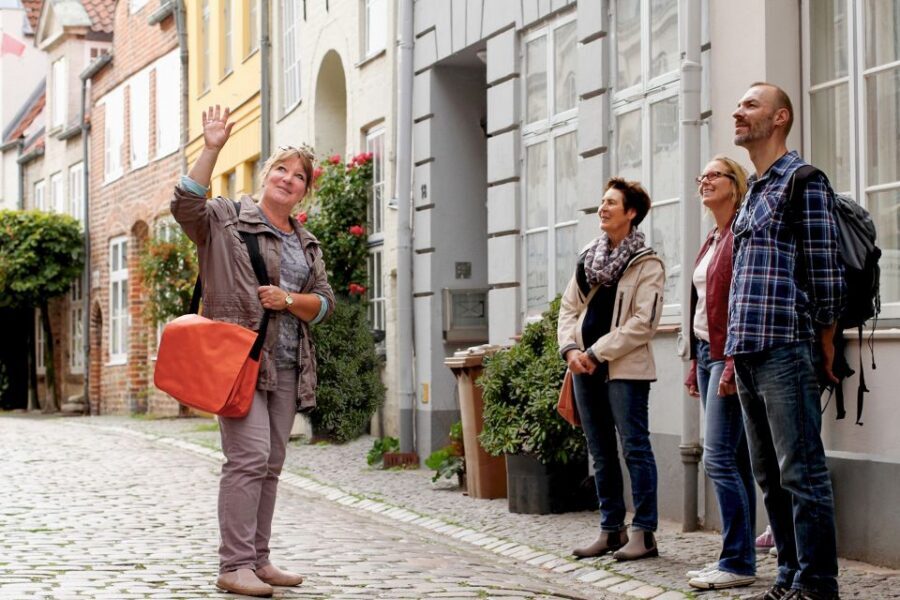
This is a compact tour by design. At 90 minutes, you’ll cover a lot of ground on foot, but it’s the right kind of ground. You’re moving from one hidden courtyard to the next, not spending the hour walking long distances across the city.
Here’s how you can make it feel smooth:
- Wear comfortable shoes. The focus is narrow paths and tight turns.
- Keep an eye on the guide, especially around corners. Courtyards are tucked in and easy to miss.
- If you speak only basic German, don’t worry about catching every word. The architecture and the courtyard layout do most of the teaching.
Also, because it’s a private group, the experience can feel more conversational. When the group is smaller, it’s easier to ask follow-up questions without feeling like you’re holding up a packed bus of strangers.
Price and Value: Is $20 Worth It?
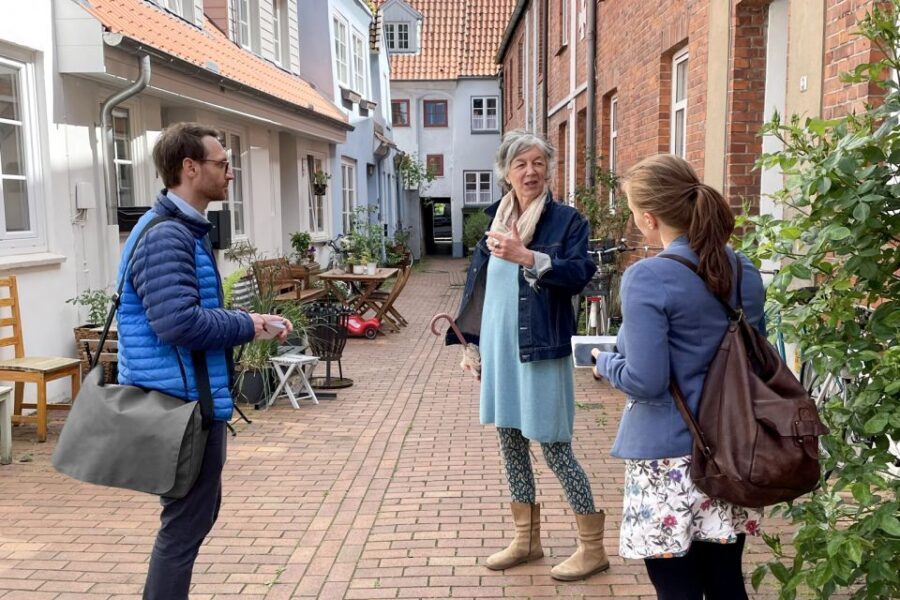
At around $20 per person for a 90-minute guided walking tour, the value hinges on two things: how much access you get and how much interpretation you receive.
You get access to small courtyards and corridors that many visitors never find on their own. That matters in Lübeck because the city’s charm isn’t just in famous façades. It’s in the in-between spaces.
You also get a live guide, and that’s where the price really makes sense. Without a guide, you can still admire courtyards—but you’ll likely miss the why behind the shapes. With the guide, you understand the logic: medieval trade growth, rapid population increase, and the housing solutions that created narrow corridors between buildings.
So for $20, you’re basically paying for context plus access. In a city like Lübeck, that’s a fair trade.
Who This Tour Fits Best
This experience is a great match if you like walking tours that focus on atmosphere and details instead of big-ticket monuments.
It’s especially good for:
- People who enjoy old towns but want more than the obvious photo spots
- Anyone who likes the social side of history (how people lived, not just what was built)
- German speakers who want a guide’s full explanations
- Travelers who prefer small-group energy and the ability to ask questions
If you strongly prefer English-only tours, or if you need full language support to feel comfortable, you may find the German-only format limiting. You could still enjoy the architecture, but the deeper storytelling might not land the way you want.
Should You Book the Lübeck Courtyard Tour Through k3 stadtführungen?
Book it if you want Lübeck in miniature. You’ll get a walking route through courtyards and corridors that explain how the city worked when space was scarce and trade was booming. The price is modest for what you’re seeing, and the guide’s approach is built around interpretation, not just navigation.
Skip it if you need an English-language tour or if you’re looking for a long, landmark-heavy sightseeing day. This is compact, focused, and intentionally off the main tourist circuit.
If your ideal Lübeck experience includes the feeling of discovering places on foot—quiet courtyards, tight passageways, and the stories behind them—this tour is a strong fit.
FAQ
Where do I meet the guide for the Lübeck courtyard tour?
Meet your guide in front of the Burgtor at Burgtorbrücke 2, outside the city. The guide will wear an orange bag with the k3 logo.
How long is the tour?
The tour lasts 1.5 hours.
Is the tour available in English?
No. This tour is held in German.
How much does it cost?
The price is $20 per person.
Is the group small?
It’s listed as a private group, which generally makes the experience feel more personal.
What will I see during the tour?
You’ll focus on Lübeck’s most beautiful courtyards and corridors, including monastery courtyards, plus details about medieval housing and life connected to the Hanseatic League.
Can children join?
Children up to 5 years old can join for free.
Is free cancellation available?
Yes. You can cancel up to 24 hours in advance for a full refund.
Can I book without paying right away?
Yes. You can reserve now and pay later.