REVIEW · LUBECK
In Lübeck ist Weihnachten zu Haus.
Book on GetYourGuide →Operated by Ulrike Müller · Bookable on GetYourGuide
Christmas has a backstory in Lübeck. This walk answers the big question What is Christmas? by linking Santa Claus myths with the modern Coca-Cola image, and then steering you through Lübeck’s holiday mood with story stops along the way. I also like that the route feels a bit removed from the biggest crush, with Lübeck glowing in glossy lights rather than just another loud market circuit. The only catch: it’s an outdoor stroll of around 1.5 km, so plan for winter and don’t ignore the frozen-fingers warning.
You meet at St. Jakobi’s place, the Jakobikirchhof opposite Königstraße 5, and you finish back at the same meeting point after passing by the Hanseatic Museum area. The whole experience is guided live in German by Ulrike Müller, and it runs about 75 minutes, which is just right if you want meaning without losing your whole evening.
In This Review
- Key takeaways before you go
- A Christmas Question, Not Just a Light Show
- Where You Meet at Jakobikirchhof (and how to arrive easily)
- The Route: 2 km of Christmas storytelling in the open air
- Santa Claus, Coca-Cola, and the Modern Christmas Face
- Lübeck in glossy lights: seeing the city through a festive lens
- Christmas at sea: holiday meaning tied to Lübeck’s maritime side
- Where the Christmas tree idea comes from
- The Hanseatic Museum area (and why the finish feels intentional)
- Pace, weather, and what to wear
- Language and vibe: German guide, story-first
- Price and value: is $16 worth 75 minutes?
- Should you book this Lübeck Christmas walk?
- FAQ
- How long is the Lübeck Christmas walk?
- How much does it cost?
- Where do I meet the guide?
- What buses can I take to get to the meeting point?
- How far do we walk and is it outdoors?
- Is tipping included, and can I cancel?
Key takeaways before you go
- Santa Claus, Coca-Cola, and the origins question: You’ll hear how the modern look of Santa connects to older ideas and branding.
- Lübeck lit up, but not chaotic: The walk is designed for Christmas atmosphere without wall-to-wall crowding.
- Christmas at sea: The guide ties holiday themes to Lübeck’s maritime character.
- Where the Christmas tree idea comes from: You’ll get the story behind the symbol, not just the decoration.
- A short, doable outdoor loop: Around 2 km overall, with about 1.5 km on foot, in a tidy 75-minute time window.
- Live anecdotes from Ulrike Müller: The tone is personal and story-driven, not a dry list of facts.
A Christmas Question, Not Just a Light Show
This tour is built around one simple prompt: what is Christmas really? You start with the big cultural stuff people debate every year, then you move through the sights and atmosphere of Lübeck so the holiday doesn’t feel like a single, copied script. Instead of only pointing at decorations, Ulrike Müller keeps asking the deeper questions, then answers them with stories that connect the tradition to modern life.
I like that the experience doesn’t pretend there’s one single explanation. It treats Christmas as a mix of family, custom, symbolism, and yes, the way media and commerce helped shape what we expect to see. If you’ve ever felt a little cynical about holiday hype, this tour gives you enough context to separate the meaningful parts from the marketing noise.
The pacing matters here. It’s short enough that you stay fresh, but long enough to get real clarity on the topics—Santa Claus, Coca-Cola’s role, the Christmas tree, and the theme of Christmas at sea. You end the walk with that take-away feeling: not just photos, but a sense that you understand why the season looks the way it looks.
You can also read our reviews of more tours and experiences in Lubeck.


Where You Meet at Jakobikirchhof (and how to arrive easily)
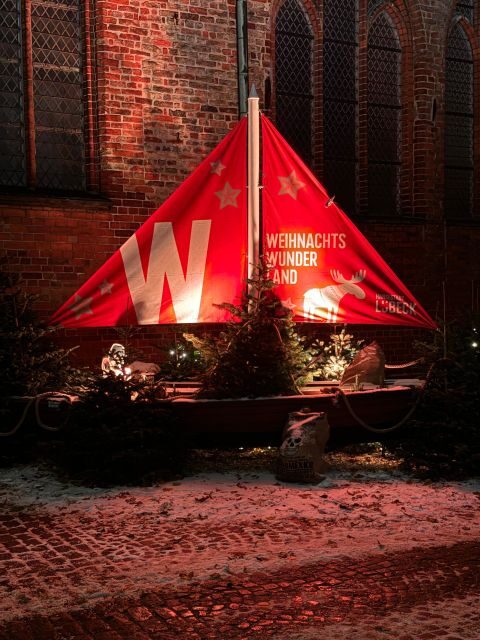
Your starting point is the Jakobikirchhof, opposite Königstraße 5. That matters because it anchors the whole walk in a real place, right from step one, rather than starting “somewhere in the center.”
Public transport is straightforward: take buses 4, 10, 21, 31, 32, or 39 to the Koberg stop, then cross the street once to reach the Jakobikirchhof. The tour ends back at the meeting point, so you’re not left figuring out how to get home after you finish.
Plan to arrive a few minutes early. This is a 75-minute, story-paced walk, and you don’t want to rush into the start while your guide is setting the scene.
The Route: 2 km of Christmas storytelling in the open air
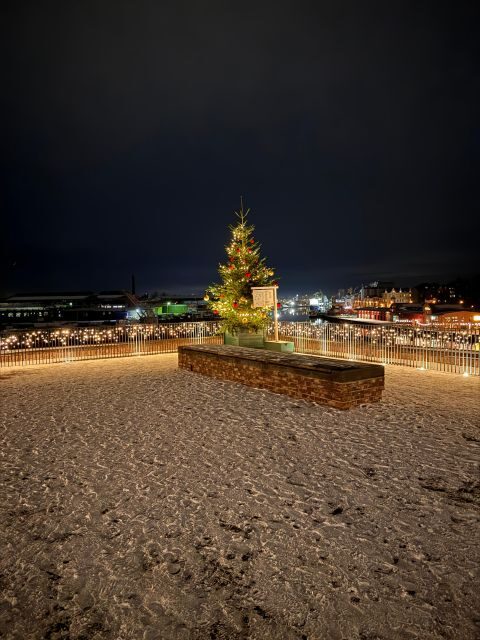
The walk covers about 2 km total, with about 1.5 km on foot. That sounds modest, but it’s still long enough to feel like a real stroll through the holiday mood rather than a quick stop-and-go photo tour.
Because it’s outdoors, winter comfort is part of the deal. The guide even jokes about frozen fingers, saying she makes sure nobody freezes—so you’ll likely want to dress like you mean it. Gloves, a warm layer, and a hat can turn the tour from “enduring cold” into “enjoying the evening.”
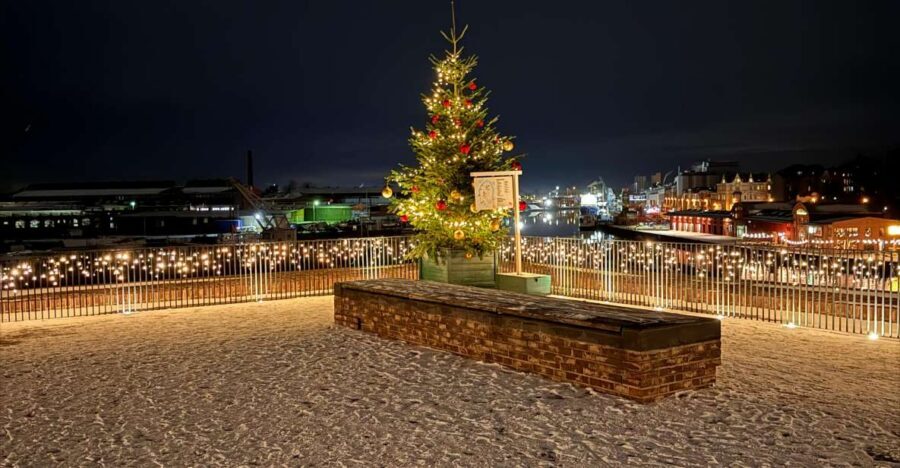
The outdoor format is also why the lighting and mood land so well. Christmas in Lübeck isn’t just something you read about. You feel it in the night air, in the way the city glow changes how the streets look, and in how the stories fit that atmosphere.
Santa Claus, Coca-Cola, and the Modern Christmas Face
One of the main highlights is the question behind the headline topic: where does Santa Claus come from, and what does Coca-Cola have to do with it?
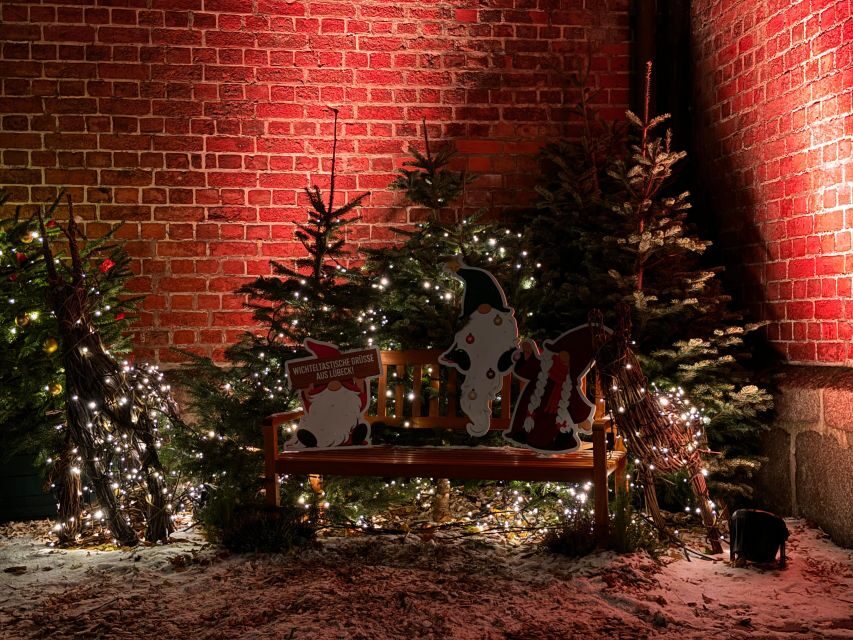
This is exactly the kind of holiday mystery that sounds simple until you start pulling on the thread. The tour treats Santa as more than a character on a card. Ulrike connects the dots between older Christmas traditions and the modern Santa image that many people instantly recognize today.
For you, that means the guide isn’t just saying, Santa arrives because of tradition. She’s talking about how symbols get shaped—through culture, through storytelling, and through the way big brands influence what ends up being widely seen. If you’re the type who wonders why Santa looks the way he does, or why the holiday season seems to share the same symbols everywhere, this part of the tour scratches that itch.
It’s also one of the most useful sections to catch early in the walk. Once you understand the “how did we get here?” angle, the rest of the Christmas symbols you see around town feel less random.
Lübeck in glossy lights: seeing the city through a festive lens
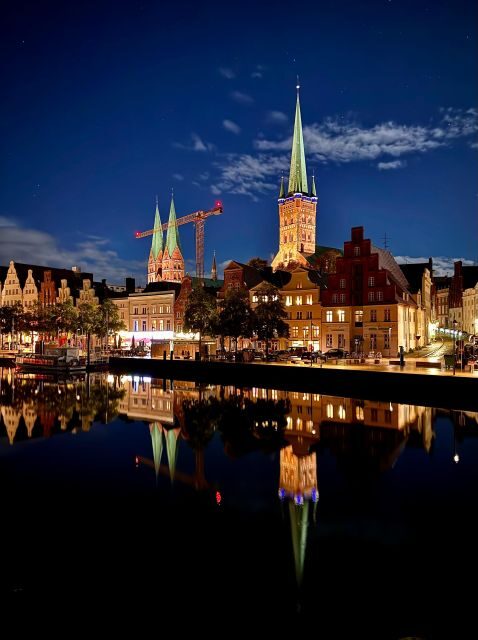
A core promise here is that you’ll experience Lübeck in glossy lights. That might sound like a generic phrase, but it’s practical: the tour is designed so the lighting and mood aren’t just background.
As you walk, the atmosphere becomes part of the storytelling. The city glow helps you shift gears from everyday life into the season’s slower rhythm. You’re not stuck staring at a single market stall, and you’re not rushing from one attraction to the next. Instead, the Christmas mood builds as you move.
I also like that the tour is positioned a bit away from the most intense crowd energy. That matters because holiday walks go two ways: either you’re enjoying the city, or you’re fighting the flow of people. Here, the tone aims for calm enough that you can hear the guide clearly and still look around.
If you want a holiday experience that feels like a walk with context, not a queue with commentary, this is the section that does it.
Christmas at sea: holiday meaning tied to Lübeck’s maritime side
Another highlight is Christmas at sea. Even if you don’t know anything about Lübeck’s maritime connections going in, the tour’s theme gives you a lens to interpret what you see. The guide uses the holiday’s imagery and stories to connect to the city’s sea-and-trade identity.
This part of the tour is valuable because it expands your understanding of Christmas beyond the living-room version. Christmas traditions didn’t all develop in one place or for one kind of household. For port cities, seasonal customs often travel differently—through routes, through communities, through the exchange of goods and stories.
You’ll come away with a sense that Christmas is not only about one culture or one calendar marker. It’s also about how communities shape seasonal meaning based on their history and everyday work.
If you like your sightseeing tied to “why this place matters,” you’ll enjoy this thematic turn. It gives the holiday a local heartbeat.
Where the Christmas tree idea comes from
The tour also addresses Woher kommt der Weihnachtsbaum—where the Christmas tree idea comes from. Instead of treating the tree as a simple modern decoration, Ulrike Müller frames it as a tradition with roots that made it into today’s Christmas look.
For you, this is one of the most satisfying types of tour content: you don’t just learn a fact, you learn how a symbol becomes normal. The Christmas tree is everywhere in December, but it’s easy to forget that it didn’t start as the default. Learning where the idea came from adds weight to what you see in shop windows and at home.
This section also helps the earlier Santa-and-Coca-Cola story feel more connected. Together, they show a pattern: Christmas symbolism gets shaped over time, and the most familiar versions are often the result of long processes and cultural blending.
The Hanseatic Museum area (and why the finish feels intentional)
The tour is described as starting at St. Jakobikirchhof and ending at the Hanseatic Museum. Then the meeting-point info clarifies that the activity ends back at the Jakobikirchhof. So what you should expect is a loop: you walk toward the Hanseatic Museum area and return to the starting point.
This structure is practical. It means you don’t need a “new plan” once the guided portion ends. You finish right where you began, which is convenient if you’re heading back for dinner or a warm drink afterward.
Also, finishing back at the meeting point keeps the story feeling contained. You don’t get scattered across the city at the end. Instead, you get a full arc: you start in the holiday-laced center area, you learn the themes, you see Lübeck in glossy lights, and you wrap up near familiar ground.
Pace, weather, and what to wear
The tour is outdoor and includes a footpath of about 1.5 km, with a total distance of about 2 km. That’s manageable for most people who can comfortably walk in winter conditions, but it’s still a real walk. Bring layers you can move in, and don’t underestimate wind once you’re outside for the full 75 minutes.
The guide’s note about frozen fingers isn’t just humor. It signals that cold is part of the experience, and she’s trying to keep it from ruining your evening. In practical terms: gloves help, and a warm outer layer will make the lighting and story stops more enjoyable.
If you’re traveling with kids, this may work depending on patience and cold tolerance, since it’s story-based and lasts about 75 minutes. If you prefer very hands-on activities, you might find a guided walk slower than a workshop. But if you want meaning with your lights, it’s a strong fit.
Language and vibe: German guide, story-first
The tour is guided live in German. That doesn’t automatically make it difficult—story tours often use clear pacing and easy-to-follow explanations—but you should be comfortable understanding basic German or be okay with catching the gist even if you miss a few details.
The vibe is clearly story-first. The guide isn’t just reading dates off a sign. Ulrike Müller is known for sharing nice anecdotes, and that kind of personal storytelling tends to make the facts stick. If you like learning through characters and scenes, you’ll probably enjoy her approach.
The fact that she explicitly watches for comfort also matters. It signals a caring tone, not a “good luck, see you at the museum” setup.
Price and value: is $16 worth 75 minutes?
At $16 per person, this tour is priced like a budget-friendly way to add depth to a Christmas trip. You’re not paying for a private driver or a fancy ticketed attraction. You’re paying for a live guide and a guided walk that connects symbolism—Santa, Coca-Cola, the tree, and Christmas at sea—to the holiday atmosphere of Lübeck.
Given the length (about 75 minutes) and the walk distance (roughly 2 km), the value comes from efficiency. You get context fast, and you still have plenty of time afterward to explore on your own. And since tips are not included, you can decide what feels fair based on your experience.
I’d call this a good deal if you’re:
- here for the Christmas feeling, but you also like to understand the “why”
- the type who enjoys walking tours with a theme
- looking for an outdoor evening that doesn’t eat your entire night
It might not be the best match if you want a long, stop-heavy museum style itinerary or if you strongly prefer tours in English.
Should you book this Lübeck Christmas walk?
I’d book it if you want your Christmas lights with explanations. This isn’t only about seeing Lübeck glowing. It’s about learning the story behind the season’s most recognizable symbols—Santa Claus, Coca-Cola’s role, the Christmas tree, and the idea of Christmas at sea—while walking through the city’s holiday mood.
If you’re deciding last minute, consider this: it’s short, it’s outdoors, it’s guided in German by Ulrike Müller, and it ends right back where you started. That combination makes it easy to slot into a packed Lübeck itinerary without turning your whole evening into a logistics puzzle.
If you like calm, story-led experiences more than crowded shopping circuits, this one fits nicely. Just dress warm, show up at the Jakobikirchhof on time, and let the guide do the connecting work.
FAQ
How long is the Lübeck Christmas walk?
The tour lasts about 75 minutes (you can check availability for starting times).
How much does it cost?
It costs $16 per person.
Where do I meet the guide?
You meet at the Jakobikirchhof, opposite Königstraße 5.
What buses can I take to get to the meeting point?
Take buses 4, 10, 21, 31, 32, or 39 to the Koberg stop, then cross the street once to reach the Jakobikirchhof.
How far do we walk and is it outdoors?
It’s an outdoor experience with an approx. 1.5 km footpath, and the tour covers about 2 km overall.
Is tipping included, and can I cancel?
Tipping is not included. Free cancellation is available up to 24 hours in advance for a full refund, and you can reserve now and pay later.