REVIEW · BERLIN
East Meets West: Berlin Food Culture & Street Art
Book on Viator →Operated by Fork & Walk - Food Tours Berlin · Bookable on Viator
Berlin tastes like history, and looks like rebellion. This small-group walk links street art and East-West memories with local tastings, plus coffee and beer. It starts in Friedrichshain and ends near Kottbusser Tor, so you finish with a head start on your next stop.
I like how the guides (people such as Lee, Elena, Tiago, and Will) bring the neighborhoods to life with plain, useful storytelling. I also love the range of food—Berlin classics like schnitzel and currywurst, alongside Turkish street food from Leylak and Ukrainian soul food at Slava Berlin.
One thing to consider: this is food-first. You will see a few big art moments, but it is not a full sightseeing marathon for museums and every wall mural in town.
In This Review
- Key highlights at a glance
- Start in Friedrichshain: East Berlin vibes and a fast orientation
- East Side Gallery Wall Walk: political murals on a still-standing stretch
- Coffee stop and history threading before the Kreuzberg eating starts
- Kreuzberg comfort food: schnitzel, currywurst, and Berliner Pilsner
- Little Istanbul at Leylak: Turkish influence you can taste
- Slava Berlin Ukrainian Soulfood: immigrant women-led comfort food
- Street Art Berlin and Markthalle Neun: from famous murals to a food hall that survived
- Brammibal’s vegan donuts: Berlin’s sweet side after savory stops
- Price and value: what you get for $169.38
- Who this tour fits best (and who should adjust expectations)
- Should you book this Berlin food and street art tour?
- FAQ
- How long is the tour?
- Where does the tour start and end?
- What time does the tour start?
- What’s included in the price?
- Is a BVG transport ticket included?
- Is the tour suitable for vegetarians?
- How many people are in the group?
- Is there free cancellation?
Key highlights at a glance
- Up to 8 people: small group pace, fewer awkward photo jams, more time for questions
- Wall + street art in one route: East Side Gallery plus a famous mural stop
- Cross-cultural eating: Turkish, Ukrainian, and German classics in the same 3.5 hours
- Market hall with character: Markthalle Neun has survived war and still runs on producers
- Tastes you can plan around: coffee, Berliner Pilsner, and multiple local bites so you skip some breakfast
Start in Friedrichshain: East Berlin vibes and a fast orientation
The tour kicks off at Industriepalast Hostel on Warschauer Str., right in the Friedrichshain side of town. You start around 12:00 pm and you’re back out around 3.5 hours later near U Kottbusser Tor. That timing matters because you’re walking while the city is active, but you’re not locked into a late-night snack crawl.
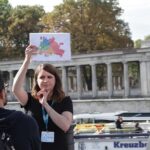
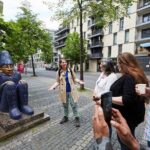
Friedrichshain has that mix of old-world edges and modern energy. The guide sets the tone with a quick, clear view of how this area shaped East Berlin life—especially the neighborhood identity that grew under the political pressure of the 20th century. It’s not a lecture. It’s the kind of context that helps you notice what you’re seeing as you go.
You’ll also get practical advice on where to stand, what to look for, and how to connect the street-level details to the bigger story. That becomes useful later when the route shifts toward the Wall and then on to Kreuzberg.
You can also read our reviews of more food & drink experiences in Berlin


East Side Gallery Wall Walk: political murals on a still-standing stretch
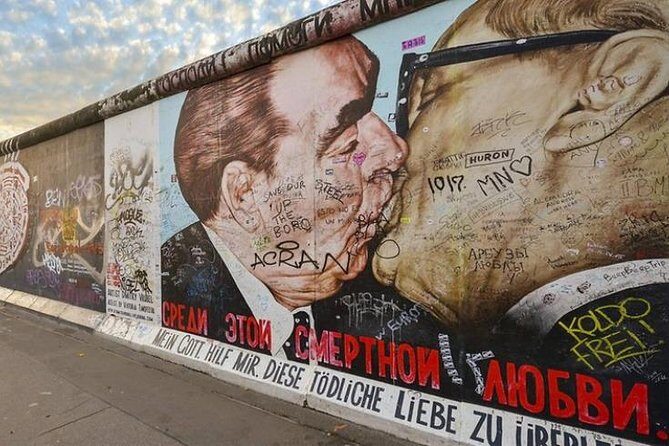
East Side Gallery is one of those places where photos don’t fully explain the experience. Standing near the Berlin Wall history and seeing the murals in place makes the political artwork feel personal, not distant.
This portion includes access to the longest stretch of still-standing Wall at the East Side Gallery, and you’ll get time to look closely at the art that grew out of the political moment. If you’re the type who likes to read meaning into street art, this stop will pay off. If you mainly want to check the big landmark off your list, it still works—this is one of Berlin’s most iconic Wall experiences.
The guide also frames why street art here matters. The murals aren’t decoration. They’re a record of what people said when the city was changing fast.
Coffee stop and history threading before the Kreuzberg eating starts
After the Wall moment, you start leaning more fully into Kreuzberg’s personality. Berlin’s neighborhood feel shifts quickly once you’re on the West Berlin side of the line—architecture, energy, and the kinds of food you see.
Part of the experience is a coffee stop in one of the neighborhood’s popular coffee spots. This is a smart move in the schedule. Berlin food tours can move faster than your stomach, and a coffee pause gives you a reset without breaking the flow.
During this stretch, the guide ties the area’s WWII-era and Communist-era storylines to what you’re passing in the streets. You’ll hear references to Nazi Germany and also local historical details tied to SS soldiers. It sounds heavy, but the guide keeps it grounded in the immediate setting—so you’re not just collecting facts, you’re learning how to read the city.
And then, when you’re ready, you switch from story mode to taste mode.
Kreuzberg comfort food: schnitzel, currywurst, and Berliner Pilsner
Kreuzberg is where the tour really gets hungry.
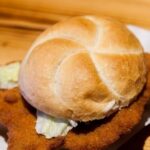
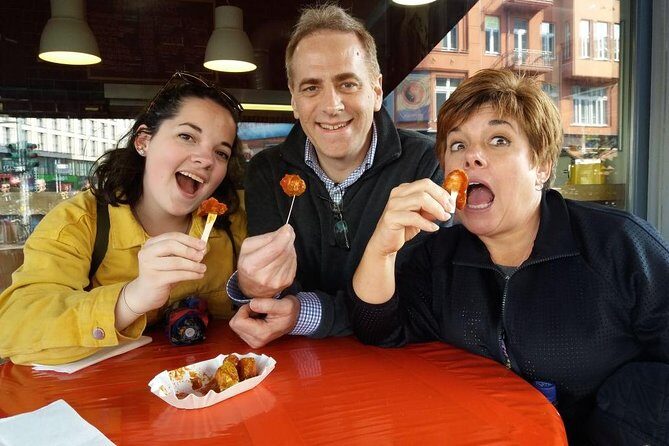
You start with Scheers Schnitzel, a Berlin schnitzel institution. Expect it to be served in classic Berlin style, the kind of place that makes schnitzel feel less like a tourist dish and more like an everyday comfort food locals actually take seriously. It’s a good anchor tasting because it gives you a German baseline before the tour moves into immigrant-led food traditions.
Then you hit Ketels Curry, known for the story of currywurst. The tour focuses on the origin tale that many people don’t realize is part of Berlin’s food identity. This matters because currywurst isn’t just something you eat on a street corner. It’s an ingredient-level piece of modern Berlin history—simple food with a story behind it.
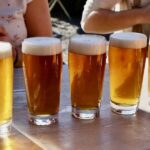
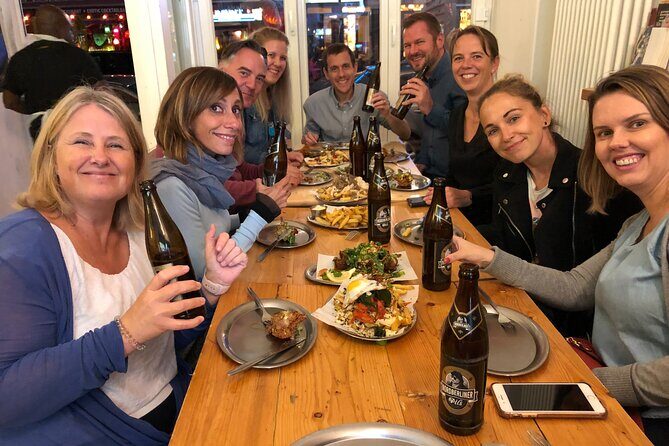
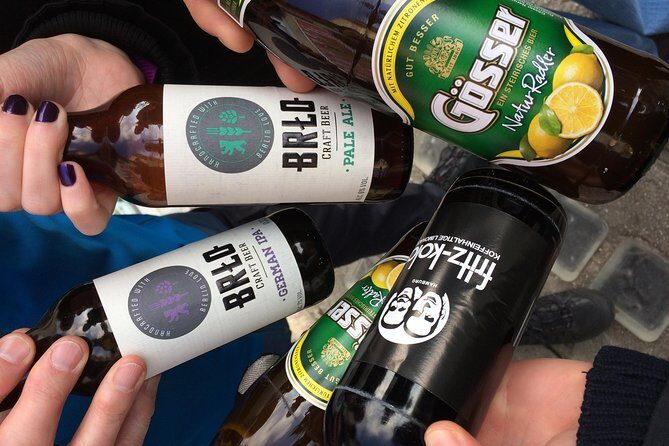
Drinks are part of this phase too. You’ll get a local Berliner Pilsner beer included. If you don’t drink beer, you’ll want to clarify your options in advance, especially since the tour data also mentions a vegetarian option and asks for dietary requirements when booking.
This whole Kreuzberg section works best if you’re the kind of person who likes to eat while walking—no long seated meals, no waiting around. You get taste, then you’re back on the sidewalk.
Little Istanbul at Leylak: Turkish influence you can taste
One of the tour’s most practical lessons is how Berlin’s neighborhoods are shaped by communities, not just buildings.
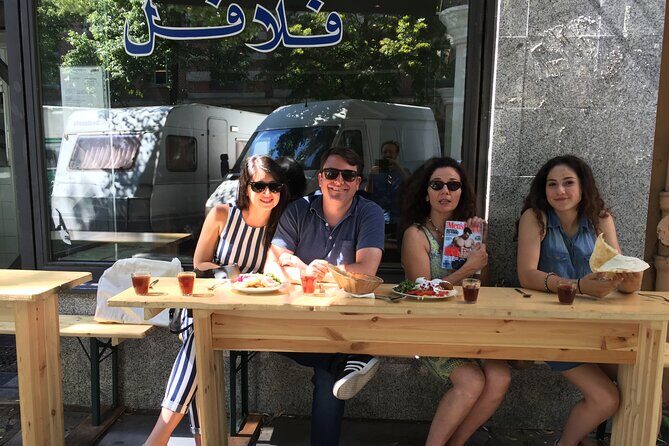
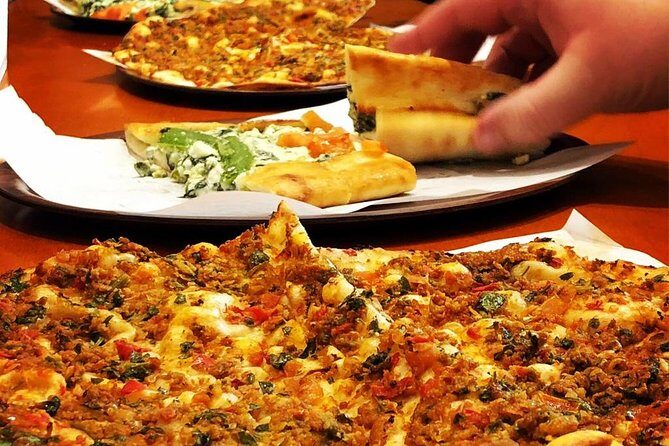
You’ll visit Leylak for Turkish street-food-style tastes. The tour points out that the Turkish community in Berlin is huge—Berlin has the largest Turkish population outside of Turkey—and you can see that influence in the food options and the neighborhood vibe.
Leylak is framed as a jump toward the Anatolian region. That means the flavors you’re tasting are not just generic Turkish meals, but more street-ready recipes rooted in that broader cultural geography. If you’ve only tried Turkish food in your own city, this stop is the chance to notice the difference between restaurant plates and street-style flavor.
It’s also a nice break from the German-heavy stops. You get to feel how Berlin’s food scene turns into a language you can recognize—spices, sauces, bread, and quick bites that fit walking life.
A few more Berlin tours and experiences worth a look


Slava Berlin Ukrainian Soulfood: immigrant women-led comfort food
Next you move into a different kind of story: modern Ukraine in Berlin.
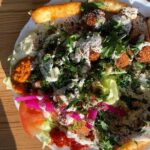
At Slava Berlin! Ukrainian Soulfood & Nalivanki, you’ll taste Ukrainian food in an immigrant women-led setting. The tour description calls it a modern Ukrainian story in Berlin, which is exactly what you should listen for: how food becomes home-cooking, how it adapts, and how a neighborhood adopts it.
Nalivanki are also mentioned, so you’ll likely notice the drink angle tied to Ukrainian tradition. If you like when a tasting includes both food and context, this is the stop.
This portion also helps with pacing. By now you’ve already had schnitzel and curry vibes, so Ukrainian soul food brings comfort and warmth, then you move back out into the city.
Street Art Berlin and Markthalle Neun: from famous murals to a food hall that survived
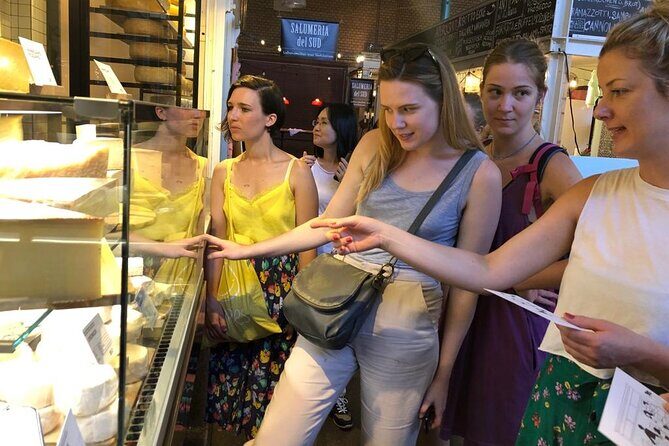
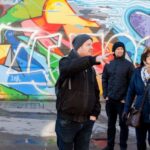
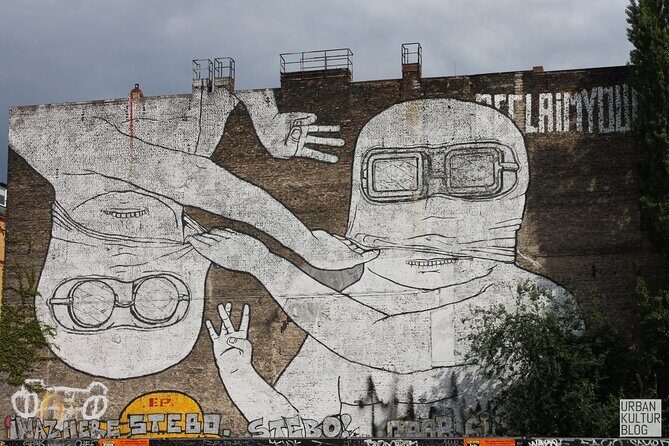
The street art component isn’t random. You get a stop in the Street Art Berlin area where the guide points out Berlin’s street-art scene as a European mecca. You’ll also see one of the world-famous street-art murals.
That matters because Berlin’s murals can be huge and scattered. Seeing one major mural with context from the guide turns it from a screenshot moment into a story you can hold onto. You start to understand what the street artists are responding to: the East-West split, the passing of time, and the pull of what comes next.
Then you shift to Markthalle Neun, a beautifully refurbished 1900s market hall that survived WW2 annihilation and resisted the drift toward full commercial sameness. This is one of the tour stops where the setting itself teaches you something.
Inside, you’re in a food hall with an event calendar that regularly pulls together great food and beverage people, plus producers from around the area. The vibe here is different from the street-food stops. It’s more about local connections—who made it, how it’s served, and how the market stays plugged into Berlin’s wider food scene.
If you like markets, Markthalle Neun is a highlight. If you don’t usually care about markets, it can still win you over because it is tied to a real, physical history of survival and change.
Brammibal’s vegan donuts: Berlin’s sweet side after savory stops
By the time you reach Brammibal’s Donuts (Maybachufer), you’ve built a salty framework: schnitzel, currywurst, Turkish street food, and Ukrainian comfort food. That makes the sweet stop feel earned rather than tacked on.
You’re heading to vegan donuts—an experience the tour frames as a natural part of Berlin’s food culture, with Berlin known for its vegan reputation. Even if you eat dairy, this stop can still work because it’s not about preachiness. It’s about dessert that tastes like dessert.
The practical win is timing and energy. A donut break helps you stay comfortable on the walk to the end point, and it gives you something to carry into the rest of your evening plans.
Price and value: what you get for $169.38
At $169.38 per person for about 3 hours 30 minutes, you’re paying for three things at once: a guided route, a dense cluster of food tastings, and time-efficient neighborhood access.
Your money includes:
- 6 local tastings
- beverages
- food tasting
- local Berliner Pilsner
It also includes a mobile ticket and the tour runs in English. What is not included is a BVG transport ticket, so you’ll want to budget for local transit if you’re coming from farther away than the meeting point.
Is it good value? For me, the value depends on what you want from the day. If you want a guided “taste map” through multiple cultural areas with history context, the included tastings make the price feel more reasonable than paying for a bunch of items one by one while also trying to find everything on your own.
If your priority is pure sightseeing, you might feel the limits. The tour is designed to cover multiple neighborhoods and food stops, not to replace a museum pass or a long street-art walking spree.
Who this tour fits best (and who should adjust expectations)
This works well if you:
- want a small group experience (max 8) where the guide can answer questions
- like street art with historical context, not just pictures
- enjoy a mix of German classics and immigrant-influenced food
- prefer eating while walking rather than sitting for long stretches
It may not be the best match if you:
- want a bigger museum-heavy day
- hate walking for an extended loop (it’s described as moderate walking)
- expect every stop to be a major landmark rather than a food and culture checkpoint
Logistically, plan for comfortable walking shoes and consider a rain jacket or poncho since the tour advises weather-dependent outerwear.
There’s also a vegetarian option, but you need to ask for it at booking. If you have dietary requirements beyond vegetarian, the tour asks you to share them when you book.
Should you book this Berlin food and street art tour?
If you want Berlin in bite-sized chunks—food, street art, and history stitched together in one afternoon loop—this tour is a strong choice. The small group setup and the guide-led storytelling make the route feel intentional rather than random.
Book it if you’re curious about East meets West and you like learning by tasting, not by reading. Skip it if you’re chasing a day packed with only big sights; this is more of a guided food-and-neighborhood walk with a handful of major art moments.
Either way, go hungry. Berlin food rewards that approach.
FAQ
How long is the tour?
The tour runs for about 3 hours 30 minutes.
Where does the tour start and end?
It starts at Industriepalast Hostel, Warschauer Str. 43, 10243 Berlin. It ends near U Kottbusser Tor, 10999 Berlin.
What time does the tour start?
The listed start time is 12:00 pm.
What’s included in the price?
The price includes 6 local tastings, food tasting, beverages, and a local Berliner Pilsner beer, plus the local guide.
Is a BVG transport ticket included?
No. A BVG transport ticket is not included.
Is the tour suitable for vegetarians?
Yes, a vegetarian option is available. You should request it at the time of booking.
How many people are in the group?
The maximum group size is 8 travelers.
Is there free cancellation?
Yes, free cancellation is available. You can cancel up to 24 hours in advance for a full refund.