REVIEW · BERLIN
Kreuzberg: Culinary Food Tour
Book on GetYourGuide →Operated by Adventure World Tours · Bookable on GetYourGuide
Kreuzberg smells like snacks and stories. This 3-hour guided walk turns the neighborhood into a living timeline with 5 culinary stops and real-world history.
I especially love how the tour pairs food you can taste with context you can actually remember, and I like the pacing: you snack instead of committing to one huge meal. The one watch-out is that, in exceptional cases, food may be served outside and you may need to eat standing up.
You’ll meet around Kotti, then wander through streets, photo stops, and local corners where the working-class and left-wing heritage still shapes daily life. If you prefer your history in perfectly tidy chronological order, you might find the story jumps across eras a bit as the guide links it to what you see.
In This Review
- Key things that make this Kreuzberg tour worth it
- Kreuzberg food tour: where your 3 hours turn into a neighborhood lesson
- The meeting at Kotti: orientation plus an immediate sense of place
- Oranienstraße: the working-class backbone (and why the stories matter)
- SO36, May Day marches, and the left-wing rhythm of the district
- The food part: five tastings that feel like a small meal, not a snack parade
- Rio-Reiser-Platz, Mariannenstraße 4, and Oranienplatz: photo stops with meaning
- Dresdener Straße and Admiralstraße: the long storytelling stretch before the finale
- Finish at Grimmstraße 23: a good place to keep exploring
- Price and value: $589 per group up to 10, and why the math can work
- Who this tour fits best (and who might not love it)
- Practical tips to get the most from your 3 hours
- Should you book this Kreuzberg Culinary Food Tour?
- FAQ
- Where is the meeting point for the Kreuzberg Culinary Food Tour?
- How long is the tour?
- How many food tastings are included?
- Are drinks included?
- Is there a vegetarian option?
- Is there a vegan option?
- What languages are the tour guide speaking?
- Is there any chance food is served outside?
- Can I cancel for a refund?
Key things that make this Kreuzberg tour worth it
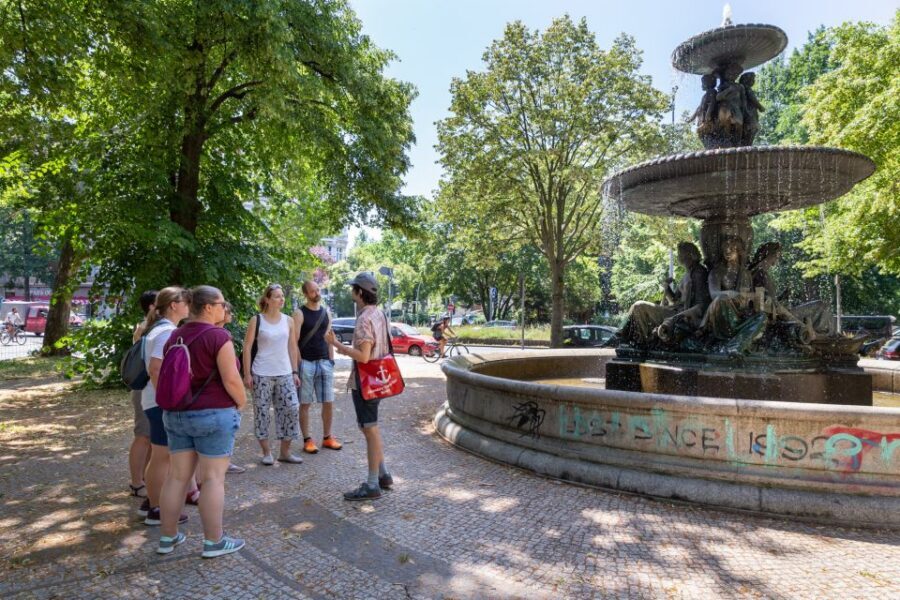
- 5 tastings across the neighborhood: not one big meal, but multiple bites that match Kreuzberg’s mix of cultures and cuisines
- A guide who connects food to place: you get the why behind the streets, not just facts on a wall
- Working-class Kreuzberg + GDR-era stories: Oranienstraße, demonstrations, and escape attempts show up in the narrative
- SO36 and May Day March connections: you’ll stop where local history is tied to modern identity
- Good “tour energy” from guides like Niclas and Nike: people specifically call out the preparation and engaging storytelling
- Vegetarian-friendly, but not vegan: you can plan ahead without guessing too much
Kreuzberg food tour: where your 3 hours turn into a neighborhood lesson
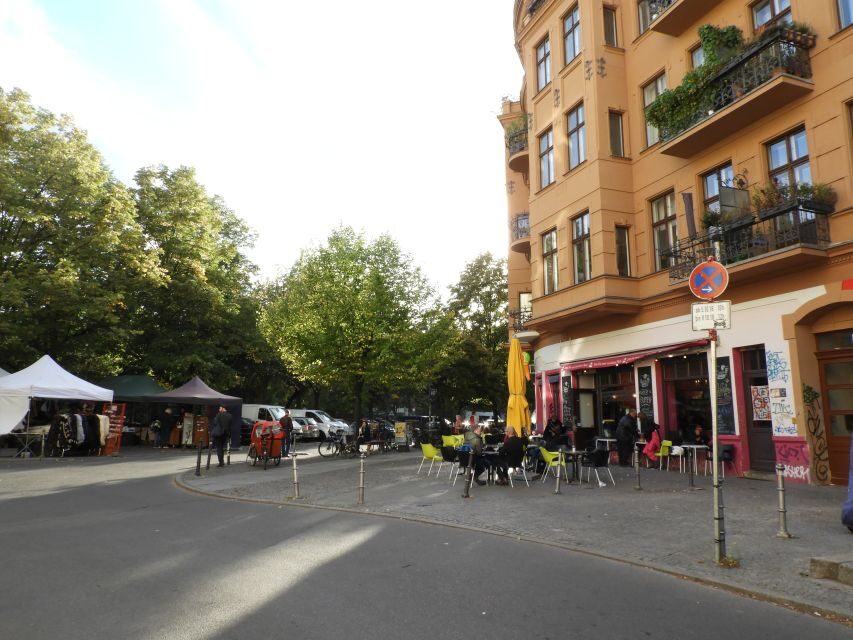
Kreuzberg is Berlin’s “show up and pay attention” district. On this tour, you don’t just pass through. You’re meant to look, taste, and connect the dots between past and present. You start around Kotti/Kottbusser Tor, then keep walking toward spots like Oranienstraße, SO36’s orbit, and down toward Admiralstraße—finishing in the Grimmstraße area.
The best part is how the guide uses the food as your anchor. One bite leads to a story; one street leads to a turning point. So instead of leaving with a list of dishes, you leave with an explanation for why Kreuzberg feels the way it does: a neighborhood shaped by labor, politics, migration, and constant reinvention.
You can also read our reviews of more food & drink experiences in Berlin



The meeting at Kotti: orientation plus an immediate sense of place

Your tour begins at a central Kreuzberg meeting area that can vary by option, including FightClub Casino and also around Kottbusser Tor/Kotti. That’s a smart choice. You start right in the middle of the action, so you’re not spending the first half hour commuting while everyone tries to “feel Berlin.”
Expect a quick intro, then a broad overview of Kreuzberg’s origin: it was founded as a working-class area in the mid-1800s. The guide sets the tone fast—this isn’t only about where to eat. It’s about how this district developed a culture of survival, organizing, and creativity.
Also, you’ll be walking a lot. This is a true walking tour with photo stops and short breaks, not a sit-down dinner. Wear shoes you don’t mind getting a little dirty.
Oranienstraße: the working-class backbone (and why the stories matter)

Oranienstraße is one of those streets where history isn’t museum-silent. You’ll spend about an hour here, moving from photo stop to photo stop while the guide paints a picture of what life looked like when people didn’t rent whole flats. The tour’s description includes an image of staying for eight hours on a mattress—grim, practical, and eye-opening.
This part matters because Kreuzberg’s modern identity didn’t fall from the sky. It grew out of housing pressure, economic reality, and the politics of people who had to fight for space. You’ll also hear about demonstrations and the area’s working-class and left-wing heritage—so later, when you see modern street life, it makes more sense.
And because this is a food tour, the history doesn’t stay abstract. As you move along Oranienstraße, you get tastings that reflect Kreuzberg’s mix: local Berlin recipes, intercultural crossover dishes, and international bites you can only really get in neighborhoods like this.
SO36, May Day marches, and the left-wing rhythm of the district
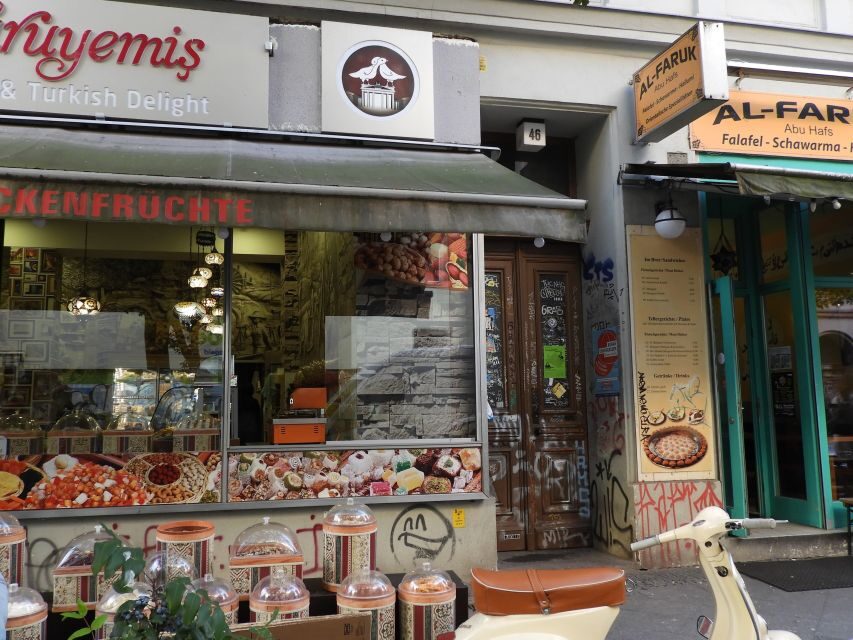
The tour doesn’t just name-drop. It ties major cultural reference points to the neighborhood’s identity. One highlight in the plan is SO36, described as a place connected to May Day March demonstrations. That’s a valuable detail: Kreuzberg’s reputation isn’t only about food and nightlife—it’s also about who showed up, what they demanded, and how the district became a home for political energy.
You’ll also hear about stories connected to the GDR period—like attempts to escape, and even the mention of former GDR traffic-light men. The tour description frames it as dramatic reporting and lived history, not trivia.
If you like Berlin history but get bored when tours turn into lectures, this is the better kind of history: it’s woven into where you’re standing and what you’re about to taste.
The food part: five tastings that feel like a small meal, not a snack parade
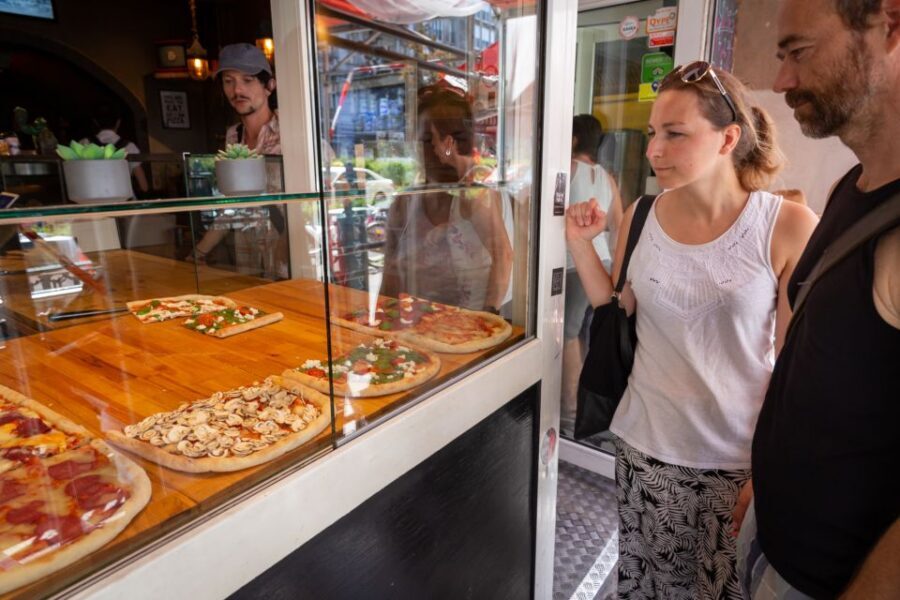
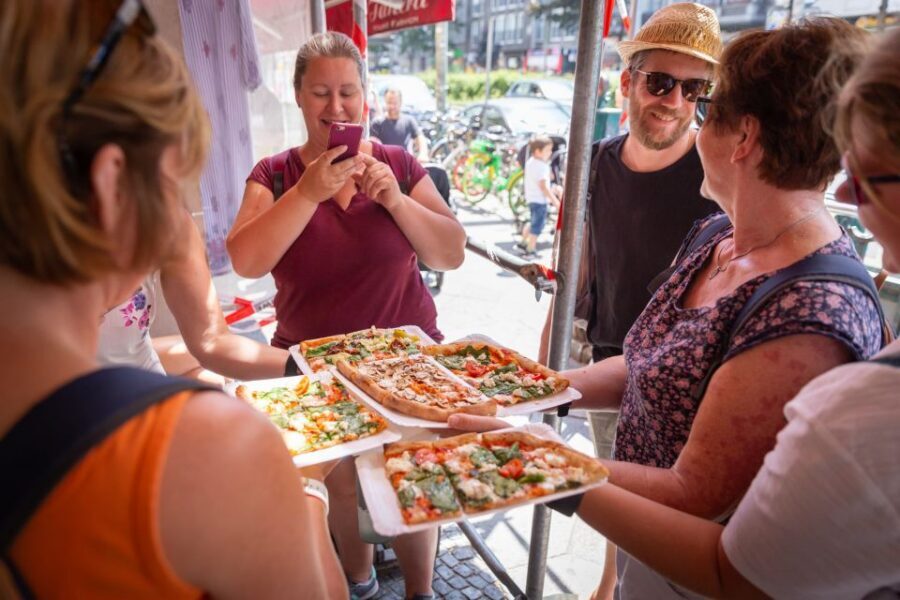
A lot of food tours promise variety, then serve the same thing five times. This one tries harder. You get 5 different tastings in 5 distinct restaurants, and the tour encourages the idea of “try several dishes instead of one big meal.”
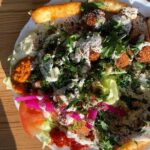
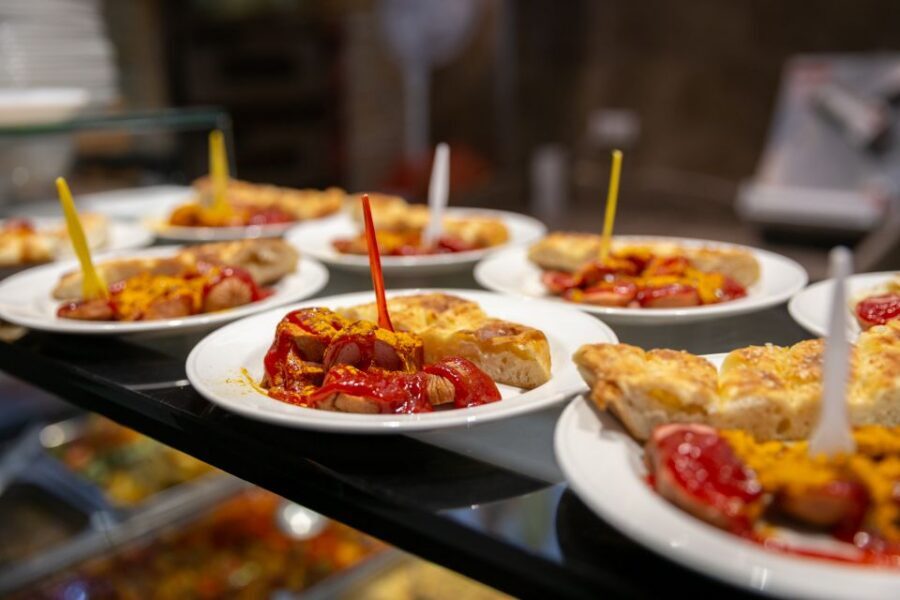
From the dish examples that have shown up on this tour, you might encounter Berlin classics and popular international favorites, including items like:
- Döner or dürüm-style bites
- Currywurst
- Flammkuchen
- Baklava
- Vegetarian options such as vegetarian sushi
You might also see sweet-and-spicy roasted nut-style snacks in the mix. The exact lineup can vary by day, but the intention stays consistent: Kreuzberg’s multicultural spirit, delivered in small, movable portions.
Two practical things to know:
- Drinks aren’t included. Plan to buy water or other drinks along the way if you need them.
- Vegetarian option is available, but a vegan option is unavailable. If you’re vegan, you’ll need to either choose accordingly during tastings or expect limited compatibility.
A few more Berlin tours and experiences worth a look



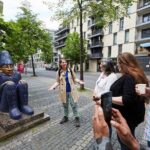

Rio-Reiser-Platz, Mariannenstraße 4, and Oranienplatz: photo stops with meaning
Between the heavier history stretches, you get shorter stretches with photo stops and guided walking. Stops like Rio-Reiser-Platz, Mariannenstraße 4, and Oranienplatz are quick, but they keep the pacing from becoming too “serious history only.”
Here’s what I think these stops do well: they keep you oriented. When a tour moves quickly through districts full of streets with similar vibes, you lose your mental map. Photo stops help you keep track of where you are and what you just learned.
Even when the tour moves faster—like Oranienplatz’s short stop—you still get a sense that the guide is connecting everyday geography to bigger themes: community life, identity, and constant change.
Dresdener Straße and Admiralstraße: the long storytelling stretch before the finale
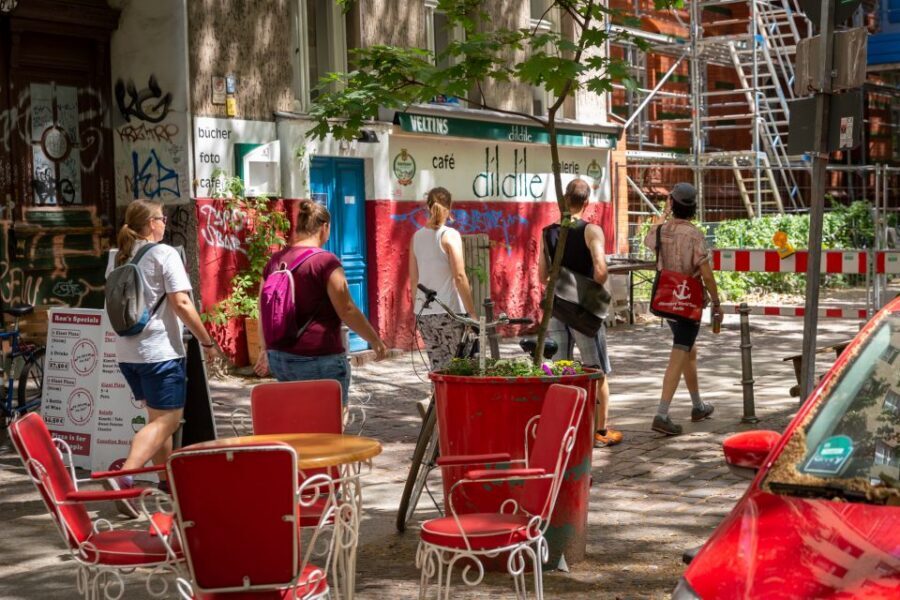
Dresdener Straße is a brief walking segment, then you head into a longer guided stretch around Admiralstraße, including another photo stop and a fuller wrap-up segment (around 40 minutes).
This is the part where you’ll start noticing the “throughline” the guide is building. You get the sense of Kreuzberg not as one story, but as a set of overlapping eras:
- working-class origins
- political activism
- GDR-era tension and escape narratives
- and cultural references that feel like they still matter today
The tour also weaves in another signature Kreuzberg-style legend: a Jack the Ripper story tied to Berlin. The guide uses it as a narrative thread while you move, so it doesn’t feel like a random spooky detour.
Finish at Grimmstraße 23: a good place to keep exploring
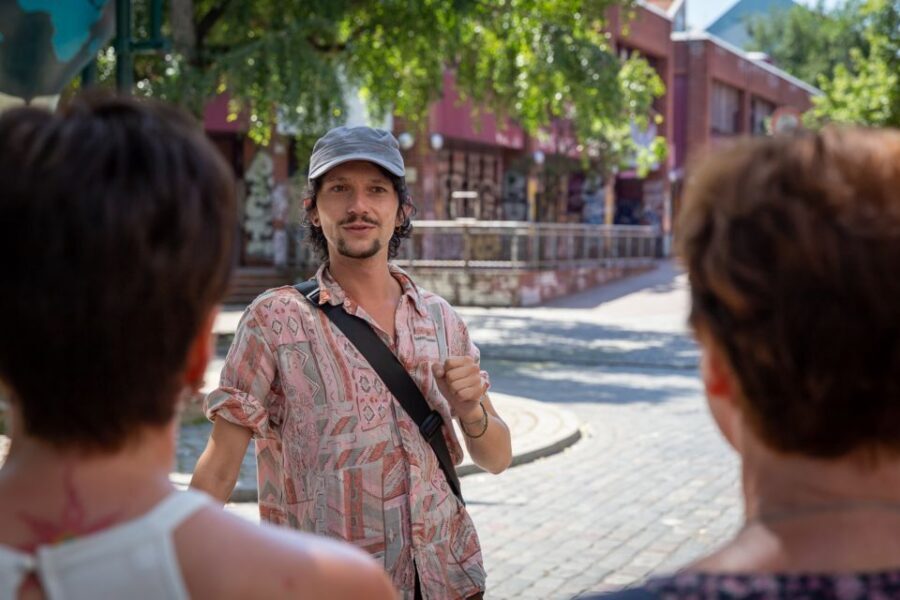
The tour ends at Grimmstraße 23. That’s a helpful choice because it gives you a defined endpoint after three hours of walking and eating. It’s also close to that familiar Kreuzberg rhythm: once you’re full of local snacks and context, the neighborhood feels easier to navigate on your own.
If you still have energy, use the last stretch as your planning window. Notice what looks busy, what looks like it has late-night life, and what food places you’d happily return to after you’re done being a temporary Kreuzberg historian.
Price and value: $589 per group up to 10, and why the math can work
The price is listed as $589 per group up to 10, with a 3-hour duration and 5 tastings included. That can sound steep if you’re thinking per person, so here’s the real value check: this price is designed for groups where you can split the total.
At full group size (10 people), it’s roughly $59 per person for:
- a qualified guided walk
- 5 restaurant tastings
- and a guided neighborhood story covering Kreuzberg’s social and political background
If you’re a smaller group, the per-person cost goes up, but you still get a structured experience that’s hard to recreate yourself: the guide’s context plus the fact that the tastings happen across multiple restaurants in a tight loop.
So who gets the best value?
- Friends traveling together
- Couples who don’t want to plan tastings one by one
- Small groups who like history but also want practical food payoff
Who this tour fits best (and who might not love it)
This tour is a strong match if you:
- want a food tour with context, not just a list of places to eat
- enjoy walking and photo stops
- like learning about Berlin through neighborhoods, especially Kreuzberg’s working-class and left-wing roots
It may be less ideal if you:
- hate standing too long between stops
- need vegan-only options (a vegan option is unavailable)
- want a very strict, chronological history with zero jumps
One more small detail to plan for: in exceptional cases, food may be served outside the restaurants and eaten standing up. If you’re sensitive to that, bring a flexible attitude.
Practical tips to get the most from your 3 hours
- Bring comfortable shoes. This is a walking tour, not a sit-down meal crawl.
- Expect snacks on the move. You’ll likely eat smaller portions across different tastings.
- If you’re vegetarian, you can go in confidently thanks to the vegetarian option. If you’re vegan, plan carefully since vegan isn’t available.
- Bring your curiosity. The stories are part of the deal, including SO36 connections and GDR-era anecdotes.
If you care about the guide experience, it’s also worth noting that guides like Niclas and Nike have been singled out for thorough preparation and an engaging approach—so you’re not just buying food, you’re buying storytelling that ties the food to the street.
Should you book this Kreuzberg Culinary Food Tour?
I’d book it if you want the easiest way to understand Kreuzberg without turning your day into research time. You get 5 tastings, a guided walk through key parts of the district, and enough historical context to make the neighborhood feel less random.
I would skip it or approach with caution if you’re vegan (no vegan option) or if you dislike the idea that food might sometimes be eaten outside and standing. And if you’re the type who only wants food and hates history, you may find the storytelling heavier than a pure tasting tour.
But for most people—especially groups who can fill out the tour—it’s a solid value way to experience Kreuzberg at the intersection of food, politics, and street life.
FAQ
Where is the meeting point for the Kreuzberg Culinary Food Tour?
The meeting point may vary depending on the option booked. Options listed include FightClub Casino and the Kottbusser Tor/Kotti area.
How long is the tour?
The tour lasts 3 hours.
How many food tastings are included?
You get 5 different food tastings at 5 distinct restaurants.
Are drinks included?
No, drinks are not included.
Is there a vegetarian option?
Yes, a vegetarian option is available.
Is there a vegan option?
No, a vegan option is unavailable.
What languages are the tour guide speaking?
The live tour guide speaks English and German.
Is there any chance food is served outside?
Yes. In exceptional cases, food may be served outside of the restaurants and has to be eaten standing up.
Can I cancel for a refund?
Free cancellation is available up to 24 hours in advance for a full refund.