REVIEW · BERLIN
Berlin: Guided Bike Tour to Explore the Highlights
Book on Viator →Operated by FREE BERLIN Bike Tours · Bookable on Viator
Berlin rewards the people who move. This fast, friendly guided bike tour maps out the city’s big stories in a half-day loop. You’ll ride between iconic sights like the Brandenburg Gate and the Reichstag, then get the context that turns photos into understanding.
I really like that the tour is built for efficiency without feeling rushed. In about three hours, you cover old town atmosphere, Cold War borders, and Germany’s “look back” moments on the Holocaust Memorial, all while pedaling on easy city bikes with a helmet included. One thing to consider: the stops are brief by design, so if you want long photo sessions or deep museum time at each site, plan to do that on your own after the ride.
In This Review
- Key Things to Know Before You Pedal
- Why a 3-Hour Bike Tour Gets Berlin Right
- Starting at Free Berlin Bike Tours: Getting Set Up Fast
- Nikolaiviertel and the Berlin TV Tower: Old Town Mood Meets Icon Viewpoints
- Bebelplatz Book Burning Memorial: Where the Past Is Forced Into the Open
- Checkpoint Charlie in the English Version: The Cold War in One Block
- Potsdamer Platz, No Man’s Land, and Tiergarten Breathing Space
- The Holocaust Memorial: A Short Stop That Stays With You
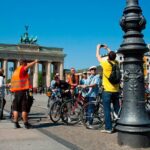
- Brandenburg Gate and the Reichstag Dome: The City Looks You in the Eye
- Prenzlauer Berg or Museum Island: Two Different Endings by Tour Language
- Pace, Photo Time, and How to Ride Comfortably
- What You Really Get for $42.34
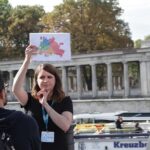
- The Guides: Storytelling Style That Matches Real Questions
- Who Should Book This Bike Tour (and Who Might Skip It)
- Should You Book This Berlin Highlights Bike Tour?
- FAQ
- How long is the Berlin guided bike tour?
- How much does the tour cost?
- What’s included in the ticket price?
- Is the tour available in English?
- Are meals included?
- How big is the group?
- Is there free cancellation?
Key Things to Know Before You Pedal
- Small group size (max 15) keeps the ride relaxed and questions easier to answer
- Helmet and bike included means you can show up light and ride
- Free-Berlin Concept: each guide designs a unique route, so you won’t get a robotic script
- Two versions depending on language: English includes Checkpoint Charlie; German includes Prenzlauer Berg
- Major landmarks with free stops: you’re not paying extra just to get oriented
- A guide who tells the story: many guests highlight humor plus clear Berlin history connections
Why a 3-Hour Bike Tour Gets Berlin Right
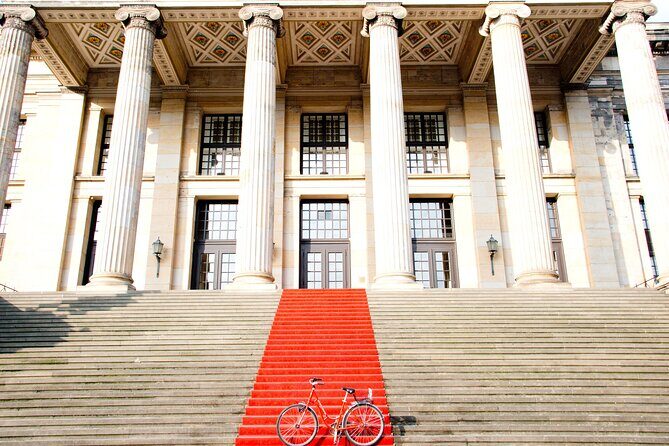
Berlin is wide, and the sights spread out. Walking is fine, but it can turn your day into a logistics problem. A guided bike tour fixes that. You get motion, you get variety, and you keep your energy for the parts that truly grab you.
The best part is the “story” effect. From street level, you can see how the city layers eras on top of each other. The ride connects those layers in a way that a bus or a list of landmarks can’t. You’re moving from medieval-ish old town vibes at Nikolaiviertel to Cold War symbolism and then into the government center, all within a few hours.
You can also read our reviews of more cycling tours in Berlin

Starting at Free Berlin Bike Tours: Getting Set Up Fast
The tour starts at Free Berlin Bike Tours & Rental on Poststraße 11 (right by the center of things). You’ll meet, get fitted with a bike, and receive a helmet. That matters more than it sounds. When helmets are included and provided from the start, you don’t waste time negotiating gear or worrying about safety once you’re already out in traffic.
The group size is small—about 4 to 15 people—so the pace stays friendly. You’re also more likely to hear your guide clearly, and it’s easier for them to adapt if someone needs a slower moment or wants to know how to reach a museum later.
If you’re planning your Berlin schedule, book ahead. This tour is commonly reserved about 19 days in advance on average, so prime times can sell out.
Nikolaiviertel and the Berlin TV Tower: Old Town Mood Meets Icon Viewpoints
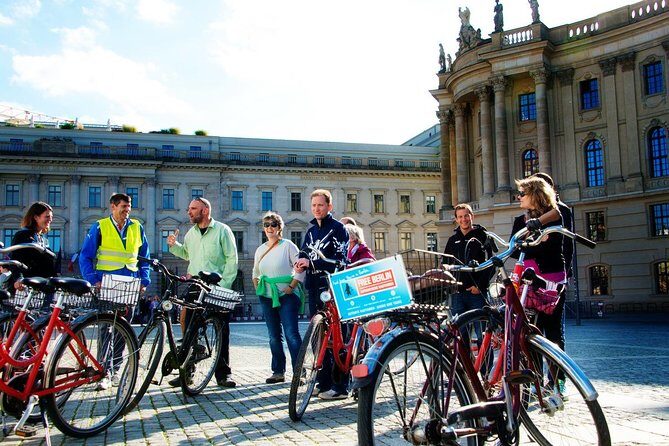
Your ride begins in Nikolaiviertel, a place designed to recreate an older Berlin feel. It’s the kind of stop that makes you slow down for a minute, because it looks like the city has a memory. For first-time visitors, that’s a great opening: it gives you a contrast point before you roll into modern-and-political Berlin.
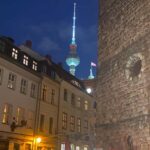
From there, you’ll pass by the TV-tower area. Berlin’s TV tower opened in 1969 and quickly became a defining skyline landmark. Even if you don’t go up, the area puts you in the mindset of the city’s postwar era—especially the way Soviet-era ambition still shows up in the city’s visual language.
Practical tip: if you’re hoping for skyline shots, bring your phone ready. Bike tours make it easy to get the angle, but you’ll only get a short window to frame the photo.
Bebelplatz Book Burning Memorial: Where the Past Is Forced Into the Open
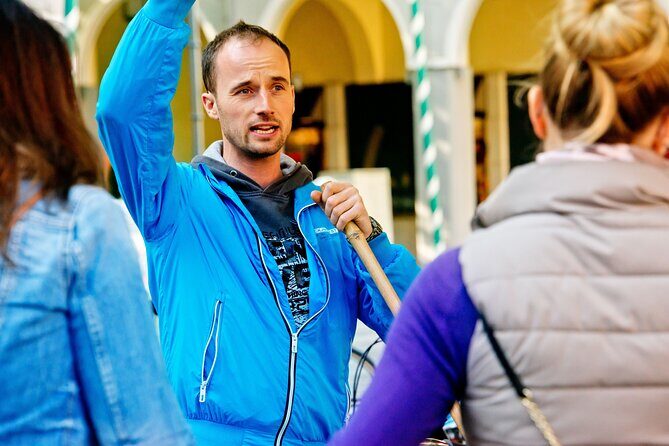
Next comes Bebelplatz and the Book Burning Memorial. This stop hits for a reason. It’s a public, permanent reminder of how Nazis burned thousands of books in front of the public—an act meant to reduce freedom of thought to ashes.
What I like here is that the stop is not just one monument. The area around it is described as a classic center of Berlin, with key nearby institutions shaping what you see: Berlin’s oldest university is part of the story, plus nearby landmarks like the old opera, a Catholic cathedral, a hotel that once served as a bank, and a guard’s house with temple-like styling.
This is one of those places where a short stop can still change how you read the city. You start to notice how architecture and institutions carry meaning. And it makes the later Cold War stops feel less abstract, because you understand Berlin’s recurring theme: power, ideology, and the public stage.
Checkpoint Charlie in the English Version: The Cold War in One Block
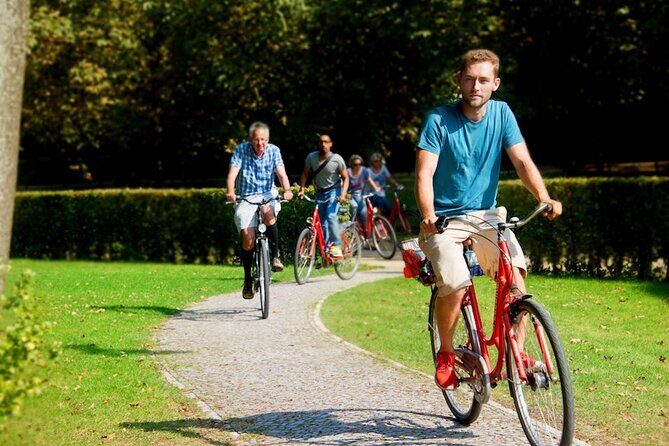
If you’re on the English-language departure, one of the standout moments is Checkpoint Charlie. It’s the most famous border station linked to Cold War division, and it’s a stop designed to make you instantly picture the idea of two systems separated by rules, fences, and fear.
Even with a brief visit, you get the emotional geography. Berlin isn’t just history in books. It’s history in street corners, signage, and the way people talk about where lines used to be. This stop gives you that mental map quickly, which is great if you only have one or two days in town.
Tip if you care about history clarity: ask your guide what to prioritize if you want to follow up on your own after the tour. You’ll often get a short list of nearby places that match your interests.
You can also read our reviews of more guided tours in Berlin


Potsdamer Platz, No Man’s Land, and Tiergarten Breathing Space
After the Cold War storytelling, you roll into Potsdamer Platz. This area is described in two moods: roaring traffic from the earlier era, then the stark meaning of no man’s land during Berlin’s division. It also became Europe’s biggest construction site around the Millennium, because the city’s reunification needed space, plans, and reinvention.
This is a good “translation stop.” You see how Berlin can be both broken and rebuilt. You also learn why places that look modern aren’t just new buildings. They’re answers to old problems.
Then the route gives you a breath of air: Tiergarten (often referred to as the Garden of the Animals, with a name that doesn’t match its zoo history). It’s one of Berlin’s biggest parks, and it works like a pressure release after the darker stops. Even a short pause in green space makes the rest of the tour feel more human.
Practical note: you’ll keep moving, so don’t plan to bring a picnic plan here. Think of it as reset time.
The Holocaust Memorial: A Short Stop That Stays With You
The Holocaust Memorial—Memorial to the Murdered Jews of Europe—is one of the stops that can’t be “optimized.” It’s a place where the silence matters, and the message is heavy even when your visit is brief.
The key value of including it on a bike tour is timing and framing. You’re not arriving cold. You’re coming after stops that explained how ideas were used in public life and borders were enforced. That buildup helps the memorial land with context instead of just shock.
If you want to get the most out of this moment, slow down when you arrive. Wear shoes that feel stable, and give yourself a few minutes of no-phone time. A quick look is still a look, but a quieter visit is what tends to stick.
Brandenburg Gate and the Reichstag Dome: The City Looks You in the Eye
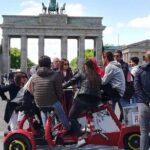
Then it’s time for Berlin’s big icon moment: Brandenburg Gate. It’s often called the icon of the city, and that title fits because it’s tied to many layers of Berlin’s political identity. You’ll see why it’s a magnet for photos—then your guide gives you the reasons behind the symbolism.
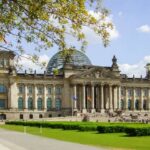
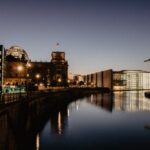
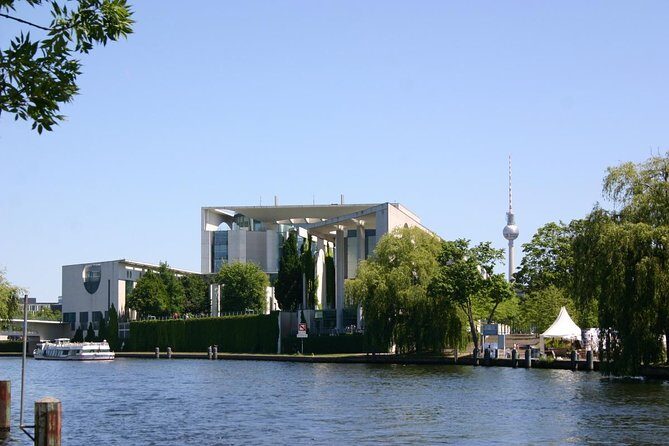
From there, you’ll reach the Reichstag Building, Germany’s parliament. One detail that really helps here is the transparent dome. The dome concept matters because it’s about visibility and accountability—literally making leadership look back outward.
This stop also includes some guide-led myth-busting about a nearby government area that gets nicknamed Germany’s White House. The point isn’t the nickname itself. It’s that Berlin holds on to popular stories, and your guide separates the fun myths from what’s actually true.
Quick practical tip: stand where you can get both the building lines and the “government quarter” feel. The geometry is part of the story.
Prenzlauer Berg or Museum Island: Two Different Endings by Tour Language
The tour route can split depending on whether you booked the English or German option.
If you’re on the German version, you’ll spend about 30 minutes in Prenzlauer Berg. It’s described as a liveable district that shows Berlin’s transformation since reunification. You’ll get the feel of its more bohemian flavor, but the key is why it works as a contrast ending: Berlin isn’t only monuments. It’s neighborhoods where people build daily life after big political change.
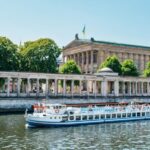
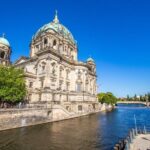
If you’re on the English version, the tour continues toward Museum Island. This part focuses on the impressive architecture along the Spree, sometimes nicknamed Spree Athens. It’s a satisfying payoff after history-heavy stops because it puts Berlin’s identity into a cultural lens. Even if you don’t go inside any museum today, the exterior architecture gives you a taste of why people spend whole days here.
Pace, Photo Time, and How to Ride Comfortably
The tour timing is about 3 hours, and that means the ride is structured around short, frequent stops. That’s a feature for getting your bearings fast, but it can feel like a drawback if you want longer photo sessions or extended reading at each spot.
Here’s how to make it work:
- Think of each stop as orientation plus one takeaway, not a finished visit.
- Plan to come back later for the two or three places that hit hardest.
- If you care about photos, keep your camera accessible and be ready to shoot quickly when your guide pauses.
You should also know that the tour runs in all weather conditions, so dress appropriately. Berlin can go from pleasant to chilly fast, and wind around open government areas can feel sharper than you expect.
What You Really Get for $42.34
At $42.34 per person for about 3 hours, this is good value because key essentials are included: the bike, the helmet, and a professional guide. When you subtract what those services would cost separately in a city like Berlin, the price starts to make sense as a pay-for-time deal.
You also get a “route designed by the guide” approach under the Free-Berlin concept. That matters because you’re not stuck with the same exact playlist every day. It’s a small difference, but it can change what you notice when you’re still learning the city.
What you don’t get is food and drinks unless specified. So plan a meal either before you go or afterward. A bike tour keeps you active, and Berlin sights are best enjoyed when you’re not waiting for a snack mid-ride.
The Guides: Storytelling Style That Matches Real Questions
One reason this tour gets such high ratings is the guide factor. Many guests specifically praised guides for combining humor with clear connections between sights and politics. Names that come up in guest feedback include Rufus, Luka, Reiko, Giuletta, Jake, Simone, Marius, and others.
What’s consistent across those comments: guides often make the tour more than a photo walk. They explain why a place matters, then answer questions in a way that helps you keep moving without feeling lost. Some guides also provide practical recommendations when you ask what to do next in Berlin, which is the kind of added value that’s hard to measure until you’re planning the rest of your trip.
Potential caution: communication can vary depending on language option and the specific guide’s English level. If you’re traveling with someone who needs very clear audio, pick a departure time when you can arrive a few minutes early and get settled.
Who Should Book This Bike Tour (and Who Might Skip It)
This is a smart choice if you:
- Are a first-time visitor and want top sights plus context
- Want an active but not extreme half-day plan
- Like history explanations that connect multiple eras
- Prefer small groups and a smooth pace
You might want to consider a different format if you:
- Want long stays inside major sites today
- Need lots of uninterrupted time at each monument for photos
- Are traveling with very young kids who need frequent breaks (your best bet is bringing up comfort and pacing when you book)
The good news is that the tour is family-friendly, and infant seats can be provided on request. Children must be accompanied by an adult.
Should You Book This Berlin Highlights Bike Tour?
If you want to get your bearings fast and still come away with real understanding, I’d book this. It covers a concentrated set of landmarks that represent Berlin’s core themes: old town identity, public memory, Cold War borders, political power, and either neighborhood life or cultural architecture at the end.
Book it especially if your schedule is tight and you’d rather bike between ideas than spend your day in transit. The price is fair for what’s included, and the route design approach means your guide isn’t just reciting facts—they’re shaping your walk-through of the city.
If you do book it, plan a little follow-up time. After you see Brandenburg Gate, the Reichstag, or the Holocaust Memorial from street level, you’ll likely want to return on your own to sit longer, read more, and take your time.
FAQ
How long is the Berlin guided bike tour?
It lasts about 3 hours.
How much does the tour cost?
The price is $42.34 per person.
What’s included in the ticket price?
You get bicycle use, a helmet, and a professional guide.
Is the tour available in English?
Yes. English is offered, and other language options are available depending on the option chosen.
Are meals included?
No. Food and drinks are not included unless specified.
How big is the group?
The group size runs from 4 to 15 participants, with a maximum of 15.
Is there free cancellation?
Yes. You can cancel up to 24 hours in advance for a full refund.