REVIEW · BERLIN
Berlin: Backyards of Berlin 2-Hour Tour
Book on GetYourGuide →Operated by Paaßens & Kniestedt Berlin kompakt GmbH · Bookable on GetYourGuide
Berlin’s best views are often behind a door. This 2-hour Backyards of Berlin walk takes you into courtyards you’d miss from the street, with a strong focus on how neighborhoods like Hackesche Höfe and Spandauer Vorstadt got shaped over time. I especially loved the way the guide brings details to life through Jewish history and the quieter rhythms of Sophienstraße’s courtyard world.
The other big win for me: you’re not just reading about the city—you’re seeing the layout and realizing how Berlin’s tolerance and coexistence played out in real buildings and streets. One thing to consider: at 2 hours, the tour can feel a little long in very cold weather, and there’s at least some chance you’ll pass spots like smaller shop areas that may not be your priority.
In This Review
- Key highlights you’ll care about
- Entering Hackesche Höfe: Berlin’s courtyards, up close
- How the 2-hour walk works (and how to plan your day)
- Sophienstraße and the courtyard world of Hackesche Höfe
- Große Hamburger Straße: tolerance in planning, plus a Baroque church view
- Oranienburger Straße: New Synagogue history and the Postfuhramt area
- Heckmann Höfe to close: the back courtyard payoff
- What the guide does well: wit, timing, and room for questions
- Price and value: $21 for a focused 2-hour story
- Who should book this tour (and who might not love it)
- Should you book Berlin: Backyards of Berlin 2-Hour Tour?
- FAQ
- FAQ
- How long is the Backyards of Berlin tour?
- Where do I meet the guide?
- What languages is the tour offered in?
- Is food or drink included?
- Does the tour include Jewish history and specific sites?
- Can I request special interests like Jewish history or urban planning?
Key highlights you’ll care about
- Hackesche Höfe first courtyard meeting point makes it easy to start and orient fast
- Courtyard-to-street context: you’ll understand how the neighborhood works, not just what it is
- Jewish landmarks on Oranienburger Straße, including the New Synagogue and Postfuhramt area
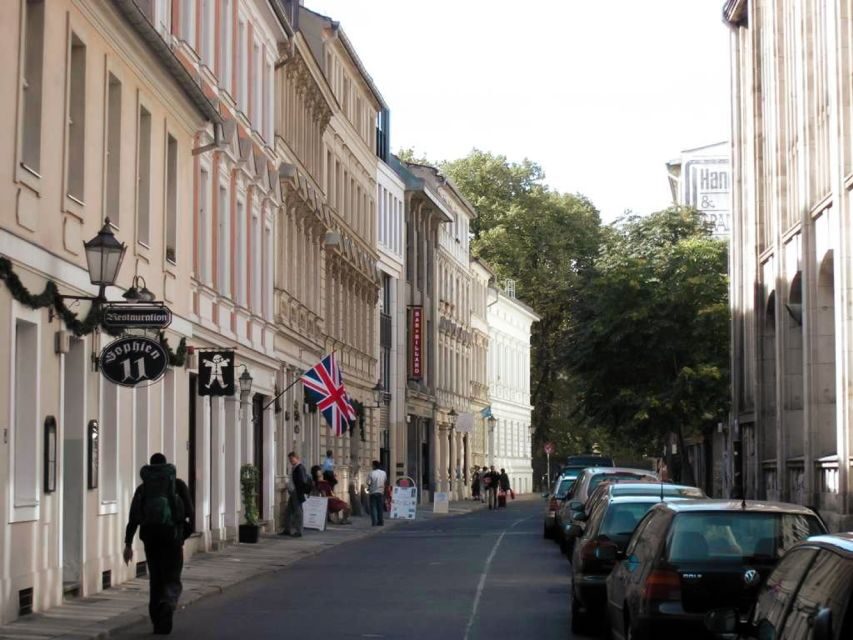
- Sophienstraße and artisan courtyards like Sophie-Gips-Höfe, where Berlin’s back spaces feel lived-in
- Baroque church views from Große Hamburger Straße without needing a separate sightseeing detour
- Heckmann Höfe at the end, one of the most interesting back courtyards in the area
Entering Hackesche Höfe: Berlin’s courtyards, up close
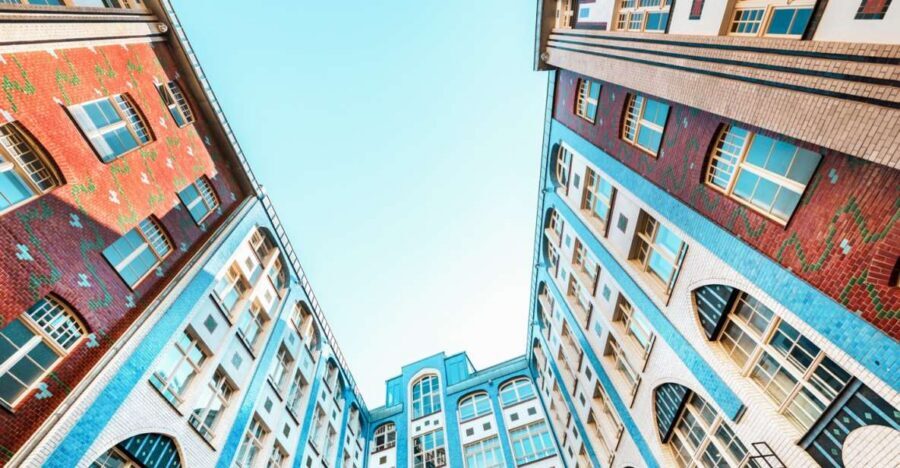
The tour’s starting point is Hackesche Höfe, right at the first courtyard by the cash counter of Chamäleon. That’s a smart choice because courtyards are the whole point. From the sidewalk, you see façades. Inside, you see how Berlin used to function day-to-day: service entrances, passageways, and shared spaces that don’t announce themselves.
What I like here is that you start in a place built for people to move through, so the idea of going behind the scenes feels natural from minute one. Instead of treating courtyards like a quick photo stop, you get the neighborhood story in the exact kind of space where that story played out.
Practical tip: arrive a few minutes early, especially if you’re coming from another part of town. The courtyard streetscape can make you feel like you’ve walked in circles unless you line up with the meeting point.
A few more Berlin tours and experiences worth a look


How the 2-hour walk works (and how to plan your day)
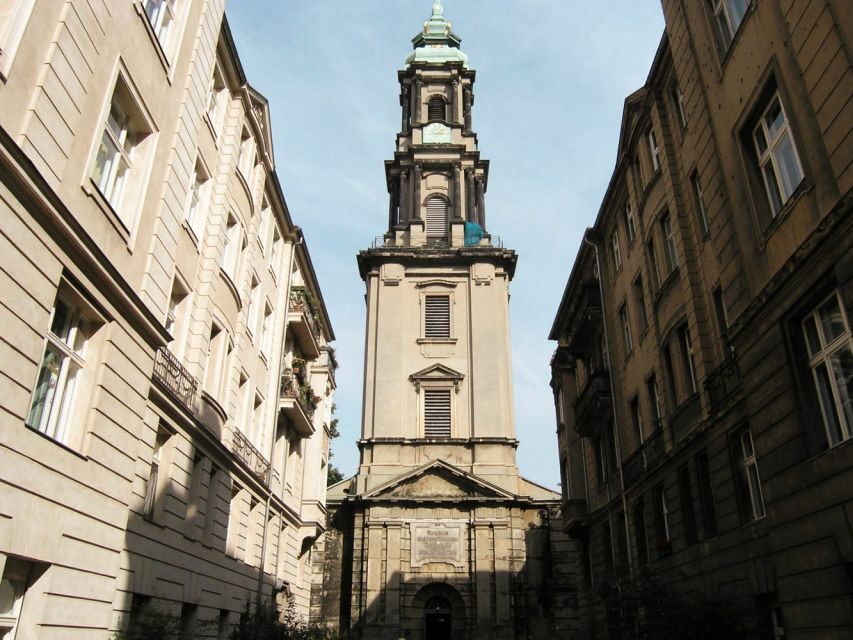
This is a private walking tour with a live guide in English or German, lasting about 2 hours. That time window is short enough to fit between bigger Berlin plans, but long enough for the guide to connect the dots—street by street, courtyard by courtyard.
Berlin walking tours work best when you treat them like a rhythm, not a sprint. You’ll do stretches on major streets, then duck into quieter courtyard sections where you can actually hear the guide’s explanations without shouting over traffic. In winter, that rhythm changes. Cold air on open streets can make the clock feel faster, and one review pointed out that the tour still feels like it flies thanks to the guide’s humor and pacing—but it can still be a factor.
What to do: wear comfortable shoes and a warm layer you can keep on during courtyard stops. If you know you run cold, bring a hat and gloves. Courtyards are calmer, but they don’t heat you up.
Sophienstraße and the courtyard world of Hackesche Höfe
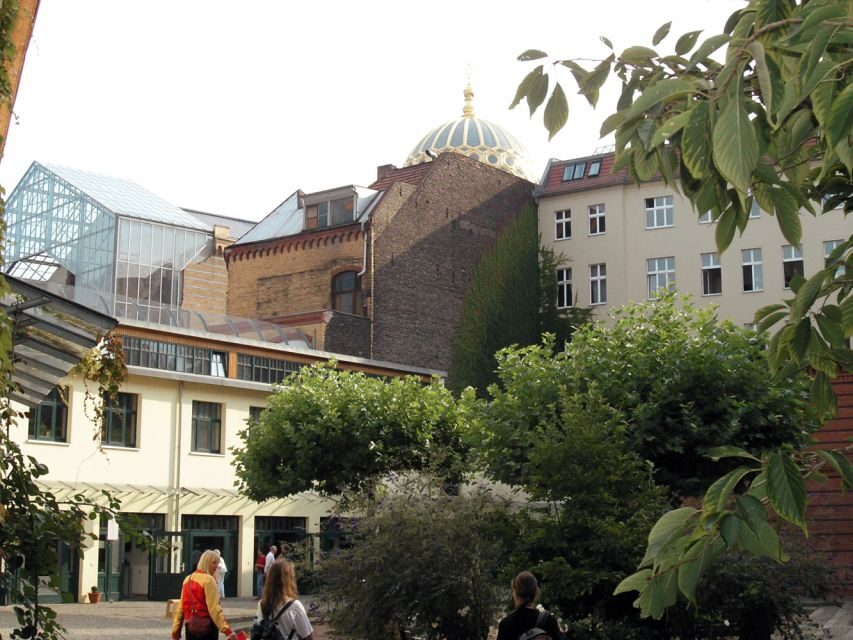
A big chunk of the experience centers on the Hackesche Höfe area and the neighborhood along Sophienstraße. This is where you get the feel of the district as more than architecture. You’ll hear about the unusual fate of a revitalized courtyard district and how the space changed over time—without turning it into a dry lecture.
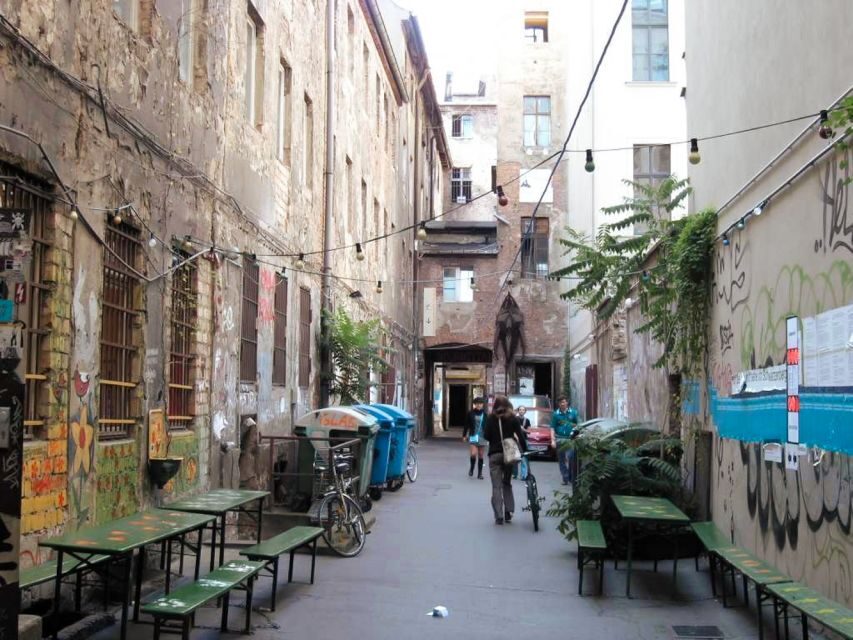
You’ll also look into specific courtyard areas, including the courtyard of an artisan association as well as Sophie-Gips-Höfe. I like these stops because courtyards here aren’t just empty “backdrops.” They’re practical spaces with a purpose, and the guide’s explanations help you see why that matters.
Here’s the mental trick I use while doing these kinds of tours: treat each courtyard like a clue to the original neighborhood design. Courtyards often reveal who had access, what the buildings were meant to do, and how daily life moved between public streets and semi-private spaces.
Possible drawback to keep in mind: there can be some time allocated to areas that feel more like smaller shop or craft settings than major monuments. If you’re only chasing the big Jewish history stops, you might want to mentally budget the “artisan space” portions as bonus texture rather than your main target.
Große Hamburger Straße: tolerance in planning, plus a Baroque church view
Then you shift to Große Hamburger Straße, described as a road of tolerance. That phrase matters. It’s not marketing fluff—it’s a way of framing what you’re about to see: multiple faiths and institutions sharing the same neighborhood geography over time.
On this section, the guide points out what you can learn by looking behind façades of a major Catholic institution. You’ll also get views of the most important Baroque church in the city. The key here is that you’re not just stopping at a landmark. You’re understanding why a church’s position in the street and relationship to surrounding buildings affects how people experienced the city.
If you’re the kind of traveler who likes to connect architecture to social history, this part is worth your attention. Berlin isn’t only museums and monuments. It’s also street scale decisions—where entrances face, how sightlines work, and how different communities were positioned in the urban fabric.
My advice: use your phone for direction, not for distraction. This is one of those segments where a guide’s ability to explain relationships between buildings is the real value.
Oranienburger Straße: New Synagogue history and the Postfuhramt area
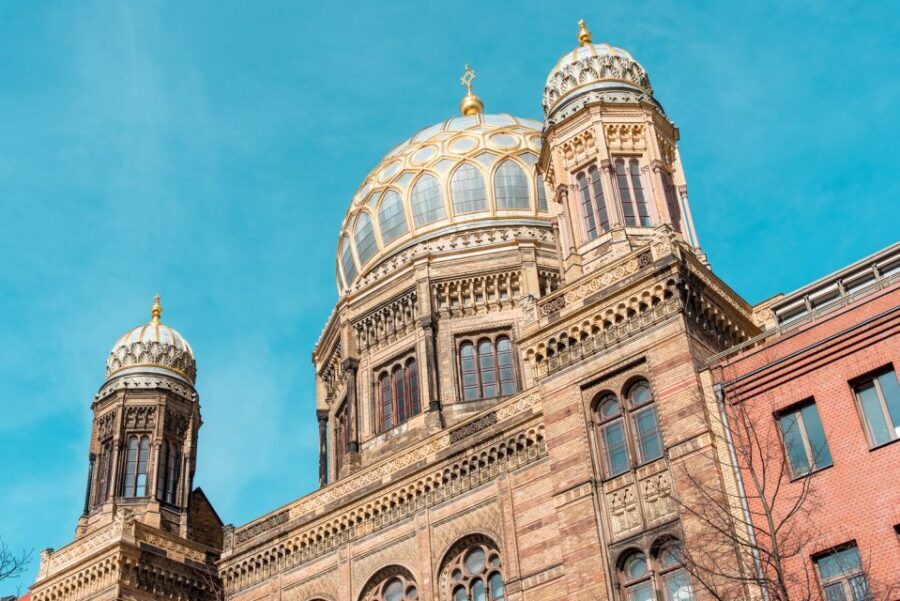
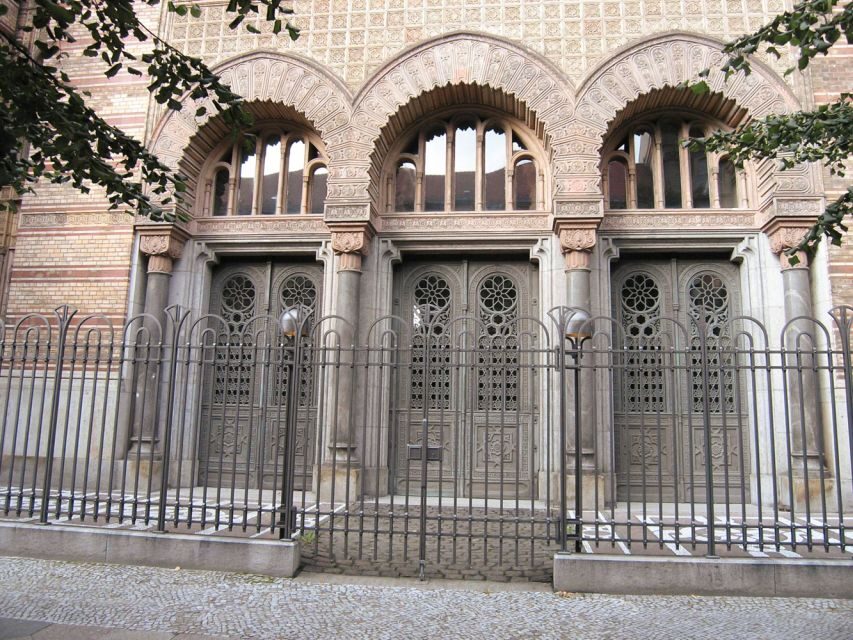
The tour’s story sharpens on Oranienburger Straße. This is where you’ll learn about the imposing New Synagogue and the adjacent Postfuhramt.
This section is important for two reasons. First, it gives you a clear connection between a visible landmark and the broader neighborhood layout around it. Second, it turns the idea of “history” into something spatial—how people moved through the area, how institutions sat side by side, and how the urban setting relates to community life.
Berlin’s Jewish history in this neighborhood isn’t abstract here. The guide explains the fate of the Jewish community in Berlin and also points you toward the idea of the first cemetery associated with that history. Even if you already know some basics, hearing it in the context of real street geometry makes the timeline feel more grounded.
Small planning note: if this is the part you care about most, keep your energy for it. It tends to be the emotional and intellectual center of the tour.




Heckmann Höfe to close: the back courtyard payoff
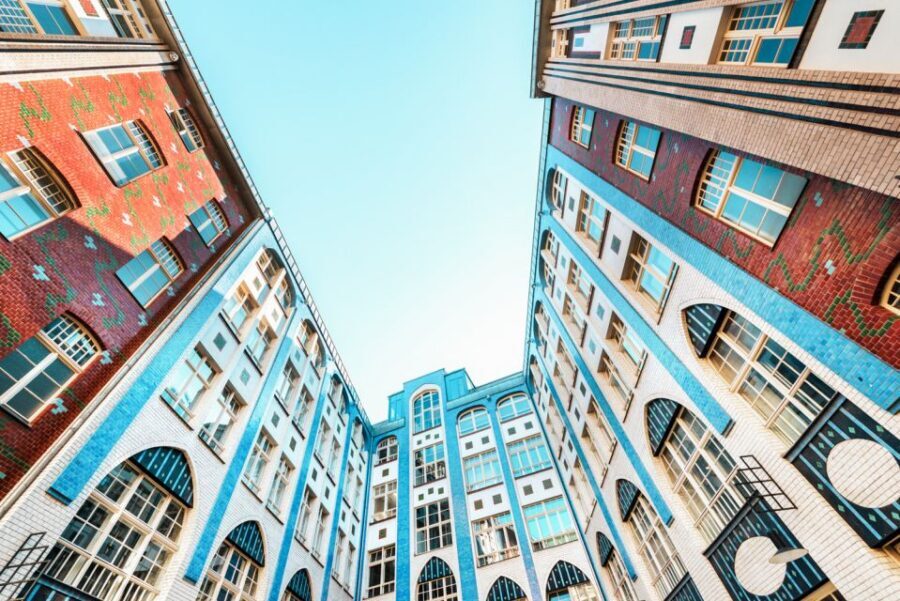
The last stop is Heckmann Höfe, one of the most interesting back courtyards of the neighborhood. This is a great choice for an ending, because it gives you the payoff you started looking for.
If you’ve spent most of the tour watching façades give way to courtyards, Heckmann Höfe feels like a final proof: this is what Berlin back spaces are actually like when you slow down. By the end, you’re better at “reading” the courtyard as a system—passages, access points, and the way a neighborhood’s quieter life continues behind the street.
End-of-tour courtyard time also matters because you’re likely to be a little more alert to details. Early on, you’re learning the map. Later, you’re appreciating the textures—how the space feels, where the exits are, and why the neighborhood layout makes sense.
What the guide does well: wit, timing, and room for questions
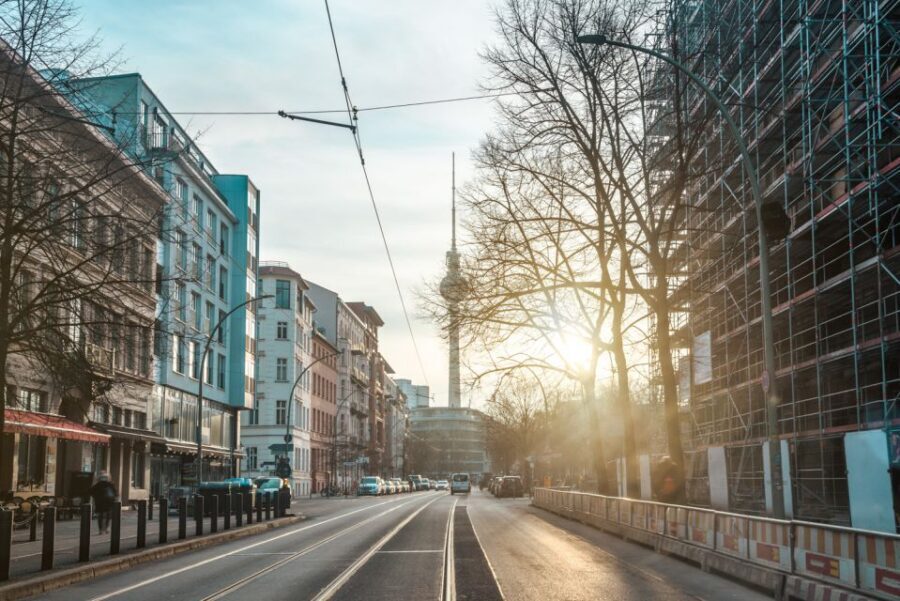
A lot of the praise here is about the guide—not just the subject. One review highlighted a guide with plenty of wit and an ability to keep the pace lively even in winter. Another emphasized that the tour is well planned and that the guide was open to questions, plus offered useful tips.
That combination matters. Courtyard tours can sometimes turn into a “walk, point, move on” routine. Here, the better approach is more like storytelling with a map. You get explanations that connect multiple stops, plus enough interaction that your questions feel welcome rather than disruptive.
If you have specific interests—Jewish history, urban planning, or city history—you can also arrange special focus with the operator in advance. That’s a great option if you want the guide to steer time toward what you actually came for.
Price and value: $21 for a focused 2-hour story
At $21 per person for a 2-hour guided walking experience, the value is mainly about focus. You’re paying for two things you can’t easily recreate on your own:
1) a guided interpretation of courtyards and landmark relationships, and
2) a clear route that uses back spaces as part of the lesson, not as incidental stops.
If you’re spending multiple days in Berlin, this tour fits as a high-ROI add-on. You’ll leave with better street-level understanding of Hackesche Höfe and the broader district, and you’ll get a structured sense of the Jewish history thread along Oranienburger Straße.
One consideration: if your group has very specific priorities, check that the route’s mix of courtyard sites and more everyday back-area stops matches your interests. The one criticism about length and the possibility of skipping certain artist-shop-style segments is a reminder that not every stop hits the same note for everyone.
Who should book this tour (and who might not love it)
This tour is a strong match if you like:
- Neighborhood history through actual spaces, especially courtyards
- A Jewish history lens tied to streets and buildings
- Architecture-as-clues, meaning you want reasons, not just names
It may feel less perfect if:
- You only want major monument photo stops and prefer skipping smaller courtyard areas
- You’re sensitive to cold and find 2 hours outdoors a bit much
That said, the guide’s pacing appears to be a major strength, and that can make the whole experience feel shorter in the best way.
Should you book Berlin: Backyards of Berlin 2-Hour Tour?
I’d book it if you want Berlin that’s quiet, personal, and street-level. The route is built around courtyards—spaces you won’t notice unless someone helps you see what to look for. And the Jewish history and tolerance framing give the walk more weight than a typical “here’s a courtyard” sightseeing loop.
Book it with confidence if you’re comfortable walking for 2 hours and you’re interested in learning how neighborhoods work behind their façades. If you’re unsure, think about what you want most: major monuments only, or a guided understanding of how life and history were shaped by the city’s back spaces.
FAQ
FAQ
How long is the Backyards of Berlin tour?
It’s a 2-hour walking tour.
Where do I meet the guide?
Meet at Hackesche Höfe, first courtyard, at the cash counter of Chamäleon.
What languages is the tour offered in?
The live tour guide is available in English and German.
Is food or drink included?
No. Food and drink are not included.
Does the tour include Jewish history and specific sites?
Yes. The tour covers Jewish history in the area and includes stops connected with the New Synagogue and the Postfuhramt, plus discussion of the fate of the Jewish community and its first cemetery.
Can I request special interests like Jewish history or urban planning?
Yes. Special interests such as Jewish history, urban planning, and city history can be arranged with the tour operator in advance.