REVIEW · BERLIN
Berlin: Kayaking Tour East – Kreuzberg and Spree river
Book on GetYourGuide →Operated by Kajak Berlin Tours · Bookable on GetYourGuide
Berlin feels best from the water.
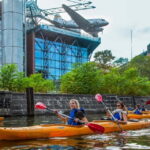
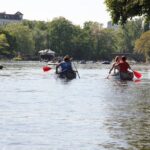
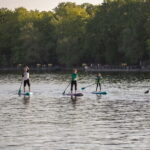
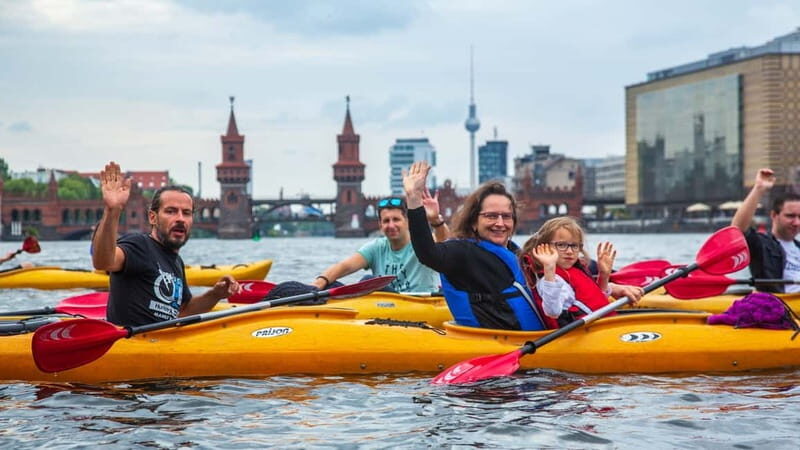
This 3.5-hour kayak route lets you paddle along Landwehrkanal and the River Spree, tracing a former East Berlin boundary while you glide under major bridges like Oberbaumbrücke. It’s a great way to see familiar landmarks with a slower, human pace—plus you get guide-led history as you go.
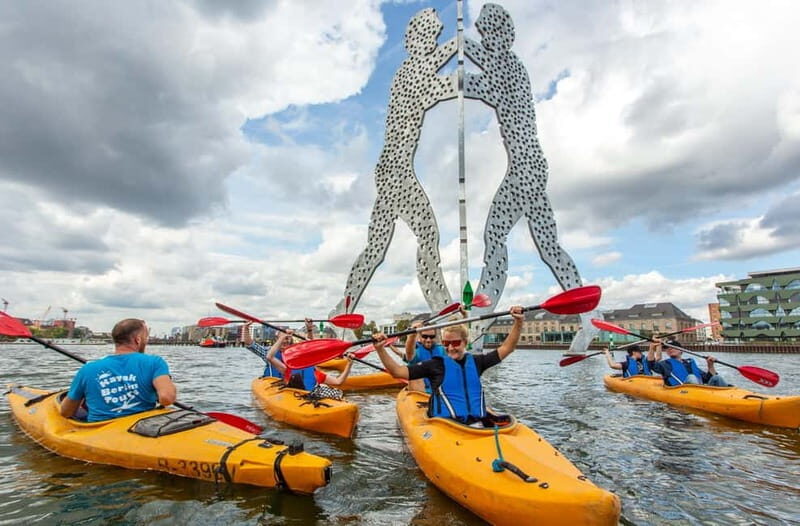
I really like the mix of picture-perfect sights and practical guidance. You’ll pass well-known crossover neighborhoods in Kreuzberg, including areas tied to Turkish market life and Jewish community landmarks, and you’ll get a chance to pause at major photo points like the Molecule Man sculpture and Oberbaumbrücke.
One thing to plan for: this is real paddling, not a casual float. You’ll be on the water about 3 hours, so you’ll want decent stamina (and you will likely get wet), especially if it’s your first time.
In This Review
- Key things to know before you paddle
- From Carl-Herz-Ufer to the Urbanhafen: getting on the water fast
- Safety briefing and kayak training that actually helps
- Landwehrkanal and the Iron Curtain line: history you can feel in your strokes
- Gliding under Admiralsbrücke: Berlin’s past-and-present bridge moment
- Oberbaumbrücke and the TV Tower: a skyline view from the water
- Kreuzberg’s multicultural corridor: Turkish market energy and Jewish community landmarks
- East Harbor and the creative Spree: Osthafen, Badeschiff, and water-level surprises
- Molecule Man stop: pause, stretch, and get your bearings
- How hard is it, really? Distance, getting wet, and energy tips
- Logistics that make a difference: helping carry kayaks and group pacing
- Languages, pacing, and what the guide adds
- Price and value: what you’re paying for beyond a ride
- Who this kayaking tour fits best (and who should skip)
- Should you book this Berlin kayaking tour or pass?
- FAQ
- Where do I meet for the kayak tour?
- How long will I be on the water?
- What’s included with the tour?
- Is the tour suitable for non-swimmers?
- What languages do the guides speak?
- Do I need to be 18+ to participate?
Key things to know before you paddle
- 3 hours on the water plus about 30 minutes for prep and explanations
- You paddle in 2-person kayaks (or a 1-seater if needed)
- The route connects Landwehrkanal and the Spree, including key East-meets-West views
- Expect guided passes by Admiralsbrücke and the famous Oberbaumbrücke
- You’ll stop for guided time at Molecule Man for photos and orientation
- Bring appropriate clothing: you should be ready to get wet and dress warm if it’s cool
From Carl-Herz-Ufer to the Urbanhafen: getting on the water fast
Meet your guide at the blue Kayak Berlin Tours Truck next to Carl-Herz-Ufer 9. The Prinzenstrasse U1 station is about 300 meters away, so you can arrive without a complicated transit plan.
Once you check in, you’ll get set up with equipment and a quick plan for the paddle. Then you’ll move toward the Urbanhafen, which works like a green pocket on the water—an easy place to settle your nerves before you start traveling more.
A few more Berlin tours and experiences worth a look

Safety briefing and kayak training that actually helps
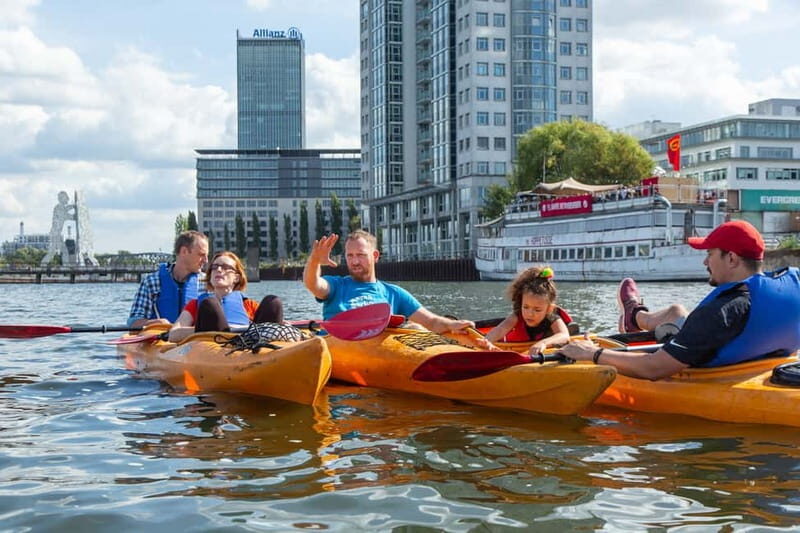
You’ll get a safety briefing first (about 10 minutes). This isn’t just rules on paper; it’s the kind of intro that helps you understand how to handle a kayak in moving urban water.
Even if it’s your first time, expect hands-on paddling training before you head out. Guides will share tips to help you find your rhythm, which matters because the paddling can feel more strenuous than people expect once you start covering distance.
Also, you’ll be wearing a life vest (provided), and you should know this tour isn’t for non-swimmers. So if you’re unsure about your comfort level in open water, this is the point to decide before you suit up.
Landwehrkanal and the Iron Curtain line: history you can feel in your strokes
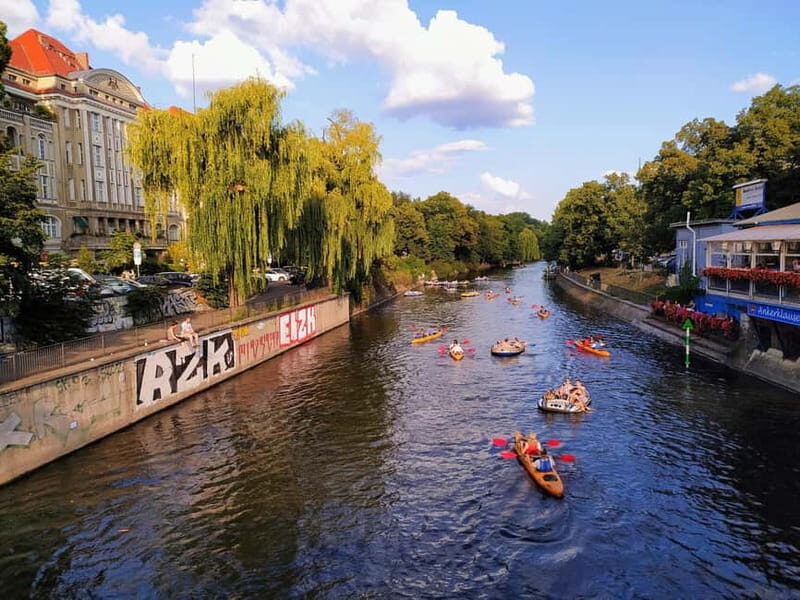
The core experience is paddling along Landwehrkanal and then continuing onto the Spree, with route segments tied to Berlin’s former East-West divide. You’re basically following a boundary story in motion—quiet water, close buildings, and an urban landscape that changed fast in the 20th century.
One of the neat details you get along the way: the canal was planned in the 19th century by royal landscape architect Peter Joseph Lenné. Your guide can explain how the canal’s curves were designed to mimic a natural river, which is a fun reminder that this isn’t just a man-made channel—it was built to look and feel “river-like.”
As you paddle, you’ll also get that lived-in feeling of Berlin. This area isn’t staged for tourists; it’s used by locals and visitors for recreation, so you share the waterway with everyday life.
Gliding under Admiralsbrücke: Berlin’s past-and-present bridge moment
After you’re warmed up, you’ll glide under Admiralsbrücke with a guided look around. It’s the kind of bridge scene where you can look up for architecture and look forward for the water line at the same time.
This is also where the tour’s pacing starts to feel right. You’re not rushed, but you’re also not stuck paddling in circles. The guide keeps the group moving while still giving you time to take photos when the waterway opens up.
And yes, it’s a good “mix” stop: you get past-and-present Berlin in one view—industrial elements, newer city life, and that wide canal geometry that makes kayaking feel smooth and navigable.
Oberbaumbrücke and the TV Tower: a skyline view from the water
The highlight most people remember is passing under Oberbaumbrücke, which the tour frames as Berlin’s most beautiful bridge. As you glide through that space, the TV Tower often sits in the background, which turns a bridge crossing into a skyline shot you can’t really replicate from a sidewalk.
It helps that your perspective is lower to the water than almost every other viewpoint. Instead of looking at the bridge from above, you feel like you’re traveling through the city’s “architecture corridor.”
If the timing works, you may also notice how the water changes your sense of scale—boats, platforms, and bridge legs all line up in a way that feels very “Berlin.”


Kreuzberg’s multicultural corridor: Turkish market energy and Jewish community landmarks
One of the most interesting parts of this paddle is that it takes you through Kreuzberg with a clear sense of cultural contrasts. Your route runs past recognizable areas where the neighborhood’s identity is visible from the water.
You’ll pass by parts of the city tied to Jewish communal life on one side, and you’ll also get the “Turkish market” atmosphere near Maybachufer on the other. Whether you know Berlin well or not, the city feels layered here in a way that works beautifully from a kayak—because you’re close to the streets and waterfront at the same time.
This is also where the guided history helps. It’s not history-by-lecture; it’s history tied to what you’re seeing now—buildings, bridges, and canal edges that still hold meaning.
East Harbor and the creative Spree: Osthafen, Badeschiff, and water-level surprises
As the route continues toward the East Harbor area, you’ll kayak around Osthafen. The guide can point out how this part of the city connects with Berlin’s creative industries, which gives the scenery a bit of context beyond just views.
You’ll also pass Badeschiff, a pool in the River Spree. It’s the kind of contrast scene that makes Berlin kayaking feel fun even when you’re working your arms: a serious city waterway with a leisure place built right into it.
One extra detail you might experience depending on conditions: going through locks and seeing water levels shift. That’s one of those “only happens on the water” moments, and it’s genuinely interesting because the change feels physical.
If the weather has been wet, keep expectations flexible. On high-water days, you can encounter more floating litter washed in from streets. It’s not enough to ruin the tour, but it is real, so don’t expect a postcard-clean canal.
Molecule Man stop: pause, stretch, and get your bearings
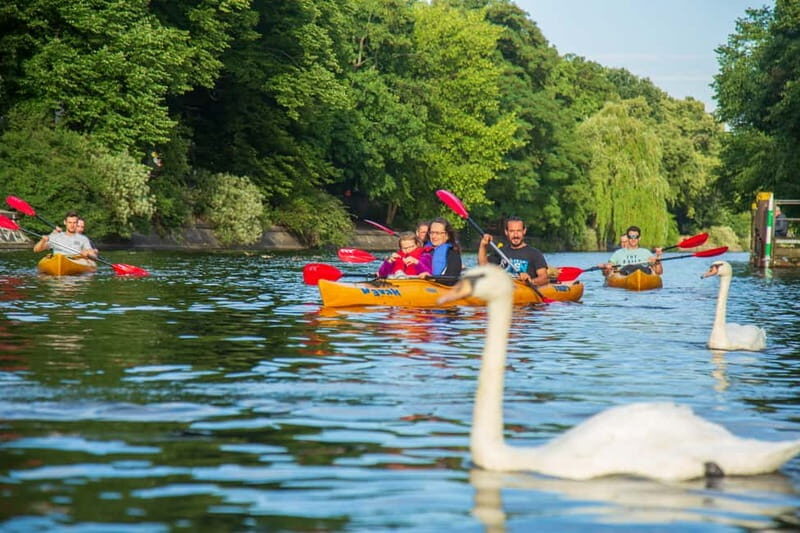
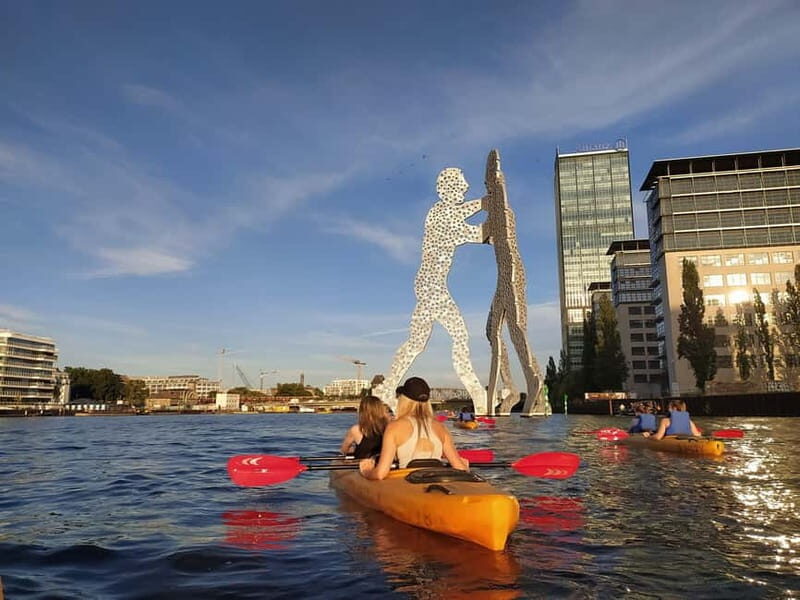
At Molecule Man, you’ll slow down for a guided stop and photo time. This sculpture is one of the tour’s anchors, and the guide uses it to help you orient your sense of where you are in the route.
It’s also a good moment to take a breath. After paddling, your body will appreciate a quick stop, and the group usually settles into a more relaxed pace right after.
Once you finish at Molecule Man, you turn around and head back toward the departure point in Kreuzberg. That return feels easier for many people because you’ve already gotten your paddling rhythm by then.
How hard is it, really? Distance, getting wet, and energy tips
Plan for a paddling workout. The distance is long enough that first-timers can feel it in their shoulders and arms, even though the guide will give tips to manage effort.
As a practical benchmark, think about roughly 8–10 km across the route, depending on your exact path and conditions. That’s why people who show up with a little stamina do better and enjoy it more.
You should also dress for getting wet. Even when conditions are mild, kayaking in Berlin means spray and damp gear. Bring something you’re okay with getting wet, and wear layers that keep you comfortable if temperatures drop.
I’d pack basic supplies too. Bring water and a light snack if you can. With about 3 hours on the water, you can get thirsty or hungry, and having a quick bite helps you finish strong.
If it’s cold or gray, dress warm. The paddle itself generates heat, but you’ll still feel wind and water chill, especially after stops for guidance and photos.
Logistics that make a difference: helping carry kayaks and group pacing
Here’s a small detail that actually matters: you’re asked to help carry the kayaks from the vehicle to the water and back. It’s usually manageable, but it’s not “sit and wait” logistics.
Group size also changes the guide setup. Larger tours use one guide for German and one for English. Smaller groups can be handled by a single guide doing both languages. Either way, the goal stays the same: safety, a steady pace, and enough storytelling to make the route feel meaningful.
You’ll end back at the same meeting point at Kayak Berlin Tours, so you don’t need to plan a complicated second transportation leg.
Languages, pacing, and what the guide adds
Guides communicate in English and German, and they focus on more than just directions. You’ll get history and explanation tied to what you see—like Lenné’s design ideas for the canal curves, the East-West boundary context, and why particular bridges or waterfront sections matter.
The pacing is built for mixed experience levels. Even if you’re nervous at the start, you should feel your control improve quickly as you practice turning and holding direction. The guides keep the group moving at a pace that doesn’t leave beginners behind.
Price and value: what you’re paying for beyond a ride
There’s no need to guess at value here. Your ticket includes the essentials that can otherwise cost extra: kayak equipment (paddles and life vests), guides, and kayak training. You also get a structured route with meaningful stops rather than a self-guided rental that leaves you figuring things out.
For most people, the best part is the combination of workout + access. You’re seeing high-interest Berlin waterfront scenes—Oberbaumbrücke and Molecule Man being the big two—while still getting instruction that makes the experience safer and more enjoyable.
Who this kayaking tour fits best (and who should skip)
This works well if you like city views with movement. It’s a strong choice for people who want East Berlin context without sitting through a museum timeline, and it’s great for anyone who enjoys active sightseeing.
You’ll likely have the best time if:
- You can handle 3 hours on the water and want a light-to-moderate workout
- You’re comfortable getting wet and dressing for outdoor conditions
- You like guided explanations as you pass landmarks
It’s not a fit if:
- You’re not a swimmer (life vests are provided, but the tour is still not suited for non-swimmers)
- You want a no-effort sightseeing plan
- You’re bringing alcohol or drugs (not allowed)
Should you book this Berlin kayaking tour or pass?
I’d book it if you want a smart mix of Berlin scenery, bridge views, and guided East-West storytelling—all in a time window that’s long enough to feel substantial but not so long you’re exhausted. The included training also makes it beginner-friendly in a practical way, and the route hits multiple “must-see from water” moments.
Pass if you hate getting wet, you’re unsure about swimming comfort, or you’re looking for a purely relaxing, effortless activity. This is active sightseeing, and that’s the point.
FAQ
Where do I meet for the kayak tour?
You meet your guide at the blue Kayak Berlin Tours Truck beside Carl-Herz-Ufer 9. Prinzenstrasse U1 station is about 300 meters away. The tour ends back at the same meeting point.
How long will I be on the water?
Plan on about 3 hours of paddling on the water. You also need about 30 minutes extra for preparation and explanations, for a total tour time of about 3.5 hours.
What’s included with the tour?
The tour includes kayak equipment such as paddles and life vests, plus guides and kayak training at the start.
Is the tour suitable for non-swimmers?
No. The tour is not suitable for non-swimmers.
What languages do the guides speak?
Guides provide live commentary in English and German.
Do I need to be 18+ to participate?
The setup is by kayak: there must be at least 1 participant over the age of 18 in each kayak. Kayaks are 2-person unless fewer guests require a 1-seater.