REVIEW · BERLIN
East Berlin Food & History Tour with Eating Europe
Book on Viator →Operated by Eating Europe Food Tours Berlin · Bookable on Viator
Berlin tastes like history on foot. This East Berlin Food & History walk pairs real street food stops with human stories, from Turkish döner to Vietnamese tacos. You’ll also get craft beer along the way, and you won’t have to hunt down extra tickets for the tastings.
Two things I really like: the tastings are built in, so the pricing feels honest, and the group stays small (max 12), which means you can actually ask questions. One thing to consider: the menu leans toward meat and the tour includes beer at multiple stops, so if you’re avoiding alcohol or eating only plant-based, email ahead and don’t assume everything will be easy.
In This Review
- Key things to know before you go
- A 3.5-hour walk that teaches Berlin through what people eat
- Price and value: what $107.68 covers in real life
- Meeting point, end point, and the pace that makes it work
- Stop 1: Boxi Späti and Berliner Kindl beer at the start
- Stop 2: Haroun and the döner story behind East Berlin street food
- Stop 3: NYOM for Vietnamese neon and TyTy Tacos
- Stop 4: RAW-Gelände, from repair yard to art, clubs, and skate culture
- Stop 5: Warschauer Strasse currywurst, the signature East Berlin bite
- Stop 6: Schnitzel Burger and Berliner Pilsner, with Wall-fall discussion
- Stop 7: East Side Gallery, 1.3 miles of Wall murals in the open air
- Stop 8: Aleppo Supper Club for Syrian and Levante flavors
- Final stop: a Berlin squat house with politics, concerts, and education
- What guides do well here (and why that matters for your time)
- Who this tour suits best
- Quick planning tips so you enjoy it more
- Should you book East Berlin Food & History with Eating Europe?
- FAQ
- How long is the East Berlin Food & History Tour?
- What’s included in the price?
- Does the tour include beer?
- Can the tour accommodate dietary requirements?
- Are children allowed?
- Can I cancel for a full refund?
Key things to know before you go
- Included tastings plus craft beer means fewer add-ons and a smoother budget
- Max 12 people keeps the pace conversational, not a factory line
- Multiple cultures show up through food: Turkish, Middle Eastern, Syrian, and Vietnamese flavors in East Berlin
- Stop-by-stop history tied to the sites: from a beer origin story to Wall art and alternative spaces
- Wall-side ending at East Side Gallery gives the walk a clear payoff
- Food can vary by day or season, but the selection stays in the same spirit
A 3.5-hour walk that teaches Berlin through what people eat
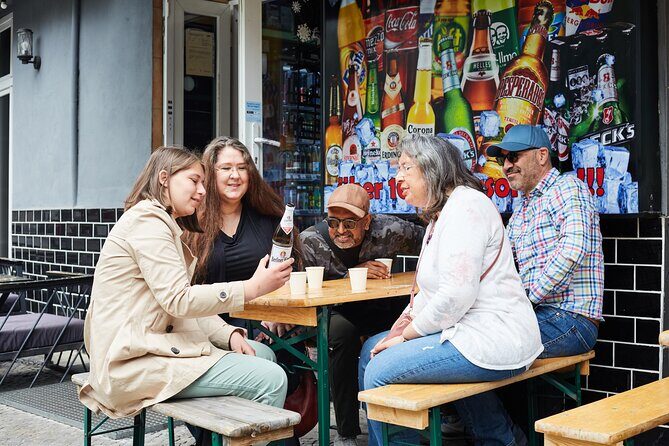
This tour is built around one smart idea: in Berlin, food isn’t just food. It’s how people settle, how neighborhoods change, and how street culture survives new governments and new waves of migration.
At about 3 hours 30 minutes, you cover enough ground to feel like you’re moving through East Berlin, not just circling one area. The pacing is friendly, with frequent short stops where you taste, listen, and take in the neighborhood details. You’ll also be walking in a cluster of places that look very different from each other: small liquor stores, kebab counters, neon-lit dining rooms, and industrial ruins turned into an all-in-one hangout.
Price-wise, this is positioned as a value tour. You pay $107.68, and the key tastings (plus beer) are included, so you’re not constantly reaching for your wallet mid-walk. The trade-off is that you should come prepared for a food-and-drink rhythm, not a museum pace.
You can also read our reviews of more food & drink experiences in Berlin



Price and value: what $107.68 covers in real life
A lot of food tours in Europe advertise tastings, then quietly make you purchase the best bites separately. This one is clearer: the tastings are included at the stops where you’ll sample items like currywurst, döner/shawarma, and other regional specialties. Craft beer also shows up as part of the experience.
What you should expect to spend extra on is mostly extra drinks (the tour doesn’t list those as included) and any changes like buying additional items on your own between stops. The good news is that the tour is capped at 12 people, so your guide can keep the group together without feeling rushed.
And if you’re trying to fit Berlin into limited time, this format works. You get a tight slice of East Berlin culture in one afternoon, ending near one of the most famous Wall memorial stretches.
Meeting point, end point, and the pace that makes it work
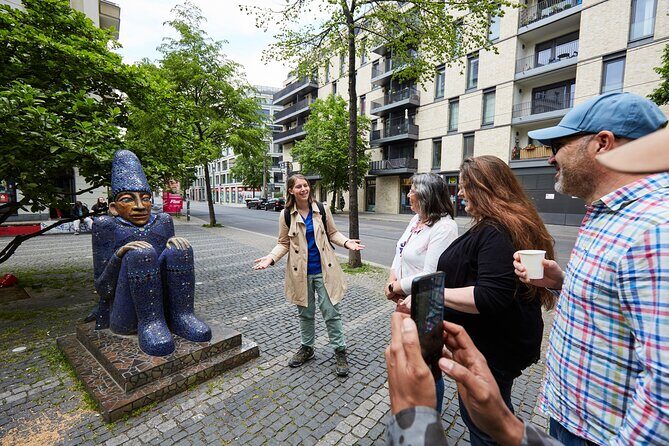
You start at Haroun, Neue Bahnhofstraße 28, 10245 Berlin and end at Mühlenstraße 78, 10243 Berlin. That matters because the route naturally funnels you from foodie stops through industrial-reuse areas and into Wall-adjacent streets.
The tour also runs in English and uses a mobile ticket, which is convenient if you don’t want to print paperwork. It’s near public transportation, so if you’re arriving from farther across the city, you’re not stuck with a complicated commute.
Most people can participate, and service animals are allowed. For kids, under age 4 can join free, but food isn’t included for them; you’d need the age-appropriate ticket options with food for children who eat.
Stop 1: Boxi Späti and Berliner Kindl beer at the start
The first stop sets the tone: instead of starting with a fancy restaurant, you begin at a small liquor store (Späti) called Boxi Spatshop on Boxhagener Strasse. It’s the kind of place locals use constantly, so it feels like the right entry point for a food-and-history walk.
Here, you try a German beer (Berliner Kindl, Light). The fun part is the origin story. The guide doesn’t treat beer like background noise. You learn where it fits in, why it became popular, and how something everyday can carry meaning through time.
This is a good moment to arrive hungry but not frantic. The tour is about steady sampling, and this opening stop gives you a baseline flavor of Berlin before it starts switching languages, spices, and street styles.
Stop 2: Haroun and the döner story behind East Berlin street food
At Haroun, you step into a classic street-food lane: shawarma/döner. But the guide frames it as more than a snack. This stop connects Berlin’s street food identity to Turkish and Middle Eastern immigrants, showing how a simple handheld meal becomes part of everyday city life.
Food tours are often just ordering and walking. This one leans into the why: how a dish travels, how it changes in a new country, and how it becomes normal. You get to taste the result while hearing the backstory that explains why it belongs here.
The practical upside: döner is filling and shares well if you’re with a partner. The possible downside: if you avoid spiced meats or have dietary constraints, this is one of the first stops where you’ll want to be clear about what you can and can’t eat. The tour says it can accommodate some needs if you email or note it at booking, but it also flags that severe, life-threatening allergies aren’t suitable for this format.
A few more Berlin tours and experiences worth a look



Stop 3: NYOM for Vietnamese neon and TyTy Tacos
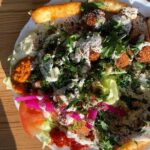
Next is NYOM, a Vietnamese spot lit up with neon energy. Here you try TyTy Tacos, a street-food-style twist that takes familiar ideas and builds them into something distinctly Berlin-in-the-present.
This is where the tour feels like it’s doing its job: showing that East Berlin’s food scene isn’t stuck in the past. Vietnamese cuisine has its place here, and the guide connects that presence to the city’s broader immigrant patterns.
If you’re the type who likes flavor variety over sameness, this stop usually hits. It’s not just a meat-and-bread pattern repeating. It’s a chance to taste a different seasoning style and texture.
Stop 4: RAW-Gelände, from repair yard to art, clubs, and skate culture
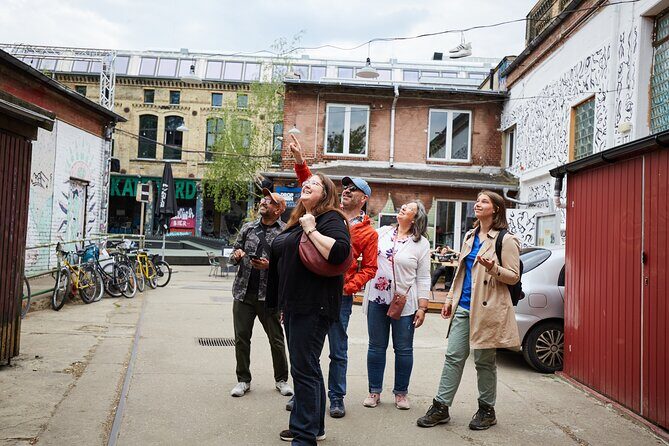
Then you step into RAW-Gelände, an industrial site with a layered past: it served as an imperial rail repair yard, later a Soviet factory, and then a Deutsche Bahn warehouse. Today it’s a cluster of creative and alternative spaces—art galleries, indie record companies, night clubs, beer gardens, a bouldering hall, and what’s described as the largest indoor skate park in Berlin.
This stop isn’t just a photo stop. It’s a reminder of how Berlin reuses space after political and economic shifts. The old infrastructure doesn’t disappear; it gets repurposed into new community life.
In the spirit of what people often notice during this part of the day, the area can feel like it has an event-ready buzz. Some guides also point out side moments that go beyond the main tastings, including a flea market atmosphere and even talk of a world’s smallest disco moment. Don’t count on specific extras every day, but the setting is the reason people keep mentioning them.
A practical tip: if you’re prone to getting cold or hot easily, this is where layers help. Industrial complexes can feel drafty compared to restaurants.
Stop 5: Warschauer Strasse currywurst, the signature East Berlin bite
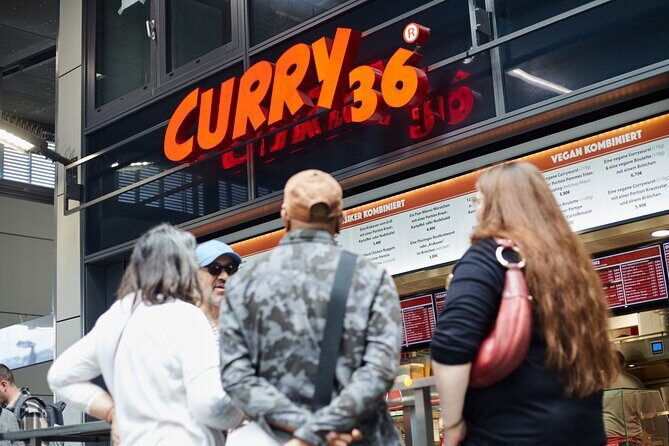
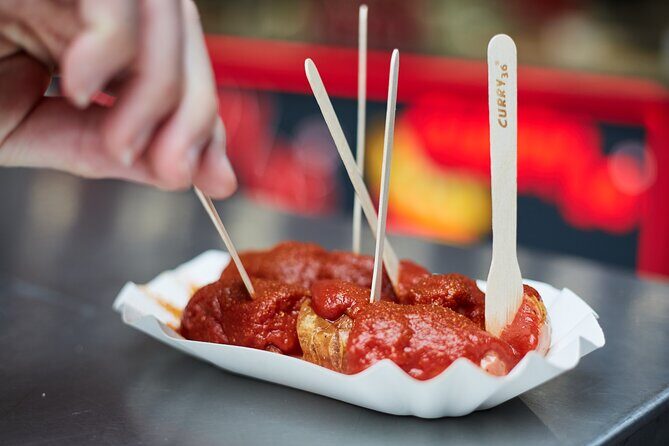
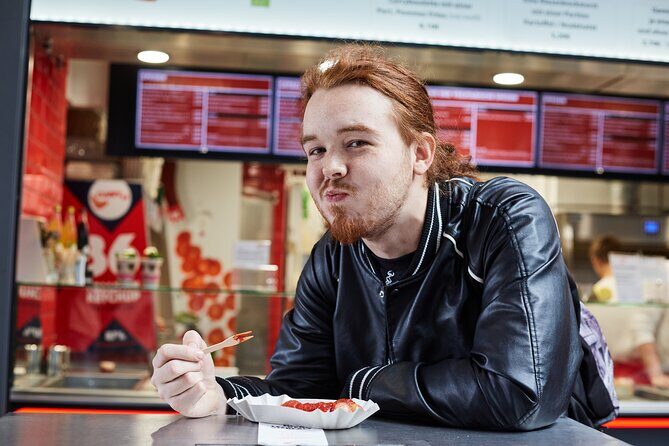
Back on Warschauer Strasse, you hunt down Berlin’s famous currywurst. This is one of those foods that looks simple and tastes complicated. The guide explains how it was created and why it became an East Berlin icon—again tying street food to the history of the people who shaped the city’s day-to-day habits.
This stop is included, so you’re tasting one of the most “Berlin” things you can find, without guessing where to go. It’s also the kind of bite that makes the tour feel satisfying even if you don’t love one specific dish later on.
If you’re not a fan of currywurst, you might still enjoy the lesson. The story helps the flavor land as more than fast food.
Stop 6: Schnitzel Burger and Berliner Pilsner, with Wall-fall discussion
Still on Warschauer Strasse, the final food-and-beer stop leans into another hearty East Berlin-style favorite: Schnitzel Burger plus a Berliner Pilsner Beer.
You’ll also hear discussion about life toward the end of East Berlin and the events leading to the fall of the Berlin Wall. This is where the guide’s ability matters. The best moments are when your guide connects what you’re eating to what daily life felt like—ration realities, nightlife, and the way people kept going while history accelerated.
One note for your own planning: if you’re trying to keep it light, this is not the moment. You’re stacking hearty German comfort food on top of earlier tastings. Come hungry, but also pace yourself so you don’t feel like you need a nap by the Wall.
Stop 7: East Side Gallery, 1.3 miles of Wall murals in the open air
Then the walk payoff arrives: East Side Gallery. This is described as the longest surviving stretch of the Berlin Wall, at just over 1.3 miles. Each segment has been coated in colorful murals, many politically themed, and the artwork has been in place for over twenty years.
This stop works especially well after all the food stops. You’ve been hearing about how East Berlin identities formed, and now you see how the Wall became a canvas for public memory and commentary.
Plan on slow steps here. Even if you don’t read every detail, you’ll want time to scan the big themes and notice how different artists tackled similar political space.
Stop 8: Aleppo Supper Club for Syrian and Levante flavors
After Wall art, you reset with warmth: Aleppo Supper Club. You try a traditional mezze dish, drawing from Syrian and Levante cuisines.
This is a smart “story ending” choice. You start with a German beer origin story and end with food that reflects how Middle Eastern traditions continue to shape Berlin’s table. It feels like closure without being overly sentimental.
If you’re the kind of person who likes learning how immigrant food becomes local food, this is one of the best stops for that. You taste it, then you recognize it as part of the city’s normal life now.
Final stop: a Berlin squat house with politics, concerts, and education
The tour also includes a stop at one of the last remaining Berlin squat houses, known for hosting political and educational events as well as live concerts for nearly a decade. The point isn’t that you need to memorize a timeline; it’s that Berlin’s alternative culture is not a sideshow.
It’s connected to the same energy you see in the Wall art and in industrial spaces like RAW-Gelände: people using space, food, and ideas to survive and reinvent.
If you’re curious about Berlin beyond the official landmarks, this is the kind of ending that makes the whole route feel coherent.
What guides do well here (and why that matters for your time)
The food matters, but so does the telling. The strongest part of this tour is how the guide ties each bite to the people and events behind it. In past experiences, guides named Clara, Jed, Lily, Eden, Laura, Benjamin, and Led have been praised for making the connections between East Berlin life and the food choices.
For you, that means you’re not just eating and moving. You’re learning enough context to make sense of what you see later on your own—whether that’s murals, neighborhoods, or immigrant-run eateries you notice on future walks.
If you like asking questions, small group size helps. You’re more likely to get a real answer than a polite nod.
Who this tour suits best
This is a great fit if you want:
- Street food plus real East Berlin context, not a sit-down lecture
- A mix of German classics and immigrant cuisines like Turkish, Vietnamese, and Syrian
- A small group afternoon where you can keep up without sprinting
It’s less ideal if:
- You don’t eat much meat and want a strictly vegetarian tour (the tour says it tries to accommodate, but the specific menu isn’t guaranteed)
- You have severe, life-threatening allergies (the tour states it isn’t suitable for that)
- You want a totally alcohol-free experience (beer is included at multiple points)
Quick planning tips so you enjoy it more
- Skip heavy breakfast if you can. The tour is a sequence of tastings, and people often find lunch later feels easier when the tour does the work.
- Wear shoes you can walk in for several hours. This is a walking-based experience.
- If you care about diet or alcohol, note it at booking or email ahead so the guide can plan around you.
- Bring a phone for the mobile ticket, and keep some cash ready for anything extra you decide to add on.
Should you book East Berlin Food & History with Eating Europe?
If you want a single afternoon plan that blends included tastings, craft beer, and a guided story of East Berlin’s change, I’d book it. The price-to-food-and-context ratio feels strong because you’re not paying separately for most of the highlights.
I would only hesitate if your priorities are strictly vegetarian, strictly alcohol-free, or you have serious allergy concerns. Otherwise, this is a fun way to eat your way through East Berlin and leave with memories you can’t get from a postcard.
FAQ
How long is the East Berlin Food & History Tour?
It runs for about 3 hours 30 minutes.
What’s included in the price?
You get an English-speaking local guide, a set of included tastings, and craft beer as part of the stops. You’ll also receive Food & the City insider tips. Gratuities and extra drinks are not included.
Does the tour include beer?
Yes. Craft beer is included, and beer is specifically listed with the Berliner Kindl (light) stop and the Berliner Pilsner beer at the Schnitzel Burger stop.
Can the tour accommodate dietary requirements?
The tour says it will do its best to accommodate vegetarians, gluten-free guests, or other dietary needs if you email or add a note at booking. It’s not suitable for people with severe or life-threatening food allergies to ingredients found on the tour.
Are children allowed?
Children under 4 can join for free, but food is not included for them. Paid tickets with food included are available for ages 4 and up.
Can I cancel for a full refund?
Yes. You can cancel up to 24 hours in advance of the experience for a full refund. Less than 24 hours before the start time is not refundable.