REVIEW · BERLIN
Cold War, Berlin Wall, Spies and the East Side Gallery
Book on Viator →Operated by Insider Tour Berlin · Bookable on Viator
Berlin hits you hard in the right places. I love how this tour makes the Berlin Wall feel close and physical, not just historical. I also love the way the guide ties big-name spy agencies like the CIA, KGB, and Stasi to real daily life in East Berlin. One thing to consider: it’s built around outdoor walking and public transport, and you’ll need the right Berlin Zone AB ticket.
You start near Friedrichstrasse train station at 10:00 am, then finish by the East Side Gallery. The format is tight and practical: a local expert guide, a small group (up to 22 people), and a mobile ticket so you can focus on the story instead of paperwork. If you’re the type who asks questions, this tour works well with you. In past groups, guides such as Klaus, Maria, Ariel, and Nikolai are praised for answering lots of questions and keeping the pacing steady.
And yes, some of the stops are emotional. The Palace of Tears, the death strip area, and the sites around the former Stasi presence aren’t there to shock you for shock’s sake. They’re there because Berlin’s division was administrative, political, and painfully personal at the same time.
In This Review
- Key things you’ll notice on this Cold War walk
- Friedrichstrasse Station: Where the Cold War map got real
- From Admiralspalast to the SED: How power formed in East Berlin
- Tränenpalast Palace of Tears: The emotional center of division
- Alexanderplatz and Karl-Marx-Allee: Propaganda on the street
- Death strip details around Bernauer Strasse, Wall remains, and the Stasi angle
- East Side Gallery: When the Wall becomes public art
- Price and time: Is $18.04 actually good value?
- How to make this tour feel personal (not just educational)
- Should you book Cold War, Berlin Wall, Spies, and the East Side Gallery?
- FAQ
- How much does the tour cost?
- How long is the tour?
- What language is the tour offered in?
- Where does the tour start and end?
- Do I need a Berlin transport ticket?
- Is food included?
- Can I cancel for free?
Key things you’ll notice on this Cold War walk
- Friedrichstrasse and the underground connection idea: you begin with a ghost-train style segment that highlights how travel itself was controlled.
- Palace of Tears at Tränenpalast: families said goodbye at a border crossing built for separation, not reunion.
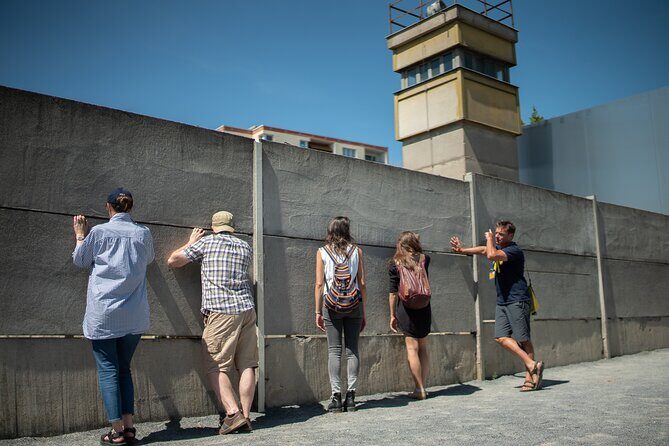
- Death strip focus around Bernauer Strasse and wall remains: you see where escape attempts happened and why the area was so deadly.
- How propaganda and policy showed up in daily life: Alexanderplatz and Karl-Marx-Allee give you context, not just monuments.
- East Side Gallery murals on remaining Wall stretches: concrete oppression turns into street art and public memory.
Friedrichstrasse Station: Where the Cold War map got real
Most Cold War tours in Berlin start with a landmark. This one starts with a place where movement was controlled, argued over, and judged. Meet near Friedrichstrasse train station, the heart of Berlin’s split years, and you’re quickly oriented to what made this city different after World War II.
What I like is the balance between drama and detail. The guide doesn’t just tell you who fought whom. You learn how Berlin became the centerpiece for the struggle over Europe, with the United States and NATO on one side and the Soviet Union and its allies on the other. You also get a sense for how Berliners experienced that tension as something physical: checkpoints, restricted routes, and the constant awareness of who was watching.
A standout moment is the short segment connected to a so-called ghost train route: an underground path that once connected East and West Berlin during the Cold War. Even if you’ve seen Cold War movies, it lands differently when you understand that the separation wasn’t only political. It was built into infrastructure, schedules, and access. In other words, the Wall wasn’t only on the street. It was inside the city’s movement system.
You can also read our reviews of more museum experiences in Berlin

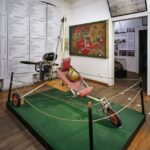
From Admiralspalast to the SED: How power formed in East Berlin
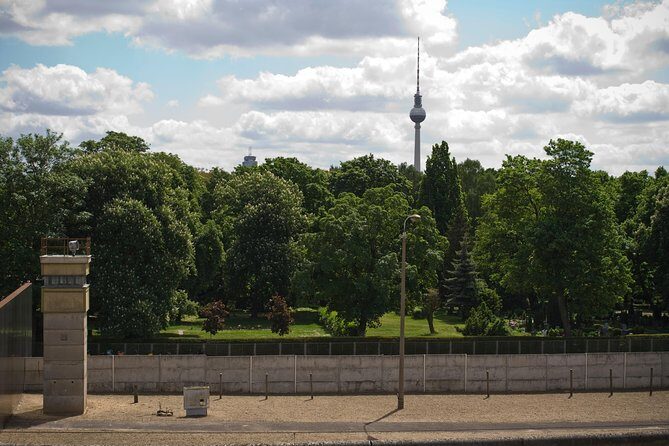
After the initial setup, you head to Admiralspalast Berlin, a key short stop tied to the East German Political Party (SED). It’s not a long stop, but that’s part of the point. This tour keeps the pace moving so you get story momentum rather than a museum-style slowdown.
This location matters because it helps you understand how East Germany organized political control after the war. You’re not asked to memorize party history for an exam. You’re guided to see the pattern: institutions were created to manage state power, and surveillance and restrictions followed as the practical tools of that system.
If you like your history grounded in what actually happened in cities and buildings, this kind of stop is a gift. It also helps explain why later sites like Alexanderplatz don’t feel random. They were built and used for control, messaging, and social pressure.
Tränenpalast Palace of Tears: The emotional center of division
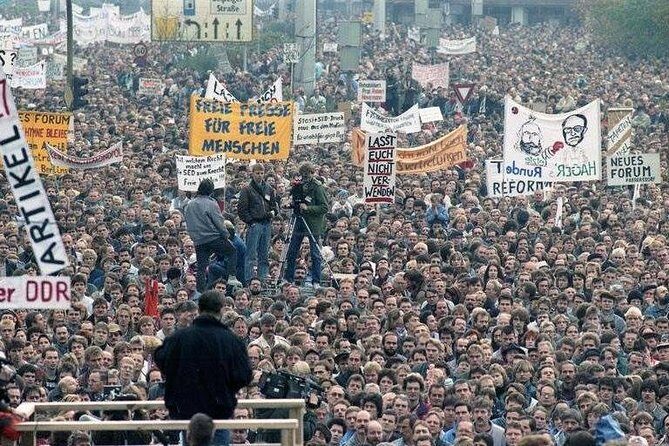
Then comes one of the most affecting parts of the route: the Palace of Tears, or Tränenpalast. This used to be a border crossing at Friedrichstrasse, and it earned its name the honest way. East and West Berliners were forced into tearful goodbyes as separation became policy.
I really value this stop because it shifts the Cold War from abstract ideology to family life. You learn how the Wall’s separation wasn’t only about crossing a line. It affected movement, reunions, and the basic expectation that a loved one might simply stay gone. The museum inside Tränenpalast focuses on both the emotional and physical toll of the Wall.
You’ll also hear about escape attempts and what separation did to everyday routines and hopes. It’s not a cheerful lesson. Still, it’s one of the clearest ways to understand why Berlin’s division continues to matter in public memory. The story sticks because it’s not just about walls. It’s about people trying to keep ordinary lives intact.
Alexanderplatz and Karl-Marx-Allee: Propaganda on the street
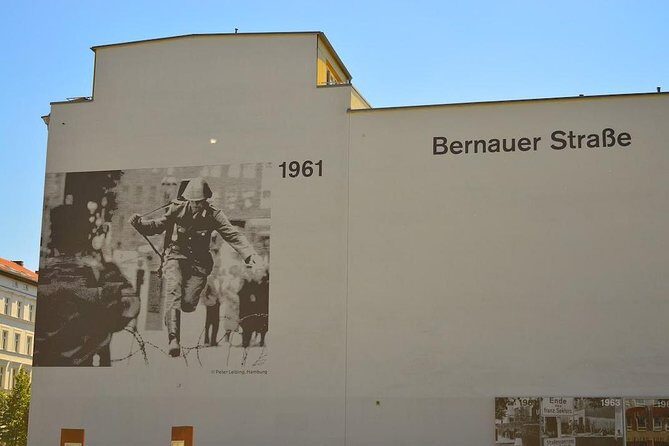
From the Palace of Tears you move into the broader East Berlin setting, starting with Alexanderplatz. This was described as the beating heart of East Berlin, where communist power, mass rallies, and daily life under surveillance played out in one shared public space. Even if you’ve seen photos of East German architecture, this stop helps you connect the architecture to the purpose.
I like how you’re guided to read the square as more than scenery. You’re shown how socialist symbols and public messaging shaped what people saw and how they felt. The Cold War becomes something you can picture: not only spies and secret files, but the constant presence of state authority in everyday environments.
Next up is Karl-Marx-Allee, East Germany’s showcase boulevard. You’re told it was built like a socialist dream meant to impress the world, with grand Stalinist architecture designed to signal power and control. That contrast helps a lot. From the outside, it looks like confidence. On the inside, the tour frames it as ideology acting as a mask over daily reality.
If you’re traveling with someone who thinks the Cold War was only about governments and generals, these two stops usually change their mind. They show how systems become habits.
Death strip details around Bernauer Strasse, Wall remains, and the Stasi angle
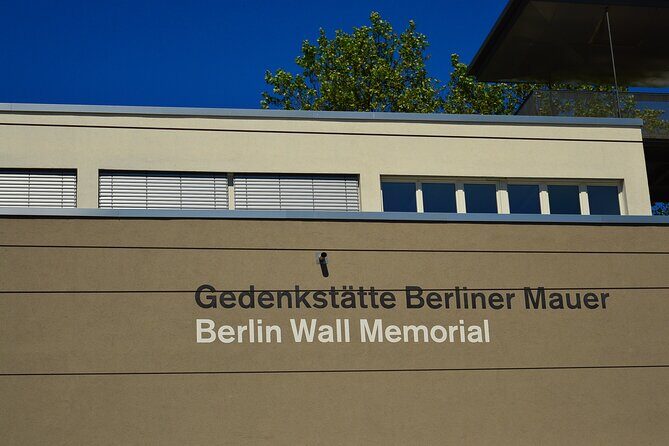
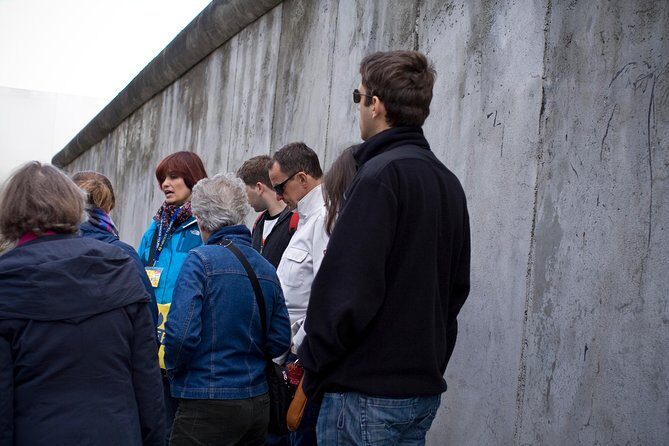
This is where the tour earns its intensity. You retrace the trail of the so-called death strip and see remains of the Berlin Wall around areas connected with escape attempts, including Bernauer Strasse. You also visit the Berlin Wall Memorial area and Former Stasi (DDR secret police).
The key lesson here is why the space between borders was so dangerous. The guide connects the physical layout to the surveillance mindset behind it. You hear how tension between the superpowers created a culture of suspicion and control, and you learn about CIA, KGB, and Stasi surveillance techniques in a way that links tactics to outcomes.
I like the way the tour keeps you oriented while walking. It’s easy to stand near a wall and think, okay, that’s the wall. It’s harder, and much more valuable, to understand how the Wall functioned as a system: observation, restriction, and punishment built into the geography.
You’ll also walk under the Brandenburg Gate, which the tour frames as a symbol that once represented division and now stands for peace and unity. That shift matters. It reminds you that memorial sites are living political signals, not just relics.
One practical note: this section can feel weighty. If you’re hoping for a light history stroll, this may not be your vibe. But if you want to understand what Berliners lived with day after day, this is the heart of the experience.


East Side Gallery: When the Wall becomes public art
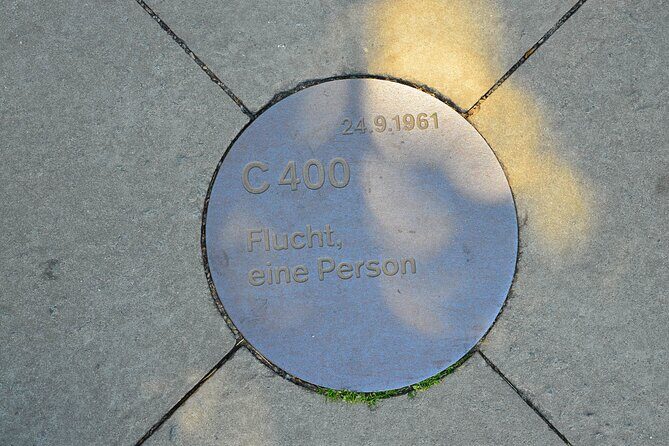
The tour finishes at the East Side Gallery at Mühlenstraße. You get a closing walk through one of Berlin’s most famous transformations: the longest permanent graffiti wall in the world and the largest remaining section of the Berlin Wall.
Here, you’re meant to read the murals as more than decoration. The tour frames them as a conversion of concrete oppression into bold public art. The messages include resistance, hope, and the fall of the Cold War divide.
I like ending here because it gives you closure that isn’t fake. The Wall was a tool of separation. Now it’s a surface for storytelling that anyone can see. If the earlier stops are about how division worked, this final stop is about how Berlin chose to remember and respond.
Also, from a practical traveler standpoint, finishing near the East Side Gallery is convenient. You’re in a central, transit-friendly zone where you can keep exploring, grab food, or take another hop to a museum without planning your whole day around the tour end point.
Price and time: Is $18.04 actually good value?
At about $18.04 per person for roughly three hours, this tour is priced like a serious bargain for the amount of ground and the number of major Cold War sites it connects. The group size cap (up to 22) helps too, because it keeps the guide’s focus on you rather than turning the experience into a human slideshow.
The part you need to budget for is transport. The Berlin Transport daypass for Zone AB isn’t included, and the tour data says it’s about €10.00 per person. If you don’t plan to buy the ticket at the start, you’ll feel rushed and you may waste time figuring out local transit.
Good news: many of the stops along the way are free to enter as part of the walk plan, including the Palace of Tears and the East Side Gallery segment. One or two stops are marked as not included, so do your homework on what you might need versus what’s covered. The big picture is still strong value: you’re paying for expert guidance and a connected storyline across the divide.
How to make this tour feel personal (not just educational)
You’ll get the best results if you go in with two mental settings.
First, treat it like a moving map. Ask yourself, What was the goal here: control, persuasion, escape prevention, or political legitimacy? The guide’s story is designed to keep returning you to that question.
Second, ask the names question. In past groups, guides such as Klaus, Maria, Ariel, Nickolai, Xavier, and Paul were praised for adding anecdotes and answering follow-ups. The tour works especially well when you ask for concrete examples of daily life, not only big-picture events. If you want a lesson on how surveillance shaped behavior, make that your first question.
For extra value, consider pairing it with a Stasi-focused stop after the tour. One review tip specifically suggested continuing with the Stasi museum, and that lines up with this tour’s Former Stasi emphasis. If the surveillance theme already grabbed you, that’s your next logical chapter.
And yes, dress for Berlin outdoors time. Even if the itinerary is well paced, you’ll still spend a lot of your three hours outside. If weather matters to you, bring layers. When one guest was underdressed in the cold, the guide allowed them to buy a jacket first and catch up, which tells you the tour team is used to real-life conditions.
Should you book Cold War, Berlin Wall, Spies, and the East Side Gallery?
I’d book it if you want a Cold War Berlin experience that connects politics, surveillance, and everyday life in one walkable arc. This is for you if the Berlin Wall isn’t just a photo stop, but a story you want to understand from multiple angles: borders, escape attempts, propaganda spaces, and the Wall’s artistic afterlife.
Skip it if you strongly prefer a highly structured, low-walking format where every minute feels museum-tight and silent. As with any small-group walking tour, there can be variation in pacing and how easily you hear the guide depending on group spacing and weather.
If you’re on the fence, I’d use a simple test: do you want CIA, KGB, and Stasi themes explained through places you can actually point to? If yes, this tour is a smart way to spend your time in Berlin.
FAQ
How much does the tour cost?
The price is $18.04 per person.
How long is the tour?
It lasts about 3 hours.
What language is the tour offered in?
The tour is offered in English.
Where does the tour start and end?
It starts at Reichstagufer 17, 10117 Berlin, Germany, and it ends at East Side Gallery, Mühlenstraße, 10243 Berlin, Germany.
Do I need a Berlin transport ticket?
Yes. A Berlin Transport daypass AB Zone ticket is required, and it is not included. The tour data lists it as €10.00 per person.
Is food included?
No. Food and drinks are not included.
Can I cancel for free?
Free cancellation is available if you cancel up to 24 hours in advance for a full refund.