REVIEW · BAMBERG
Bamberg: Guided Walking Tour
Book on GetYourGuide →Operated by BAMBERG Tourismus · Bookable on GetYourGuide
Bamberg pulls you in fast. This guided walking tour puts you right into a UNESCO World Heritage town with more than 2,400 historic buildings, twisting medieval streets, and Baroque facades you can actually see and compare block by block. I especially like how the route balances big sights (like the cathedral area) with smaller details such as bridges, narrow lanes, and half-timbered houses. One heads-up: the tour is German-only, and it does not include the cathedral interior.
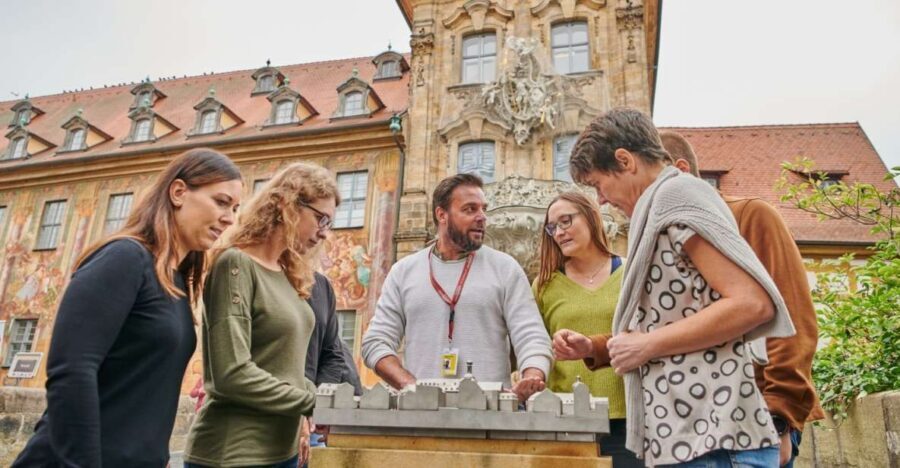
You’ll meet at BAMBERG Tourismus in the Old Town area, then walk for about two hours with a live guide. I also like that the emphasis is on getting your bearings and understanding why Bamberg looks the way it does, not just snapping photos. A possible drawback is that it’s a public group walk, so you’ll move at group pace and won’t have the kind of quiet, stop-everywhere flexibility you might want if you travel slower.
In This Review
- Key highlights to look for on this Bamberg walk
- Bamberg’s UNESCO center: why the walking tour format works
- Getting oriented fast at BAMBERG Tourismus (Geyerswörthstraße 5)
- How the walk handles the old town: streets, squares, and the “in-between”
- Little Venice and the Old Town Hall: where Bamberg gets instantly photogenic
- Cathedral views (no interior): how to still enjoy the big church without tickets
- Old Court and the New Residenz: power and style you can compare
- Rose Garden: the calm pause that gives you perspective
- Pace, group size, and how to enjoy it without rushing
- Price and value: why $14 makes sense for this kind of walking
- Who should book this Bamberg guided walk?
- Should you book this Bamberg walking tour?
- FAQ
- Is the cathedral interior included?
- How long is the Bamberg walking tour?
- What language is the guide?
- Where do I meet the tour?
- How much does it cost?
- Do I need to arrange my own transport?
- FAQ
- How do I get the ticket after booking?
- What’s the cancellation deadline for a refund?
- Is this a private tour?
- Are there different starting times?
Key highlights to look for on this Bamberg walk
- UNESCO World Heritage in practice: see the historic center as a working, walkable place
- Cathedral area, without the interior: exterior views plus context around the site
- Old Court and New Residenz: a clear look at Bamberg’s architectural change
- Little Venice: that postcard bend where Bamberg feels instantly different
- Rose Garden: a calmer stop that breaks up the streetscape rhythm
- A guide who teaches as you walk: praised for humor and lots of medieval context
Bamberg’s UNESCO center: why the walking tour format works

Bamberg is one of those towns where the city plan is part of the story. Instead of packing history into a museum room, this experience lets you learn by moving: you see bridges, squares, church exteriors, Baroque facades, and older medieval street patterns all in one loop.
What makes the UNESCO label matter to you is simple. UNESCO doesn’t just mean old buildings. It means a place where the historic fabric is still there, still connected by everyday streets. Walking helps you notice the transitions—how you go from medieval structure to later Baroque style without feeling like you’re reading a textbook. And because it’s a guided walk, you get the “why” behind what you’re seeing.
Also, Bamberg has that compact, human scale. Two hours is long enough to build a mental map, but short enough to keep your day flexible. You can use the tour to decide what to explore further after the group finishes.
You can also read our reviews of more walking tours in Bamberg


Getting oriented fast at BAMBERG Tourismus (Geyerswörthstraße 5)
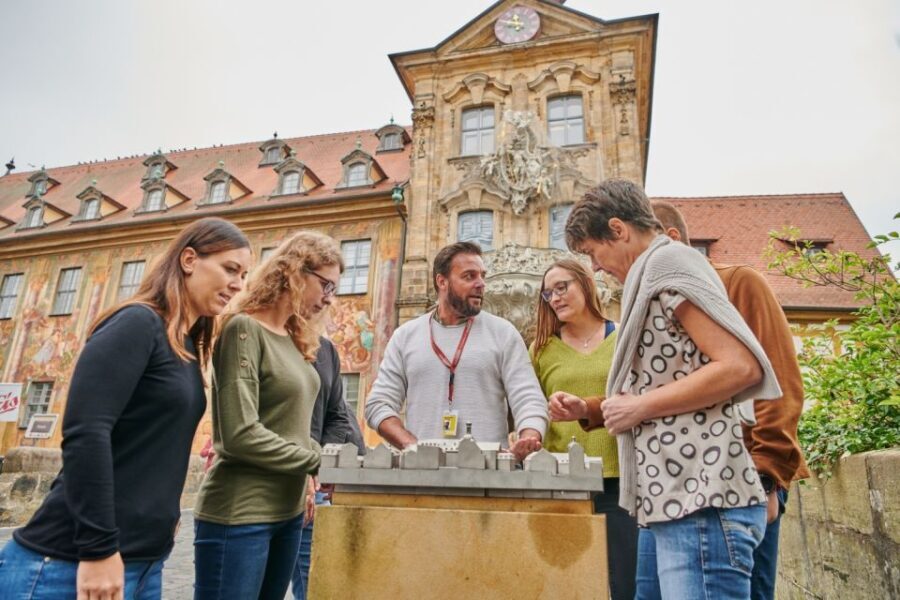
Meeting point is BAMBERG Tourismus – Tourist Information, Geyerswörthstraße 5. That’s a smart starting spot if you want an efficient day: you’re essentially beginning inside the tourist-friendly old center rather than trekking in from outside.
The tour runs for about 2 hours, which is a sweet spot for a UNESCO town. Long enough to cover the main sights you’d otherwise chase across multiple stops, but not so long that you lose interest or feel worn out before the rest of your itinerary.
One practical point: the guide you’ll book is live and only in German. If your German is basic, you can still enjoy the architecture and the stories told through tone and pacing, but you’ll miss some details. If you want every word, plan to brush up on key vocabulary like church, court, residenz, and history terms before you go.
Finally, the tour is public. That usually means steady movement, a shared schedule, and fewer opportunities for one-on-one questions. Still, the overall feedback for this experience highlights guides who answer questions and keep the mood light, so it’s not the stiff, lecture-on-a-leash style.
How the walk handles the old town: streets, squares, and the “in-between”
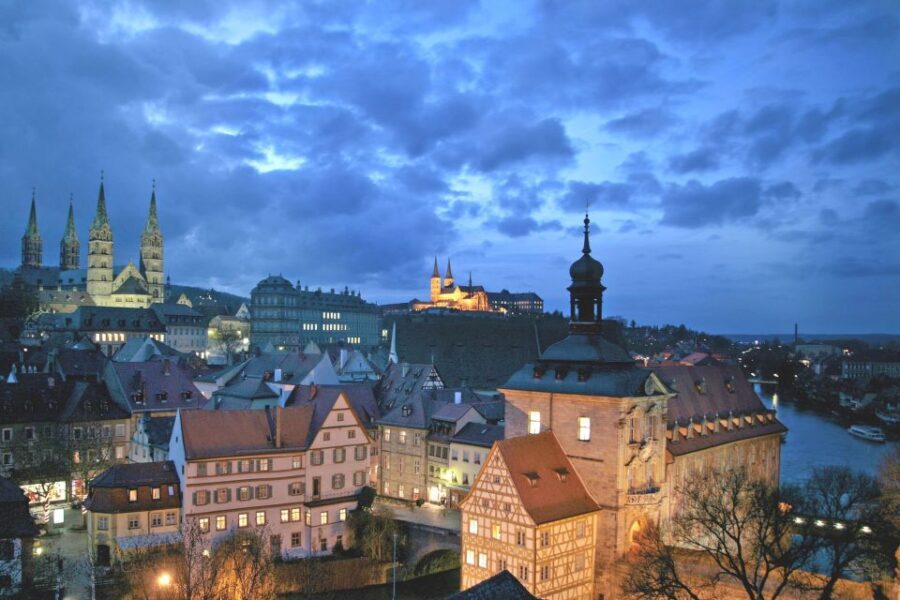
This tour is built around the idea that Bamberg’s charm lives in the spaces between the headline monuments. You’ll walk through the historical center and see the kinds of elements that make the town feel medieval and orderly at the same time: winding streets, wide squares, and the mix of materials you only notice when you’re standing close.
Expect to encounter half-timbered houses and Baroque facades side by side. That contrast is one of the big reasons Bamberg is famous. It’s not just “old town vibes.” It’s a visible timeline, where the street-level view shows how tastes changed.
This is also where a guide adds value quickly. Without guidance, it’s easy to see pretty buildings and move on. With a guide, you start spotting patterns: which buildings signal civic power, which reflect religious influence, and which show the “later” style layers. Even if you’re not catching every term in German, you’ll still learn what to look for when you’re back on your own.
Little Venice and the Old Town Hall: where Bamberg gets instantly photogenic
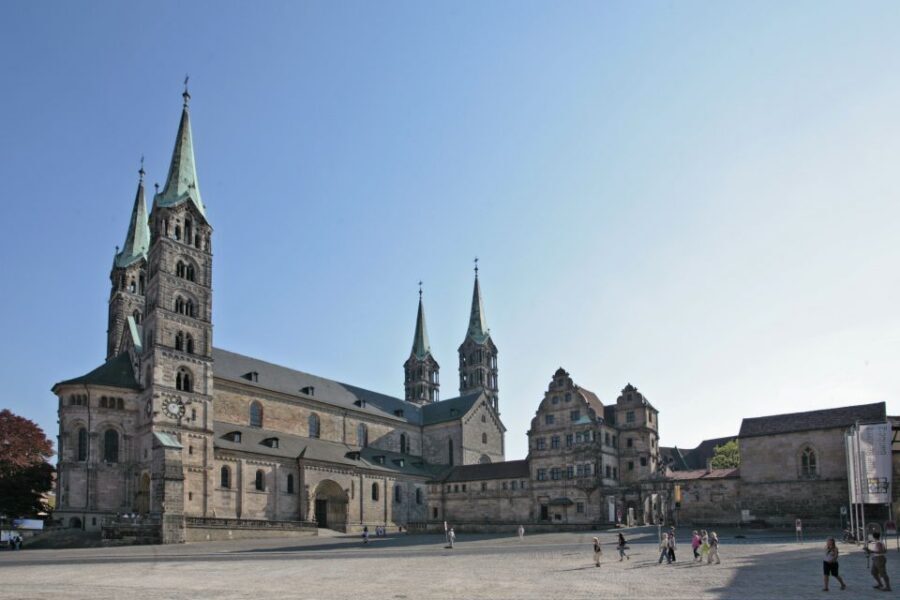
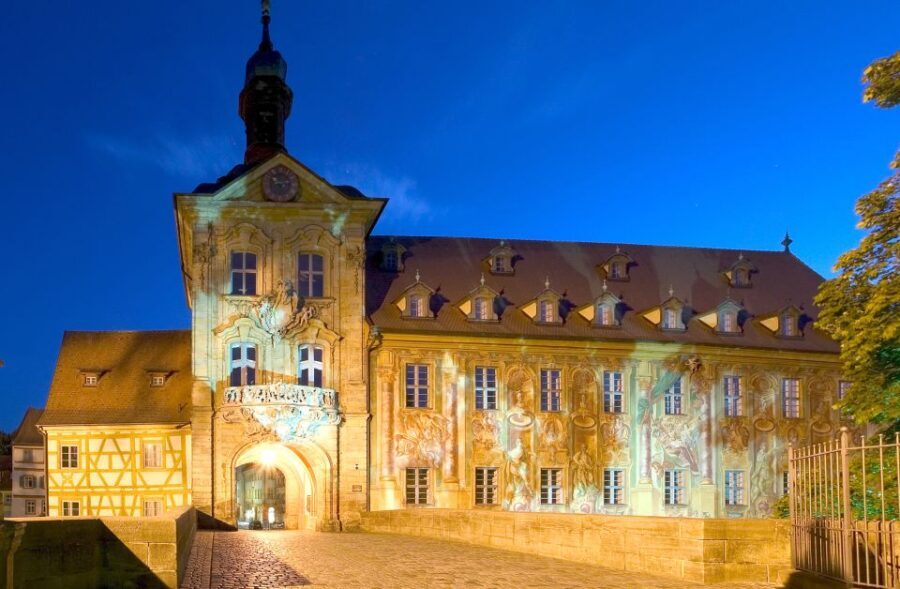
Two of the most memorable stops are the Old Town Hall and Little Venice. I like this pairing because it shows Bamberg’s civic identity and its river-side character in a single stretch.
The Old Town Hall matters because it’s the civic heartbeat of an old town. It anchors the idea that Bamberg wasn’t only religious life; it was also governance, trade, and local decisions that shaped how the town grew. If you’re the type who likes to understand the “who ran the place,” this stop gives you that foundation.
Then you hit Little Venice, and the vibe shifts. This part of Bamberg is known for that scenic look by the water, where the buildings and angles give you that postcard feeling. Even if you’ve seen river towns before, Little Venice has that slightly unexpected, intimate angle that makes you slow down and look back at where you came from.
What’s practical for you: if you want good photos, don’t just shoot while walking past. Stop for a moment at the viewpoints the guide points out, then take a second shot from a step or two back. Those small position changes can make a big difference, especially around water.
Cathedral views (no interior): how to still enjoy the big church without tickets
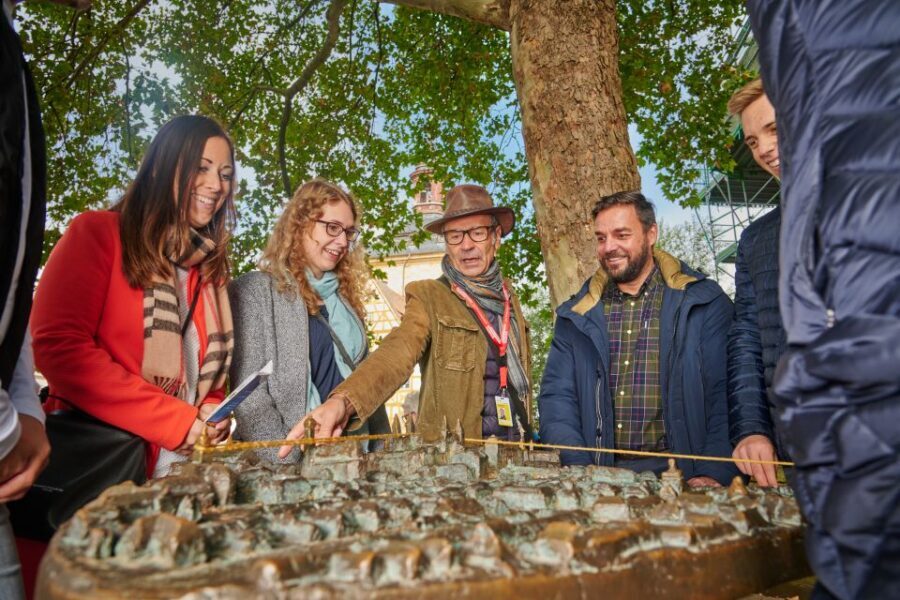
One of the clearest expectations to set is this: the tour includes cathedral sights, but not an interior visit. That might sound like a deal-breaker if you love church interiors, but it doesn’t have to be disappointing.
Here’s why it still works: Bamberg’s cathedral area is part of the visual identity of the city. You’re not just seeing a building; you’re seeing how it sits in the urban fabric—how the streets funnel toward it, how bridges and nearby structures frame the view, and how the cathedral functions as an anchor in a dense historic center.
If you’re the kind of traveler who likes architecture more than stained glass, this approach can be perfect. You get the exterior composition plus historical context from the guide, without spending time on the logistics and lines that sometimes come with interior tickets and timed entry.
Practical tip: wear comfortable shoes and plan to spend a few extra minutes after the tour if the area interests you. Since the interior isn’t included, your own time can fill that gap if you want it.
You can also read our reviews of more guided tours in Bamberg





Old Court and the New Residenz: power and style you can compare
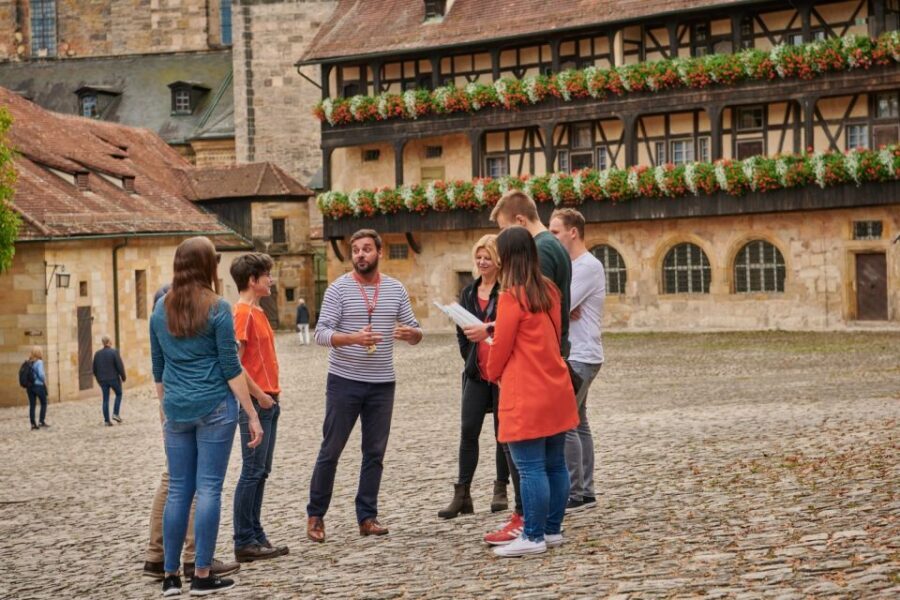
The tour highlights two major architectural stops: the Old Court and the New Residenz. I like these because they help you understand how Bamberg balanced tradition with status displays.
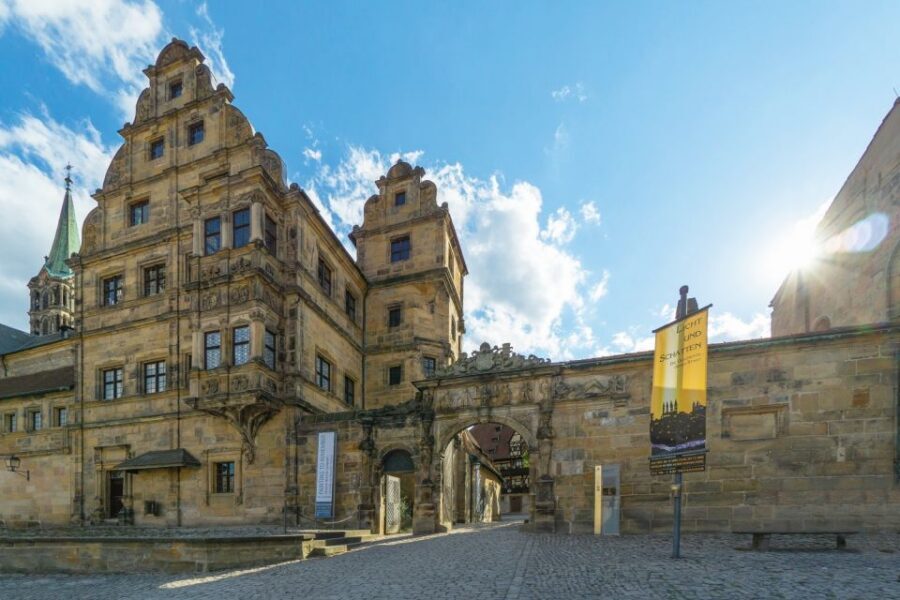
With the Old Court, you’re looking at a place tied to administration and authority. Even without heavy museum-style explanations, you can read the building’s presence: it’s meant to look official. This is the kind of stop that makes you feel how leadership and everyday life intersected in historic towns.
Then you move to the New Residenz, where the style focus becomes easier to spot. The tour frames Bamberg’s mix of architectural eras, and the Residenz type of building typically signals later grandeur and refined tastes. That makes it a useful contrast point. You can stand there and compare: What looks older? What looks more elaborate? Where do you see Baroque influences more strongly?
If you’re traveling with family or friends, these stops are also easy to enjoy together because they’re visually distinct. You don’t need deep background knowledge to appreciate the difference in atmosphere and design.
Rose Garden: the calm pause that gives you perspective
Not every UNESCO walking tour includes a breather, but this one does with the Rose Garden. I like stops like this because they change the mental tempo. After streets, churches, and monumental buildings, a garden stop gives you space to reset your eyes and slow your thoughts.
Even if your day plan is packed, this is where you can reframe what you’ve learned so far. Instead of rushing from sight to sight, you get a moment to look around and think: what kind of town design supports both dense historic architecture and calmer open areas?
It also helps with comfort. In colder months, your feet may feel the earlier cobblestone rhythm. A garden pause can be a welcome break before you head back into the busier streets.
Pace, group size, and how to enjoy it without rushing
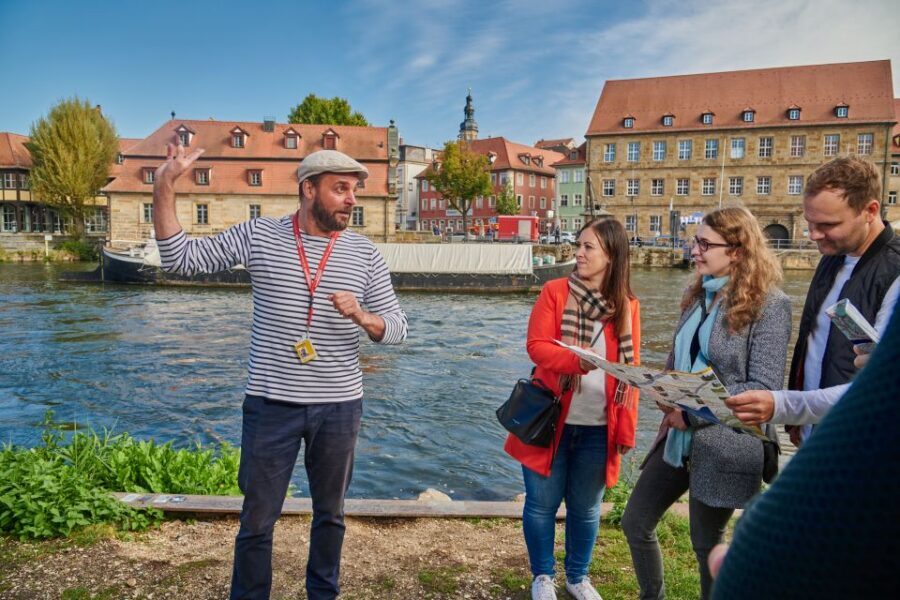
This is a public walking tour, so you’ll experience it the way a group experiences it. That means you should expect steady walking and scheduled stops. The upside is that you’re not burdened with figuring out the route or deciding what matters most—your guide does that work for you.
From customer feedback, a recurring positive theme is that the guide keeps things interesting and sometimes funny, and that people can ask questions. I take that as a signal for you: if you speak up, it likely won’t feel ignored.
Still, plan your expectations. If you’re the type who wants to linger at every doorway, you may feel slightly constrained during the group portion. The best move is to treat the tour as your “first pass.” Once the group finishes, you can come back later to spend extra time where you felt the strongest pull—especially around the cathedral area, Old Court, New Residenz, and Little Venice.
Also, download the ticket app in advance. You’ll receive confirmation without a ticket, and the ticket is accessed through the GetYourGuide app. That’s the kind of small timing detail that prevents an avoidable stress moment on a busy day.
Price and value: why $14 makes sense for this kind of walking
At about $14 per person for roughly two hours with a live guide, the value here comes from how much you cover efficiently in a compact historic center.
Here’s what you get for the money:
- A guided route through the central highlights (cathedral area, Old Court, New Residenz, Rose Garden, Old Town Hall, Little Venice)
- Context for the buildings and streets you’d likely see anyway
- The benefit of a guide who can explain the medieval and later development patterns
You don’t pay extra for interior entry on the cathedral, and you also aren’t paying for transportation because transfers aren’t included. So the price is essentially paying for expert interpretation plus time saved from planning.
If you compare that to the cost of doing multiple “spot-by-spot” activities on your own, this tour often wins because it strings the sights together in a logical route. It’s not just a stroll—it’s a guided way to reduce guesswork and get a clearer sense of what Bamberg is trying to show you.
Who should book this Bamberg guided walk?
This tour fits well if you:
- Want a first look at Bamberg’s historic center without getting lost
- Enjoy architecture and want help noticing the transitions between medieval and Baroque elements
- Prefer a structured, time-efficient experience (two hours) over a full-day deep dive
- Travel with someone who enjoys conversation and questions rather than total silence while sightseeing
It’s less ideal if you:
- Only want non-German interpretation
- Really want an interior cathedral visit as a must-have
If you fall into either of those categories, it’s worth considering other options (for example, a separate cathedral interior ticket or a tour in your language). But if you’re comfortable with German-only guidance or you’re mostly there for exterior sights and streets, this is a strong way to start your Bamberg day.
Should you book this Bamberg walking tour?
I’d book it if you want your time to feel efficient and meaningful. Two hours in Bamberg with a good guide is a fast way to build the map in your head: the cathedral zone, civic landmarks like the Old Town Hall, scenic river views at Little Venice, and the architectural statements at the Old Court and New Residenz. The Rose Garden gives you a helpful reset, so the walk doesn’t feel like nonstop stone and signage.
Skip it only if language is a hard requirement for you or if cathedral interiors are non-negotiable. Otherwise, this is an affordable way to understand why Bamberg earned UNESCO status and to see the town’s character clearly, one stop at a time.
FAQ
Is the cathedral interior included?
No. The tour includes cathedral sights, but an interior tour of the cathedral is not part of this experience.
How long is the Bamberg walking tour?
It lasts about 2 hours.
What language is the guide?
The guide and guided walking tour are in German only.
Where do I meet the tour?
Meet at BAMBERG Tourismus – Tourist Information, Geyerswörthstraße 5.
How much does it cost?
The price is $14 per person.
Do I need to arrange my own transport?
Transfers are not included, so you should plan how you’ll get to the meeting point yourself.
FAQ
How do I get the ticket after booking?
After booking, you receive a booking confirmation without a ticket. You can only access the ticket through the GetYourGuide app, so download the app ahead of time.
What’s the cancellation deadline for a refund?
You can cancel up to 24 hours in advance for a full refund.
Is this a private tour?
No, it’s a public tour.
Are there different starting times?
Starting times depend on availability, so check when you book.