REVIEW · BERLIN
Cold War, Berlin Wall, Spies and the East Side Gallery
Book on GetYourGuide →Operated by Insider Tour Berlin · Bookable on GetYourGuide
Berlin’s past hits harder when you walk it. This 3-hour tour strings together major Cold War stops—Tränenpalast and the East Side Gallery—with the kind of spy-and-escape storytelling that makes concrete and surveillance feel personal. I especially like how you’re kept moving through real places (not just names on a map) and how the guide connects the big skyline of East Berlin to the fear behind it.
The standout second love: the stretch along Karl-Marx-Allee, where you learn to read monumental architecture like propaganda. One possible drawback: with only 3 hours, the tour is intentionally brisk—if you want museum-level details at each site, plan to add your own time later.
Before you go, know this is a walking-and-transit route. You’ll need an AB day pass for travel between stops, and the tour runs in all weather, so you’ll want comfortable shoes and weather-appropriate layers.
In This Review
- Key things I’d plan around
- Starting at Friedrichstraße and Tränenpalast: where the Cold War emotion begins
- Alexanderplatz: the East Berlin center you can still feel today
- Karl-Marx-Allee’s long walk and the propaganda you can read
- Friedrichshain: building the spy-story map of East Berlin
- Berlin Wall and the original death strip area: the part that sticks
- East Side Gallery: graffiti art as a post-Wall turning point
- Price and logistics: why $18 can make sense here
- How guides shape this experience (and who it suits best)
- Should you book this Cold War, Berlin Wall, Spies and East Side Gallery tour?
Key things I’d plan around
- Tränenpalast sets the emotional tone fast, with a short but focused stop
- AB day pass is required for moving between sites during the tour
- You get guided walking time around Alexanderplatz and Karl-Marx-Allee, not just quick photos
- The Berlin Wall segment includes the original death strip area
- Ending with the East Side Gallery turns the Wall into street-level art and memory
- Guides are consistently praised for storytelling pace and staying power, including handling rainy weather
Starting at Friedrichstraße and Tränenpalast: where the Cold War emotion begins
You’ll meet your guide outside Friedrichstraße train station, on the square beside the Tränenpalast (Palace of Tears). Look for a guide with a yellow name badge holding a yellow umbrella—it makes it easy to spot the group before you even start walking.
The first stop is Tränenpalast, with about 20 minutes of sightseeing. Even without turning this into a full lesson, this is a smart opening because it frames the tour’s core theme: separation and risk. The Cold War wasn’t abstract here—it showed up in daily life, in checkpoints, and in people trying to leave.
This is where I’d take a second to set expectations. If you’re the type who likes context before you see landmarks, this start helps you follow the story as the route moves from central city spaces to the Wall.
You can also read our reviews of more museum experiences in Berlin

Alexanderplatz: the East Berlin center you can still feel today
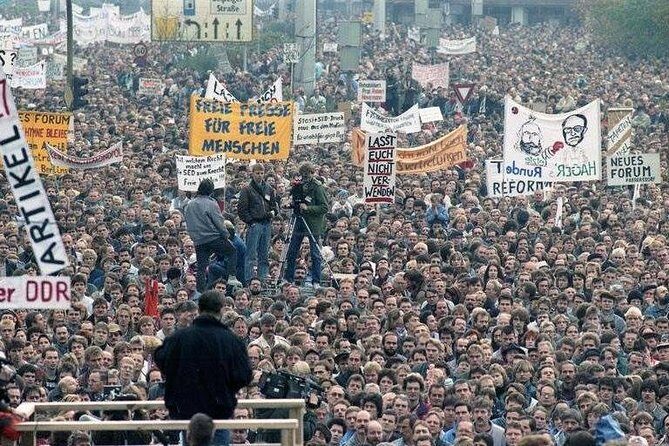
Next up is Alexanderplatz, with a guided segment plus time to look around (about 20 minutes). This stop matters because it’s not just a “nice square” moment—it’s described as surrounded by classic GDR architecture, the kind that still tells you how people lived behind the Iron Curtain.
What you’re doing here is getting your bearings. Alexanderplatz works like a baseline: you see the scale of East Berlin’s city planning, then later you contrast it with the Wall’s brutal logic—control over movement, control over choices.
If you’re traveling with limited time (and most people are in Berlin), this is a good use of minutes. You get guidance on what to notice, and you also get enough room to step back, take photos, and absorb the mood.
Karl-Marx-Allee’s long walk and the propaganda you can read
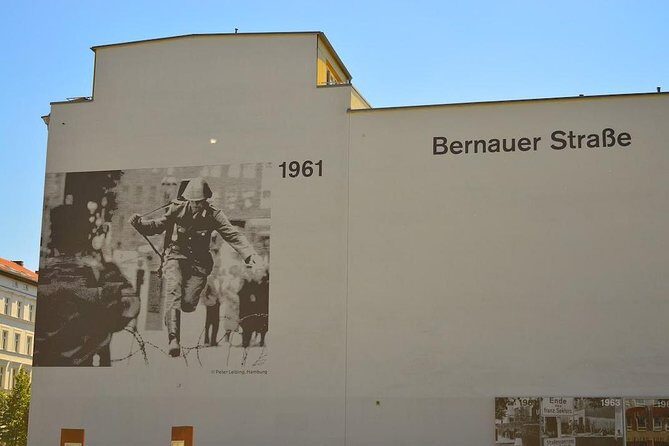
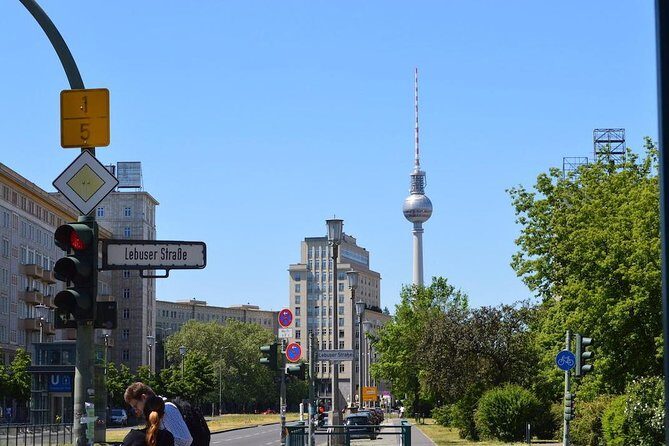
Karl-Marx-Allee is one of the tour’s big wins. You’ll spend about 20 minutes on a guided walk along this enormous boulevard, with the guide helping you “decode the propaganda” built into its monumental architecture.
This is where the tour shifts from story mood to visual literacy. The Cold War wasn’t only fought with weapons and spies; it was sold with buildings. Karl-Marx-Allee was designed as a socialist statement, and the guide’s job is to help you notice what the architecture is trying to say.
You’ll also hear about how key historical events shook the communist regime—specifically the 1953 workers’ uprising. That detail changes how you see the space. Instead of imagining the boulevard as a set piece, you start thinking: who was it built for, who was watching, and what happened when people pushed back?
Practical note: this is a long-feeling walk even if the time on paper is short. Wear shoes you trust.
Friedrichshain: building the spy-story map of East Berlin
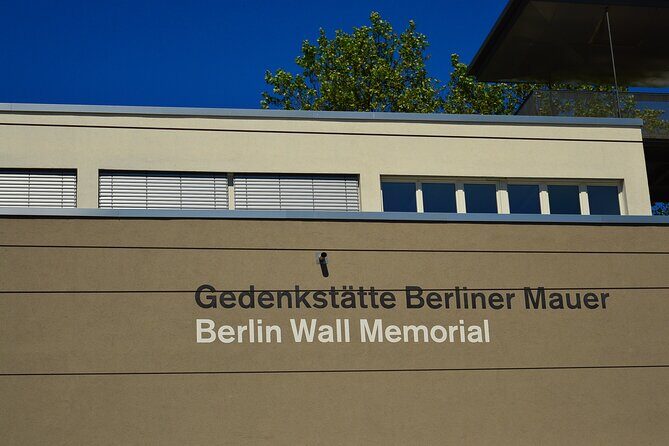
After a short train hop, you’ll reach Friedrichshain for another guided sightseeing block (about 20 minutes). The tour positions this area as part of the geography where escape attempts, informants, and Stasi surveillance shaped ordinary choices.
Friedrichshain gives you a pacing break between the grand boulevards and the Wall itself. It also helps you understand that the Cold War wasn’t locked inside one monument. It spilled into neighborhoods, routes, and daily routines—especially when the Stasi was watching for “signals” of disloyalty.
One small thing to keep in mind: the tour is story-driven and walking-heavy, so Friedrichshain is not meant to be a deep academic lecture. It’s a connective tissue stop—use it to connect themes, not to hunt for museum exhibits.
In the feedback I’ve seen from other guests, guides are often praised for answering lots of questions here, especially from people who start with embarrassingly little background. If you’re one of those people, this is a great moment to ask: How did people actually move, and what was the risk?
Berlin Wall and the original death strip area: the part that sticks
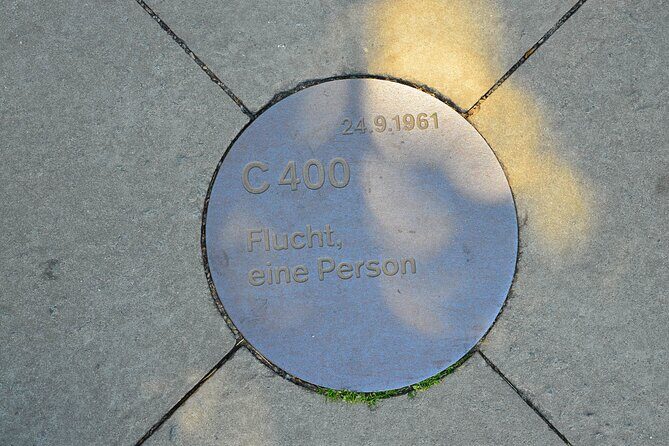
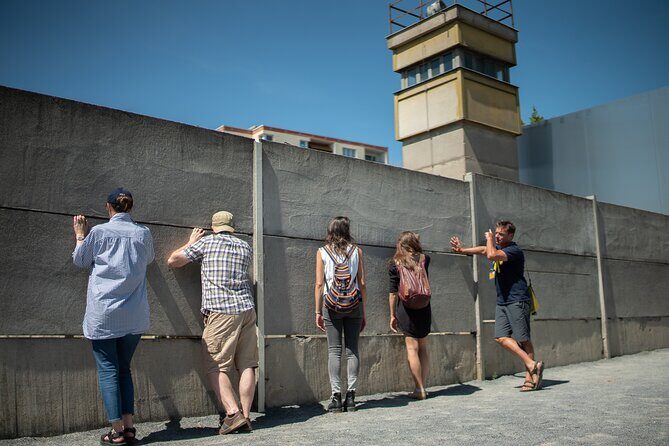
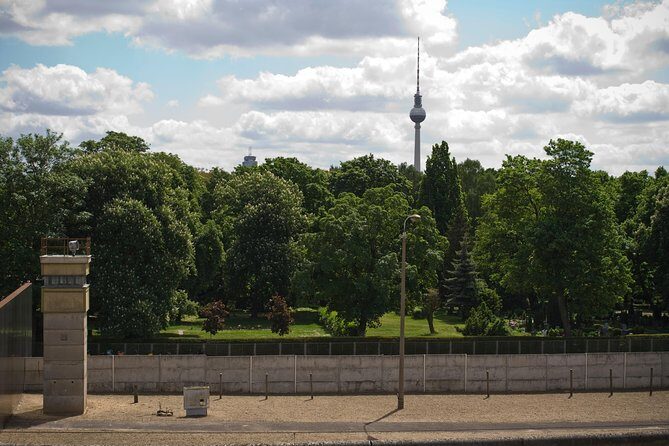
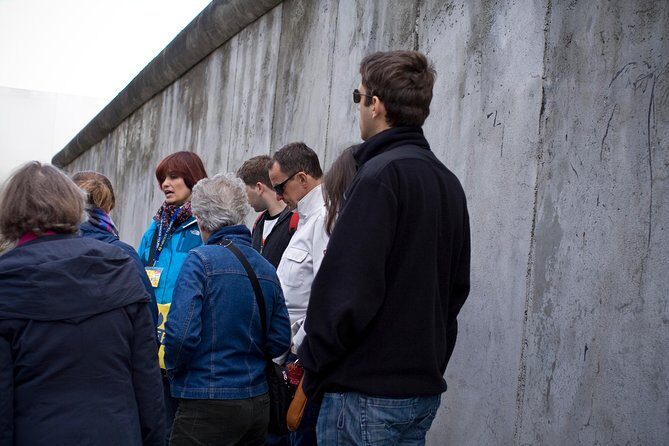
Then comes the Wall itself. You’ll have about 16 minutes for the guided Wall segment, plus time that’s specifically aimed at seeing the Berlin Wall and the original death strip area.
This is the emotional center of the tour. The description is blunt for a reason: the death strip wasn’t a metaphor. It was a physical zone designed to make escape incredibly dangerous—an engineered boundary that punished hope with fear.
What I recommend doing during this stop is simple. Don’t just look at the Wall line. Look for sightlines and the idea of being observed. The guide’s storytelling is meant to make you imagine what it felt like for people deciding whether a single move was worth their life.
Because this time block is short, you’ll want to come in mentally ready to absorb. If you’re the type who likes taking lots of notes, be selective. Take a photo or two, then let the guide’s explanation land.




East Side Gallery: graffiti art as a post-Wall turning point
The tour ends with a walk along the East Side Gallery, the Wall transformed into one of the world’s longest open-air art galleries. You’ll get about 20 minutes here with guided time.
This stop is important because it shows change without pretending the past vanished. The Cold War Wall still exists in fragments, but the message has shifted: from oppression to public expression. The guided portion helps you connect that transformation to the moment the Wall became history rather than a barrier you couldn’t cross.
You’ll also want your camera ready. Many guides encourage photos, and this is one of the best spots to get Berlin’s Wall story in a single image: art on concrete, people reclaiming a space once built to control movement.
If you’re sensitive to heavy themes, this ending is a smart contrast. It doesn’t erase what happened, but it gives you something to hold onto—creative memory instead of pure dread.
Price and logistics: why $18 can make sense here
At $18 per person for a 3-hour guided route, the value depends on two things: guide quality and how well the walking route fits your schedule.
Here, you’re not paying for a bus tour with a few quick stops. You’re paying for a guide to connect multiple major sites—Tränenpalast, Alexanderplatz, Karl-Marx-Allee, the Wall area, and the East Side Gallery—into one coherent Cold War story.
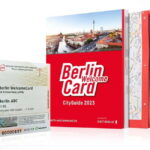
The main logistics consideration is the transport piece. An AB public transport day pass is required to travel between sites during the tour, and staff help you with purchase on the day. That means your day planning matters: check the start time, buy your pass before you need it, and don’t rely on one-off tickets.
Also plan for no food included. It’s a short tour, but Berlin walking adds up. If you have lunch later, you’re fine. If you tend to get hungry fast, bring a small plan for before or after.
One more real-world tip: wear layers. The tour runs regardless of weather, and the guides in the feedback are praised for keeping the group together even when rain hits—so you’ll be moving, not waiting in a café all day.
How guides shape this experience (and who it suits best)
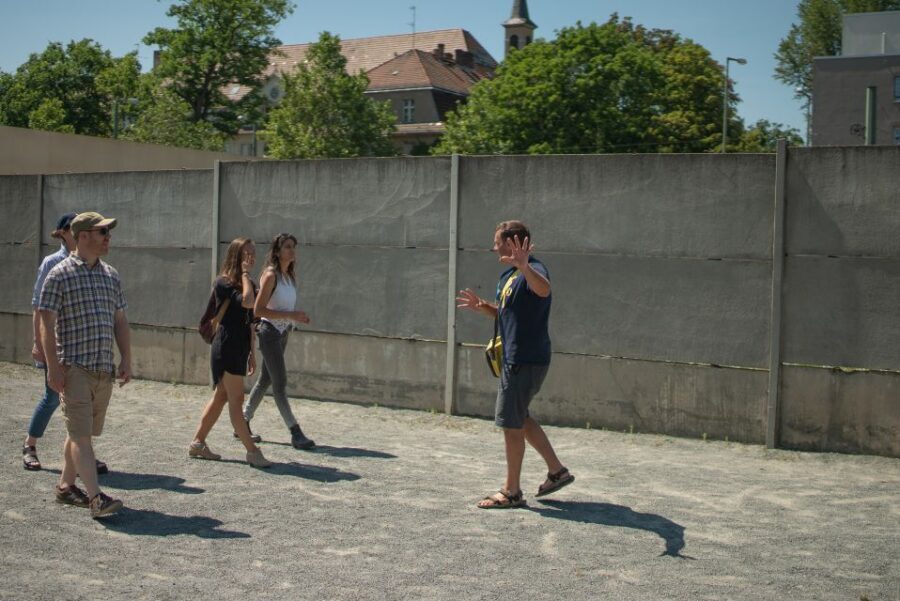
The tour’s ratings are high (a 4.8 average from 254 reviews), and what repeatedly shows up is the guide skill: clear storytelling, lots of background, and the ability to make the everyday feel real.
You’ll see many guide names pop up in the feedback—Paul, Jamie G, Maria, Xavier, Klaus, Nikolai, Glen, Thomas, Eran, and Jim. The shared theme is that the guide helps you understand not only what happened, but how people lived under pressure and surveillance. Some guests highlight that guides use additional visuals like iPad pictures, and others say they appreciated lived-experience context when the guide had a DDR background.
So who should book it?
- First-timers who want a fast, structured Cold War orientation without getting lost
- People who care about the Wall beyond photos—especially spy, informant, and escape stories
- Anyone who likes architecture with a reason behind it, like Karl-Marx-Allee’s propaganda design
Who might want something else?
If you expect a long, war-and-policy deep dive, this tour may feel more focused on the Wall and lived experience than on broad geopolitical theory. The duration is short, and the route is built for motion and memory, not long lectures.
Should you book this Cold War, Berlin Wall, Spies and East Side Gallery tour?
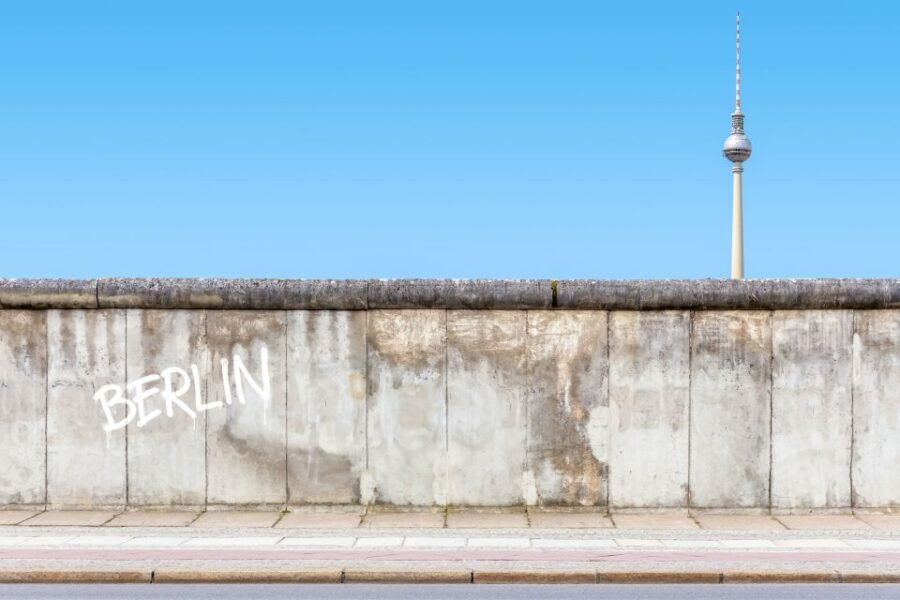
If you have limited time in Berlin and you want the Cold War to feel real, I think this is a strong choice. The route is compact but purposeful: it starts emotionally at Tränenpalast, gives you East Berlin city context at Alexanderplatz, teaches you how to read Karl-Marx-Allee, hits the Wall and death strip area, and ends with the East Side Gallery’s art takeover of the narrative.
Book it if:
- You’re comfortable walking for a few short bursts over 3 hours
- You’ll get the AB day pass ready and show up with sensible shoes
- You like guides who tell stories and answer questions
Skip it or pair it with something else if:
- You want museum-level reading time at each site
- You’re hoping for a slow, detailed political seminar rather than a story-led walk
If you do book it, come with one goal: learn how Berlin’s division worked on real people—through architecture, surveillance, and the desperate physics of escape.