REVIEW · KONSTANZ
Constance: Guided City Tour
Book on GetYourGuide →Operated by Marketing und Tourismus Konstanz GmbH · Bookable on GetYourGuide
Constance has bigger stories than its size suggests. In just 1.5 hours, you get two things I really like: the Council of Constance (1414–1418) in clear context, and the medieval frescoes that turn the Old Town into an open-air history book. One possible drawback: the tour covers a lot of ground in a short time, so if you want to linger at only one or two buildings, this may feel a bit fast.
The meeting point is easy to find—outside the Constance Tourist Information Center at the train station—and the walk ends in the city center near the market square. You’ll move at a comfortable strolling pace, guided in German, with a focus on the highlights plus the connections between them, not a long, stop-and-stare museum crawl.
For $18 per person, this is strong value if you like walking tours that add meaning to what you see. Just plan on comfortable shoes, since it’s a walking format and you’ll want your feet to feel good when the route turns through alleys and around major sights.
In This Review
- Key highlights to look for on this Constance walking tour
- Why Constance is perfect for a short, guided history walk
- Price and value for an $18, 1.5-hour guided tour
- Meeting outside the Constance Tourist Information Center (station side)
- The Council of Constance (1414–1418) is the story engine
- Old Town alleys and medieval frescoes: what to actually look for
- Cathedral stop: one of southern Germany’s largest Romanesque churches
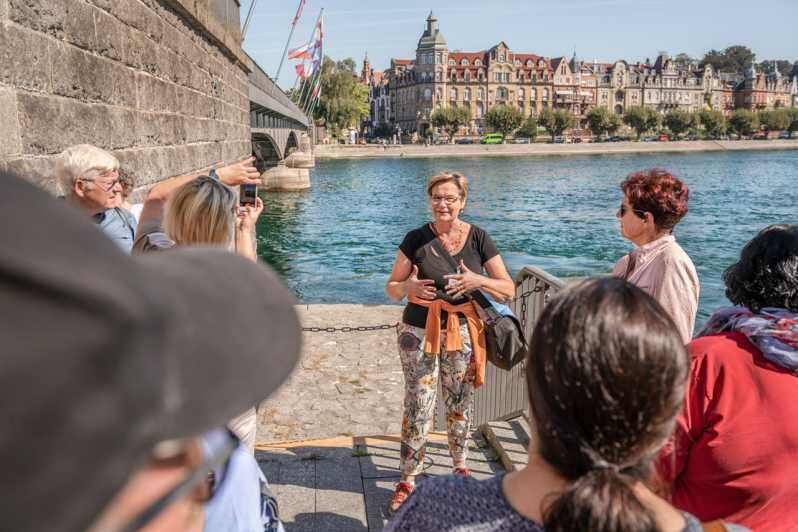
- Lake Constance and Alps views: the payoff moment between history stops
- Ending at the market square so you can keep exploring on your own
- What the guiding style can change for you (including Armin Günter)
- Who this tour fits best
- A quick, honest check before you book
- FAQ
- How long is the Constance guided city tour?
- How much does the tour cost?
- Where do I meet the guide?
- What language is the tour guide?
- What historical topic will I learn about?
- What are the main places you visit?
- Where does the tour end?
- Is the tour wheelchair accessible?
- Can I cancel or pay later?
Key highlights to look for on this Constance walking tour
- Council of Constance made understandable: why 1414 to 1418 mattered, and why it’s noted as the only papal election north of the Alps.
- Old Town alleys with visible artwork: frescoes and paintings on medieval houses and even the town hall area.
- Cathedral stop for Romanesque architecture lovers: one of the biggest Romanesque churches in southern Germany.
- Lake Constance and Alps views: scenic moments built into an easy city stroll.
- Finish at the market square: you end where the action is, so it’s simple to keep exploring on your own.
Why Constance is perfect for a short, guided history walk
Constance sits on the edge of Lake Constance, and that location shapes the whole vibe. One minute you’re in narrow Old Town lanes, the next you get that open-water feel, and then you can catch Alps views when the route lines up with good sightlines. Even in a short tour, you get that sense that the city has always been a place where ideas and people met—politics, religion, trade, and daily life.
What I like about this format is that it uses the city as the textbook. You’re not just hearing dates and names. You’re seeing the physical reminders: medieval building facades, a major Romanesque church, and a center point that still anchors the city’s daily rhythm. It’s the kind of guided walk that helps you look at streets differently afterward.
You can also read our reviews of more guided tours in Konstanz


Price and value for an $18, 1.5-hour guided tour
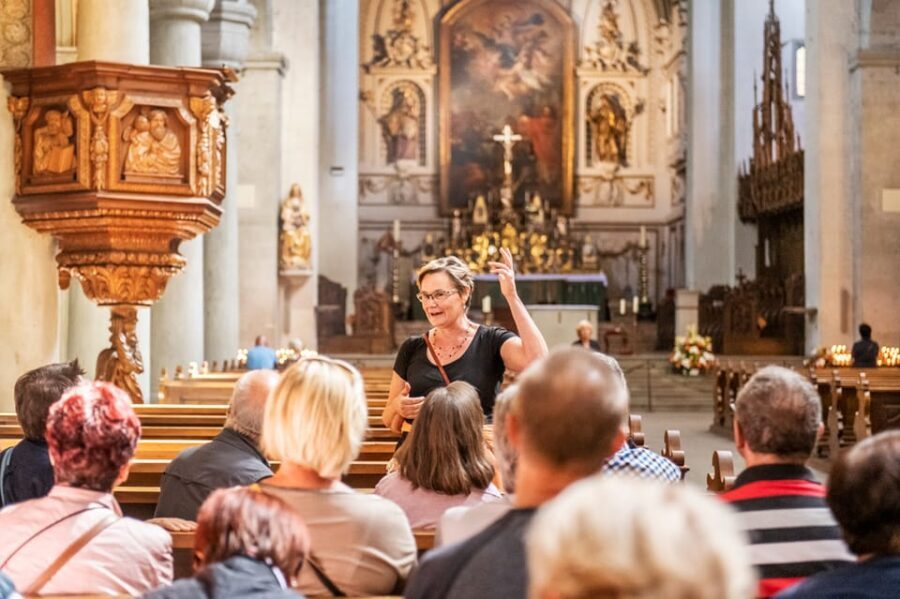
At $18 per person for a 1.5-hour guided walking tour, you’re basically paying for orientation plus context. The tour includes a live guide and focuses on several major stops—Old Town highlights, the cathedral, and scenic lake and Alps viewpoints—so you’re not spending the money just to get from A to B.
Is it a deal compared to larger, pricier full-day tours? Yes, especially if you’re short on time or you’re visiting more than one city. The price-to-duration ratio is the key strength here: you can absorb a lot of the city’s story without giving up an entire day.
Meeting outside the Constance Tourist Information Center (station side)
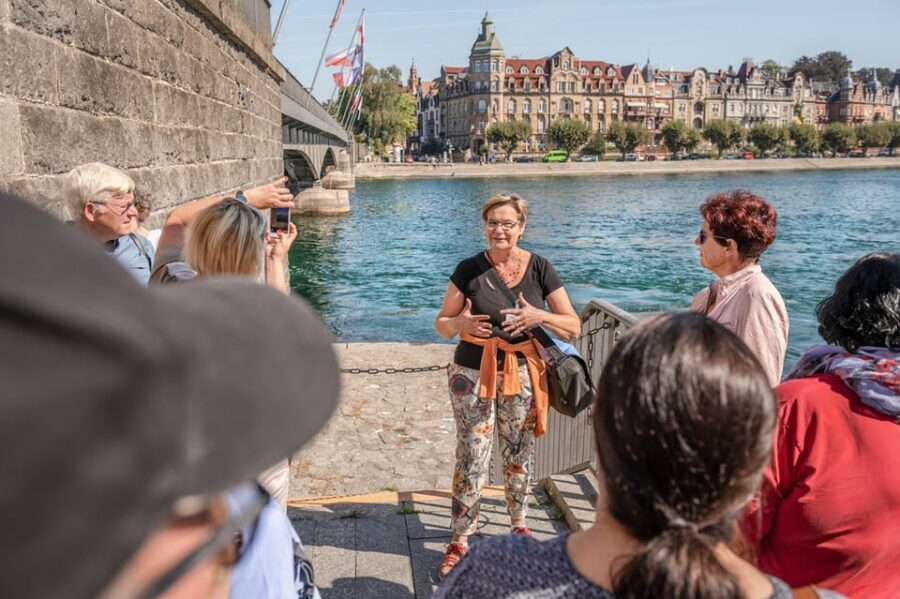
You meet your guide outside the Constance Tourist Information Center. That’s a smart choice because it keeps the start point tied to the train station area, so it’s usually less stressful than trying to coordinate a rendezvous in some random side street.
The tour is in German, led by a live guide. If your German is basic, you’ll still get value from the structure and the way the guide points out what to notice—especially because the stops include visual cues like frescoes and a prominent cathedral. But if you need full comprehension, plan accordingly.
Also, bring comfortable shoes. This is a walking tour through the Old Town alleys, and that means you’ll want your feet to be ready for uneven pavement and lots of turning corners.
The Council of Constance (1414–1418) is the story engine
The tour’s big historical focus is the Council of Constance, running from 1414 to 1418. This matters because it’s not just local gossip—it’s one of those landmark moments where religion and politics intersected on an unusually large stage.
You’ll also learn a very specific detail: the Council is tied to the fact that it involved the only papal election north of the Alps. That’s the kind of detail that makes history feel less like distant textbook content and more like a real reason Constance mattered to people far beyond the region.
Here’s the practical payoff for you: when you hear why the city was such an important crossroads during that period, you’ll understand why the Old Town layout, major church architecture, and civic buildings feel like they’re part of one bigger picture. The guide’s explanations are built to help you connect those dots during the walk, not after.
Old Town alleys and medieval frescoes: what to actually look for
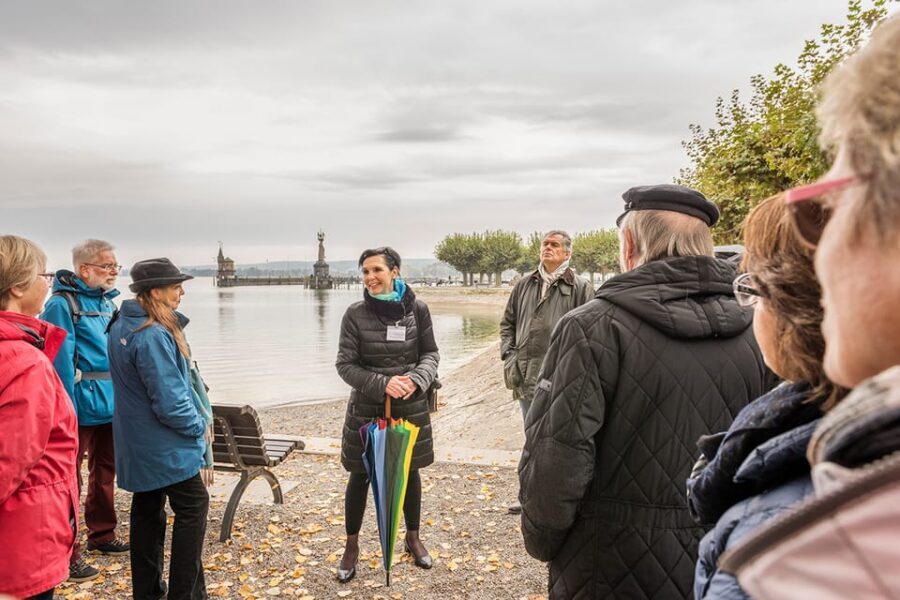
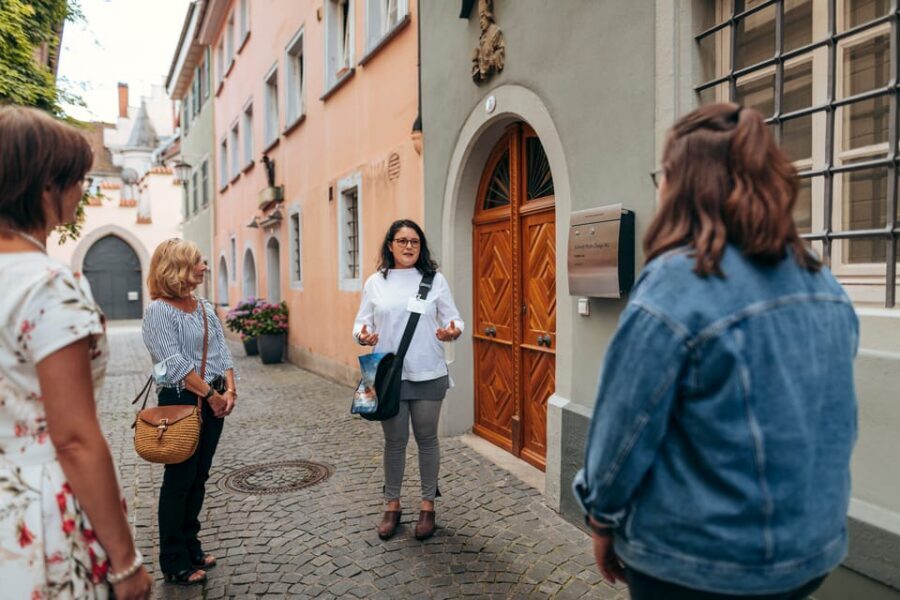
This is one of the most enjoyable parts of the tour because the “history” is visible. You’ll wander through charming Old Town alleys and learn about medieval houses decorated with frescoes and paintings. You’ll also see artwork associated with civic architecture, including the town hall area.
When a tour includes frescoes, your job as a visitor is to look slowly for the layers:
- Where the paintings are placed on the building (above doorways, along street-facing walls, or around windows).
- How the artwork relates to the street level—some details only make sense when you stand where the guide directs you.
- What the guide points out about the style or purpose of the images (even a few seconds of explanation can change your whole interpretation).
One reason I’d recommend this portion to you: frescoes are easy to miss if you’re walking on your own. With a guide, you get cues for what matters, and you don’t just pass by painted walls as background.
You can also read our reviews of more city tours in Konstanz
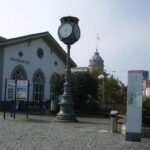
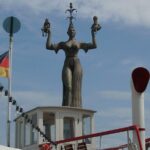
Cathedral stop: one of southern Germany’s largest Romanesque churches
A highlight of the walk is the cathedral visit. You’ll discover that it’s one of the biggest Romanesque churches in southern Germany, and that detail matters because Romanesque architecture has recognizable traits: sturdy proportions, heavy forms, and a strong sense of massing that can make a church feel like a landmark of permanence.
What makes the stop worthwhile on this particular tour is the way the guide ties it back to the wider story of Constance. The cathedral isn’t treated as a standalone photo spot. It’s part of the city’s historic identity—especially in a town where a major religious event (the Council of Constance) had regional and international impact.
Even if you’re not an architecture fanatic, you’ll likely enjoy this stop because Romanesque churches often reward you just by giving you something solid to look at—structure, rhythm, and scale—rather than requiring deep technical knowledge.
Lake Constance and Alps views: the payoff moment between history stops
No city walk is complete here without the scenery. The tour includes admiring scenic views of Lake Constance and the Alps. This is more than a nice break from walking—it’s the reminder that Constance’s geography helped shape why it connected to so many larger movements.
For your experience, these view moments do two things:
- They refresh your energy so the historical stops feel easier to digest.
- They give you a sense of place, so Constance stops being a “place with buildings” and becomes a real location on the map.
If you like travel photos, this is also where you’ll get the shots that don’t look like every other Old Town image. The mix of water and distant mountains makes the city feel bigger than it is.
Ending at the market square so you can keep exploring on your own
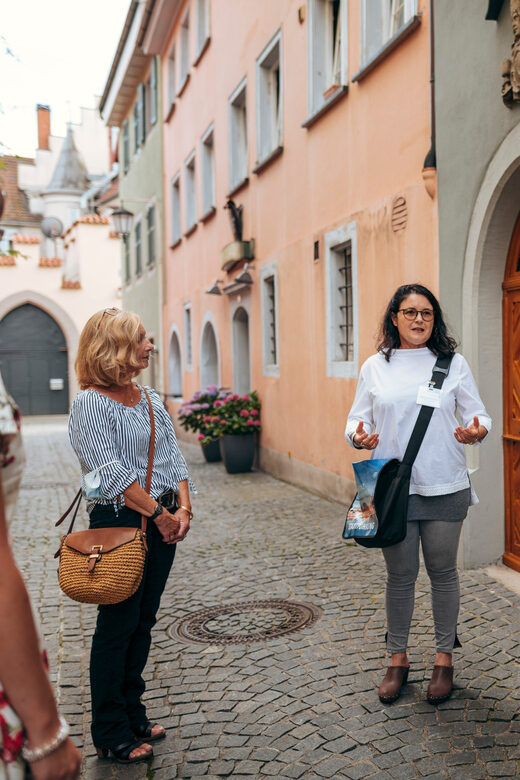
The tour ends at the market square, where you can experience the lively city center. This ending point is practical. By the time you reach it, you’ve already learned the main threads: the civic story, the religious story, and the visual cues in the Old Town.
Now the market square becomes your launching pad. You’ll have enough context to notice which streets connect back to what you just saw, and you’re positioned to grab a snack or continue wandering without needing to translate the city in your head.
What the guiding style can change for you (including Armin Günter)
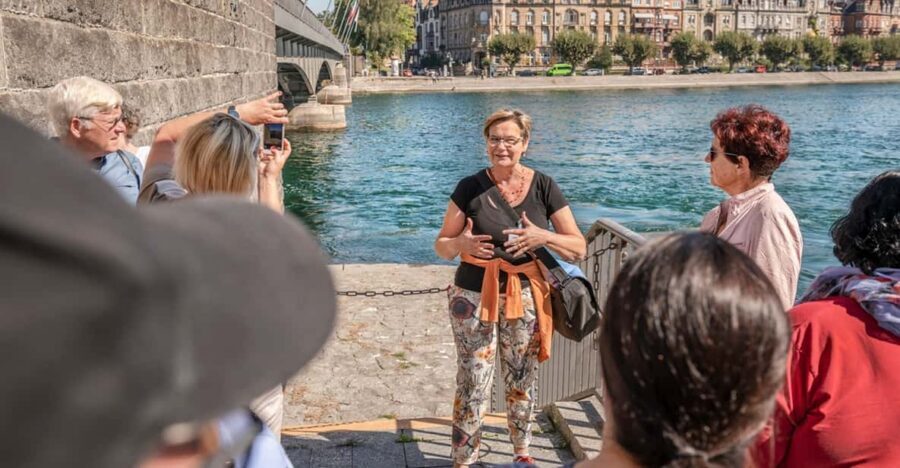
A walking tour lives and dies on the guide. In this case, one name stands out from the experiences shared with this tour: Armin Günter. The way he’s described is exactly what you want in a short city walk—lots of knowledge, delivered in a way that keeps moving and doesn’t turn into a lecture marathon. People also mention that the time passes quickly when the guide is doing their job well.
That said, one possible consideration comes up too. Some participants found that certain stops didn’t include quite as many buildings or visible points as they expected, and they wanted a more compact experience. In other words: if you hate wandering and want every minute to be about fewer sights, you might feel the pacing is slightly broad.
My advice: if you’re the type who likes depth at one or two places, you can still make this work. During the walk, ask the guide to focus on what you care about most—cathedral details, the Council story, or the frescoes. Guides often can adjust how they frame things in real time.
Who this tour fits best
This guided city tour is a great match if:
- You want a short, structured way to understand Constance’s historic importance.
- You enjoy Old Town walking with meaningful stops rather than a random sightseeing loop.
- You like history that connects to real places, especially church and civic landmarks.
- You’re interested in the Council of Constance and the very specific note about the papal election north of the Alps.
It’s also suitable for visitors who want an easy start and finish in central areas—train station side at the beginning, market square at the end. And it’s wheelchair accessible, which matters for planning.
A quick, honest check before you book
With a 4.5 rating across 737 reviews, the balance here is clear: most people appreciate how informative and easy to follow the tour feels, especially when the guide brings the story to life.
My bottom line: book this tour if you want a high-value introduction to Constance in 1.5 hours, with the Council of Constance story, Old Town frescoes, a major Romanesque cathedral visit, and lake-and-Alps viewpoints wrapped into one route. Skip it (or consider another option) if you want a slower pace with lots of time at fewer buildings, since the tour is designed for covering the main highlights efficiently.
FAQ
How long is the Constance guided city tour?
The tour lasts 1.5 hours.
How much does the tour cost?
It costs $18 per person.
Where do I meet the guide?
Meet your guide outside the Constance Tourist Information Center.
What language is the tour guide?
The live tour guide speaks German.
What historical topic will I learn about?
You’ll learn about the Council of Constance from 1414 to 1418, including that it involved the only papal election north of the Alps.
What are the main places you visit?
You’ll see the Old Town alleys, learn about medieval house frescoes and paintings, visit the cathedral, and enjoy views of Lake Constance and the Alps.
Where does the tour end?
The tour ends at the market square in the city center.
Is the tour wheelchair accessible?
Yes, the tour is wheelchair accessible.
Can I cancel or pay later?
You can cancel up to 24 hours in advance for a full refund, and you can reserve now and pay later.