REVIEW · BERLIN
Berlin: Walking Tour of the Top 10 Sightseeing Attractions
Book on GetYourGuide →Operated by TOURGUIDEME BERLIN · Bookable on GetYourGuide
Two hours can change how you see Berlin. This is a tight walking loop that turns major landmarks into a story you can follow. You start in the government district and end near Friedrichsbrücke, with a guide who mixes facts with Berlin humor.
I especially like the way it keeps moving while still giving you context, so you’re not just looking at buildings. I also like the practical pacing: photo stops when you need them, plus short stretches of breathing room at a couple of the most emotionally loaded spots. One thing to consider: it’s about 2 hours and roughly 4 km, so it’s not the tour for long museum time or lingering.
Guides matter here, and the feedback is strong—one guide named Max gets praised for clear answers and making time for photos without rushing. If you want a slow, detailed, sit-down version of Berlin, you may find the pace a bit quick.
In This Review
- Key highlights worth marking on your map
- Starting at Paul-Löbe-Haus: why this meeting point is smart
- Chancellery and Reichstag: seeing power without needing extra tickets
- Brandenburg Gate plus the Cold War in one photo stop
- Holocaust Memorial: heavy subject, guided care
- Unter den Linden and Potsdamer Platz: the boulevard that explains change
- Gendarmenmarkt and the Cathedral trio: architecture that feels like a stage set
- Bebelplatz: books burned and the cost of censorship
- Lustgarten and Berlin Cathedral: Prussian roots plus big-city views
- Museum Island and the walk toward Friedrichsbrücke
- What makes this 2-hour format work (and who it suits)
- Price and value: what $82 buys you in real terms
- Guide style: humor without losing the message
- Weather, shoes, and the small planning details that save time
- Should you book this 2-hour Top 10 Berlin walking tour?
- FAQ
- How long is the Berlin walking tour?
- How far do you walk during the tour?
- Where does the tour start?
- What time does the tour run?
- Which landmarks are included?
- What languages are offered for the live guide?
- Is there a ticket line included with the tour?
- Does the tour run in bad weather?
- Is the tour accessible for wheelchair users?
- Can I pay later and reserve my spot?
Key highlights worth marking on your map
- Brandenburg Gate with real context: unity, change, and what you’re actually looking at
- Unter den Linden route: a boulevard viewed through emperors and revolution
- Gendarmenmarkt trio: German Cathedral, French Cathedral, and the Konzerthaus in one stop
- Bebelplatz and books burned: a heavy moment handled with story—not lectures
- Museum Island viewpoints: Prussian connections plus memorable sight lines
Starting at Paul-Löbe-Haus: why this meeting point is smart

You meet in front of the Paul-Löbe Haus, directly opposite the Federal Chancellery, in Berlin’s government district (Konrad-Adenauer-Straße 1, 10557). I like this setup because you’re not starting in the middle of tourist traffic. You begin near the modern seat of power, then you walk backward through time.
From there, the tour uses quick orientation views before you get into the deeper landmarks. You’ll get a look at the Central Station area, the Chancellery, and a bell tower in Tiergarten. Then you’re on your way toward the Reichstag. That order helps. You see today’s Berlin first, and then you understand why the city’s political center matters so much in the story.
You can also read our reviews of more walking tours in Berlin



Chancellery and Reichstag: seeing power without needing extra tickets

Right away, the tour moves through the idea of governance as both symbol and stage. The German Chancellery gets a guided orientation, then the route continues to the Reichstag, where you’ll get the official Parliament seat explained with the kind of street-level clarity you actually want.
The practical win here is that you’re not hunting for the “right” side angles on your own. Your guide frames what to notice—lines of sight, architectural cues, and why these places took on meaning far beyond politics. Even if you’re not a history buff, it’s easy to follow because the guide keeps the focus on what you’re looking at right now.
If you’re short on time in Berlin, this is a good segment. In two hours total, you need efficient stops that deliver context fast. The Chancellery to Reichstag stretch does that.
Brandenburg Gate plus the Cold War in one photo stop
The Brandenburg Gate is the tour’s signature landmark, and it’s treated like more than a postcard. You’ll learn it as a symbol of unity and change, and you’ll get a sense of how the gate sits inside bigger moments that defined modern Germany.
From this vantage, you’re also shown what surrounds it: the American and French embassies, the Hotel Adlon, and farther landmarks that anchor the broader political story. The tour mentions the Victory Column and the Soviet War Memorial in the distance, which helps you connect the gate to the wider Berlin map instead of treating it as a standalone object.
There’s also an explicit photo stop. I like that because Brandenburg Gate is one of those places where you always want time for a clean shot, but you don’t want to waste time fiddling with timing once you get there. The guide’s job is to give you the angle and the moment, and then keep the tour moving.
Holocaust Memorial: heavy subject, guided care
After the gate, the route continues toward the Holocaust Memorial. This is the part where you should expect a more thoughtful tone. The itinerary lists it as a guided stop, which matters because the setting can feel overwhelming if you show up with only general knowledge.
I also appreciate that the tour places this stop in the flow rather than tacking it on as an afterthought. You’ve already seen political symbols and then you’re asked to face memory and consequence. That sequence makes the meaning land harder, and it’s exactly why a guided route is helpful here.
This is also one area where the pace should be steady and respectful. Plan to slow down your own rhythm a bit—let the guide’s framing do its work.
Unter den Linden and Potsdamer Platz: the boulevard that explains change
Next comes Unter den Linden, a major boulevard with a story you can walk. The tour describes it as shaped by emperors and revolutionaries, and that’s a useful way to think about it. When you’re walking the street, you’re not just passing elegant facades—you’re moving along a spine of Berlin’s shifting identity.
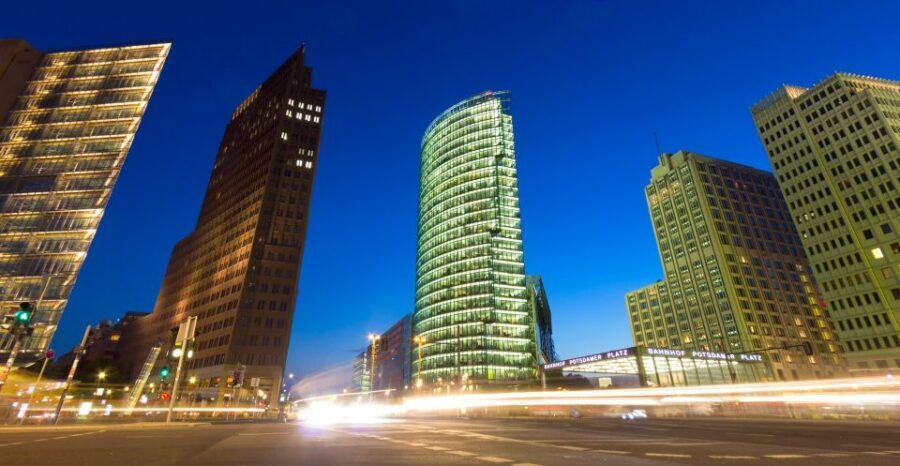
You’ll also connect the central sights to other major points on the route, including Potsdamer Platz. This stop is guided in the itinerary, so you get more than a quick look around. It’s one of those places in Berlin where past and present collide visibly, and a guide helps you read the cues.
The main thing I look for on a short tour is whether the route teaches you what to notice. Unter den Linden and Potsdamer Platz do that: they give you architectural and historical anchors you can remember after the walk ends.




Gendarmenmarkt and the Cathedral trio: architecture that feels like a stage set
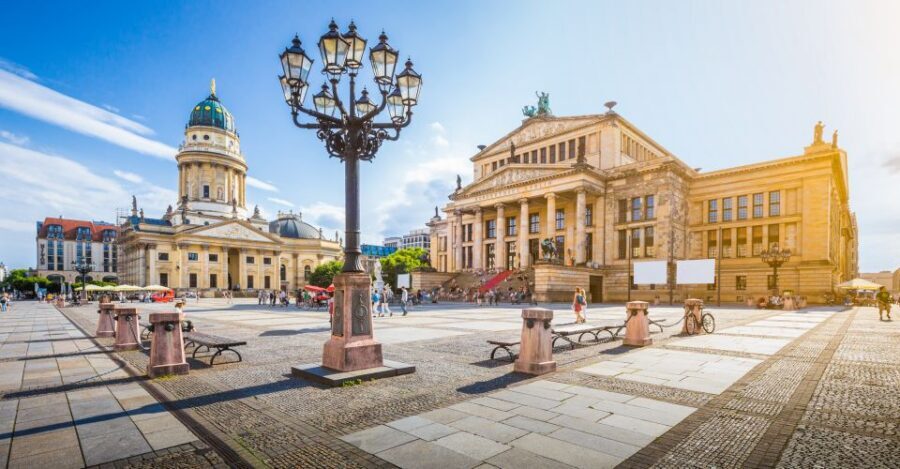
Then you arrive at Gendarmenmarkt, one of Berlin’s most beautiful squares, described in the tour as home to three architectural masterpieces: the German Cathedral, the French Cathedral, and the Konzerthaus.
This is a satisfying stop because it’s visually coherent even in a short visit. The square is structured enough that you can take in symmetry quickly, and the guide’s storytelling ties the buildings to the broader Berlin identity. You don’t have to know architectural terms to get it. You just need your eyes and a moment of explanation, and the tour delivers that.
One drawback to be aware of: squares can get crowded fast, depending on the day and time. With a 2-hour tour, you’ll likely get guided orientation and key viewing angles, not a long, slow wander. If you love photography, bring your patience and focus on the main perspectives your guide points out.
Bebelplatz: books burned and the cost of censorship
Next up is Bebelplatz, listed with guided touring plus a short free-time window. This is the stop where the tour explicitly points to the weight of what happened there: books burned, and what that represents culturally and politically.
I like that it includes free time here. It gives you a chance to absorb the moment on your own terms after you’ve heard the framing. Standing in the area and letting it settle is part of what makes this stop matter, and the itinerary doesn’t force you to rush straight through.
If you’re traveling with kids or seniors, this is also a helpful pause. Even when the tour overall is fast-paced, Bebelplatz creates a natural reset.
Lustgarten and Berlin Cathedral: Prussian roots plus big-city views
From Bebelplatz, the route moves to the Lustgarten, also listed with guided touring and some free time. Lustgarten is described as deeply connected to Prussian history, which gives you a useful lens. When you understand it as a stage for Prussian-era identity, the space makes more sense than it would as just another open area near monuments.
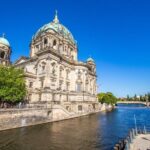
After that, the tour includes Berlin Cathedral, a major sight where you’ll get guided sight-seeing and photo chances as you pass through. This stop helps widen the story from national politics and modern memory into more religious and royal-era symbolism.
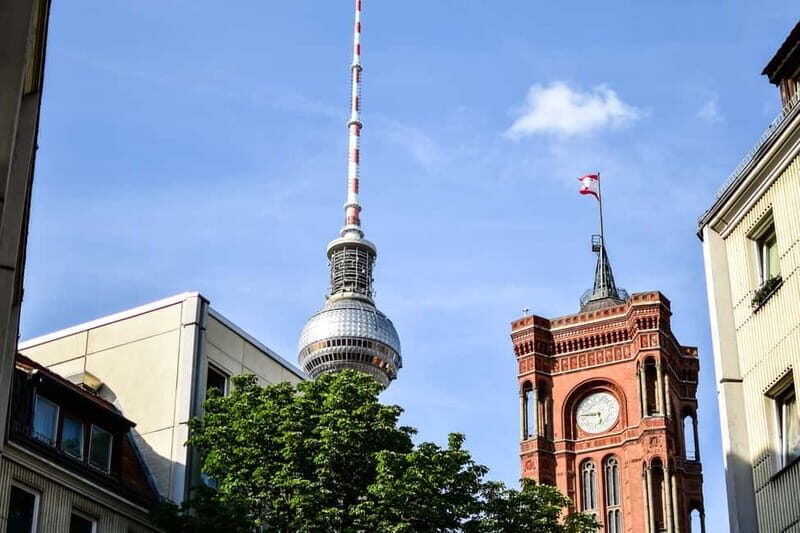
Then you’ll reach viewpoints that tie in nearby attractions. The description notes breathtaking views from the Berlin City Palace area toward the TV Tower and also references the Nikolaiviertel as Berlin’s birthplace dating back to 1237. You don’t need to plan extra outings just to get a sense of where older Berlin started.
Museum Island and the walk toward Friedrichsbrücke
The itinerary continues to Museum Island, with guided touring included. Even if you don’t go inside museums, Museum Island works as an outdoor lesson. You learn how Berlin’s cultural identity became a deliberate project, not just an accident of what happened to survive.
Finally, you finish at Friedrichsbrücke. Ending at a major crossing point is practical. You’re in an area where it’s easy to get yourself back into the rest of Berlin plans without feeling stranded at a dead end.
If you’re the type who likes to map your day efficiently, this finish helps. It’s a logical “wrap-up point,” and it keeps you from having to immediately navigate your way out of the government district.
What makes this 2-hour format work (and who it suits)
This tour is built for people who want a clear overview fast. It’s 120 minutes, with about 4 km of walking, and it’s designed to hit major landmarks while still covering key historical shifts, including references from the Nazi era to the Cold War and the period when the Wall fell.
That matters because history in Berlin can feel like it’s everywhere. A good guide turns the scattered facts into a route you can hold in your head. You’re not trying to learn everything; you’re learning enough to make later self-guided exploring feel easier.
You’ll likely enjoy it most if:
- You’re on a first trip and want the biggest hits in order
- You prefer walking + talking over sitting in a museum for hours
- You want humor and storytelling to keep the heavier topics from turning into dead time
A quick reality check: because it’s a short walk, you won’t get long explanations at every stop. The strength is breadth and flow, not deep, one-topic study.
Price and value: what $82 buys you in real terms
At $82 per person for a 2-hour guided walk, the value comes from how much you get packed into that time. This isn’t a generic “look at this building” stroll. It includes an expert local guide with storytelling, coverage of big historical periods, multiple major landmarks (including Brandenburg Gate and Museum Island), and a route designed to keep you from wasting time figuring out what matters.
Two more value points that matter in practice:
- The itinerary is structured, with guided segments at most stops plus photo opportunities
- It includes things like skip the ticket line, which helps reduce friction at the landmark stops you’ll want to see efficiently
If you’re someone who likes to understand what you’re seeing before you photograph it, you’ll probably feel the price as reasonable. If you’d rather wander at your own pace with no guiding, then you might choose self-guided routes instead.
Guide style: humor without losing the message
One of the most praised aspects is the guide’s ability to stay both informed and approachable. Multiple write-ups highlight guides answering questions and taking time for photos. One guide named Max is specifically mentioned for being very knowledgeable and for making the experience feel memorable, with room for questions and photography.
That combination matters. Berlin has a lot of monumental sites. If the guide only gives facts, it turns into memorization. If the guide only jokes, it turns into disrespect. The best tours balance both, and the feedback suggests this one leans into humor as a tool to keep you listening.
So yes, expect Berlin humor, but also expect the guide to handle the darker stops with the seriousness they deserve.
Weather, shoes, and the small planning details that save time
The tour runs in all-weather conditions, so plan for rain or cold. Comfortable walking shoes are a must, and you’ll cover roughly 4 km on foot. Bring a water bottle, and a camera helps because the route includes multiple iconic photo moments, like Brandenburg Gate and the central sight lines near government buildings.
If you hate being outdoors for even a couple hours, then this tour might feel like a lot. But if you’re okay walking briskly and staying flexible, you’ll likely find it an efficient way to start your Berlin trip.
Should you book this 2-hour Top 10 Berlin walking tour?
I’d book it if you want a high-impact overview that ties together Brandenburg Gate, Unter den Linden, Gendarmenmarkt, Bebelplatz, Lustgarten, Berlin Cathedral, and Museum Island in one guided arc. It’s especially worth it when you don’t have days to build context on your own.
I wouldn’t book it if your ideal Berlin day is slow strolling with long museum breaks, or if you want an ultra-deep lecture on only one topic. This tour is for getting the key story beats and major sights under your feet—then using your remaining time to explore with clearer instincts.
If that’s your style, this is a smart use of two hours.
FAQ
How long is the Berlin walking tour?
The tour lasts about 2 hours.
How far do you walk during the tour?
Expect about 4 km of walking.
Where does the tour start?
The meeting point is in front of the main entrance of Paul-Löbe Haus, opposite the Federal Chancellery, at Konrad-Adenauer-Straße 1, 10557 Berlin.
What time does the tour run?
It starts daily at 10:00 AM and 2:00 PM.
Which landmarks are included?
The tour covers major sights such as Brandenburg Gate, Gendarmenmarkt, Bebelplatz, Lustgarten, Berlin Cathedral, and Museum Island, along with stops in the government district and around the Reichstag.
What languages are offered for the live guide?
The live tour guide is available in English, Spanish, and German.
Is there a ticket line included with the tour?
The tour includes skip the ticket line.
Does the tour run in bad weather?
Yes. Tours run in all-weather conditions.
Is the tour accessible for wheelchair users?
Yes, the tour is wheelchair accessible.
Can I pay later and reserve my spot?
Yes. You can reserve now and pay later.