REVIEW · AUGSBURG
Augsburg’s Water Management System – City Walking Tour
Book on GetYourGuide →Operated by Regio Augsburg Tourismus GmbH · Bookable on GetYourGuide
Water runs under Augsburg, and you can walk it. I love how the experience makes the UNESCO water management system feel real, with practical stops you can spot and hear, and how the walk ties together famous Augsburg fountains into one story. The one catch: if you’re expecting a hands-on, technical class about plumbing, this tour leans more toward history and meaning than step-by-step engineering.
I booked this for a compact, good-value introduction to a UNESCO World Heritage Site, and it delivers. You start in the city center, then head through the Old Town and the Lech quarter before finishing at the imposing Rotes Tor waterworks.
Plan on about 2 hours, good walking shoes, and rain gear if the sky misbehaves. The optional elysium sound amplification system uses your smartphone, plus headphones and an internet connection, which is a handy upgrade on cloudy, windy days.
In This Review
- Key things that make this Augsburg water tour worth your time
- Entering the Augsburg Old Town: your “water system” becomes walkable
- The UNESCO story told in places: how Augsburg’s water system “shows up”
- Old Town fountains: Augustus, Merkur, and Herkules as landmarks
- Walking the Lech quarter canals: where the system feels local
- Rotes Tor waterworks: the anchor stop with real scale
- The sound system option: elysium, your phone, and better clarity
- Price and value: what you’re really paying for
- Who this Augsburg water tour suits best
- A day-of reality check: timing, walking pace, and comfort
- Should you book the Augsburg Water Management System walking tour?
- FAQ
- Where does the tour start?
- How long is the Augsburg water management system walking tour?
- What does the tour cost?
- What’s included in the price?
- Are entry tickets included?
- Is food and drink included?
- What languages are offered?
- Does the tour offer a sound system?
- Is the tour wheelchair accessible?
- What should I bring?
- Can I cancel and get a refund?
Key things that make this Augsburg water tour worth your time
- UNESCO water system, explained as you walk across multiple elements tied to Augsburg’s water story
- Lech quarter canals + cobblestones in the kind of old streets where you can actually picture the system working
- Rotes Tor: oldest existing waterworks in central Europe
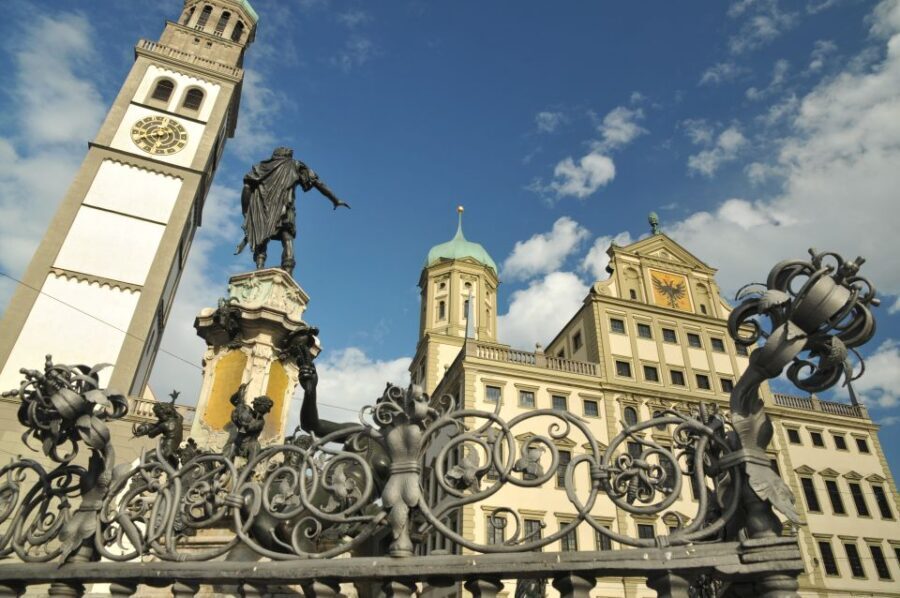
- Fountains in one loop including Augustus, Merkur, and Herkules
- Live guiding in German or English, with clear, fact-forward explanations from guides like Brigitte Plonner
- Optional elysium audio so you can hear well using your own phone and headphones
Entering the Augsburg Old Town: your “water system” becomes walkable
Augsburg’s water management system isn’t just something you read about on a sign. On this 2-hour walking tour, you see how water shaped daily life, city planning, and the look of the old town. The big win is that you’re not stuck indoors or herded from one ticket desk to another. You move through the city, and the story moves with you.
The tour starts at the Tourist Information Center area (meet your guide there), right in the heart of the city. Within minutes, you’re walking Augsburg’s Old Town with that classic feel of old cobblestones under your shoes. That small detail matters more than it sounds: it makes the whole experience physical. When you hear about canals and waterworks, you can connect the history to the streets you’re standing on.
Guides are set up for both German and English, so you don’t lose the thread if you choose your language option. If you use the optional elysium sound amplification system, you’ll bring your own smartphone with internet access and headphones. I like this approach because it’s simple: no extra device to manage, and you control the volume.
Practical tip: wear comfortable shoes. Two hours is short, but you’ll be on foot the whole time, and the cobblestones don’t forgive bad footwear.
You can also read our reviews of more walking tours in Augsburg



The UNESCO story told in places: how Augsburg’s water system “shows up”
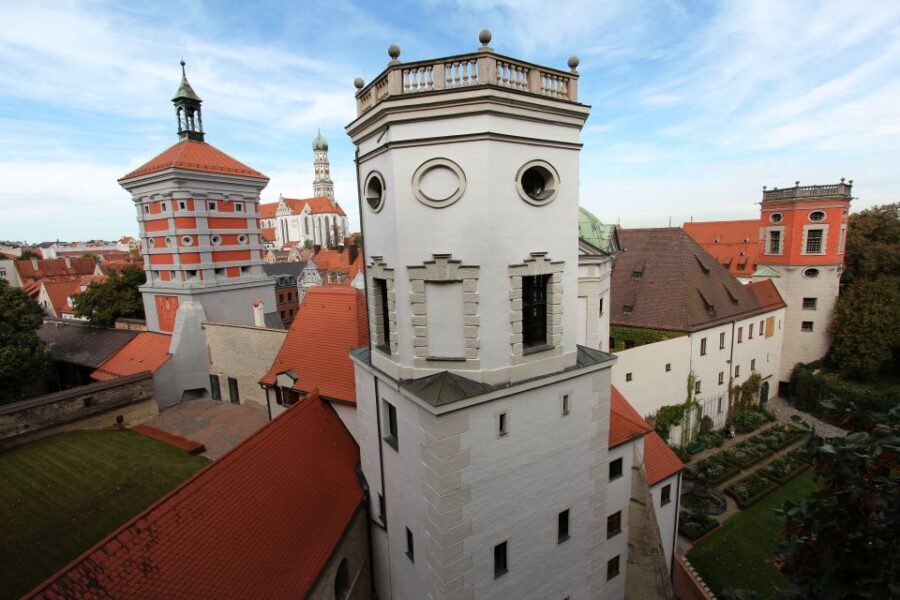
One reason this tour works is that it’s built around Augsburg’s water management system as a UNESCO World Heritage Site with 22 elements. That means you’re not just seeing one fountain or one canal and calling it a day. You’re collecting multiple pieces of the system, in a logical flow, so the “how it all connects” part actually clicks.
In plain terms, the guide is helping you understand how water moved through the city over time and how that movement left visible marks: canals in specific quarters, fountains that became landmarks, and waterworks structures that still command attention.
Two details I appreciate about the guiding style: it’s clear and fact-focused, and it’s paced for a short city walk. One guide I saw mentioned by name—Brigitte Plonner—was described as able to explain Augsburg’s water management in an illustrative, easy-to-follow way. Even if your guide is different, expect a similar tone: you’ll leave with names, locations, and a better sense of what these sites are doing in the broader UNESCO system.
Possible drawback to consider: if you’re hoping for lots of personal anecdotes or chatty stories, you might find the tour more data-and-history oriented. On at least one tour experience, the guide leaned heavily into historical dates and facts, with fewer personal tales. That’s not a deal-breaker, but it’s good to know your expectations.
Old Town fountains: Augustus, Merkur, and Herkules as landmarks

Fountains are a big part of the experience, and that’s smart. A fountain is visual. It’s also social: people gather, look, and remember. When a city designs fountains thoughtfully, it tells you something about priorities—public life, display, and the power of water infrastructure.
During the walk you’ll admire Augsburg’s magnificent fountains, including:
- Augustus fountain
- Merkur fountain
- Herkules fountain
Seeing these close together on foot helps you spot patterns. Even without being an art historian, you can compare how each fountain fits into the streetscapes around it. The guide connects the dots to Augsburg’s water management system, so these aren’t just pretty photo stops. They become evidence of how the city used water as a civic statement.
Why this is valuable for you: fountains make the invisible infrastructure feel real. You get a visual anchor, then the guide points out how canals and waterworks support that kind of water access over time.
Small logistics note: photography will be easy at fountain stops, but cobblestones can make tripods annoying. Skip the tripod and focus on quick shots.
Walking the Lech quarter canals: where the system feels local
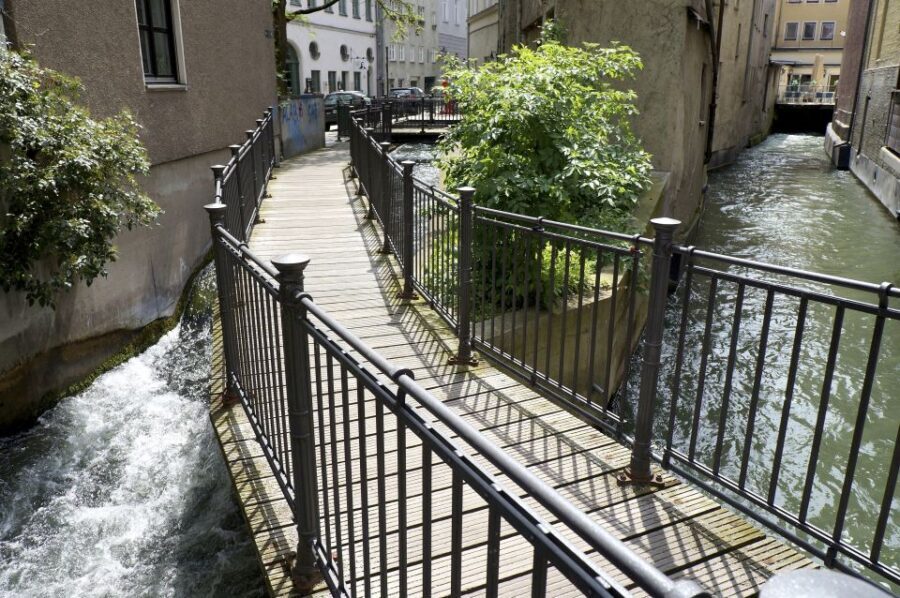
After the city-center stretches, the route moves into the Lech quarter, where the feel of Augsburg changes in a good way. You’ll stroll through charming streets lined with small canals, red-roofed houses, and that familiar cobblestone texture underfoot.
This is one of my favorite parts because canals are where water management stops being abstract. When you’re standing near small, historic canal segments, you can picture a functioning network instead of thinking about distant buildings and names.
The guide talks through the historical context while you walk, helping you understand why the Lech area matters to Augsburg’s system. The stop is also a nice contrast after the more monumental feel of the fountains and older city points.
What to watch for: slow down at canal-side moments. Even if the guide is moving, it’s worth pausing for a second to look at street alignment, water edge, and how the surrounding buildings face the water.
Weather note: rainy days can make cobblestones slick. If the forecast looks questionable, bring shoes with real grip.
Rotes Tor waterworks: the anchor stop with real scale
At the end (after Lech quarter streets), you head to the waterworks at Rotes Tor—an imposing stop that’s the emotional climax of the tour. Here’s what makes it special: it’s described as the oldest existing waterworks in central Europe.
That phrase matters because it shifts the mindset from sightseeing to legacy. You’re not just walking through Augsburg’s past. You’re looking at a working kind of historical infrastructure that still survives in some form, long after later technologies changed the world elsewhere.
Even if you don’t know technical terms, you can still appreciate scale—how the structure presents itself and how it fits into Augsburg’s broader water story. The guide links this waterworks stop back to the fountains and canals you saw earlier, so the tour ends with the big “why it all matters” piece.
My practical takeaway: use the Rotes Tor stop to straighten your understanding. If the earlier stops felt like several interesting highlights, this one helps turn them into one connected system.
You can also read our reviews of more city tours in Augsburg

The sound system option: elysium, your phone, and better clarity
This tour offers an optional use of the elysium sound amplification system. The idea is simple: you bring your smartphone with internet and headphones, and the setup helps you hear the guide more clearly. It’s especially useful if you’re near moving crowds, outdoors in wind, or sitting at a distance from the guide during a photo stop.
You’ll decide on the day whether you want it. If you hate fiddling, you can skip it. But if you know you struggle with hearing guides outdoors, it can make the tour more comfortable fast.
Simple prep: bring fully charged headphones. If your phone battery tends to drop quickly in cold weather, consider a power bank.
Price and value: what you’re really paying for
The listed cost is $20 per person, with a price breakdown shown as 14,00€ plus a 3,00€ administration fee. In other words, you’re paying for a guided, 2-hour walk that covers multiple elements of Augsburg’s UNESCO-listed water system.
Is it worth it? For me, the value depends on what you want:
- If you want context, a guide saves you from wandering around with a map and hoping the signs explain the connections.
- If you want compact coverage, you’ll see several key elements—fountains, canal areas, and the Rotes Tor waterworks—without needing to plan separate visits.
- If you want technical training, you may feel it’s not deep enough. The tour is more history and meaning than mechanics.
Also consider what’s not included. Entry tickets to attractions aren’t included, and food and drinks aren’t included either. That’s normal for a walking tour built around public areas and exterior viewing. The “skip the ticket line” note can still be relevant if any ticketed sights are part of the walking sequence, but you’ll still need to pay for those entries separately.
My value call: this is a strong buy if you like walking tours that explain how a city works, not just what it looks like.
Who this Augsburg water tour suits best
This tour fits best if you want an accessible, guided introduction to Augsburg’s water system. I’d especially recommend it if:
- You like UNESCO sites but don’t want a heavy day of museums.
- You enjoy walking in old European city streets and noticing how infrastructure shapes the place.
- You’re curious about fountains and canals and want the “why” behind them.
- You prefer a guide to connect the dots for you in a short timeframe.
It may be less ideal if you’re the type who wants intensive engineering detail or lots of hands-on demonstrations. Also, if you strongly prefer stories and personal anecdotes over dates and historical facts, you might want to manage expectations.
A day-of reality check: timing, walking pace, and comfort
It’s a 2-hour tour, and that time moves fast because it’s built around multiple outdoor stops. The meeting point is straightforward: the Tourist Information Center. From there, the route takes you through the Old Town, into the Lech quarter, and onward to Rotes Tor.
You’ll want to plan your day around comfortable walking. Bring weather-appropriate clothing because outdoors time matters here. Comfortable shoes are non-negotiable if you’re sensitive to uneven surfaces.
Group size can be small. One experience note mentioned the tour nearly didn’t run because there were only two participants, then still went ahead for three people. That suggests you should book soon enough that you’re not stuck hoping your date fills up.
Should you book the Augsburg Water Management System walking tour?
Yes, I think you should book it if you want a practical, guided way to understand Augsburg’s UNESCO water network in just 2 hours. The combination of Lech canals, major fountains like Augustus, and the big-ending stop at Rotes Tor creates a clear arc from everyday water features to the larger system behind them. You get a lot of city meaning per minute.
Skip it only if your main goal is hands-on technical knowledge or you know you strongly prefer anecdotes over facts. If your ideal tour is more about engineering lectures, this one might feel too focused on history and explanation rather than how-you-build-it details.
If you’re on the fence, consider this simple question: do you want Augsburg’s water story to make sense while you’re still standing in the streets? If yes, this is a good bet.
FAQ
Where does the tour start?
Meet your guide in front of the Tourist Information Center.
How long is the Augsburg water management system walking tour?
The duration is 2 hours.
What does the tour cost?
The price is listed as $20 per person, with a breakdown of 14,00€ plus a 3,00€ administration fee.
What’s included in the price?
A tour guide and a walking tour are included. The optional elysium sound amplification system is also available if you bring your smartphone with internet connection and headphones. The 3,00€ administration fee is included as shown.
Are entry tickets included?
No. Entry tickets to attractions are not included.
Is food and drink included?
No. Food and drinks are not included.
What languages are offered?
The tour is available in German and English.
Does the tour offer a sound system?
Yes, there is an optional sound amplification system called elysium. You use your own smartphone, headphones, and internet connection.
Is the tour wheelchair accessible?
Yes, it is listed as wheelchair accessible.
What should I bring?
Bring comfortable shoes and weather-appropriate clothing.
Can I cancel and get a refund?
Free cancellation is available up to 24 hours in advance for a full refund.