REVIEW · BERLIN
Berlin: Sightseeing Walking Tour of the Top 20 Attractions
Book on GetYourGuide →Operated by TOURGUIDEME BERLIN · Bookable on GetYourGuide
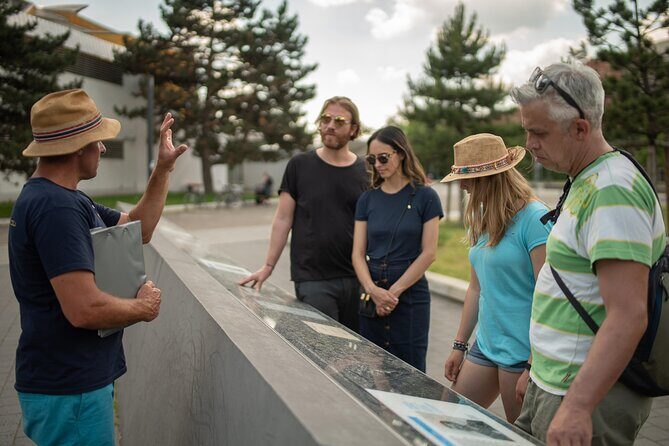
Berlin can feel like two cities in one. This 3-hour Top 20 walk strings them together with clear street-level storytelling, smart pacing, and that dry Berlin humor that makes heavy moments easier to hold. I like how you get both the famous postcard stops and the less-obvious links between them, so the map in your head starts clicking into place fast. I also like that you’re not stuck on a rigid script: you can ask questions and the guide adapts.
The main consideration is simple: it’s still a 6 km walk and it covers a lot of ground in a short time. If you’re not up for steady walking, or you know you want a lighter, less historical tour, this one may feel like information overload.
In This Review
- Key things to know before you go
- Why This 3-Hour Top 20 Walk Feels Like More Than a Highlights Tour
- Starting at Paul-Löbe-Haus: Getting Oriented Fast
- German Chancellery, Reichstag, and Brandenburg Gate: Power Meets the Street
- Holocaust Memorial: Handling a Heavy Site With Structure and Respect
- Potsdamer Platz to Checkpoint Charlie: Learning Cold War Geography in Real Time
- Topography of Terror: What It Means to Stand on the Former Gestapo Site
- Bebelplatz and the Berlin Cathedral Zone: Book Burning to Prussian Grandeur
- Gendarmenmarkt and Museum Island: Seeing Prussia’s Image of Order
- Pace, Humor, and Why Private or Small Groups Matter
- What to Bring, How to Handle 6 km, and When to Use Your Time Wisely
- Who This Tour Fits Best (and Who Might Want a Different Style)
- Should You Book This Berlin Top 20 Walking Tour?
- FAQ
- How long is the Berlin walking tour?
- How much does the tour cost?
- Where does the tour meet?
- What time does the tour start?
- Is this tour private or small group?
- How far will I walk?
- What languages are available?
- Is the tour wheelchair accessible?
- Does the tour include skipping ticket lines?
- What if I need to change plans?
Key things to know before you go
- Top 20 in 3 hours: a concentrated loop built for orientation, not lingering museum time
- Nazi and Cold War stops: Checkpoint Charlie, Topography of Terror, and Holocaust and book-burning memorials
- Small group or private feel: better chances for questions and slower moments when needed
- Berlin humor with real stories: guides like Carlos and Carlo are praised for personal, lived-in context
- Photo-friendly pacing: on some days, the group format allows extra time to get shots without rushing
Why This 3-Hour Top 20 Walk Feels Like More Than a Highlights Tour
A lot of Berlin tours do the same thing: line up the top sights, say a few dates, then move on. What I like about this one is that it builds a story through the streets, so you learn how neighborhoods and power centers connect. In just three hours, you cover major landmarks that normally take a whole day to piece together on your own.
You also get the advantage of a guide who can explain what you’re seeing in plain language, including the political logic behind the architecture and street layout. That matters in Berlin, where so many landmarks have layers: Prussian ambition, Nazi terror, Cold War division, and reunification. If you’re short on time, this is the kind of tour that helps you stop memorizing and start understanding.
You can also read our reviews of more walking tours in Berlin


Starting at Paul-Löbe-Haus: Getting Oriented Fast
You meet in front of the Paul-Löbe Haus, opposite the Federal Chancellery, on Konrad-Adenauer-Straße 1. That’s a smart starting point because it puts you immediately next to the center of modern German government. Within minutes, you’re walking in the same zone where you’ll keep seeing the relationship between authority, design, and public space.
From here, the route naturally connects major landmarks around the central government district. If you’ve never been to Berlin, this helps you learn the “big spine” of the city, so later you can find your way around without constantly checking your map.
And because it’s mainly on foot, the pace feels real. You can look up at facades, notice the scale of avenues, and get that street-level sense of where viewpoints and memorials sit in the city.
German Chancellery, Reichstag, and Brandenburg Gate: Power Meets the Street
This tour begins where Berlin’s current identity is on full display. You’ll pass key government sites, then move toward the Reichstag area and toward Brandenburg Gate. This cluster is ideal for first-time visitors because the buildings aren’t just impressive. They show how Germany presents itself at different moments in history.
What makes the area special is how the city’s layout affects your impressions. Wide streets, prominent sight lines, and landmark placement all work like a stage set. A good guide turns that into a practical lesson: you’ll learn what to look for, not just what to name.
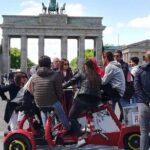
Even if you’ve seen photos of Brandenburg Gate, walking nearby changes the experience. The monument stops looking like a picture and starts feeling like a hinge point between eras—especially once you continue deeper into the story later in the walk.
Holocaust Memorial: Handling a Heavy Site With Structure and Respect
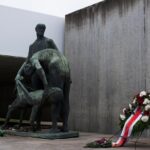
One of the most important stops is the Holocaust memorial area. This is not the kind of place where you want to rush past, and the tour format gives you a guided approach plus a bit of room to take it in. A guide’s job here is balancing information with tone, so you understand what you’re seeing without turning it into a checklist.
If you’re sensitive to difficult topics, plan your expectations: some parts of Berlin’s history are painful on purpose. Having a guide helps you make sense of why the memorial’s design communicates so much, and it keeps the moment grounded rather than abstract.
Potsdamer Platz to Checkpoint Charlie: Learning Cold War Geography in Real Time
Once you head toward Potsdamer Platz, the tour starts connecting modern-day Berlin to its divided past. You’ll move on to Checkpoint Charlie, one of the most recognizable Cold War sites. The value here is not just the name recognition. It’s the way the guide explains what this crossing meant and how division shaped movement, even when the city looked similar on the surface.
Checkpoint Charlie also works as a visual anchor. After you see it, you can better understand why the Wall mattered beyond politics. It was physical, daily, and messy—built into routes people took, places they avoided, and choices they couldn’t make.
The tour also includes longer Wall-related walking sections, so you don’t just stop at one photo spot. Instead, you get more of the geography—the sense of where the Wall sat and how it shaped nearby areas.




Topography of Terror: What It Means to Stand on the Former Gestapo Site
Topography of Terror is one of the most significant stops on the route. This memorial area sits on the grounds of the former Gestapo headquarters, and the tour connects the space to the machinery of repression that operated there. You’ll learn how Nazi terror functioned and how it affected everyday life, not only politics.
This stop benefits from a guided approach because the site’s meaning can be easy to reduce to big facts. The guide turns it into street-level understanding: what happened here, how the system worked, and why Berlin chose this kind of memorial landscape.
Expect emotional weight. The tour doesn’t try to soften the topic, but the storytelling style—often described as dry and humane—helps you stay with it long enough to actually absorb it.
Bebelplatz and the Berlin Cathedral Zone: Book Burning to Prussian Grandeur
Bebelplatz adds a different angle on repression: censorship. You’ll be in the area tied to the burning of books, and the tour frames it as a method, not a spectacle. When you connect that idea to the other sites on the walk, Berlin’s theme becomes clear: control information, control people.
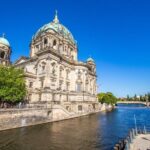
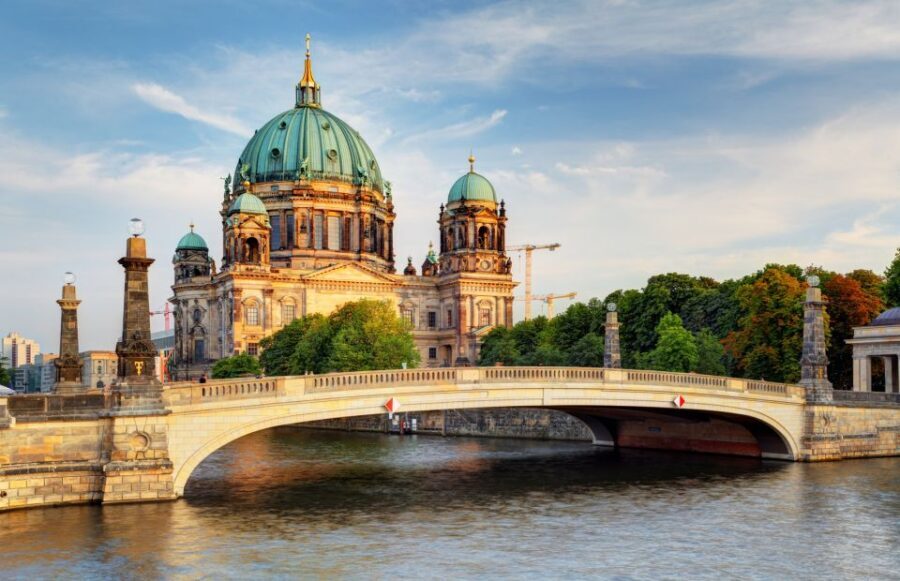
After that, you shift toward architecture and power symbolism in the broader Lustgarten and Berlin Cathedral area. This part is a reminder that Berlin’s history doesn’t only live in memorials. It also lives in domes, courtyards, and the way public space is designed to project national identity.
If you’re the type who likes contrasts, this is one of the most effective sequences on the walk. One moment you’re confronting attempts to erase ideas. Next, you’re looking at buildings that were built to project permanence.
Gendarmenmarkt and Museum Island: Seeing Prussia’s Image of Order
Gendarmenmarkt is pure visual confidence: grand symmetry, classic facades, and a sense of civic space that feels planned and intentional. This stop breaks up the heavier history with something more legible and beautiful, and it gives your brain a rest without losing the tour’s thread.
Then you move toward Museum Island, a major cultural cluster that helps explain Berlin’s ambition beyond politics. Museum Island isn’t just about museums. It’s about how a city chooses what to preserve and display—and how that choice shapes identity over time.
You’ll also see the broader museum-area landmarks along the way, including Alte Nationalgalerie. For many people, this segment is where Berlin stops feeling like a list of events and starts feeling like a place with long-term goals.
Pace, Humor, and Why Private or Small Groups Matter
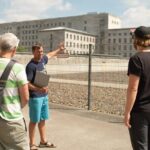
A big reason this tour earns strong ratings is the guide dynamic. Guides such as Antonella, Max, and Carlos/Carlo are repeatedly described as warm, friendly, and able to keep the mood moving even in bad weather. You’re not dealing with a performance. You’re dealing with someone who understands how to translate history into street stories.
Because the format can be private or small groups, you’re more likely to get the time you need for questions and photography. On some days, guides may run a bit over when the conversation is flowing, and that’s often when you learn the most specific details that don’t show up in a brochure.
This tour also explicitly works for choosing your interests and having the guide adapt. That’s practical: if you care most about Cold War division, you can lean that way. If your focus is architecture and civic space, the guide can steer explanations accordingly.
What to Bring, How to Handle 6 km, and When to Use Your Time Wisely
Bring comfortable walking shoes. You’ll walk about 6 km, and three hours can feel longer if you stop often for photos. Pack a camera, and bring a water bottle because you’ll want something to sip during breaks.
The tour runs in all weather, so plan for rain and wind. Berlin weather can be moody, and good guides keep moving while still offering small pauses when needed.
My tip: use the early part of the walk to ask your big-picture questions. If you understand the city’s logic by the time you reach the memorials and Cold War sites, the rest of the tour makes more sense.
Who This Tour Fits Best (and Who Might Want a Different Style)
This is ideal if you’re:
- visiting Berlin for the first time and want quick orientation
- a curious history fan who doesn’t want to plan a self-guided day
- traveling with friends, couples, or a small team who can share questions
- someone who likes a guide to connect the dots between sites, not just name them
It’s also a good fit for curious locals who want a tighter, guided version of the big highlights.
It may be less ideal if you:
- want only light, fun sightseeing
- have limited mobility or can’t comfortably handle a sustained walking route
- prefer one area deeply rather than seeing many different parts in one go
Should You Book This Berlin Top 20 Walking Tour?
If your goal is to get your bearings quickly and understand Berlin’s story from Brandenburg Gate through Cold War division to memorial sites tied to Nazi terror, I think this is a strong booking. The price is $94 for three hours, and the value comes from the number of major stops, the guide-led pacing, and the small-group/private setup that makes questions and photos more realistic.
If you’re ready for a concentrated walk and you don’t mind that the route includes heavy topics, this tour gives you a useful, memorable framework for the rest of your trip. For many people, it’s the kind of first-day experience that makes later explorations feel more informed and less random.
FAQ
How long is the Berlin walking tour?
It lasts 3 hours (about 180 minutes).
How much does the tour cost?
The price is $94 per person.
Where does the tour meet?
Meet in front of the main entrance of the Paul-Löbe Haus, opposite the Federal Chancellery, Konrad-Adenauer-Straße 1, 10557 Berlin, Germany.
What time does the tour start?
Daily departures are listed at 10:00 AM and 2:00 PM.
Is this tour private or small group?
It’s offered as private or small groups.
How far will I walk?
The tour is approximately 6 km.
What languages are available?
The live guide is available in English, Spanish, and German.
Is the tour wheelchair accessible?
Yes, wheelchair accessible is listed.
Does the tour include skipping ticket lines?
The tour notes a skip the ticket line option.
What if I need to change plans?
Free cancellation is available up to 24 hours in advance for a full refund. Reserve and pay later is also offered.