REVIEW · BERLIN
Berlin History Walking Tour with a French-Speaking Guide
Book on Viator →Operated by Vive Berlin Tours · Bookable on Viator
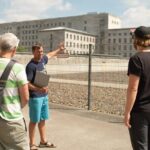
History walks beside you in Berlin. This 3-hour, French-speaking tour strings together Potsdamer Platz, the Holocaust Memorial, and the Hitler’s Bunker site, then ties them to the Cold War and modern city landmarks so it actually makes sense.
I especially like how the guide turns big, messy WWII and Cold War events into clear, walk-by-walk stories. And I love the value angle: admission is included for major sites, plus a professional French-speaking guide keeps the pace manageable for a first visit.
One consideration: there’s no mention of audiophones/headsets, so if you’re sensitive to hearing in a group setting, you’ll want to stay close to the guide at each stop.
In This Review
- Key things to know before you go
- A fast route that actually explains Berlin’s past
- Morning start: Potsdamer Platz to Checkpoint Charlie
- The hardest part: Fuhrerbunker and the Holocaust Memorial
- Under Den Linden: reading the city’s scars in architecture
- Bebelplatz: book burning, a university, and a cathedral square
- Museum Island finish and Brandenburger Tor: Cold War to reunification symbols
- What you’re really paying for (and what you’re not)
- Who this tour suits best
- A practical tip for enjoying it more
- Should you book this Berlin History Walking Tour?
- FAQ
- What language is the tour in?
- How long is the Berlin history walking tour?
- Where does the tour start and end?
- Is a mobile ticket provided?
- What’s included in the price?
- Are there any admissions you still have to pay for?
- What should I wear or prepare for?
- Is tipping required?
- Can I get a full refund if I cancel?
Key things to know before you go
- French-speaking guide with detailed explanations and lots of room for questions
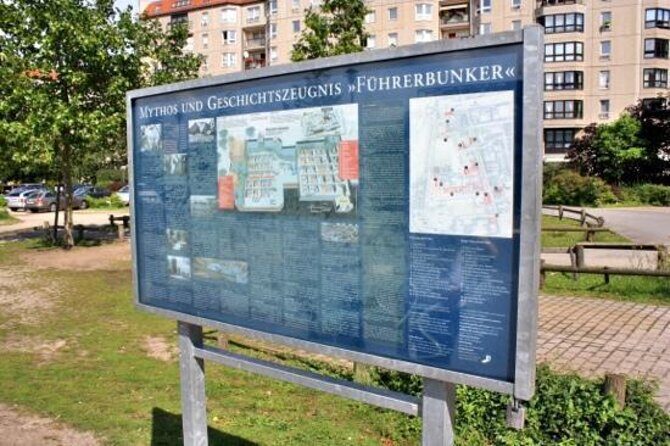
- Admissions included for both the Holocaust Memorial and Hitler’s Bunker site
- Built for first-timers, using major landmarks to connect WWII to the Cold War
- Small group size (max 25), which usually keeps the experience conversational
- Morning finish makes it easier to plan lunch right after
- All-weather walking, so good shoes matter more than you think
A fast route that actually explains Berlin’s past
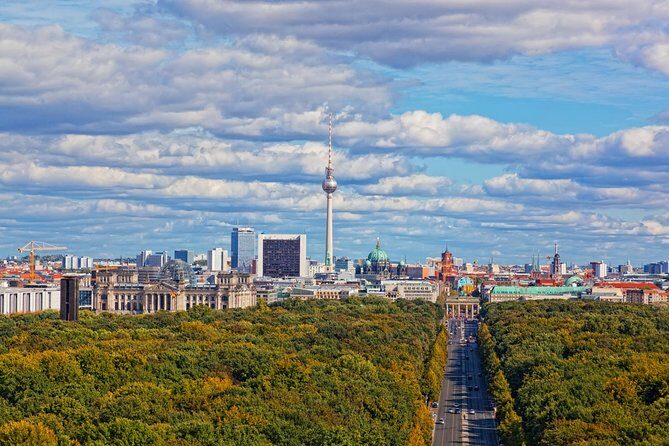
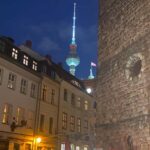
Berlin can feel like it has two cities living on top of each other: the pre-war and post-war story, and then the Cold War overlay. This tour helps you sort that out fast. You start in the modern city at Potsdamer Platz, then you move into the WWII and Nazi era sites, and finally you land at Cold War and reunification symbols like Brandenburger Tor.
The best part is that the tour isn’t just “see this, then take a photo.” The guide frames each stop so you understand what you’re looking at and why it matters today. In French, the explanations tend to stay clear and structured, and several past guides (like Anouk, Martin, Paul, Céline, and Arthur) have been praised for being articulate, well-prepared, and responsive when people ask questions.
You do walk a lot, but it’s paced like a city tour, not a forced march. And because it runs in the morning, you get your history dose without stealing your whole day.
You can also read our reviews of more walking tours in Berlin



Morning start: Potsdamer Platz to Checkpoint Charlie
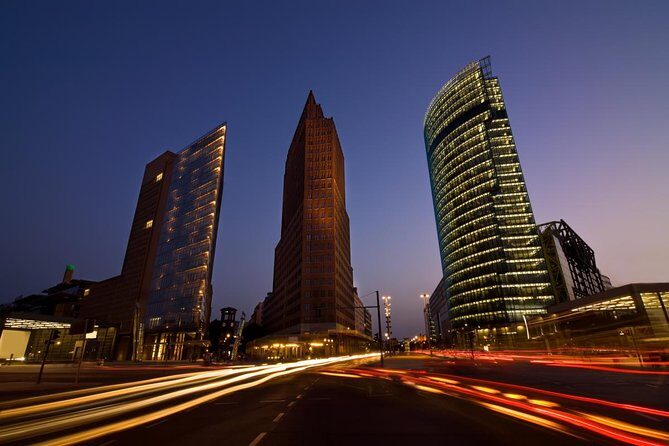
You meet at Potsdamer Platz 10, near the corner of Gabriele-Tergit-Promenade. That’s a smart starting point. Potsdamer Platz is one of those places where Berlin feels modern and built-up, and it gives you a baseline before the tour turns heavy.
This first stretch also sets the rhythm. The tour moves you through major landmarks without you having to figure out what goes where. You’ll also get the feel of the area around Potsdamer Platz and the Sony Center zone mentioned in the tour description, which helps connect the city’s “new Berlin” look with what came before.
Next up is Checkpoint Charlie, a Cold War hotspot made symbolic by the East-versus-West confrontation lasting decades. Even if you’ve read about the Berlin Wall era, walking past a landmark like this is different. It makes the Cold War idea physical. Your guide’s job here is to connect the emotional weight of the era to the simple fact that Berlin was split by politics for a long time.
Admission is listed as free at Checkpoint Charlie on this tour, so you’re not paying extra just to stand where the Cold War story became a public reality.
The hardest part: Fuhrerbunker and the Holocaust Memorial
Two stops define the tone of this tour: the Fuhrerbunker site (Hitler’s bunker) and the Holocaust Memorial. These aren’t quick photo breaks. Expect time to slow down and listen.
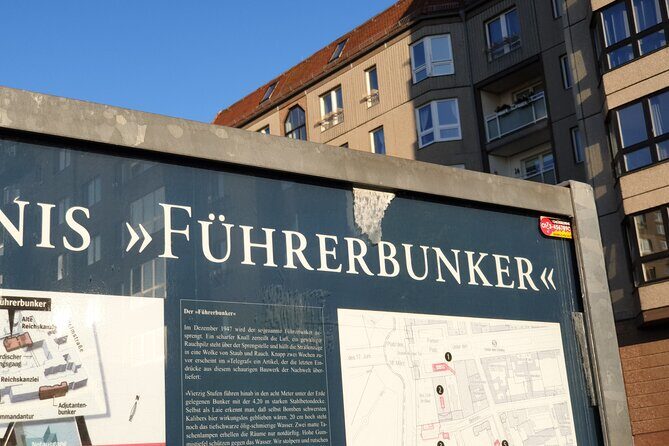
At the Fuhrerbunker stop, you’re visiting the place where the bunker was and where Hitler spent his last days. The guide explains the meaning of the site and why it looks the way it does now. That last part matters. A lot of tours stop at describing the horror. Here, the emphasis is also on context—how a location carries history forward, even after the physical era is gone.
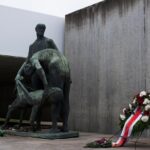
Then you reach the Memorial to the Murdered Jews of Europe. This is one of those places where you feel the weight immediately. The tour description calls it a symbol in Berlin remembering the greatest crime committed by the German state during the Nazism period, and the guide’s storytelling is meant to make the experience emotionally real without turning it into spectacle.
A few practical notes for this section:
- You’ll want to dress and behave respectfully. This is not a casual wander.
- Give yourself mental space. The tour is only about three hours, but the subject matter is intense.
- Stay with the group so you don’t miss the guide’s framing, because that framing is part of what makes these stops more than “standing in front of a monument.”
Admission is included here, so you don’t have to juggle tickets mid-tour.
Under Den Linden: reading the city’s scars in architecture
After the heavy stops, the route eases into something more architectural and visible: Unter Den Linden. This famous avenue is described as once being the access road to the emperor’s palace, and the guide points out how you can recognize different construction periods.
The added bonus is that you’ll also hear about wounds left by the war—how the city’s physical shape carries the history of destruction and rebuilding. That’s the kind of detail you can’t reliably pick up from a phone screen, because it’s learned by being shown where to look.
This is also a good stretch to ask questions. In the reviews, guides like Anouk and Jean-Charles were praised for being articulate and answering people well, and Unter Den Linden is the sort of place where questions pop up naturally: What changed? Why does it look this way? How do you read the layers?
Admission is included for this stop, so it’s part of the paid experience rather than a grab-and-go stop.
Bebelplatz: book burning, a university, and a cathedral square
Bebelplatz is a fascinating shift in tone because it brings together three threads in one place: Nazi book burning, education at Humboldt University, and the presence of the Catholic Cathedral.
The tour description specifically mentions the square as the site of the burning of books during the Nazi dictatorship, and it also notes Humboldt University and the cathedral. That combination works well on a walking tour because you’re seeing ideology, intellectual life, and religious life in the same visual frame.
If you’re the type who likes history that connects to ideas (how power tries to control what people read), this stop is a strong mid-tour moment. It also helps break up the density of the WWII sites by shifting from memorial and bunker to a public square with institutions.
Admission is included here too, keeping the tour streamlined.
You can also read our reviews of more guided tours in Berlin



Museum Island finish and Brandenburger Tor: Cold War to reunification symbols
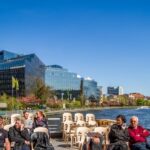
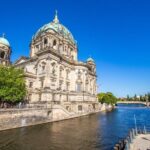
The tour concludes near Museum Island, close to Alexanderplatz on the Museum Island area described. Museum Island is presented here as a stop where you’ll see the Berliner Dom (Protestant Cathedral) and the reconstructed Humboldt Forum.
That matters because the tour’s structure is basically a timeline in motion:
- Nazi Germany era through the bunker and Holocaust Memorial
- The post-war city through rebuilding and architectural change
- Cold War symbols through Checkpoint Charlie and Brandenburger Tor
- Reunification symbolism through the story behind Brandenburger Tor
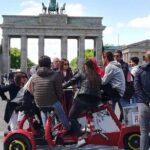
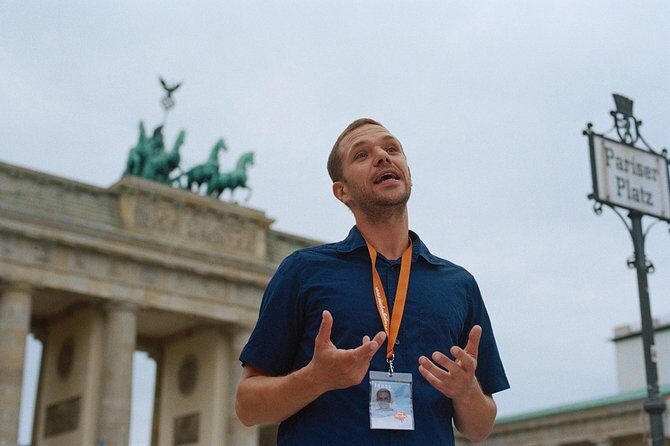
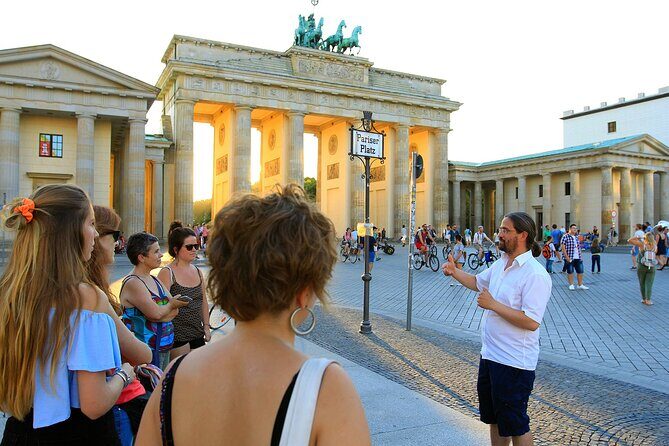
Then, one of the final stops is Brandenburger Tor, Berlin’s most famous gateway. The guide explains its story moving from a symbol tied to a king’s strength into a Cold War symbol, and finally into one of the symbols of German reunification. It’s hard to overstate how useful it is to hear that narrative out loud while you’re standing there. The landmark becomes more than a postcard; it turns into a timeline you can feel.
Admission is included for Brandenburger Tor, and Museum Island’s portion is marked as free at the end of the walk.
What you’re really paying for (and what you’re not)
At $27.81 per person for an approx 3-hour tour, the pricing looks low for what you get—especially because admission is included for two of the most important and ticketed parts of the route: Hitler’s Bunker and the Holocaust Memorial.
You’re also paying for professional French-speaking guiding and local taxes. And the tour runs with a maximum of 25 people, which usually helps the guide manage pacing and keep explanations audible.
What’s not included is also important:
- Transportation to and from the attractions (so it’s best if you’re already in central Berlin)
- Food and drinks (the plan is to finish in time for lunch, so eat after rather than during)
- Tips for the guide (optional)
If you like structured city walking and you want major Berlin sites covered without ticket hassle, the value is strong.
Who this tour suits best
This is ideal for:
- First-time Berlin visitors who want their bearings and a story that connects major eras
- People who prefer walking tours with frequent stops and explanation, not audio-only sightseeing
- Travelers comfortable with a moderate walking pace and time outdoors in different weather
It’s also a good option if you’re traveling solo or as a small group, since the tour is capped at 25 and the guide is described as responsive to questions.
If you’re looking for something lighthearted or mostly about entertainment, you’ll feel the shift in tone once you reach the Holocaust Memorial area. This tour is history-forward, with emotion built into the route.
A practical tip for enjoying it more
Bring a curious mindset and plan to listen more than you photograph.
This route is designed around understanding: why each place exists and what it means in Berlin today. If you show up ready to pause, the stops land harder—in a good way. And if you’re hoping to hear everything, stay near the front when you can, since audiophones are not listed as part of the setup.
Should you book this Berlin History Walking Tour?
Yes, if you want a French-guided, high-value overview that connects WWII, Nazi sites, and Cold War symbols to Berlin’s modern layout. The inclusion of admissions for the Holocaust Memorial and Hitler’s bunker site is a big plus, and the morning timing is practical for lunch.
I’d think twice only if you strongly need headsets/audiophones for hearing comfort, or if you prefer history without emotional memorial and bunker context. Otherwise, this is a smart way to see the essentials in just a few hours and walk away with a clearer picture of how Berlin got from then to now.
FAQ
What language is the tour in?
The tour operates in French with a professional French-speaking guide.
How long is the Berlin history walking tour?
It lasts about 3 hours (half-day).
Where does the tour start and end?
It starts at Potsdamer Platz 10, 10785 Berlin (near the corner of Gabriele-Tergit-Promenade) and ends next to Museum Island at Museumsinsel, 10178 Berlin.
Is a mobile ticket provided?
Yes, the tour uses a mobile ticket.
What’s included in the price?
Local taxes, a local guide, and a professional French-speaking guide are included. Admission tickets are included for specific stops (including Hitler’s Bunker and the Holocaust Memorial).
Are there any admissions you still have to pay for?
Checkpoint Charlie and the Museum Island portion are listed as free on this tour, while other stops have admission included. Transportation, food, and drinks are not included.
What should I wear or prepare for?
The tour runs in all weather conditions, so dress appropriately and plan for outdoor walking. You should have a moderate physical fitness level.
Is tipping required?
A tip for the guide is optional.
Can I get a full refund if I cancel?
Free cancellation is available if you cancel up to 24 hours before the experience starts for a full refund.