REVIEW · FRANKFURT
Frankfurt: Discover the heart of Frankfurt – a city tour in German
Book on GetYourGuide →Operated by WESTPOINT Reise- & Business Service GmbH · Bookable on GetYourGuide
Frankfurt can feel huge until you walk it. This German guided city tour with Dimitri turns the center into an easy, human-scale stroll, linking famous landmarks to the lesser-known lanes that give the city its personality. I love the way you hit major sights like the Römerberg and St. Paul’s Church while still getting detours into quieter alleys and courtyards, and I also love Dimitri’s humor mixed with real context. One consideration: it’s a 2-hour walk on streets and it isn’t suitable for wheelchair users, and some interiors may only happen if openings allow.
Dimitri has lived in Frankfurt for 35 years and brings a very personal affection for the place he calls the smallest big city in the world. You’ll get a tour that doesn’t just list buildings; it connects places such as the Iron Bridge (Eiserner Steg) and the Museumsufer to the way Frankfurt grew. A possible drawback is that St. Paul’s Church and the Kaisersaal in the Römer are not guaranteed parts of the experience if city events or closures get in the way.
You finish back at the Römerberg area, which is a smart way to end. After two hours, you’re not exhausted and lost, you’re oriented, with practical ideas for what to explore next on your own.
In This Review
- Key things you’ll appreciate on this Frankfurt city walk
- Starting at St. Paul’s Church: a good first anchor for your bearings
- Römerberg and the Römer complex: medieval town power made walkable
- Kaisersaal, Kaiserdom, and Kaiserpfalz: why Frankfurt once mattered so much
- Eiserner Steg and Museumsufer: make the Main feel historic, not just pretty
- Medieval streets and quiet corners: Haus Wertheym and the art of the detour
- Roman ruins and old churches: when the center has layered life
- Römerberg to the Neue Altstadt: the New Old Town as a lived photo set
- Art and courtyards near Schirn: Saalgasse, Schirn Art Gallery, and visual rhythm
- Finishing at Römerberg: why ending where you began matters
- Price and value for a 2-hour German walking tour
- What’s included (and what to plan around)
- Who this tour suits best
- Should you book Frankfurt: Discover the heart of Frankfurt (German city tour)?
- FAQ
- How long is the Frankfurt city tour?
- What is the price per person?
- Where does the tour start and how do I find the guide?
- What language is the tour conducted in?
- Is the tour wheelchair accessible?
- What landmarks will we see during the walk?
- Are interior visits included?
- Does the tour include food or drinks?
- Is transport to and from the meeting point included?
- Is a private group available?
Key things you’ll appreciate on this Frankfurt city walk
- Dimitri’s Frankfurt rhythm: humor plus in-depth knowledge, with a guide who truly sounds like he loves the city
- Classic sights, but not the default view: Römerberg, Römer complex, Eiserner Steg, and the Kaiserdom area, seen from smart angles
- Courtyards and hidden alleys: short detours that show why the old center feels lived-in, not staged
- Medieval power stories: remains connected to the imperial palace area (Kaiserpfalz) and what came before today’s skyline
- Bridge-to-river context: the Iron Bridge and Museumsufer explained so the Main feels like part of the history, not just scenery
- Optional interiors when open: brief inside moments may be possible if access and opening times cooperate
Starting at St. Paul’s Church: a good first anchor for your bearings
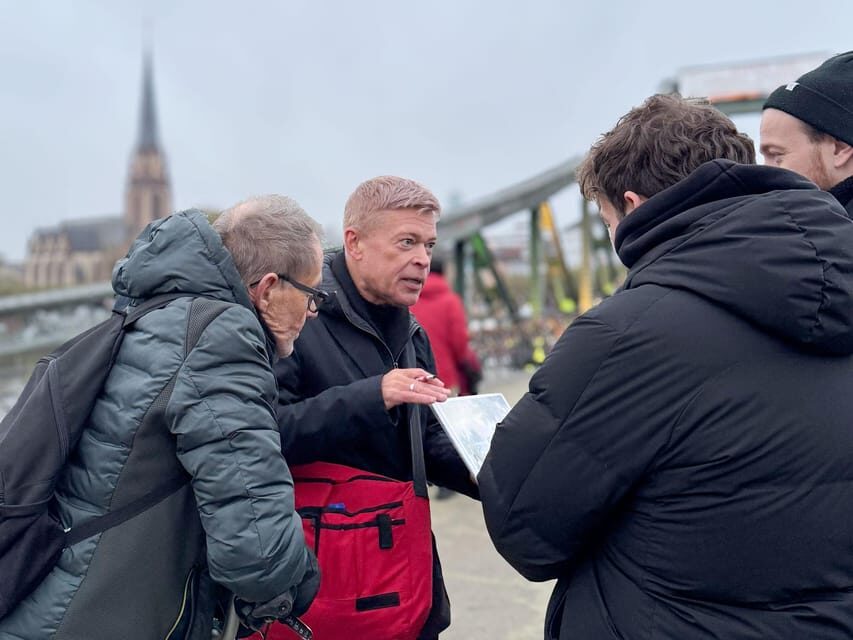
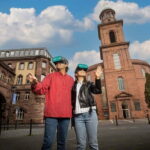
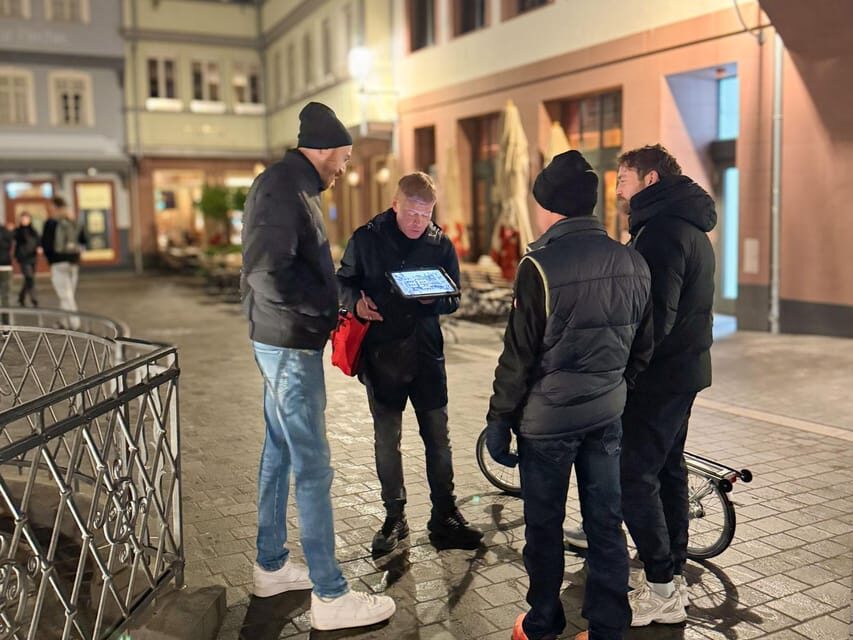
You meet at the main entrance of St. Paul’s Church (Paulskirche) by the sign Erlebnis Frankfurt. It’s a strong starting point because the building immediately signals that Frankfurt isn’t only about commerce and banks; it’s also about ideas and politics. Expect a quick photo stop and a guided look, designed to set the stage before the tour moves into the older, narrower streets.
This first section is also practical. You’ll walk with your guide to get familiar with the compact logic of the center—where squares open up, where streets pinch tighter, and where the big landmarks sit relative to each other.
One reason I like this start for newcomers: it gives you a “north star” sight early. Even if you don’t catch every detail in the explanation, you’ll later recognize the church again as a reference point for where you are.
You can also read our reviews of more city tours in Frankfurt

Römerberg and the Römer complex: medieval town power made walkable
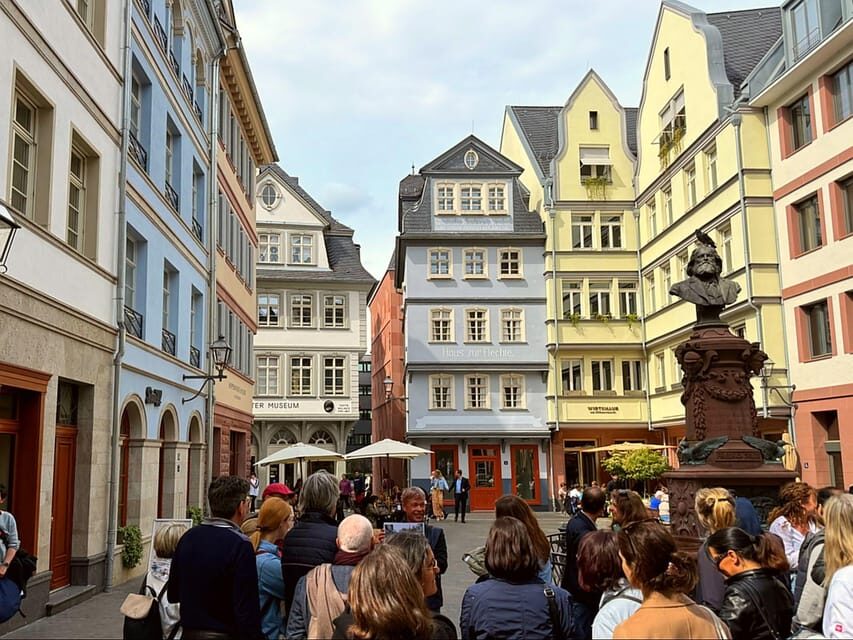
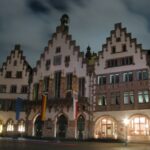
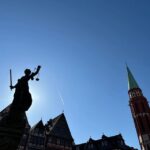
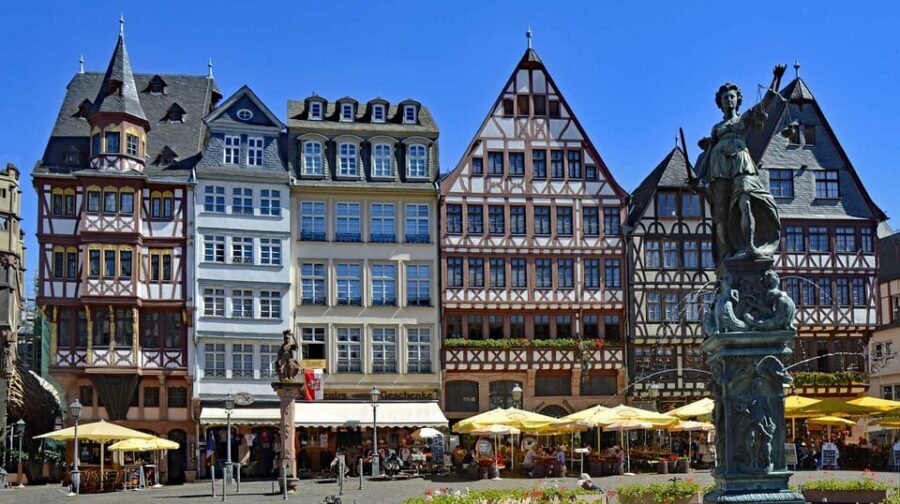
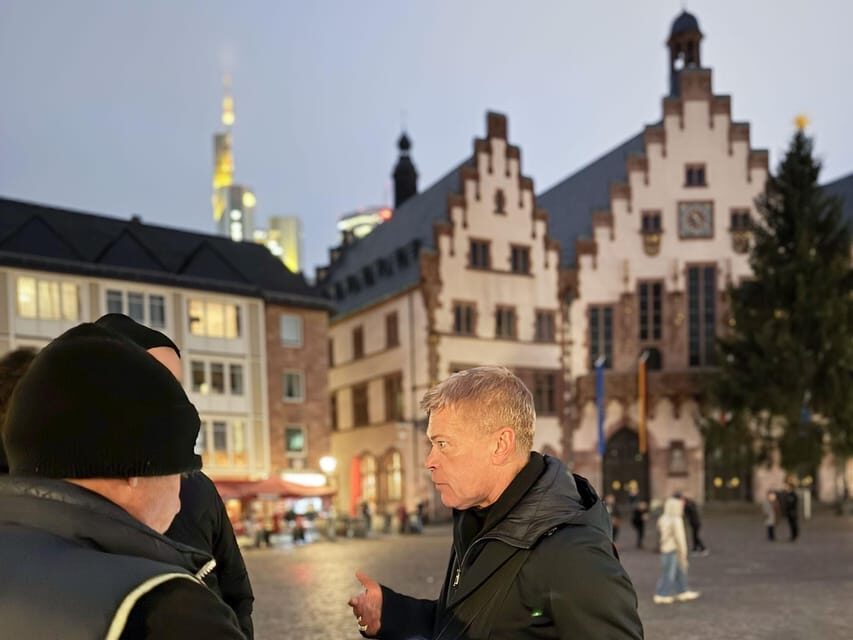
From St. Paul’s Church you quickly reach the heart of the old city: the Römerberg and the Römer complex area. This is where Frankfurt’s civic identity shows up in stone and shape—historic Rathaus vibes, busy square geometry, and that postcard sense of place that still works in real life.
The standout here is how the tour frames the buildings. You’re not only stopping for photos; you’re learning what these spaces meant in their time. The Römerberg connection also matters later in the tour because you end there, so the place goes from “seen once” to “understood.”
If conditions allow, you may get short interior time linked to the Imperial Hall in the Römer. Still, it’s worth keeping expectations flexible: it’s not treated as an obligatory stop if closures or city events interfere.
Kaisersaal, Kaiserdom, and Kaiserpfalz: why Frankfurt once mattered so much
As the tour continues, you’ll move toward the imperial-story cluster around the Kaiserdom and the Kaiserpfalz area, plus a look at the Kaisersaal if access is possible. The key here is interpretation. Frankfurt’s old power isn’t presented as an abstract medieval concept; your guide ties it to physical remains and what still survives today.
This is where Dimitri’s long connection to the city really shows. With someone living in Frankfurt for decades, you can feel the guide explaining not just the “what,” but the “why that still affects how the city looks.” You’ll pick up the sense of Frankfurt as a place that hosted authority, not only trade.
A note for pacing: these sections are short, but the information is dense. If you like to take notes, this is where you’ll want to pay attention early so you don’t scramble later.
Eiserner Steg and Museumsufer: make the Main feel historic, not just pretty
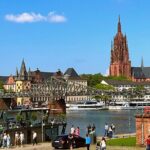
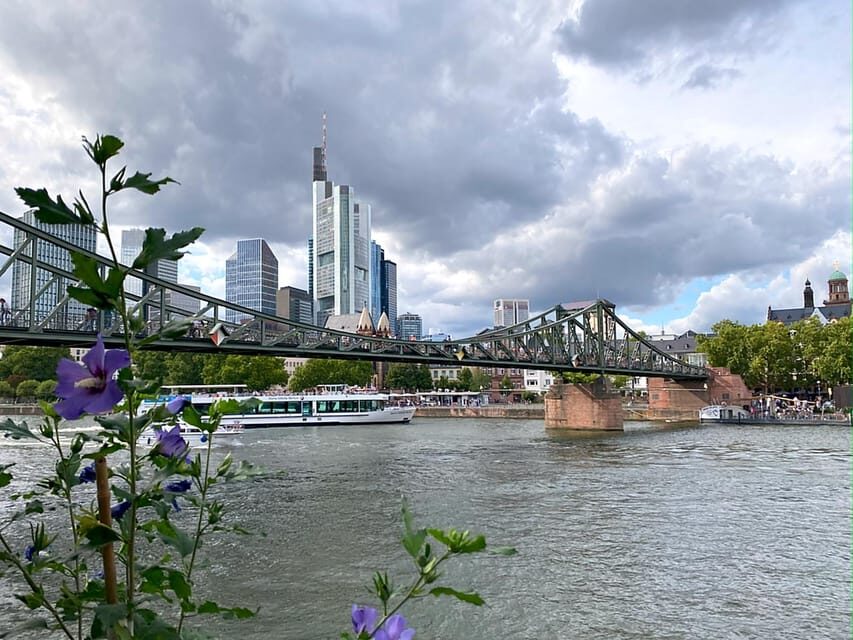
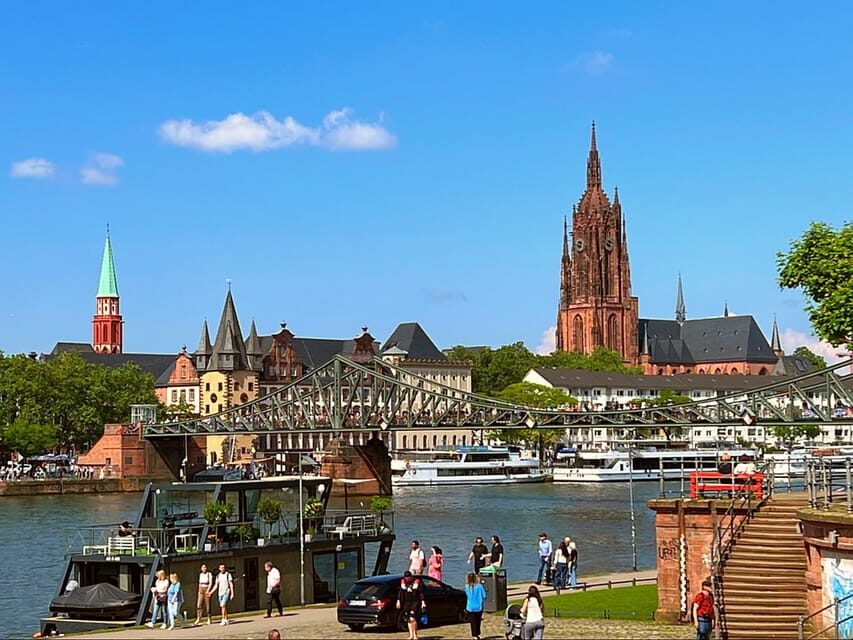
Next comes a classic Frankfurt sight with a strong story behind it: the Eiserner Steg (Iron Bridge). You’ll have a photo stop and guided walk time here, and the tour connects it to the Museum Embankment (Museumsufer).
This matters because bridges and riverfronts are often treated like background. Here, they become part of the city’s logic—how people moved, where attention concentrated, and how the Main shaped development. When your guide explains the connection, you start looking at the riverbanks differently on your own.
Also, the timing works well. With a bridge stop mid-tour, you get a natural break. It resets your eyes after dense old-street walking and gives you space to reorient.
Medieval streets and quiet corners: Haus Wertheym and the art of the detour
One of the most enjoyable parts of the experience is the way you’re pulled off the main sightseeing line and into smaller passages. You’ll pass and stop at places that feel more like real neighborhoods than museum corridors.
A highlight in this zone is Haus Wertheym, where you get another photo stop plus guided tour time. In an old center, buildings like this are clues. They tell you what trade and everyday life looked like when the city core was still physically smaller and socially tighter.
You’ll also encounter historical traces in compact spaces—spots that look modest from a distance but become meaningful when someone explains what they represent. This is a big reason the tour stays entertaining: it keeps switching the focus from “big landmark” to “small clue.”


Roman ruins and old churches: when the center has layered life
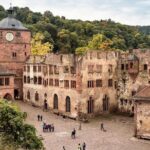
The tour doesn’t stay trapped in medieval time. You’ll also stop for Roman ruins (photo stop and short visit), which is a great reminder that Frankfurt’s story doesn’t start and end with one era. The value of that moment is perspective: you see the center as a layered site rather than a single timeline.
Then the route continues with old-church energy, including a quick stop at Old St Nicholas Church. These short stops are timed to keep momentum, but they still help you connect the city’s spiritual history to the physical layout of the center.
Römerberg to the Neue Altstadt: the New Old Town as a lived photo set
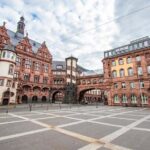
Later, you reach the charming New Old Town Frankfurt area (Neue Altstadt). This part is longer—about 25 minutes—which signals the guide thinks it’s more than just a pretty stretch. You’ll get photo time and guided explanations, and you’ll see how the city’s reconstructed old-town mood blends with genuine street life.
Then you keep moving through a chain of atmospherics and small-city details that help you understand daily rhythm in the center:
- Coffee House to the Golden Scale
- Hühnermarkt
- Neues Rotes Haus
- Krönungsweg
- Goldenes Lämmchen
- Struwwelpeter Museum
- Im Rebstock
I like this stretch because it shifts the tour from “history lecturer” to “storyteller with urban taste.” You start thinking about what kind of trip this city wants to be for you—wander-and-snack, museum-and-coffee, or just slow strolling with curiosity.
One practical tip: this part is also where your phone camera will get a workout. Wear comfortable shoes and plan to slow down when Dimitri asks you to look at a detail. A quick glance can turn into a much better photo when you know what you’re looking for.
Art and courtyards near Schirn: Saalgasse, Schirn Art Gallery, and visual rhythm
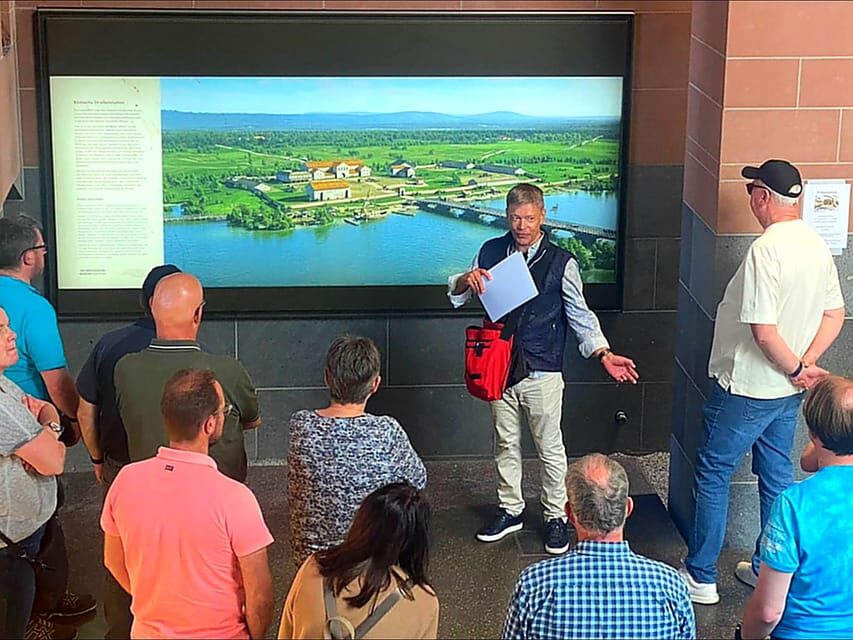
You’ll also pass through the Schirn Art Gallery area with a photo stop and guided walk time, plus Saalgasse. Even if you don’t go inside, these stops matter because they show the visual rhythm of Frankfurt’s center—where art institutions sit near older street geometry.
Saalgasse, in particular, is the type of street you remember. Short lanes like this help you see that the city’s beauty isn’t only in huge buildings; it’s in how streets curve, how courtyards hide, and how the old center keeps offering little surprises between big monuments.
Finishing at Römerberg: why ending where you began matters
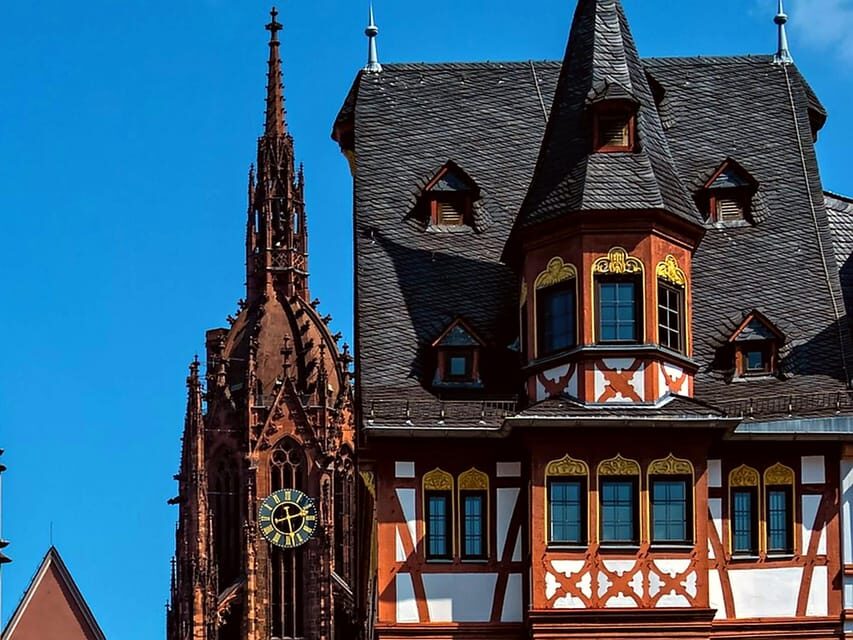
The tour finishes at Römerberg, and ending here is a smart move. By the time you reach it for the last time, you’ve already learned what the square means, where the imperial connections sit around it, and why the Römer complex matters.
If you want to keep the momentum, this ending point makes it easy to extend your day. You’ll already know how to find the main sights nearby, so you can choose a museum stop, a longer river walk, or a relaxed return to cafés without feeling like you’re starting from zero.
Price and value for a 2-hour German walking tour
At $20 per person for 2 hours, the value is in the mix: multiple major landmarks plus detours into less obvious spaces, guided by a certified professional who’s been living in Frankfurt for decades. What you’re really paying for is interpretation—turning a set of famous buildings into a connected city story you can walk again later on your own.
It’s also good to see what’s not included. You won’t be trapped into buying a meal during the tour, and you’ll also handle your own transport to the meeting point. For a short city core walk, that flexibility is a win.
What’s included (and what to plan around)
Included in the experience is a guided tour in German with a certified guide, plus short visits such as the Imperial Hall in the Römer and the Imperial Palace Franconofurd if open. These “if open” caveats are worth noting, because the tour is designed to keep you moving smoothly even when interiors are closed.
Not included: food and drinks, and transport to and from the meeting point. In practice, that means you can treat the walk as your morning or early afternoon “orientation chapter,” then eat when and where you want.
You should plan for weather too. Bring comfortable shoes and an umbrella, and dress for what the day throws at you.
Who this tour suits best
This is a great fit if you want a guided walk that feels like Frankfurt—layered, historical, and slightly playful—without committing to a full day. It also works well if you like compact city centers where one stop leads naturally into the next.
It may not be ideal if you need wheelchair access, since it’s noted as not suitable for wheelchair users. If you’re comfortable walking on city streets for about two hours, you should be in the right zone.
Should you book Frankfurt: Discover the heart of Frankfurt (German city tour)?
I’d book it if your goal is to get your bearings fast and still learn details that make the city feel real. The combination of Dimitri’s energy, the big anchors like Römerberg and St. Paul’s Church, and the detours into courtyards and smaller streets is exactly the kind of “two-hour investment” that pays off later in the trip.
I wouldn’t book it as your only Frankfurt plan if you’re hoping for guaranteed interior access every time. Some interiors, including St. Paul’s Church and the Kaisersaal in the Römer, depend on opening times and city events. But even with that flexibility, the walking route and the storytelling should keep you engaged.
FAQ
How long is the Frankfurt city tour?
It lasts 2 hours.
What is the price per person?
The price is $20 per person.
Where does the tour start and how do I find the guide?
You meet at the main entrance of St. Paul’s Church (Paulskirche) by the sign Erlebnis Frankfurt. The guide waits there and can be recognized by the Erlebnis Frankfurt sign and a guide pass.
What language is the tour conducted in?
The tour is in German.
Is the tour wheelchair accessible?
No. It is not suitable for wheelchair users.
What landmarks will we see during the walk?
You’ll pass or stop for sights such as St. Paul’s Church, Römer, Römerberg, Eiserner Steg, Museumsufer, Kaiserdom, Kaiserpfalz, and the New Old Town, plus several smaller historic points along the way.
Are interior visits included?
Short interior visits may be possible if opening times allow, including the Imperial Hall in the Römer and the Imperial Palace Franconofurd. St. Paul’s Church and the Kaisersaal in the Römer are not obligatory if closures happen due to city events.
Does the tour include food or drinks?
No. Food and drinks are not included.
Is transport to and from the meeting point included?
No. Transport is not included.
Is a private group available?
Yes. Private group availability is listed.