REVIEW · BERLIN
Berlin Cold War & World War II Third Reich Walking Tour
Book on Viator →Operated by Original Berlin Tours · Bookable on Viator
Cold War Berlin still leaves scars on the pavement. This tour connects the rise of Hitler, the fall of the Third Reich, and the Cold War wall years through real, in-the-street stops, led by guides like Miguel who keep the story human and easy to follow with mix of history and street-level detail.
I love the way it turns big events into walkable scenes, from the Reichstag to the East Berlin border-world.
You’ll also like the stop-by-stop variety: not just polished monuments, but war leftovers like the Humboldthain Flak Tower and the off-the-main-route wall traces around Teufelsberg. You get insider context and a chance to ask questions, which is a big deal on a history-heavy walk.
One thing to consider: this is a long walking circuit in all weather, and drinks and snacks are not included. It is easy to underestimate time and comfort, so pack water and plan for steady pace.
In This Review
- Key things you should know before you go
- Walking Berlin’s WWII to Cold War timeline
- Start at Generator Berlin Alexanderplatz: where your story walk begins
- The WWII and Third Reich arc: Reichstag to Karlshorst
- Humboldthain Flak Tower and Prenzlauer Berg: war scars you can still see
- Berlin Story Bunker: Hitler’s shadow and the pull of underground stories
- Palace of Tears and East Berlin: border crossings, escape points, and the system
- Berlin Wall Memorial to East Side Gallery: visible reminders of division
- Teufelsberg and DDR Watch Tower: wall traces off the main route
- How long it really takes, and what to bring
- The guide experience: why asking questions changes everything
- Price and value: $35.64 for a story-driven day
- Who should book this walk
- Should you book this Berlin Cold War and Third Reich walking tour?
- FAQ
- What is the meeting point for the tour?
- What time does the tour start?
- How long is the tour?
- Is admission included for the stops?
- What is included in the price?
- Are beverages and snacks included?
- Will the tour run in bad weather?
- How much walking should I expect?
- Can I cancel for a full refund?
Key things you should know before you go
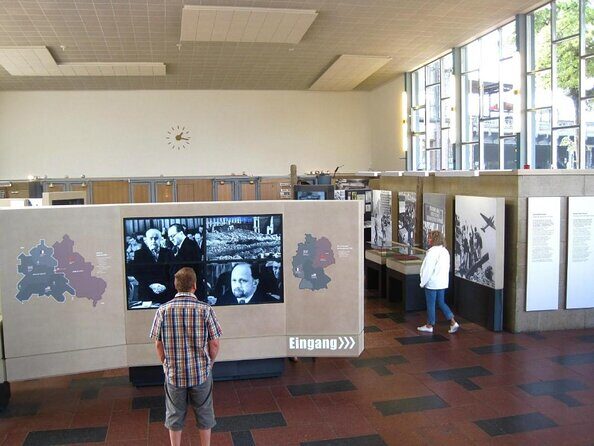
- WWII to Cold War in one route: you connect Nazi Germany to East-West Berlin without jumping around the city.
- A guide-led experience, not just sightseeing: your guide adds stories, context, and follow-up answers.
- War-scar stops, not only postcard sites: flak tower, battle-scar areas, wall remnants, and memorials.
- A clear East Berlin focus: you move east to border, escape, and system-of-control sites.
- Bring weather gear and comfortable shoes: all-weather operation means you will feel every season.
Walking Berlin’s WWII to Cold War timeline
Berlin can feel like a history museum without walls. That is exactly why this kind of tour works: you walk along the same streets where power, propaganda, fear, and resistance all played out. Instead of treating WWII and the Cold War like separate topics, you see how one era built the conditions for the next.
What I like most is the tour’s rhythm. It does not just name buildings; it explains what mattered and why you’re standing there. It also keeps the tone grounded enough to handle heavy topics without turning it into a lecture.
The other thing: this is the kind of walk where you can get your bearings fast. Even if you plan to do more self-guided sightseeing later, you leave with a mental map of how Berlin’s divisions shaped daily life.
You can also read our reviews of more walking tours in Berlin



Start at Generator Berlin Alexanderplatz: where your story walk begins
You meet at Generator Berlin Alexanderplatz on Otto-Braun-Straße 65, right in the Alexanderplatz area. The start time is 12:00 pm, and the tour ends back at the meeting point. That loop matters because it helps you plan the rest of your day without worrying about how to get back across town.
Generator Berlin Alexanderplatz is also a practical choice: it is easy to find and usually well-served by public transit. If you are arriving from another neighborhood, you can sort out your route the morning of your tour and keep your start stress low.
The tour runs in all weather conditions, so take that seriously. Berlin can switch from mild to wet in a blink, and the walk includes multiple outdoor stops.
The WWII and Third Reich arc: Reichstag to Karlshorst
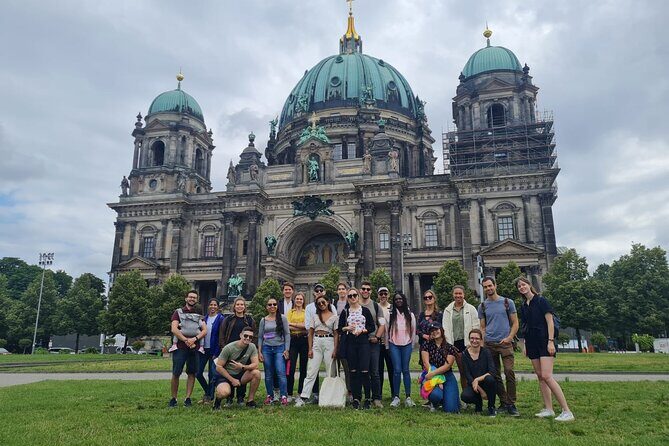
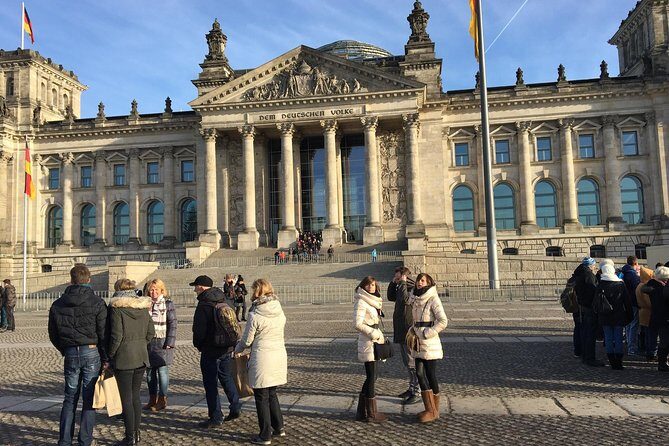
Stop 1 is the Reichstag building, a high-profile starting point for a reason. It is the kind of site where politics and symbolism collide, and your guide uses it as a launch pad into the rise of Hitler and the era that followed. Even though you are not spending hours inside here, you get architecture and event context to frame the rest of the day.
Stop 2 is Museum Berlin-Karlshorst. This is where the WWII story sharpens. The museum stop is designed around WWII historical sights and memorials, and your guide also shares what you might call the human side of the past through stories and even urban legends. It is a short stop, but it sets a clear mood shift from political drama toward real consequences.
Between these stops, you get a useful mental structure: power shifts first, then the war’s reality arrives. That sequence is helpful if you want to make sense of why Berlin later became the Cold War stage.
Humboldthain Flak Tower and Prenzlauer Berg: war scars you can still see
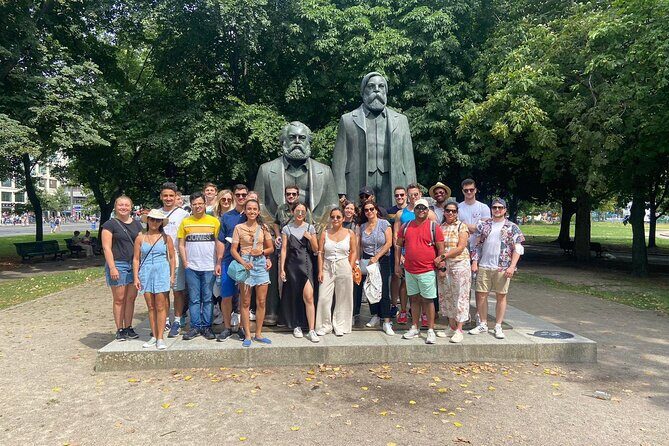
Stop 3 is Humboldthain Flak Tower. This tower is one of those places many people just walk by, which is exactly why it works on a guided tour. Your guide points out details and stories tied to the war, and you get a moment where the pace allows a stop for drinks along the way.
Stop 4 takes you to Prenzlauer Berg, framed through the scars and battlefields left behind during the Battle of Berlin. This is the kind of stop where the streets feel like part of the story. You are not just seeing a site; you are learning how the fighting reshaped neighborhoods.
The value here is interpretation. You learn how to read the city like a document: what got hit, what got rebuilt, and how the geography of Berlin mattered.
Berlin Story Bunker: Hitler’s shadow and the pull of underground stories
Stop 5 is Berlin Story Bunker, presented as the spot where Hitler had his notorious underground lair. Even if underground-shelter tales can sound dramatic, your guide’s job is to keep it grounded in what the site represents and why it has become part of Berlin’s memory.
This stop is also a reminder that history is not only what happened. It is also what people later talked about, feared, and turned into legend. That makes the Story Bunker a useful counterpoint to the more official memorial tone you’ll hit later.
If you like your history with a bit of drama, this is likely the most narrative stop on the route.




Palace of Tears and East Berlin: border crossings, escape points, and the system
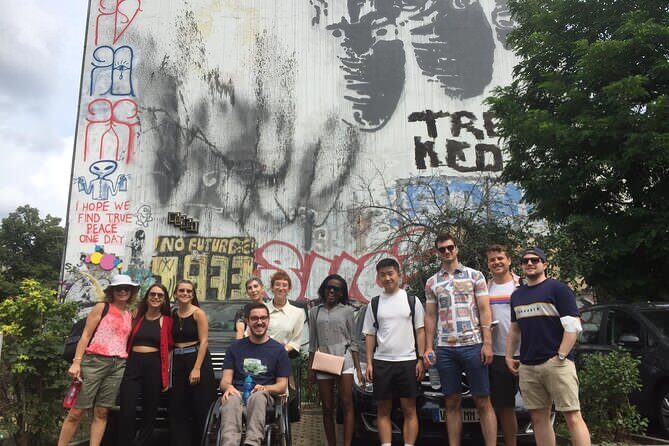
Stop 6 is Palace of Tears, and it is one of the most important theme shifts on the itinerary. The tour heads east to understand Cold War Berlin and communism Berlin through boarding crossings, escape points, and other landmarks tied to how the system worked.
This is the part of the day that helps you move from general Cold War facts to how life changed for ordinary people. Even with short time windows at each stop, your guide connects the dots between borders, rules, and the emotional weight of separation.
One practical note: this segment is often the most memorable, so it helps to be mentally ready. If you have limited attention that day, take a breath before you head into the East Berlin phase. You’ll get more out of it.
Berlin Wall Memorial to East Side Gallery: visible reminders of division
Stop 7 is the Berlin Wall Memorial. This is where you see still-visible sections and reminders of the wall’s impact. Your guide frames it as a Cold War reality with long consequences, not just a construction project.
Stop 9 is the East Side Gallery, and it is a contrast stop in the best way. The story here is about how the conflict between east and west culminated at the wall, and how the area became part of what people saw, painted, argued about, and remembered. It is still a wall site, but the mood can feel different because it connects history with public expression.
I like pairing these two moments. You get the physical wall first, then you see how the wall’s story was retold in art and public memory.
Teufelsberg and DDR Watch Tower: wall traces off the main route
Stop 8 is Teufelsberg, where you can see major landmarks left behind by the wall, including the east side gallery area, guard towers, and a wall memorial. The tour also emphasizes off-the-beaten-path wall sights, which is a smart way to avoid feeling like you’re only doing the most obvious photo stops.
Stop 10 is DDR Watch Tower. This is where the narration shifts toward escape stories and forced conscription. It is the kind of stop that can hit hard, because the guide’s focus is not only on buildings but on what people faced.
If you are the type who likes your history to include both structure and human stakes, these two stops are often the payoff.
How long it really takes, and what to bring
The itinerary lists a 6-hour duration approx, but the day can flex based on pace and questions. Some people may find it shorter than expected; others may notice it running longer than a quick browse. Either way, treat it as a half-day walking commitment.
Because drinks and snacks are not included, you should bring water. You might also want something small to eat. Even though the route suggests there are times to pause, it is smarter to avoid being forced into expensive, time-wasting purchases.
Comfort gear matters. Reviews-style feedback points to the importance of comfortable shoes, and Berlin weather can be unpredictable. If you go in cloudy or rainy conditions, bring an umbrella or rain layer. A dry day makes the story easier to absorb.
Physical fitness level is listed as moderate. If you’re comfortable with steady walking and outdoor time, you will likely be fine.
The guide experience: why asking questions changes everything
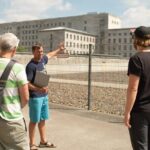
This tour is all about the local guide. You do not just receive directions; you get a narrative that ties each site to the wider WWII-to-Cold War story. Guides are described as friendly, funny at times, and willing to go deeper when people ask follow-up questions.
That question-friendly format matters more than it sounds. A good tour turns the stops into answers to your own curiosity. If you show up wondering how border control worked, you will leave with clearer language for what you saw. If you show up wanting WWII basics, you will still get a structured timeline.
Guides you might encounter include Miguel and Arthur, mentioned by name in past experiences. Even without those exact guides, the goal is consistent: make the sites feel alive through story, not just facts.
Price and value: $35.64 for a story-driven day
At $35.64 per person, this is priced like an affordable history fix rather than a premium, ticket-heavy museum day. The biggest value is that you’re paying for a guide to connect places that otherwise would feel disconnected.
It also helps that many stops in the itinerary are marked as admission ticket free. That means you are not stacking extra entry fees on top of the tour price for each location. You still need to cover your own snacks and drinks, but the ticket side is mostly handled.
In plain terms: you are buying time-efficient learning. You get multiple iconic and scarred sites without planning an entire multi-stop route yourself.
Who should book this walk
This is a strong match if you want:
- A single guided route that links WWII, the Third Reich era, and the Cold War.
- A walking tour that includes major Berlin landmarks plus less obvious wall traces.
- A history format where you can ask questions and steer the depth.
It can be less ideal if you want deep technical detail on one specific topic. The itinerary is packed with many short stops, so the day works best as a guided overview. If you fall in love with one area like Berlin Wall escape stories or WWII endgame, you’ll probably want to add a museum visit afterward.
Should you book this Berlin Cold War and Third Reich walking tour?
I’d book it if you want a practical, story-led half-day that helps you understand modern Berlin without needing a separate planning spreadsheet. The mix of Reichstag, WWII memorial context, war-scar stops, and East Berlin boundary history gives you a strong foundation.
Skip it or swap it if you hate walking, need lots of indoor time, or only want one narrowly focused theme. Also think twice if you are trying to do this as a casual stroll with no attention span for serious topics. This tour asks you to pay attention, and that is the point.
FAQ
What is the meeting point for the tour?
You start at Generator Berlin Alexanderplatz, Otto-Braun-Straße 65, 10178 Berlin, Germany.
What time does the tour start?
The start time is 12:00 pm.
How long is the tour?
The duration is listed as about 6 hours.
Is admission included for the stops?
The itinerary lists admission ticket as free for the major stops shown.
What is included in the price?
The local guide is included.
Are beverages and snacks included?
No. Beverages and snacks are not included.
Will the tour run in bad weather?
Yes, it operates in all weather conditions, so dress appropriately.
How much walking should I expect?
It is a walking tour with a moderate physical fitness level requirement, so wear comfortable shoes and expect outdoor walking between multiple stops.
Can I cancel for a full refund?
Yes, you can cancel up to 24 hours in advance for a full refund. If you cancel less than 24 hours before the start time, it is not refunded.