REVIEW · PASSAU
Passau: 1-Hour Guided City Walking Tour
Book on GetYourGuide →Operated by Eichberger Reisen · Bookable on GetYourGuide
Passau is a city that makes rivers feel alive. This 1-hour guided walk hits the best sights fast, with a certified local guide bringing the streets to life and giving you natural photo stops like Residenzplatz and the Inn promenade. I especially liked the flood-line details on the Old Town Hall tower and the moment you reach the City of Three Rivers confluence near Veste Niederhaus. One consideration: the tour is in German only, so if you don’t read the language, some of the humor may pass you by.
The best part is the storytelling pace. Even when the cold bites, guides here tend to mix background facts with funny, human bits—one common theme is art and style talk (including Rokoko connections) that makes the city feel less like a checklist and more like a place with a personality.
Because it’s only an hour, don’t plan to wander off. The route is tightly paced, and it can vary slightly by guide—so you’ll want to show up on time and keep moving at a walking-tour tempo.
In This Review
- Key highlights worth showing up early for
- Why Passau’s best “wow” moments fit in one hour
- Meeting at Domplatz: your starting cue is the cathedral courtyard
- St. Stephen’s Cathedral: a famous organ and a simple way to read the building
- Old Town Hall tower and its flood lines: history you can literally measure
- ScharfrichterHaus and the darker thread of local history
- Veste Oberhaus fortress: why 1219 still matters
- Veste Niederhaus and the triple confluence: the City of Three Rivers moment
- The former Jesuit Church of St. Michael: old and new in one glance
- Inn promenade and Residenzplatz cafes: where you can slow down after the sprint
- Price and value: why $10 feels fair for what you get
- Language note: German-only doesn’t kill the experience, but it changes how much you absorb
- How the itinerary stays flexible (and why that’s not a bad thing)
- Who this tour suits best (and who might want something longer)
- Should you book this Passau 1-hour walking tour?
- FAQ
- How long is the Passau 1-hour guided city walking tour?
- What does the tour cost?
- Where do I meet the guide?
- Is the tour in English?
- Are attraction entrances included?
- Will the route be exactly the same every time?
- What is the cancellation policy?
Key highlights worth showing up early for
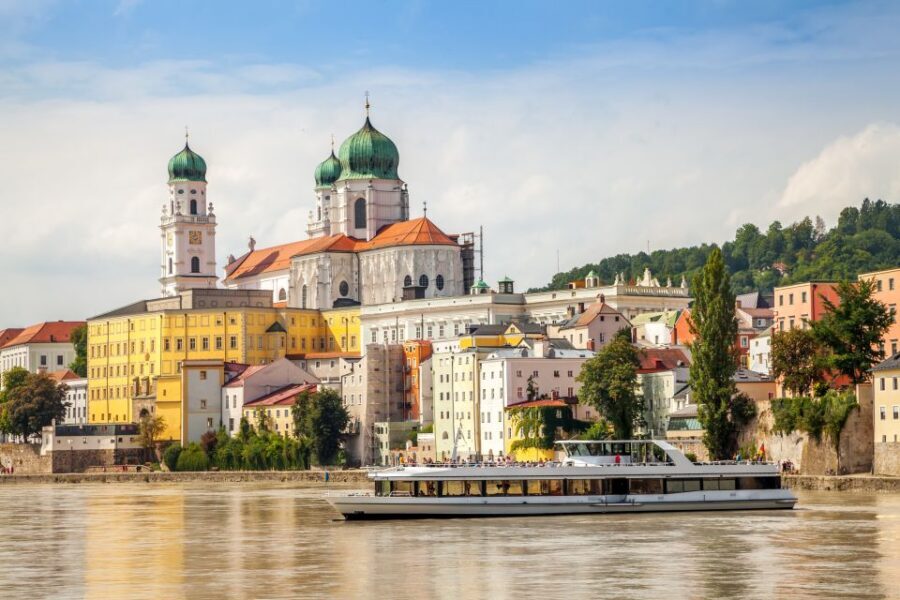
- Flood lines on the Old Town Hall tower turn a normal landmark into a quick lesson about river life.
- ScharfrichterHaus adds a sharp, surprising historical angle beyond the obvious postcard views.
- St. Stephen’s Cathedral is a sight stop that also explains why its organ matters worldwide.
- Veste Oberhaus (built in 1219) gives you fortress views and a sense of why Passau needed protection.
- The three-river meeting point by Veste Niederhaus is the payoff for Passau’s famous nickname.
- Inn promenade and Residenzplatz are built for photos and a calm moment to reset your bearings.
Why Passau’s best “wow” moments fit in one hour
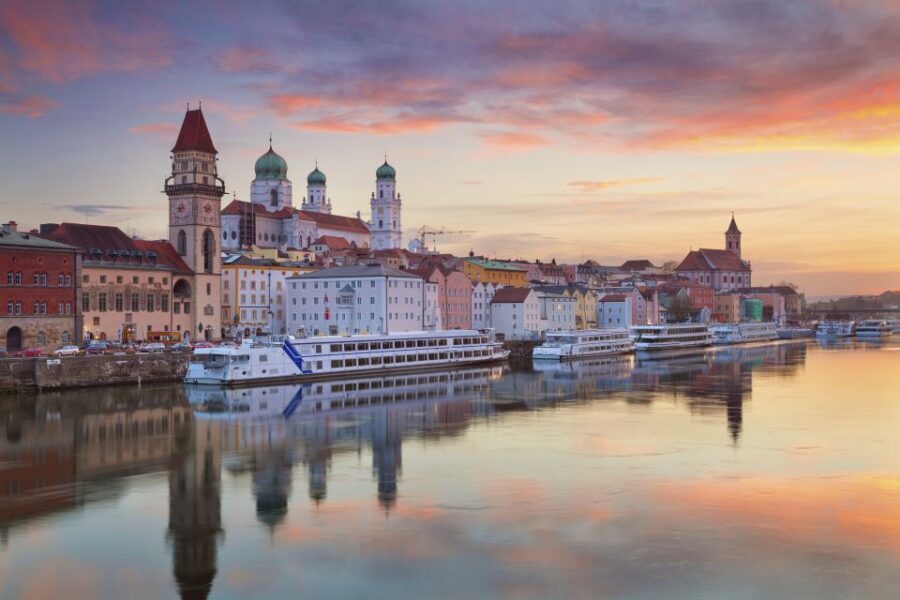
Passau’s magic is that it’s not one river city. It’s a meeting-place city. In a short walk, you get the sense of how the Danube, Ilz, and Inn shape everyday life—where people build, where they fortify, and what they fear when water rises.
This tour works because it doesn’t waste time. You’re not stuck in long museum waits or ticket lines. Instead, you move between tight, meaningful clusters: civic buildings, a famous cathedral, fortress complexes, and then the rivers’ junction where everything makes sense in your head.
The real value is how a good guide turns geography into story. You’ll see the points, but you’ll also understand what they meant—like why flood marks are worth staring at, or why a fortress sits exactly where it does.
You can also read our reviews of more walking tours in Passau


Meeting at Domplatz: your starting cue is the cathedral courtyard
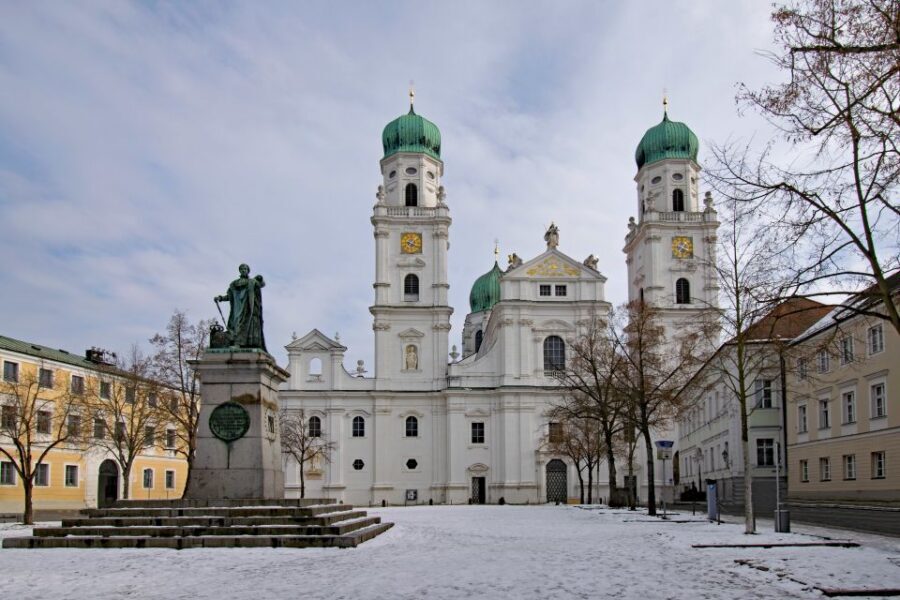
You’ll meet at the cathedral courtyard, Domplatz (94032 Passau), right at the main cathedral entrance area. This is a smart starting point because it’s central and easy to orient yourself with the river system in the back of your mind.
Right away, you get a “street-level map.” As you walk out, the guide ties the city layout to what you’ll see next: Old Town Hall tower, cathedral views, and the way the fortress areas rise above the water.
If you’re planning photos, this is where you want to do a quick warm-up shot. The cathedral setting gives you a clean visual anchor before the route starts weaving through tighter streets.
St. Stephen’s Cathedral: a famous organ and a simple way to read the building
You’ll stop at St. Stephen’s Cathedral and learn why it’s famous for having the largest cathedral organ in the world. Even if you don’t go inside, you’ll still get the key idea: this church isn’t just pretty stone. It’s a sound-and-sight landmark that helps explain Passau’s cultural pull.
A good guide here also helps you “look like a local.” You’ll likely notice architectural cues and how the church’s presence dominates the center. That matters, because Passau’s story is visual. If you only pass the cathedral without context, you miss the reason it stays in your memory.
Practical tip: If you can, pause for a full minute at your stop. That small pause makes it easier to hear the organ fact and connect it to the scale of the cathedral space.
Old Town Hall tower and its flood lines: history you can literally measure
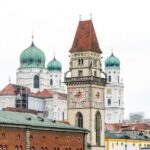
One of the tour’s standout moments is the Old Town Hall and its tower, including the flood lines. These marks are the city’s direct way of telling you what water can do—no long speeches required.
Here’s the useful part: flood lines aren’t just scary. They’re practical. They explain why Passau built certain landmarks where it did, why certain viewpoints matter, and why the rivers are never background scenery.
If the weather is damp or icy, this is also a good place to slow down. Let your brain connect the day’s real weather to what the markers show about past water levels. It makes the whole walk feel more grounded.
ScharfrichterHaus and the darker thread of local history
You’ll also see ScharfrichterHaus, described as a national historical treasure, and you’ll hear the story connected to the theater angle mentioned on the tour. This stop is valuable because it breaks the “only pretty buildings” rhythm.
Passau has layers—civic pride, religious landmarks, and also darker municipal history. ScharfrichterHaus helps you understand how a town managed fear, justice, and public life. Even without going inside, the stop gives you a richer mental picture of what Passau was doing centuries ago.
If you like stories that go beyond postcards, you’ll probably latch onto this part. It also gives the guide a chance to be funny without turning the history into fluff, which is a balance this tour seems to handle well.
You can also read our reviews of more guided tours in Passau
Veste Oberhaus fortress: why 1219 still matters
Next comes Veste Oberhaus, the fortress on the left bank of the Danube. You’ll admire it as it towers over Passau, and you’ll learn it was built in 1219.
That date isn’t trivia. It tells you this wasn’t a decorative castle. It was an answer to control, defense, and strategy—especially important in a city shaped by powerful waterways. When you look up from street level, you start understanding how the fortress would protect the city and watch the river routes.
Practical tip: Wear something warm enough for “wind from the river.” Even if the sun is out, these viewpoints can feel sharper than you expect on a winter day. If your hands go numb, you’ll lose the joy of paying attention to the details.
Veste Niederhaus and the triple confluence: the City of Three Rivers moment
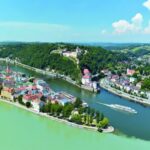
This is the tour’s headline scene: the point where the Danube, Ilz, and Inn meet next to Veste Niederhaus. It’s where Passau earns the nickname City of Three Rivers, and where all the earlier stops start clicking.
What I like about this kind of geography stop is how quickly it changes your perspective. Before the confluence, you may think of rivers as lines on a map. At the meeting point, you grasp how they actually create space, movement, and identity.
Photo tip: Stand where you can see the water flow direction, not just the landmark. Ask your guide where they want you to look—then snap a shot that includes at least two water sources. Those photos age well because they show the story, not just the scenery.
The former Jesuit Church of St. Michael: old and new in one glance
You’ll also visit the area of the former Jesuit Church of St. Micheal (as the stop is described) where you’ll get a view of the new and old parts of town. This kind of stop is underrated on quick tours because it helps you read the city as it is today, not just as it was centuries ago.
Even if you’re mostly in “see the highlights” mode, this helps you figure out where the modern city sits relative to the historic core. You end up more confident about where to stroll after the tour ends.
Inn promenade and Residenzplatz cafes: where you can slow down after the sprint
By the time you reach the Inn promenade and Residenzplatz, the tour has done its work. You’ve had fortress views, river confluence understanding, and cathedral context. Now you get photogenic space and softer city energy.
You’ll have a chance to take photos especially around the Inn promenade and at Residenzplatz, where you’ll find the cute cafe vibe the tour points out. This matters because one-hour walks can leave you wired. These stops give you an easy moment to breathe, check your phone, and decide what you want next.
Practical move: Plan your next step around food or a short extra walk here. It’s the kind of place where you’ll naturally extend your trip without feeling like you’re wandering in circles.
Price and value: why $10 feels fair for what you get
At $10 per person for a 1-hour guided walking tour, the value is strong if you like context. You’re paying for a local, certified guide who can connect architecture, history, and river geography in real time.
The key value isn’t just that you’ll see landmarks. It’s that you’ll understand why each spot matters. In a city like Passau, that difference is huge. Without context, you might admire towers and fortresses. With context, you start seeing the logic behind the city’s layout and the meaning behind things like flood lines.
One small reality check: entrances are not included, so treat this as a walking-and-seeing tour rather than an all-access sightseeing pass.
Language note: German-only doesn’t kill the experience, but it changes how much you absorb
The tour is offered in German with a live guide. If you speak some German, you’ll probably enjoy the jokes and insider asides more fully. If not, you can still enjoy the route and visuals, but you’ll want to rely more on what you can read and observe.
The good news is that a walking tour like this still works visually. You’ll see the cathedral, the tower and flood marks, the fortress areas, and the confluence. Even without perfect comprehension, you’ll come away with the main story of why Passau is so river-connected.
If you’re worried about language, come with one advantage: patience. A guide’s pace usually gives you time to catch key words and follow cues for where to look.
How the itinerary stays flexible (and why that’s not a bad thing)
You can expect the route to be planned individually by each guide, so the itinerary may vary slightly. That’s often a positive on short tours. It means the guide can adjust based on crowd flow, weather, or what they think will land best for their group.
Still, you should show up knowing the core “spine” of the walk: cathedral area, Old Town Hall tower with flood lines, ScharfrichterHaus, St. Stephen’s Cathedral stop, fortress views at Veste Oberhaus and Veste Niederhaus, and the three-river meeting point.
Who this tour suits best (and who might want something longer)
This one-hour tour is great for you if:
- You want a high-signal overview without ticket lines
- You love stories connected to real places—especially river history
- You like photos, viewpoints, and learning what to look for
- You’re spending only a short time in Passau
It may be less ideal if:
- You want long indoor time at major attractions (entrances aren’t included)
- You need a lot of self-paced wandering time
- You don’t read German and prefer fully detailed commentary
If you’re pairing Passau with other stops, this walk is a smart first move. It gives you a mental map fast.
Should you book this Passau 1-hour walking tour?
Yes, if you want a fast, meaningful Passau introduction with a guide who mixes local knowledge and humor. For $10, the mix of civic landmarks, cathedral focus, fortress viewpoints, and the triple-river confluence is exactly the kind of “starter dose” that makes the rest of your day easier.
I’d book it too if you care about the why behind landmarks—especially the flood-line tower and the river junction near Veste Niederhaus. Those are the moments that turn a simple walk into a memory.
Just be honest with yourself about language. If German commentary isn’t your thing, you can still enjoy the route, but you’ll get more out of it with at least a basic ability to follow along.
FAQ
How long is the Passau 1-hour guided city walking tour?
The tour lasts 1 hour.
What does the tour cost?
The price is $10 per person.
Where do I meet the guide?
Meet in the cathedral courtyard (Domplatz, 94032 Passau). The tour starts at the main cathedral entrance.
Is the tour in English?
No. The live tour guide language is German.
Are attraction entrances included?
No. Entrance fees to attractions are not included.
Will the route be exactly the same every time?
The itinerary is planned individually by each guide, so it can vary slightly.
What is the cancellation policy?
You can cancel up to 24 hours in advance for a full refund.