REVIEW · BERLIN
All-in-One Berlin Highlights on Foot: Private Walking Tour
Book on Viator →Operated by Vexperio · Bookable on Viator
Berlin’s history walks with you. In about three hours, this private tour strings together major Berlin landmarks from the Brandenburg Gate area to Gendarmenmarkt, with a guide who helps you save time navigating. I like how the stops are arranged in a logical story arc, and I like the on-the-ground commentary that turns famous sights into real context; the only drawback is that each place gets a short visit, so you may want to return later if you want more time to sit with the heavier sites.
You’ll get a professional local guide in English, and the experience is set up for your group only, not a chaotic mix-and-match crowd. Pickup is possible after you confirm, the tour uses a mobile ticket, and guide names like Joana show up in feedback for making complicated postwar themes feel clearer and more livable.
In This Review
- Key reasons this walking tour works
- The value of a private Berlin highlights walk (and what you trade off)
- How the “save time navigating” format plays out in real life
- Stop-by-stop: what each landmark adds to the story
- Brandenburg Gate: the monument you recognize, explained like you’ve never heard it
- Reichstag Building: modern democracy next to a dark pivot
- Holocaust Memorial: the “field of concrete stellae” with real human meaning
- Checkpoint Charlie: crossing the East-West line without the confusion
- Topography of Terror: the SS and Gestapo headquarters area
- Fuhrerbunker: the site of the end of Hitler’s WWII story
- Museum Island: UNESCO splendor and the imperial edge
- Bebelplatz: Frederick the Great’s Berlin and the Nazi book burning
- Neue Wache: central war memorial themes with a focused message
- Unter Den Linden: Berlin’s royal mile for a quick reset
- Gendarmenmarkt: the ornate square that contrasts with the hard stops
- Pace, comfort, and what to do with your time after
- Price and value: is $223.24 a good deal for this route?
- Who this private walking tour suits best
- Should you book this Berlin highlights on foot tour?
- FAQ
- How long is the walking tour?
- Is this tour private?
- Does the tour include entrance fees?
- Is pickup available?
- What language is the tour offered in?
- Can I cancel for a full refund?
Key reasons this walking tour works
- A tight 3-hour route that hits Berlin’s big “first time” landmarks in the center
- Strong narrative at emotionally heavy stops, including the Holocaust Memorial and Topography of Terror
- Checkpoint Charlie on the cold-war frontline with the US vs Soviet face-off context (1961)
- UNESCO Museum Island viewpoints plus nearby imperial-era highlights
- Free entries built into the plan, with only the Reichstag not included
- Private pacing where your group can ask questions and keep moving
The value of a private Berlin highlights walk (and what you trade off)
At $223.24 per person for roughly three hours, this is not the cheapest way to see central Berlin. But it can be good value if you’re trying to avoid the usual time sink: wandering, backtracking, and guessing what matters most in each area.
What you’re really buying is a guided route that connects the dots. You start at Am Lustgarten 1 (right in the museum-and-government zone) and finish back near Pariser Platz by the Brandenburg Gate area, so you’re not left stranded across town. The stops are scheduled in short bursts—often 10–15 minutes—so you get a lot of key points without losing half a day.
The trade-off is the pacing. This tour is built for highlights, not deep museum time. Some sites in the itinerary are heavy and deserve slower attention, so if that’s your style, you’ll probably want follow-up time on your own later.
You can also read our reviews of more walking tours in Berlin


How the “save time navigating” format plays out in real life
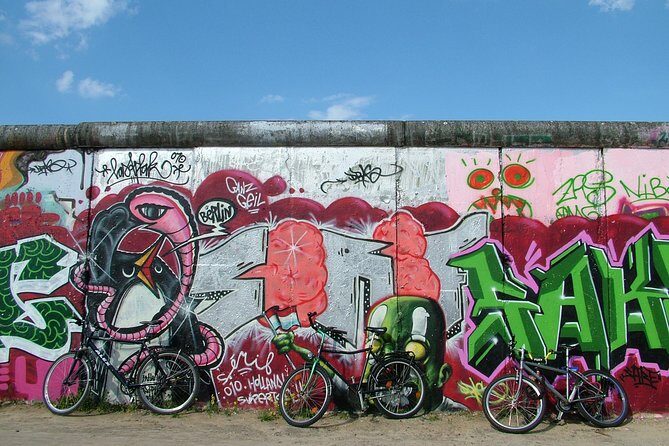
This tour is basically a guided shortcut through central Berlin. Instead of figuring out which landmark is where, you follow a route that takes you from the classic symbolic center outward and then back toward the grand boulevards.
You’ll also benefit from having commentary built into the walk. The tour plan doesn’t just point; it explains why each place matters, including post-Hitler Germany’s shift into modern democracy themes (at the Reichstag area) and the way cold-war walls and intelligence-era tension still shape how Berlin feels.
It’s also designed to be easy to join without special skills. It’s a walking tour, offered in English, and it states that most travelers can participate. Since it’s private, your group gets the guide’s attention without the constant “turn and talk” pressure of large group tours.
Stop-by-stop: what each landmark adds to the story
Brandenburg Gate: the monument you recognize, explained like you’ve never heard it
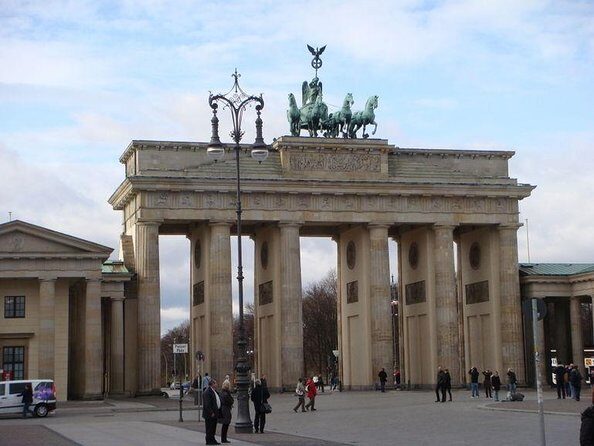
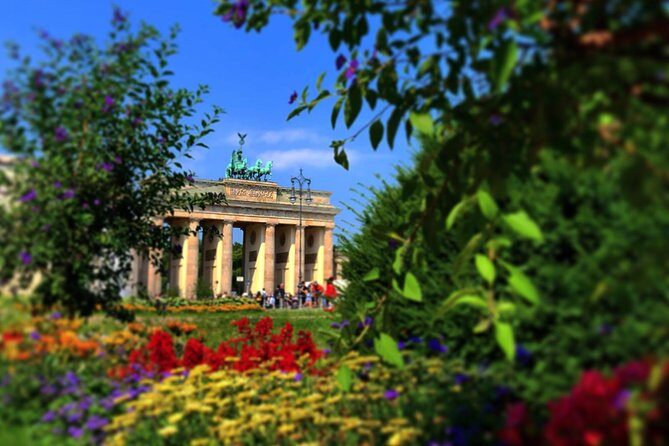
You start at Brandenburg Gate (about 15 minutes), walking through the gateway area of Berlin’s most iconic monument. You’ll get commentary on why the Gate is treated as the most important cultural monument in Germany—an angle that helps you understand why people photograph it from every angle.
This is a good opener because it sets a theme: Berlin as a place where symbols matter. Even if you’ve seen the Gate in photos before, you’ll likely notice how the story of the city keeps circling back to this spot.
If you’re hoping for a long contemplative moment, the time here is short. But as a kickoff for orientation, it’s hard to beat.
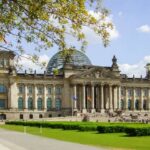
Reichstag Building: modern democracy next to a dark pivot
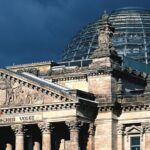
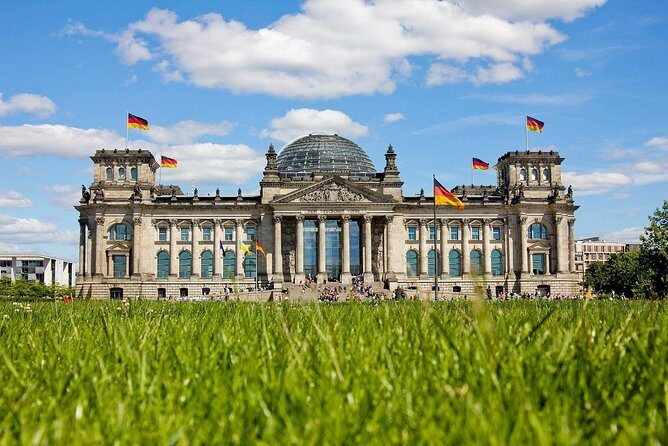
Next is the Reichstag Building (around 10 minutes). The tour focuses on the building’s role after Hitler’s rise—specifically that it was burned down after that rise—and then frames it as a bold symbol of modern German democracy.
This pairing helps your brain do something useful: it connects political rupture to the present-day identity you see in Berlin today. It’s a quick stop, so you’re not going to see everything inside (admission isn’t included), but the guide’s framing makes the exterior feel less like scenery and more like a marker in a timeline.
Practical note: since admission tickets for the Reichstag are not included, expect your visit to center on what you can see from outside and nearby.
You can also read our reviews of more private tours in Berlin


Holocaust Memorial: the “field of concrete stellae” with real human meaning
Then you move to the Holocaust Memorial—Memorial to the Murdered Jews of Europe (about 15 minutes, free). The route takes you through the field of concrete stellae and, importantly, connects the space to atrocity and everyday bravery.
This is one of the stops where pacing matters. You get enough time to walk the area and absorb the guide’s commentary, but not enough for a long, personal pause. Still, having the explanation in place can make your visit feel less like walking through a famous photo and more like understanding what the site is trying to hold.
Checkpoint Charlie: crossing the East-West line without the confusion
Checkpoint Charlie is next (about 10 minutes, free). The tour highlights the idea of crossing from East to West during the cold war’s frontline tension, including spies in the streets and the face-off between US and Soviet tanks in 1961.
The value here is clarity. Berlin’s cold-war landmarks can feel like a scattered set of plaques unless someone organizes the story for you. With this stop, you get a snapshot of how quickly politics could become physical and how close that tension was to ordinary life.
Because it’s a short stop, you won’t get a full deep-history treatment—but you will leave understanding why people still treat this as a high-salience point in Berlin’s modern story.
Topography of Terror: the SS and Gestapo headquarters area
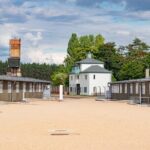
Topography of Terror (about 15 minutes, free) is where the itinerary leans into the “dark heart” of Nazi Germany. The tour focuses on the former SS and Gestapo headquarters site, mentions excavated torture cells, and links the location to a later cold-war symbol: the Berlin Wall.
This stop is powerful because it’s not only about the Nazi era in isolation. The guide helps connect the layers of power that left scars on Berlin’s physical map. You can see how different regimes used Berlin’s central spaces to control, punish, and then—later—define new boundaries.
The potential drawback is emotional load. If your group is sensitive to brutal topics, you may want to build in extra time later to decompress.
Fuhrerbunker: the site of the end of Hitler’s WWII story
The tour then heads to the Fuhrerbunker area (about 10 minutes, free). The focus is on the bunker where history’s most notorious criminal committed suicide at the end of WWII.
This is one of those stops where the guide’s framing helps more than the visuals do. The site is tied to a specific moment, and the tour uses that moment to close a loop on the earlier Nazi-era stops. For me, the benefit of including Fuhrerbunker right after Topography of Terror is the sense of timeline closure—Nazi machinery, its consequences, and then the end.
Again, time is limited, so treat it as a directional marker rather than an extended memorial experience.
Museum Island: UNESCO splendor and the imperial edge
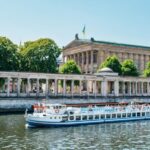
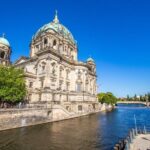
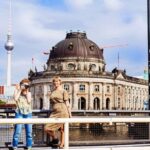
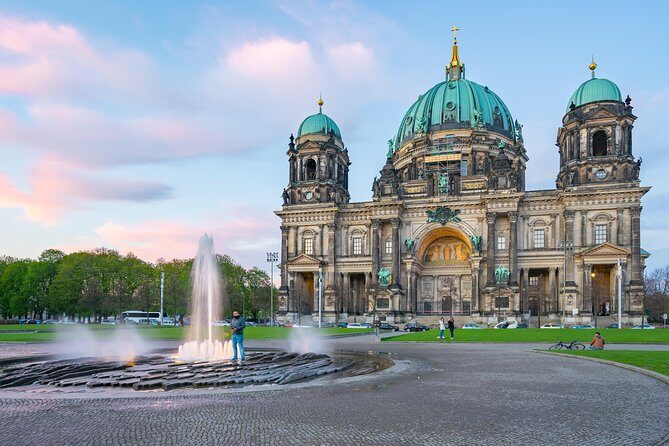
Museum Island is next (about 10 minutes, free). The tour highlights the UNESCO-listed complex and the imperial splendor of the structures you can see in the area, including the Old Museum, the Berlin City Palace, and the Berlin Cathedral.
What you gain here is a change of pace without losing the historical thread. After dark chapters, Museum Island brings back the scale and ambition of earlier eras in Berlin—so your brain doesn’t just treat the city as tragedy.
It’s short, so you’re mostly getting viewpoints and exterior context. But for a first visit, it works well because you’ll then know which museum buildings you actually want to spend time inside later.
Bebelplatz: Frederick the Great’s Berlin and the Nazi book burning
Bebelplatz (about 10 minutes, free) ties architecture and ideology together. The tour points out the 18th-century Berlin associated with Frederick the Great and then visits the site of the Nazi Book Burning on May 10, 1933.
That combination is useful. It reminds you that cultural power isn’t only about grand monuments; it’s also about what gets suppressed. The guide’s commentary helps you see how the same city that celebrates intellect and art can also try to erase it.
If you want to read more, this is a great stop to return to later with a book in hand—just not something you should rush if your mind needs time to process it.
Neue Wache: central war memorial themes with a focused message
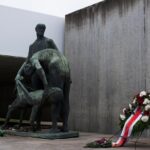
At Neue Wache (about 10 minutes, free), the tour acknowledges victims of two world wars and those murdered at orders of tyrants at Germany’s central national war memorial.
This is a stop that can land differently depending on your group. The guide’s role matters because the memorial language is specific, but people often come with only a general sense of “war happened.” The tour keeps it anchored to victims and orders—so it doesn’t blur into generic commemoration.
Unter Den Linden: Berlin’s royal mile for a quick reset
Unter Den Linden (about 5 minutes, free) is a short but important reset. The tour describes it as Berlin’s royal mile and key historical boulevard.
This is where you feel the city as a place of movement and everyday structure, not only as an archive of events. Since the earlier stops are heavy and factual, this quick boulevard walk helps your legs and your brain keep up.
It’s brief by design, so don’t expect a long stroll. Use the moment to re-orient and get ready for the next landmark.
Gendarmenmarkt: the ornate square that contrasts with the hard stops
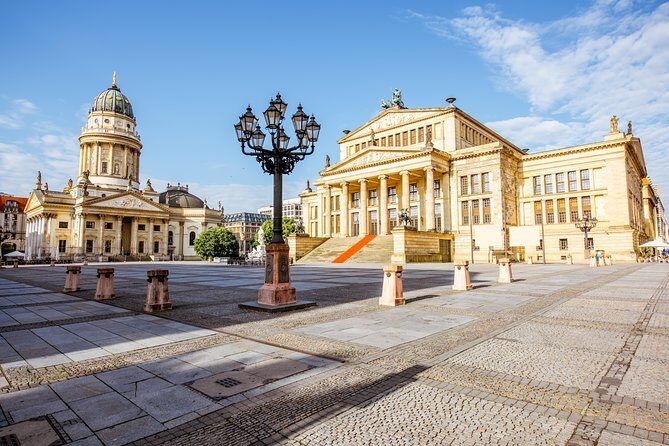
Finally, you reach Gendarmenmarkt (about 10 minutes, free). The tour focuses on the architectural splendor of one of Berlin’s most beautiful squares, including the French and German Domes and the Concert House.
This is a satisfying closing point because it gives you something visually “clean” after the political and memorial themes. It also helps you understand Berlin as layered, not one-note: grandeur can exist in the same city that has also carried extreme violence.
Since the tour ends near Pariser Platz by the Brandenburg Gate area, you’ll likely spend the last minutes feeling like you’ve come full circle—an intentional rhythm for a first-time visit.
Pace, comfort, and what to do with your time after
This is a walking tour with stop times typically around 10–15 minutes and one shorter 5-minute stretch. That means you’ll see a lot, but you won’t “linger.” Plan your expectations like a highlight reel.
For comfort, wear shoes that work for city sidewalks and don’t count on long breaks. Food and drink aren’t included, so decide in advance whether you want a café stop before the tour or a proper meal afterward.
One smart tactic: if a particular site hits you harder than the rest—like the Holocaust Memorial or Topography of Terror—make your plan to revisit later. The tour gives you context; your own time gives you breathing room.
Price and value: is $223.24 a good deal for this route?
Let’s talk value, not just cost. At $223.24 per person, you’re paying for a professional local guide, a tightly planned route, and the fact that many major sights in the center are handled in one go.
Here’s what makes that price feel reasonable:
- You cover multiple top Berlin landmarks in one session, saving navigation effort.
- The guide helps connect each place to broader events, so you’re not just collecting photos.
- Entrance fees are not required on the tour for the stops listed, which reduces surprise costs.
- It’s private for your group, so you’re not stuck waiting for others’ pace.
What could make it feel steep:
- If you already know Berlin well and you’re comfortable self-guiding, you might spend less money and still hit the same areas.
- Since the Reichstag admission is not included, you may need to decide whether you want to do anything beyond the outside view.
Bottom line: if it’s your first time in central Berlin and you want a structured route with explanation, this price is easier to justify.
Who this private walking tour suits best
This tour is especially good if you:
- Want a fast orientation around Brandenburg Gate and central landmarks
- Prefer guided storytelling over reading plaques line by line
- Are okay with heavy topics as long as they come with clear framing
It may not be the best fit if you:
- Want long stays inside buildings or museums
- Need a slower rhythm for memorial spaces
- Are looking for food stops built into the tour (none are included)
Because it’s private, it can work well for couples and small friend groups who want the route without turning it into an inflexible schedule.
Should you book this Berlin highlights on foot tour?
I’d book it if you want a 3-hour primer that connects the big monuments—Brandenburg Gate, Holocaust Memorial, Checkpoint Charlie, Topography of Terror, Museum Island, and more—into one coherent walk. The strongest selling point is the guide-led commentary that helps you understand why these places matter, not just where they are.
I wouldn’t book it as your only Berlin plan. Treat it like the backbone of a first visit. Then build in extra time on your own for any stop that deserves deeper attention, especially the ones that deal with persecution and war.
If you want, you can tell me your travel dates and what you care most about—WWII, cold-war Berlin, architecture, or city orientation—and I’ll suggest how to pair this with a couple of smart follow-up hours.
FAQ
How long is the walking tour?
The tour runs for about 3 hours.
Is this tour private?
Yes. It’s a private tour/activity, and only your group participates.
Does the tour include entrance fees?
Entrance fees are not included, but the tour’s listed stops are free where entry isn’t required. The Reichstag Building admission ticket is noted as not included.
Is pickup available?
Pickup is offered. After confirming the tour, you contact the provider to discuss the starting location and time.
What language is the tour offered in?
The tour is offered in English.
Can I cancel for a full refund?
Yes. You can cancel up to 24 hours in advance for a full refund. If you cancel less than 24 hours before the start time, the amount paid is not refunded.