REVIEW · BERLIN
Third Reich Berlin & World War II Private Walking Tour
Book on Viator →Operated by Tour Up in Europe · Bookable on Viator
Berlin has a second wartime face. This private Third Reich Berlin and WWII walk connects the big monuments to the mechanics of propaganda, terror, and collapse. I like that it keeps things human-sized: short stops, clear explanations, and a guide who can tailor the pace to your questions.
Two things I really like: the Topography of Terror portion includes admission, so you don’t waste time later chasing tickets. And the guides sound seriously dialed-in, with named examples like Sven, Alex, Madeleine, Alexander, and Sigrid, including at least one guide described as having a PhD in WWII history.
One thing to consider: the subject matter is heavy, and the tour moves fairly briskly through major sites. If you want a slow, reflective pace, you may need to add extra time on your own after the official route ends.
In This Review
- Key highlights I’d plan my day around
- Where this tour starts (and how it feels on your feet)
- Reichstag and the Brandenburg Gate: Nazi propaganda in full view
- The Holocaust Memorial: more than a stop you pass through
- Soviet Memorial Tiergarten: remembering the Battle of Berlin’s other victims
- The Führerbunker area at Berlin Story Bunker: the last-days narrative
- Former Luftwaffe HQ to modern Berlin: seeing power repurposed
- Topography of Terror: included admission where the remains meet the records
- Price and what you’re really paying for
- Should you book this Berlin WWII private walk?
- FAQ
- What’s the duration of the private tour?
- Where does the tour start and end?
- Is the tour admission included for all stops?
- What language is the tour offered in?
- Is this tour private or group-based?
- Are there ticket requirements before you go?
- What is the cancellation policy?
Key highlights I’d plan my day around
- Private guide with a personalized route, so you can ask follow-up questions instead of staying stuck in a group script
- Brandenburg Gate and Reichstag framed not as postcards, but as stage sets for Nazi messaging
- Holocaust Memorial treated as a place to understand space and intent, not just a photo stop
- Berlin Story Bunker (Führerbunker site) focused on how the regime’s final days unfolded
- Topography of Terror included admission, giving you access to documents and remains on site
Where this tour starts (and how it feels on your feet)
You begin near Brandenburg Gate at Pariser Platz and you end at Checkpoint Charlie on Friedrichstraße. That matters because it strings together central Berlin’s most important WWII-era locations in a logical sweep, instead of sending you crisscrossing across the city.
This is private, meaning it’s only your group. You’ll get a guide and a route built around your pace, plus a mobile ticket for smoother entry where needed. The walking time is set for about 3 hours, with a handful of short stops that average roughly 10 to 30 minutes each. In practice, that works well if you want the main story arcs without turning your day into a long marathon.
Logistically, it’s also friendly: it’s near public transportation, and service animals are allowed. The tour is offered in English, and if you care about language fit, you’ll want to confirm that at booking—one guide name in the feedback set suggests the operator has supported other languages for some groups.
You can also read our reviews of more walking tours in Berlin



Reichstag and the Brandenburg Gate: Nazi propaganda in full view
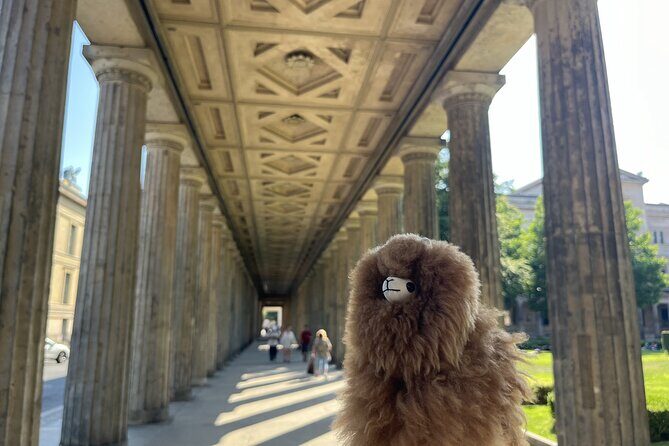
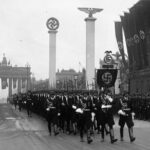
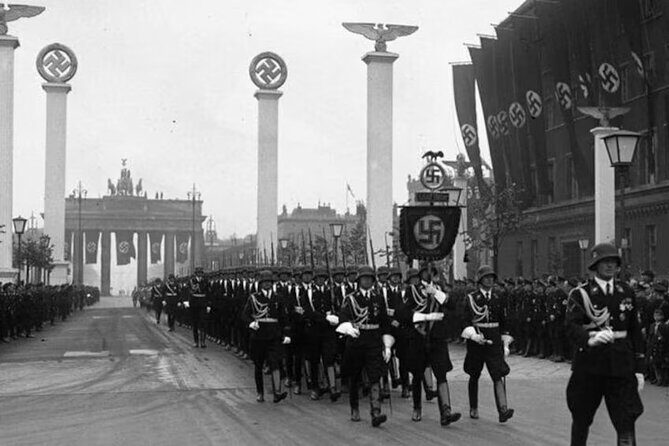
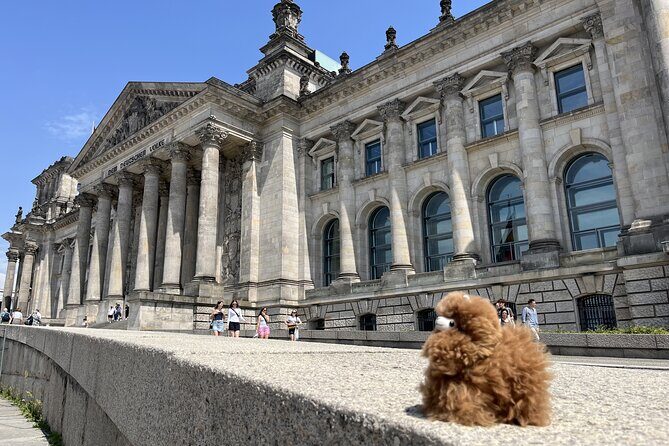
The day kicks off with the Reichstag Building area and the Brandenburg Gate, with a focus on how Nazi leaders used the monumental setting to sell power. You’re not just looking at architecture—you’re being taught how symbolism works in real time: who stood where, what the visuals signaled, and why controlling the story mattered as much as controlling the streets.
Even if you’ve seen photos of the Reichstag dome and the Gate, you’ll likely notice a different way of “reading” the space after your guide connects it to events like the Battle of Berlin and the Nazi campaign of messaging. The tour time here is about 20 minutes, so you’re getting a concentrated explanation rather than a long museum visit.
A practical consideration: admission is not included for this stop. That doesn’t mean it’s not worth your time; it means you should treat this as orientation and interpretation around the building, not a full interior visit. If you want the dome or deeper access, plan extra time beyond the tour’s scheduled window.
The Holocaust Memorial: more than a stop you pass through
Next is the Memorial to the Murdered Jews of Europe, a place that can feel simple from a distance and then quietly becomes disorienting up close. You’ll spend about 10 minutes here, which is short on paper but enough time to change how you experience the grounds—especially with a guide pointing out how the design affects movement, sound, and perception.
This is where the tour’s tone matters. Instead of turning tragedy into spectacle, your guide keeps the focus on what the memorial represents: the six million Jewish victims of Nazi persecution and murder. The short timing works because it prevents you from turning the site into a “photo mission,” which is easy to do when you’re moving through a city at sightseeing speed.
No admission ticket is required for this stop, so you won’t get hung up on ticketing. The only real “expense” is mental energy. If you’re the type who needs a moment to regroup at emotional sites, it’s smart to be prepared for that here, even though the stop itself is brief.
Soviet Memorial Tiergarten: remembering the Battle of Berlin’s other victims
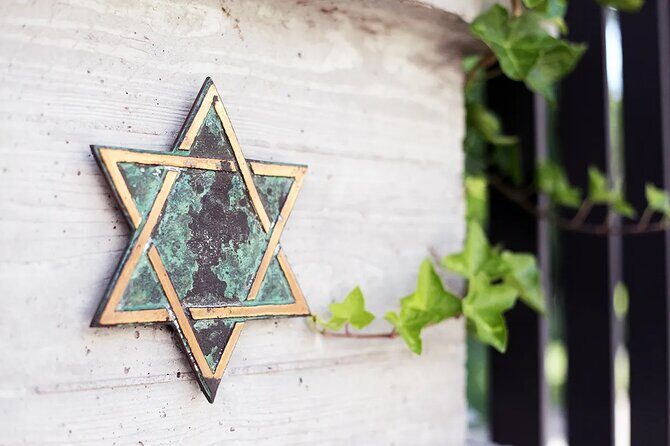
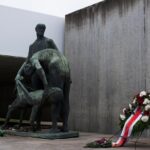
Berlin’s WWII story isn’t only Nazi crime and downfall. Your tour includes the Soviet Memorial Tiergarten, which commemorates the roughly 80,000 Soviet soldiers who died in the Battle of Berlin. Your guide uses the physical presence of the monument—along with Soviet tanks and artillery elements—to anchor the narrative in what the war cost beyond Germany’s perspective.
You’ll spend around 20 minutes at this stop. That time lets you understand the site’s purpose and the reason the tour includes it at all: it rounds out the picture so you don’t leave Berlin with a one-note story.
There’s no admission ticket needed here, and the location fits well in the middle of the route. Still, it can be jarring, in a good way. One of the useful skills this tour builds is switching frames without losing focus—seeing how different regimes commemorated their losses and how that shapes modern memory in Berlin.
The Führerbunker area at Berlin Story Bunker: the last-days narrative
After the Soviet memorial, you move to the Berlin Story Bunker area, tied to the unmarked location of Hitler’s Führerbunker. This is one of the most intense sections of the route because the subject shifts from memorialization into the mechanics of a regime collapsing.
You’ll have about 20 minutes here, focused on the final days of the Nazi regime. Even though you’re walking outdoors and around preserved context, the guide’s job is to connect gaps: what was happening in Berlin, why the bunker concept mattered, and how the end unfolded.
No admission is included for this stop, but the tour timing is still tight enough that you should expect explanation more than museum-style immersion. If you find yourself wanting more detail here, you’ll likely be the type who benefits from adding an extra museum hour on a separate day—this tour gives you the spine, not the whole body.
You can also read our reviews of more private tours in Berlin





Former Luftwaffe HQ to modern Berlin: seeing power repurposed
The next segment takes you to the former Luftwaffe HQ, one of the few remaining Nazi-era buildings in the area, now used as Germany’s Finance Ministry. This stop is fascinating because it shows how cities metabolize the past: a power structure becomes a functioning government office, and daily life continues around the ghosts of what happened there.
You’ll spend around 30 minutes here, and admission is free for the relevant building context. That’s a nice value detail because it means more of your tour time is spent on guided interpretation rather than on ticket logistics.
What I like about this stop is that it’s not just about what Nazis built—it’s about what Germany chose to do afterward. You get a chance to think about accountability, continuity, and how official spaces carry meaning even when the original purpose is gone. It’s also a good stretch point in the route, since you’re not jumping between the most emotionally demanding sites back-to-back.
Topography of Terror: included admission where the remains meet the records
The day culminates at Topography of Terror, which explores the remains of the SS and Gestapo headquarters. This stop is the one that benefits most from having admission included, because you’re moving from the city’s monuments and symbolism into a place that uses physical remains and documentation-style storytelling to explain what happened.
You’ll spend about 30 minutes here, which is enough time to understand the core narrative, not enough time to read every text wall if you’re a slow reader. Go in expecting facts and layout, and let your guide help you choose what to prioritize.
This is also a place where your guide’s approach really shows. Names mentioned in the feedback set—like Alex and Alexander—suggest guides can make the timeline click for both adults and kids, including families traveling with history-focused children. If you care about WWII history as more than a list of battles, this is where you’ll feel the difference between guessing and understanding.
And because it’s near the tour’s end point around Checkpoint Charlie, you’ll be in a convenient location to continue your day afterward without rushing across Berlin to find dinner.
Price and what you’re really paying for
At $224.76 per person for roughly 3 hours, you’re paying for private guiding and a route that hits several top sites without you having to coordinate each ticket, timing, and narrative thread. The big value is the personalized route: you’re not forced to sprint through history in silence with strangers.
Also, admission inclusion at Topography of Terror helps justify the overall cost because it’s one of the stops where ticket details would otherwise become a chore during sightseeing. Meanwhile, some earlier stops have admission not included, so you should think of this as a guided walk plus selective paid access only where noted.
For families, history lovers, or anyone who wants context rather than just photos, the private format is often worth it. For people who prefer totally independent pacing or who plan to read everything themselves, you might feel the time limits more. Still, for a concentrated intro to this chapter of Berlin, this tour is built for maximum clarity per hour.
Should you book this Berlin WWII private walk?
If you want a guided, time-efficient way to connect Nazi propaganda, Holocaust memory, Soviet losses, and the final days narrative, I’d say yes. This tour is especially strong when you care about explanation: guides like Sven, Alex, Madeleine, Alexander, and Sigrid show up in the feedback set, and the fact that at least one guide is described as having a PhD-level background hints that you’re not getting a shallow script.
Book it if your priorities are:
- understanding how major places relate to WWII events
- getting interpretation at several key sites in one morning/afternoon
- ending at Topography of Terror with admission already handled
Skip it only if you need lots of quiet time to process alone, or you plan to spend hours inside multiple museums. This route is structured; it moves.
FAQ
What’s the duration of the private tour?
It runs for about 3 hours.
Where does the tour start and end?
It starts near Brandenburg Gate at Pariser Platz (10117 Berlin) and ends near Checkpoint Charlie at Friedrichstraße 43-45 (10117 Berlin).
Is the tour admission included for all stops?
No. Admission is not included for some stops, while Topography of Terror includes admission.
What language is the tour offered in?
The tour is offered in English.
Is this tour private or group-based?
It’s a private tour, meaning only your group participates.
Are there ticket requirements before you go?
You’ll receive a mobile ticket, and confirmation is received at booking.
What is the cancellation policy?
You can cancel for a full refund if you cancel at least 24 hours before the experience’s start time. After that window, refunds are not available.