REVIEW · BERLIN
The Best Private Berlin Tour with a Car, Tour Guide and Pick up
Book on Viator →Operated by Vexperio · Bookable on Viator
Berlin clicks into place fast.
This private Berlin tour pairs pickup + round-trip private vehicle with guided stops at major WWII and Cold War landmarks, plus classic sights in the city center. You get the city’s “big story” in the right order, without wasting time figuring out transit or crossing lanes while trying to read plaques.
I especially like the way the tour builds meaning at each stop: the guide connects what you’re seeing to what came next, from the Holocaust Memorial to the Topography of Terror. I also like the flexibility—choose a short 2-hour sweep or go longer up to 6 hours—so you can match it to jet lag, weather, and energy.
One possible drawback: because the route heavily covers Nazi Germany and the Cold War, it can feel heavy if you want a lighter, purely arts-and-neighborhoods Berlin day. If that’s you, ask your guide to balance the discussion toward architecture, politics, and everyday life.
In This Review
- Key highlights worth planning around
- Why a private car tour beats hopping trains in Berlin
- How the 2–6 hour format helps you see more without burnout
- Brandenburg Gate to Fuhrerbunker: the WWII and Cold War storyline, stop by stop
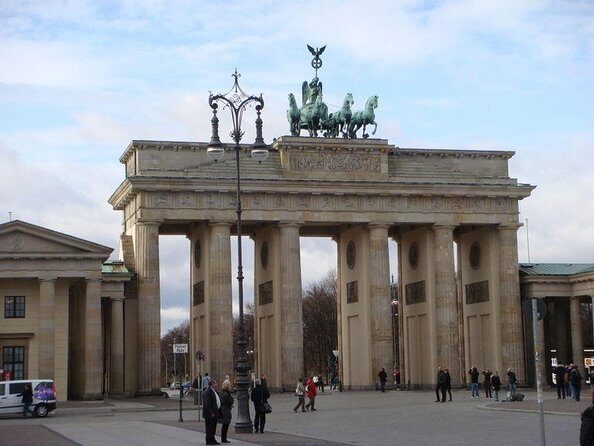
- Brandenburg Gate: Berlin’s most iconic cultural monument
- Reichstag Building: from destruction to modern democracy
- Holocaust Memorial: witnessing through design, not spectacle
- Checkpoint Charlie: the frontline of the Cold War
- Topography of Terror: the sites that explain the machinery
- Fuhrerbunker: the end of WWII, at the site
- Museum Island and Bebelplatz: Berlin’s learning and literary scars
- Museum Island: imperial splendor with UNESCO status
- Bebelplatz: Frederick the Great’s Berlin and the Nazi book burning
- Riding the royal mile to Gendarmenmarkt, plus Rausch chocolate
- The private vehicle “royal mile” cruise: getting the sights without detours
- Gendarmenmarkt: domes, concerts, and an easy place to reset
- Rausch chocolate: a small, memorable local finish
- What the guides and drivers tend to get right
- Price and value: when $106.93 is fair (and when it’s not)
- Who should book this private Berlin car tour
- Should you book this tour?
- FAQ
- Is this a private tour?
- What’s included in the tour price?
- Does the tour include pickup from where I’m staying?
- How long is the tour?
- Is the tour in English?
- Are entrance fees required for the tour?
- Is food and drink included?
- Will I get confirmation after I book?
- Can I cancel for a full refund?
Key highlights worth planning around
- Private vehicle pickup cuts transit stress and keeps the day moving
- Major memorial sites explained with clear context and a respectful tone
- Flexible tour lengths (2–6 hours) help you avoid “vacation marathon” fatigue
- A smart mix of walking and driving for photo stops and pacing
- Museum Island + Bebelplatz add the intellectual/imperial side of Berlin
- Finales that feel local, like a stop at Rausch chocolate (optional in practice)
Why a private car tour beats hopping trains in Berlin
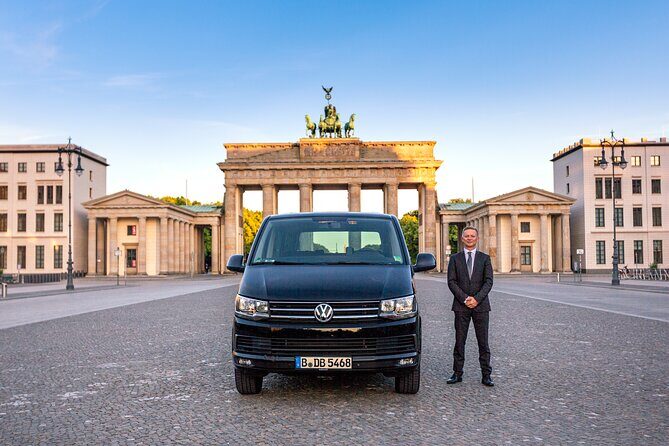
Berlin is huge, and the key sights aren’t all in one neat block. A private vehicle with pickup changes the whole day. You don’t have to translate stops, time tram transfers, or play the where-do-we-walk-now game with tired legs and a map in your phone.
This tour also handles the boring-but-important part: getting you from one “must-see” to the next. Round-trip transfers mean less friction at the start and at the end, which matters more than people think—especially if you’re traveling with kids, older relatives, or anyone who tires quickly.
And yes, you’ll still do walking at the landmarks that work best on foot. That’s the right compromise. The car is there for distance. The guide is there for meaning.
You can also read our reviews of more guided tours in Berlin



How the 2–6 hour format helps you see more without burnout
One of the best things about this experience is the built-in time options. You can do a tighter session (around 2–3 hours) if you want the core highlights fast, or choose a longer outing (up to about 6 hours) when you want more context and breathing room.
In practice, that pacing shows up as a balance:
- short walks where you can stop and look closely
- quick re-boarding when the next site is farther apart
- enough time at each location to understand why it matters, not just snap a photo and rush off
From what I’ve seen from guides attached to this tour style, they tend to move briskly but not in a “grab-and-go” way. People often mention the day felt organized and that they weren’t rushed. That’s exactly what you want when you’re seeing sites that deserve a pause—especially memorials.
Brandenburg Gate to Fuhrerbunker: the WWII and Cold War storyline, stop by stop
This part of the route is the heavy spine of the day. It’s where Berlin’s 20th-century shocks become visible in stone, concrete, and architecture. For most first-time visitors, it’s the fastest way to understand what happened—and why Berlin looks the way it does now.
Brandenburg Gate: Berlin’s most iconic cultural monument
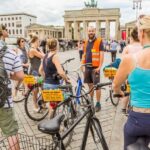
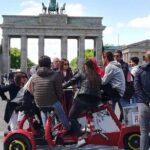
You’ll start at Brandenburg Gate, walking through the gateways of one of Germany’s most recognized monuments. It’s not just a photo stop. The guide frames what the Gate has meant across different eras—so you start with an anchor before the story turns darker.
Most days, you’ll get time to look around and absorb the scale without feeling like you’re being dragged. Admission is free for the stop, so you’re not “paying to stand here for ten minutes.”
Reichstag Building: from destruction to modern democracy
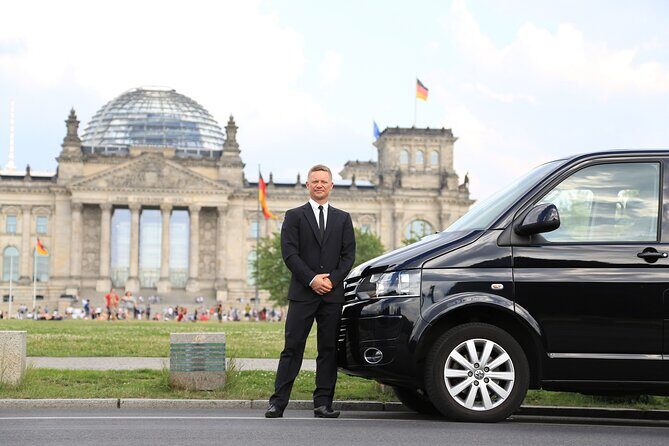
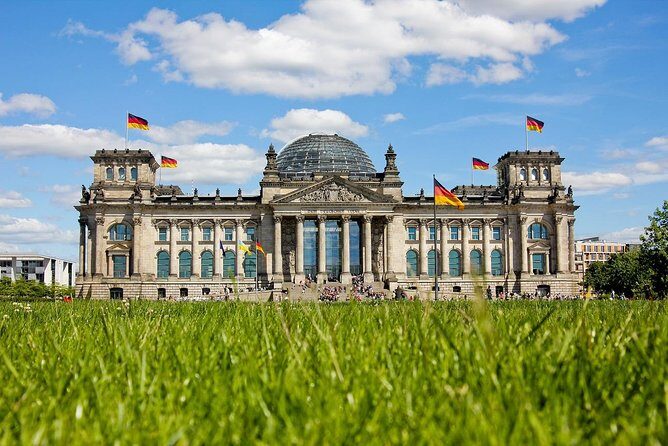
Next, you’ll stand near the Reichstag Building—the German parliament—linked to the era of burning and political upheaval after Hitler’s rise. You don’t need to be a political science fan to appreciate the shift: this building is a physical reminder that democracy came back after catastrophe.
Admission isn’t included here, so you may want to plan around that if you’re hoping to go inside. Even from the outside, the commentary helps you read the symbolism in the façade and setting.
You can also read our reviews of more private tours in Berlin


Holocaust Memorial: witnessing through design, not spectacle
Then comes the Memorial to the Murdered Jews of Europe. You’ll walk through the field of concrete stelae, where the experience is built to slow your brain down. Instead of big dramatics, it uses space, repetition, and quiet to force you to think.
Admission is free for the memorial. That’s important because it keeps the focus on the message, not on ticket hassles.
Checkpoint Charlie: the frontline of the Cold War
At Checkpoint Charlie, you get the Cold War in a tight, understandable snapshot. You’ll hear how spies operated and how the US and Soviet sides faced off around 1961. It’s a site that feels like a movie set—until the guide explains it as a real pressure-cooker.
Admission is free, which is perfect for fitting in this stop even during shorter tour options.
Topography of Terror: the sites that explain the machinery
Topography of Terror is where the day becomes most specific. This is the former headquarters area tied to the SS and Gestapo, and you’ll see excavated remains that help explain how the system worked. The tour also connects this location to the Berlin Wall as a brutal Cold War symbol.
Admission is free. Still, don’t treat it like a quick skim. Even if the stop is only about 15 minutes on the schedule, the guide’s direction matters—telling you what to look for so you’re not just staring at walls.
Fuhrerbunker: the end of WWII, at the site
Finally in this WWII/Cold War cluster, you’ll stand at the Fuhrerbunker site, tied to where Hitler died at the end of the war. It’s short on the schedule, but it lands with emotional weight.
Admission is free, and that helps keep your time focused on understanding what this place represents.
Museum Island and Bebelplatz: Berlin’s learning and literary scars
After the 20th-century shock, the route shifts to the city’s intellectual identity. This is where Berlin feels more “impossible to summarize,” but in a good way—architecture and ideas are part of the story, not just background.
Museum Island: imperial splendor with UNESCO status
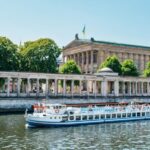
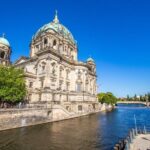
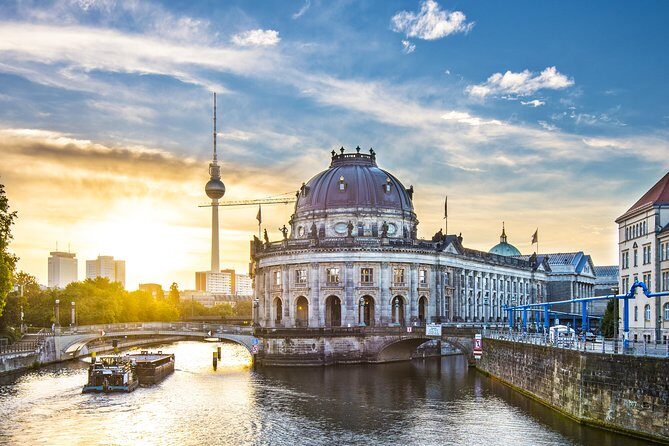
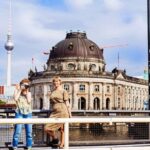
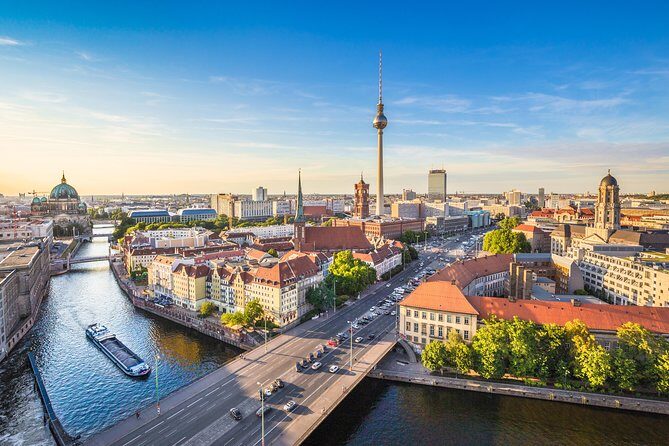
On Museum Island, you’ll see the classic institutions and grand styles that define this UNESCO-listed area. You may spot the Old Museum, the Berlin City Palace, and the Berlin Cathedral, plus other landmark buildings along the way.
Admission is free for the stop itself on this tour. That means you’re free to focus on the big picture: Berlin has long presented itself as a city of museums, research, and power—sometimes in the same breath.
Bebelplatz: Frederick the Great’s Berlin and the Nazi book burning
At Bebelplatz, you’ll look at buildings associated with Frederick the Great’s 18th-century Berlin, including the former Prussian Royal Opera House, St. Hedwig’s Cathedral, and the former Prussian Royal Library. The tour also points you to the site connected to the Nazi book burning on May 10, 1933.
Admission is free. The guide’s job here is crucial: without context, the site can look like “just another plaza.” With context, it becomes a warning sign about how regimes target knowledge and culture.
Riding the royal mile to Gendarmenmarkt, plus Rausch chocolate
This is the part of the day that feels like Berlin as a living city rather than Berlin as a historical timeline.
The private vehicle “royal mile” cruise: getting the sights without detours
You’ll cruise down Berlin’s most important historical boulevard—the royal mile—in the comfort of your own private vehicle. This helps you cover ground quickly while still getting views from the right angle, without weaving in and out of traffic on foot.
Even when the stop is brief, this segment is valuable because it creates a visual bridge between the heavy memorial sites and the elegant squares later.
Gendarmenmarkt: domes, concerts, and an easy place to reset
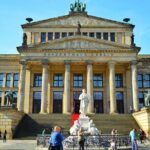
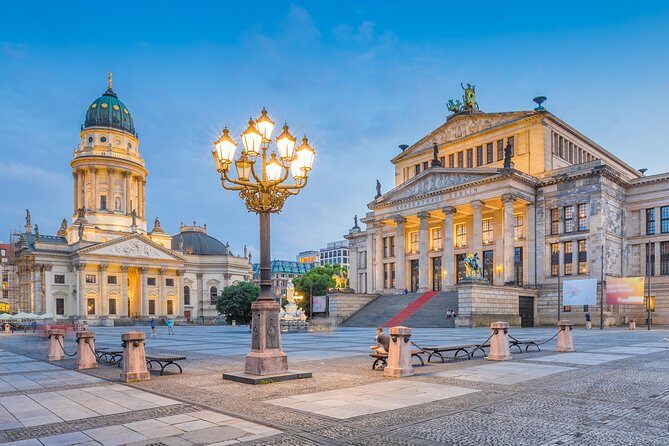
At Gendarmenmarkt, you’ll get architectural contrast in one scene: the French and German domes and the Concert House around one of Berlin’s most beautiful squares. It’s the kind of place where you can relax your eyes for a minute.
Admission is free here too. And it gives you space to take photos without the pressure of standing in a line or racing the clock.
Rausch chocolate: a small, memorable local finish
One of the nicest “small moments” connected with this tour style is ending at Rausch Schokoladenhaus. In cold or rainy weather, a hot drink and chocolate are a welcome reset—without turning the day into a food tour.
The key point: it’s optional-feeling in the day flow, but it can turn a history-heavy outing into something more personal. If your guide recommends it, this is one finale that’s genuinely easy to say yes to.
What the guides and drivers tend to get right

In the supplied experience reports, a repeating theme shows up: people come away saying the guide made the sites make sense. That usually boils down to a few practical strengths.
First, pace control. Many guests talk about being able to ask questions and not feeling rushed. That’s not automatic on a busy, packed route. It’s a sign the guide is tracking your group’s energy while still hitting key stops.
Second, precision with context. Guides like Jose and Nick are mentioned for clear historical framing with names, dates, and location context—so you don’t leave with vague impressions.
Third, human delivery. On sites tied to suffering, you want respectful care, not drama. Several write-ups highlight that the tone felt serious and appropriate, with a focus on what people faced day to day—not just big political labels.
Fourth, local personality. Drivers like Markus and guides like Walid, Natalie, Ioana, Jochen, Scott, Tal, and Jamie are repeatedly described as friendly and engaging. Some bring humor. Some bring warmth. The mix helps Berlin feel less like a lecture and more like a story you can follow.
One caution from the same set: in at least one case, a guide’s script felt too focused on Hitler, with less attention to other angles of Berlin. If you care about a broader range—arts, daily life, architecture, or post-war city culture—tell the guide what you want up front. A private tour can flex more than you’d expect.
Price and value: when $106.93 is fair (and when it’s not)
At $106.93 per person, this isn’t a budget “grab a bus” option. But it can be very good value if you measure what you’re actually buying.
You’re paying for:
- a professional local guide (paid attention, not just a self-guided audio track)
- a private vehicle and driver (time saved, less stress, easier pacing)
- a route built around free-access stops (many locations on the route don’t require entry fees)
If you only have a short window in Berlin—say you’re doing a quick first visit—this kind of day can “buy back” hours. It also helps if you want to keep your feet fresh. Several families and multi-age groups mention the van and the guided flow made it workable for kids and older adults.
Where it may feel less worth it: if you’re traveling solo with lots of time and you’re comfortable navigating transit and reading on your own, you could DIY parts of this route. But most people don’t regret paying for the structure when they’re also juggling jet lag, weather, or limited days.
My rule of thumb: if you’d rather spend your energy looking and asking questions than planning routes, the price starts making sense fast.
Who should book this private Berlin car tour
This tour format fits best when you want a guided “greatest hits + meaning” day.
You’ll likely love it if:
- it’s your first time in Berlin and you want the big historical backbone explained clearly
- you’re traveling with kids or a multi-generational group and need an easier pace
- you want walking plus car comfort, not one extreme or the other
- you appreciate a guide who can connect architecture and landmarks to historical events
You might want to think twice (or message your priorities) if:
- you strongly prefer lighter themes and less WWII/Cold War focus
- you plan to spend lots of time inside buildings that require separate entry planning (since one stop notes admission isn’t included)
- you’re the type who loves long, slow neighborhood wandering for its own sake
Should you book this tour?
If you want to get your bearings fast, this is one of the smartest ways to do it: private pickup, a tight sequence of major landmarks, and a guide who can translate Berlin’s monuments into a story you can actually use.
Book it if you value structure and context over free-roam wandering. Skip it (or tailor the theme) if you know you don’t want a heavy WWII/Cold War focus. Either way, send a note to your guide about what you want most—then let the car and the timing do the work for you.
FAQ
Is this a private tour?
Yes. It’s described as a private tour/activity, meaning only your group participates.
What’s included in the tour price?
The included items are a professional local guide and a private vehicle with a professional driver.
Does the tour include pickup from where I’m staying?
Pickup is offered, and the tour summary also mentions round-trip transfers that take the stress out of public transport navigation.
How long is the tour?
It runs from about 2 to 6 hours, depending on the option you choose.
Is the tour in English?
Yes, the tour is offered in English.
Are entrance fees required for the tour?
Entrance fees aren’t required for the tour itself. Also, several stops listed are free to access (including Brandenburg Gate, Holocaust Memorial, Checkpoint Charlie, Topography of Terror, Fuhrerbunker, Museum Island, Bebelplatz, and Gendarmenmarkt).
Is food and drink included?
No. Food and drink are not included.
Will I get confirmation after I book?
Confirmation is received at the time of booking, unless you book within 9 days of travel, in which case confirmation is received within 48 hours subject to availability.
Can I cancel for a full refund?
Yes. Free cancellation is available up to 24 hours in advance for a full refund. If you cancel less than 24 hours before the start time, the amount paid is not refunded.