REVIEW · BERLIN
Karl-Marx-Allee Walking Tour: Berlin’s Socialist History
Book on GetYourGuide →Operated by Beyond and Beneath Tours · Bookable on GetYourGuide
Berlin’s socialist boulevard has layers you can read. On this guided walk, Karl-Marx-Allee doesn’t just look dramatic—it explains why East Berlin was built to feel certain, even when life wasn’t. I love how the tour connects socialist classicism to Cold War thinking, so the buildings start making emotional sense, not just visual sense.
I also like the tour’s willingness to talk about the uncomfortable part: Stasi surveillance and how repression hid behind a polished façade. One possible drawback: the subject matter can feel heavy and political, so it’s best if you’re ready for stories about suppression and fear, not just architecture photos.
This is a smart 2-hour outing with an easy start point near the U-Bahn. You’ll want comfortable shoes, and you’ll walk at a pace that lets the guide explain how this street went from a reconstruction mega-project to a symbol of gentrification debates today.
In This Review
- Key Things You’ll Notice on Karl-Marx-Allee
- Karl-Marx-Allee: A Street Built to Project Power
- Starting at Frankfurter Tor: Get Your Bearings Fast
- Walking Karl-Marx-Allee’s Socialist Classicism Blocks
- 1953 Uprising Context: Why This Street Was Built Under Pressure
- When Affluence Was the Cover: Shops, Cafes, and the Facade
- Stasi Surveillance in Plain Sight: Listening Stations and Wiretaps
- Pop Culture Meets Cold War Berlin: The Lives of Others and The Queen’s Gambit
- Poplar Trees, Style Shifts, and Why the Street Looked Different Later
- Price and Value: Getting a Guide for $23
- The Practical Route: From Frankfurter Tor to Strausberger Platz
- Who This Tour Is Best For
- Should You Book This Karl-Marx-Allee Walk?
- FAQ
- How long is the Karl-Marx-Allee walking tour?
- Where does the tour start?
- Where does the tour finish?
- How do I find the guide?
- What languages is the tour offered in?
- Is the tour wheelchair accessible?
- Is it suitable for children?
- What should I bring?
- What’s included in the price?
- How much does it cost?
Key Things You’ll Notice on Karl-Marx-Allee
- Cold War ideology in the street plan, not just in slogans
- Thousands of volunteers rebuilding after WWII, and how that shaped what you see
- Grand housing blocks designed to feel like the future is guaranteed
- Hidden surveillance details, including wiretaps and listening stations
- A link to film locations, including The Lives of Others and The Queen’s Gambit
- A street that changed after the Wall, and now attracts protests tied to housing costs
Karl-Marx-Allee: A Street Built to Project Power
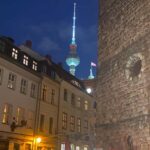
Karl-Marx-Allee is often described like an architectural statement, and it is—but it’s also a political document written in stone. This was Germany’s first socialist street, built on top of WWII ruins, where East German authorities wanted to show that a new society was possible—and unstoppable.
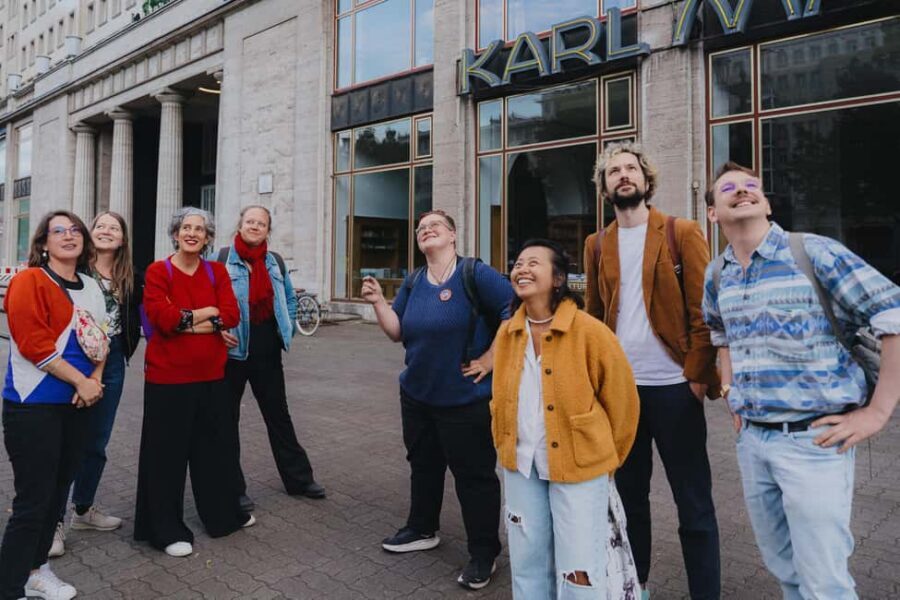
As you walk, you’ll feel how “grand” becomes “intimidating” fast. The buildings are imposing in a very deliberate way. The scale makes you feel small, and that’s part of the message: socialist life wasn’t meant to look experimental or fragile. It was meant to look permanent.
And then the tour adds the missing paragraph: reality. The street aimed to sell an image of orderly, well-catered life—cafes, restaurants, and well-stocked shops. But behind that tidy front, surveillance and suppression were designed to stay out of sight.
You can also read our reviews of more walking tours in Berlin



Starting at Frankfurter Tor: Get Your Bearings Fast
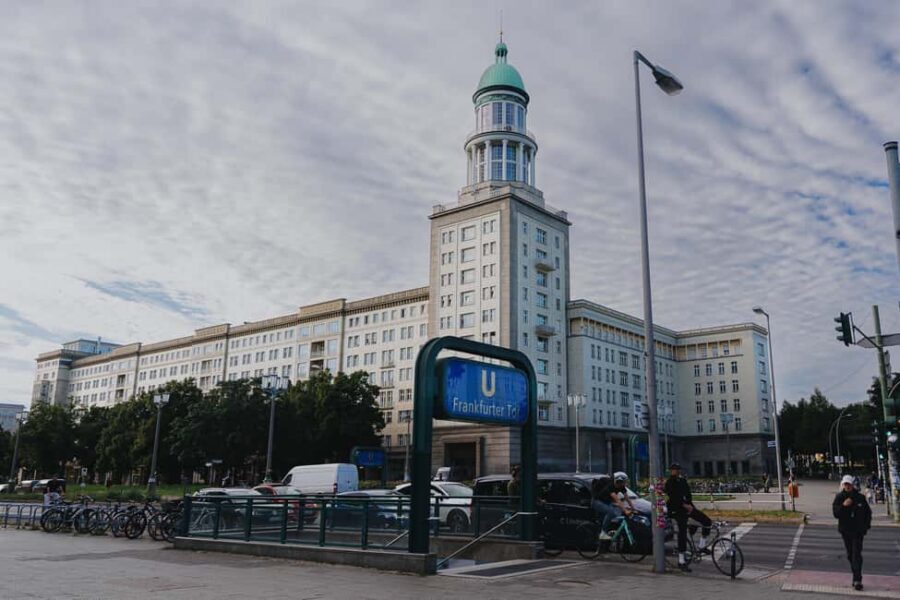
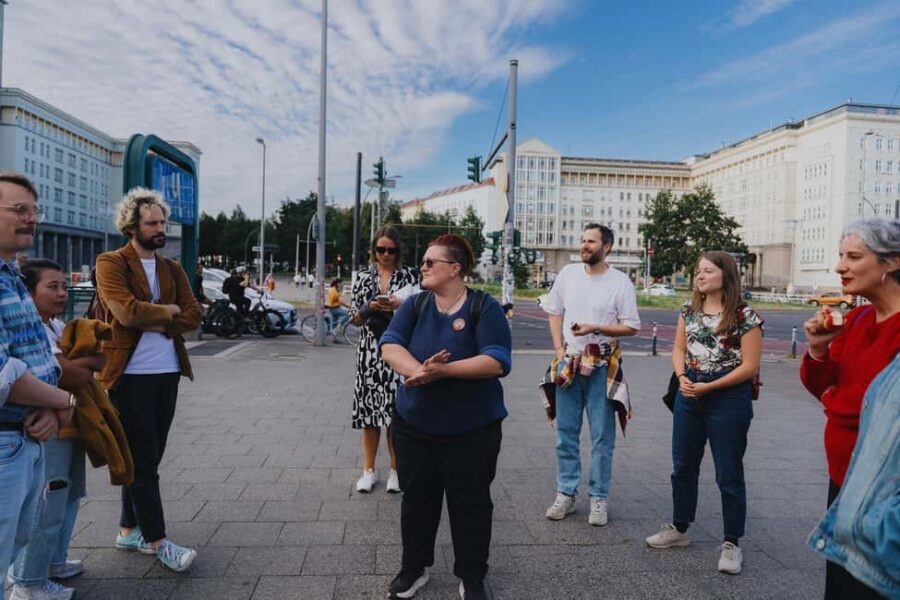
You begin outside the U Frankfurter Tor station, at the corner of Warschauer Straße and Karl-Marx-Allee. The guide is easy to spot—look for the person holding an orange umbrella.
This start matters more than you might think. Right away, you’re positioned where the street’s “stage-like” feel is obvious. It also helps you understand the direction of the walk and the key viewpoints before you’re halfway down the boulevard. If you’re the kind of traveler who likes to understand a place while you’re still arriving, this beginning works well.
The tour runs in English and German, and the format is a guided walk with historical context tied directly to what you’re standing in front of. You’ll also get wheelchair accessibility, so the route is designed with access in mind.
Walking Karl-Marx-Allee’s Socialist Classicism Blocks
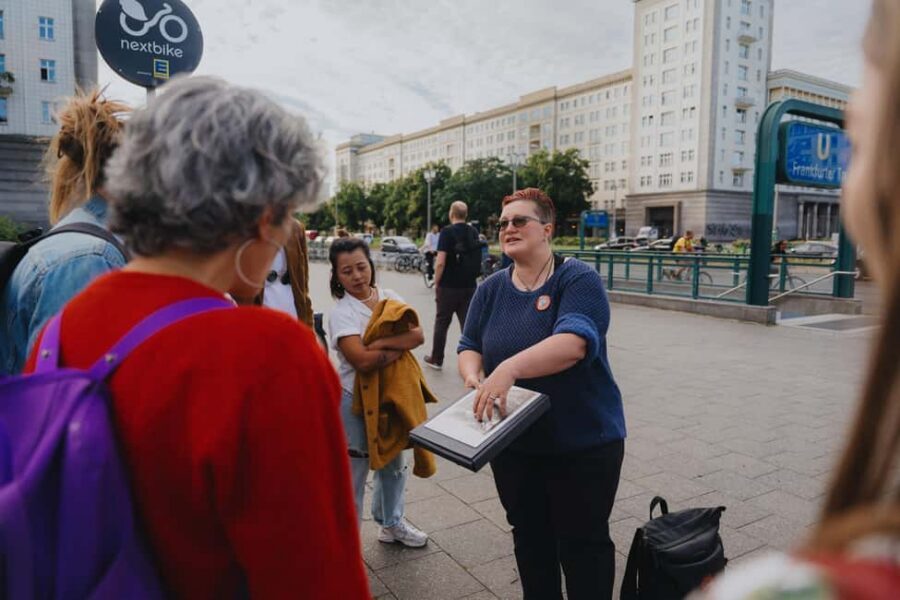
The heart of the tour is the stretch along Karl-Marx-Allee, where the East German reconstruction program produced its most ambitious building project in former East Berlin. You’ll spend about 1.5 hours on the main guided portion, and that time is used to connect design choices to Cold War ideology.
Here’s what I’d pay attention to as you walk:
- The sense of official order. The style is socialist classicism—meant to feel serious, stable, and state-approved.
- How utopian ideas were baked in early, right after the war. Even the modernist architecture from the immediate post-WWII years reflects the utopian urban planning thinking that emerged from destroyed Berlin.
- How the street’s appearance was managed over time. At one point, fast-growing poplar trees were used to hide the architecture from passersby—an odd but revealing detail about how the state controlled what people could easily see.
One of the tour’s strengths is that it doesn’t treat architecture like wallpaper. The buildings are presented as a tool. They were meant to communicate the right mood: confidence, unity, and the feeling that East Germany was building something meaningful out of ruins.
1953 Uprising Context: Why This Street Was Built Under Pressure

The tour brings an important twist: the street’s construction almost threatened the survival of the young East German government. In June 1953, disgruntled workers launched a mass uprising that came close to toppling the socialist state.
You’ll learn that the building effort wasn’t just slow and expensive—it was intense, demanding, and politically charged. Thousands of volunteers worked day and night to rebuild the street, and that urgency turned everyday life into something shaped by deadlines and expectations.
As you continue walking, it helps to remember that you’re viewing a place that was born in strain. These buildings weren’t raised in a calm, neutral time. They were created while social tensions were building—and the street itself became tied to what people thought the government demanded.
That context changes how you read the street’s scale. It can feel less like “monumental art” and more like “a project with consequences.”
When Affluence Was the Cover: Shops, Cafes, and the Facade
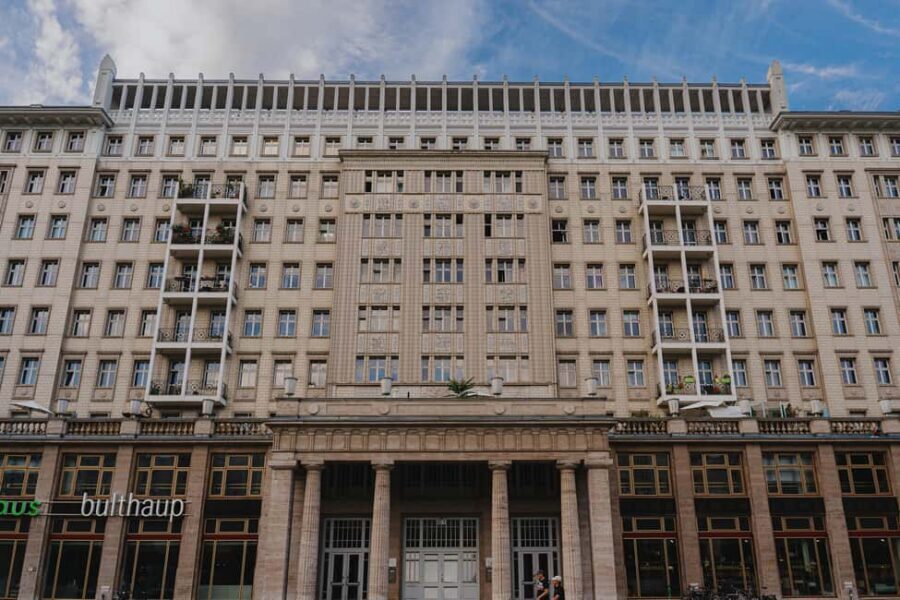
One of the most useful parts of this tour is how it frames the street’s everyday attractions. Karl-Marx-Allee was designed to show off East Berlin at its best. You’ll hear about the cafes, restaurants, and well-stocked shops that helped create an image of idyllic life and affluence.
That doesn’t mean everything was fake. It means the state understood that comfort and consumption could be powerful persuasion tools. If people believed life looked good, the system felt more believable.
The tour makes you ask a practical question while you walk: what do you see, and what do you not see? The street invites you to focus on the façade—bright streetscape energy, “normal” public life. But the guide steers the conversation toward what stayed hidden.
You can also read our reviews of more historical tours in Berlin




Stasi Surveillance in Plain Sight: Listening Stations and Wiretaps

This is where the walk gets really real. The tour discusses the truth about surveillance by the Stasi police and how a monitoring state could be built right into daily structures.
You’ll learn about wiretaps in flats and listening stations in attics used by the East German secret police. The chilling detail isn’t just that surveillance existed. It’s how it was engineered to be difficult to notice, placed where people might assume privacy.
Standing in front of grand buildings, it can be hard to imagine attics, wires, and covert equipment. That’s why the tour’s explanations land so well: they make the invisible visible in your mind. You start looking at the architecture differently, not as a decorative exterior, but as something that had to function—physically and administratively—for control.
This section also helps you understand why Berliners might have had complicated feelings about these “ideal” streets. The system promoted a perfect image while operating a shadow layer of fear.
Pop Culture Meets Cold War Berlin: The Lives of Others and The Queen’s Gambit
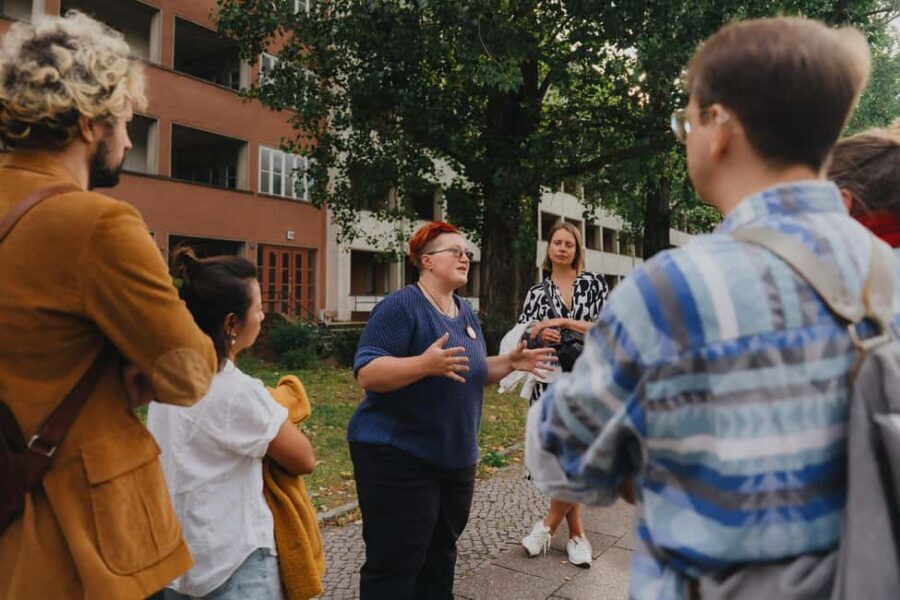
The guide also points out filming locations connected to The Lives of Others and The Queen’s Gambit. Even if you’re not a film superfan, you’ll likely find this angle useful because it shows how the city’s look has been translated into storytelling.
This matters because it trains your eyes. Once you know a location has been used to recreate a particular mood—East Germany under observation—you’ll start noticing composition: where characters would stand, where tension would play out, and how the architecture supports a narrative.
Just remember: film scenes compress time. The real value here is not accuracy down to the frame. The value is learning how filmmakers used the street’s distinctive feel to communicate power, surveillance, and the atmosphere of the era.
Poplar Trees, Style Shifts, and Why the Street Looked Different Later

One detail I appreciated is how the tour explains that the East German regime didn’t commit to one look forever. After early modernist influences, the regime rejected certain styles and pushed a radically different idea of socialist living.
The poplar tree story fits neatly into that theme. Trees were allowed—or encouraged—to grow fast enough to hide the buildings from passersby. It’s a practical, human-scale reminder that even “official” architecture could be managed, adjusted, and partially concealed.
Then, after the fall of the Wall, the street didn’t stay frozen in its former role. It fell into disrepair and seemed to drift into odd curiosity. That transition is part of Berlin’s rhythm: what was meant to last can end up needing to be reinterpreted.
And right now, Karl-Marx-Allee is part of a housing crisis story. It’s no longer a boulevard for socialist parades. Instead, it’s also a stage for local protests about gentrification and rising living costs.
Price and Value: Getting a Guide for $23
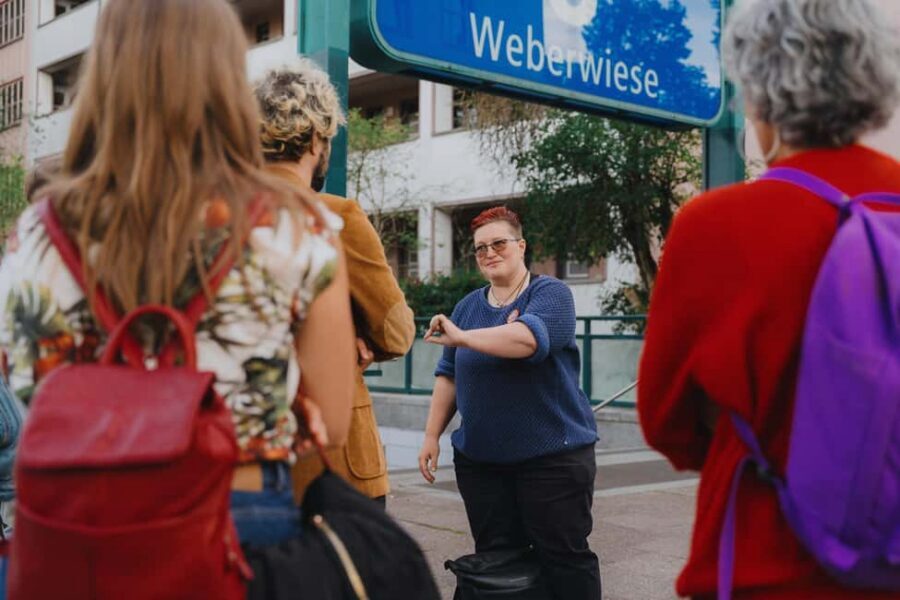
At $23 per person for a 2-hour guided experience, this tour is priced like a practical history walk—not a museum ticket. The big value is the guide: you get an explanation that ties architectural choices, postwar rebuilding, and political repression into one coherent path.
You’re also paying for context you can’t easily piece together from a phone map:
- why this street was built so quickly and intensely
- how the style was used to communicate ideology
- why surveillance details matter when you’re standing in front of impressive facades
- how the street’s look connects to movies you may recognize
If you enjoy walking tours where the guide changes how you see what’s right in front of you, this is a good use of time.
If you’re hoping for a light, casual stroll with only broad facts, you might find the tone heavier than expected. But if you want meaningful interpretation, the price feels fair.
The Practical Route: From Frankfurter Tor to Strausberger Platz
You start outside U Frankfurter Tor and follow the boulevard for the main guided portion. The tour is organized with a finish point at U Strausberger Platz, and the activity is also noted as ending back at the meeting area. In practice, plan for a route that brings you back to your starting zone area so you can easily continue exploring Berlin afterward.
Either way, the U-Bahn stations bookend the experience nicely. If you’re combining this with other sights, you can pair it with more East Berlin exploring without needing complicated transit.
Bring comfortable shoes. This is a walking tour on city pavement, and your comfort will directly affect how much you absorb.
The tour isn’t suitable for children under 10, which makes sense given the mature themes discussed.
Who This Tour Is Best For
This is ideal if you:
- like architecture, but want it explained as politics and policy
- enjoy Berlin’s Cold War era and want a street-level perspective
- want context for how surveillance systems can be embedded in ordinary spaces
- appreciate cultural connections, like film locations, as a way to sharpen your viewing
It’s less ideal if you only want casual sightseeing with minimal emotional weight. The Stasi and uprising parts aren’t optional on this tour’s storyline.
Should You Book This Karl-Marx-Allee Walk?
Yes, if you want Berlin that feels specific, not generic. For $23, you get a guided interpretation of East Germany’s most ambitious reconstruction-era project, tied to the 1953 uprising, surveillance realities, and even film location context.
I’d book it especially if you’re the type who looks at a building and thinks: who built it, why, and what did it cost people. This tour answers those questions in a way that makes the street more than a backdrop.
If you’re ready for heavy history and you wear comfortable shoes, Karl-Marx-Allee is one of the most meaningful ways to spend a couple hours in Berlin.
FAQ
How long is the Karl-Marx-Allee walking tour?
The tour lasts about 2 hours.
Where does the tour start?
Meet outside the U Frankfurter Tor U-Bahn station, on the corner of Warschauer Straße and Karl-Marx-Allee.
Where does the tour finish?
The itinerary indicates a finish at U Strausberger Platz.
How do I find the guide?
Look for the guide holding an orange umbrella at the start meeting point.
What languages is the tour offered in?
The guide provides the tour in English and German.
Is the tour wheelchair accessible?
Yes, it is wheelchair accessible.
Is it suitable for children?
It is not suitable for children under 10.
What should I bring?
Wear comfortable shoes.
What’s included in the price?
You get a live guide.
How much does it cost?
The price is $23 per person.