REVIEW · AACHEN
Aachen: 24-Hour Hop-On Hop-Off Sightseeing Bus Ticket
Book on GetYourGuide →Operated by Willms-Touristik GmbH & Co.KG · Bookable on GetYourGuide
Aachen looks different when you float above the streets. This open-top hop-on hop-off bus pairs scenic city views with an audio guide in multiple languages, letting you understand why this place matters—from Charlemagne’s era to modern university life. I also like that you’re not locked into one stop or one walking loop; you choose what to explore and when.
One thing to plan around: seats aren’t guaranteed. On busier days the bus can fill up, so if you’re traveling as a couple, don’t assume you’ll sit side-by-side for the whole ride. Still, the flexibility of the route helps you work around it.
With a 24-hour ticket, you get about 2 hours of guided sightseeing on the main loop, then you can hop off and back on as you go. You’re basically turning Aachen into a choose-your-own-adventure day, with commentary doing the heavy lifting while you move at street level.
In This Review
- Key Highlights You’ll Actually Use
- Getting Your Bearings Fast From an Open-Top Bus
- The 24-Hour Hop-On Plan: How to Pace Your Day
- Elisenbrunnen and the Imperial Core: Where the Story Starts
- Ludwig Forum, Modern Culture, and the Roman Thermal-Bath Chapter
- CHIO Tivoli and Tivoli Stadium: Sports Fans, Here You Go
- Memorial, Lousberg, and the University Zone Around RWTH
- Vaals and the Three-Country Point: Stepping Into Another Country View
- Choosing Stops for Walking Time: A Simple Strategy
- Price and Value: Is $28 Worth It?
- Practical Details That Can Affect Your Day
- Who Should Book This Aachen Bus Ticket
- Should You Book This Aachen Hop-On Hop-Off Bus Ticket?
- FAQ
- Where can I board the Aachen hop-on hop-off bus?
- How long is the sightseeing ride with the audio commentary?
- What languages are available for the audio guide?
- Is the bus wheelchair accessible?
- Are dogs allowed on the bus?
- Are seat reservations available?
Key Highlights You’ll Actually Use
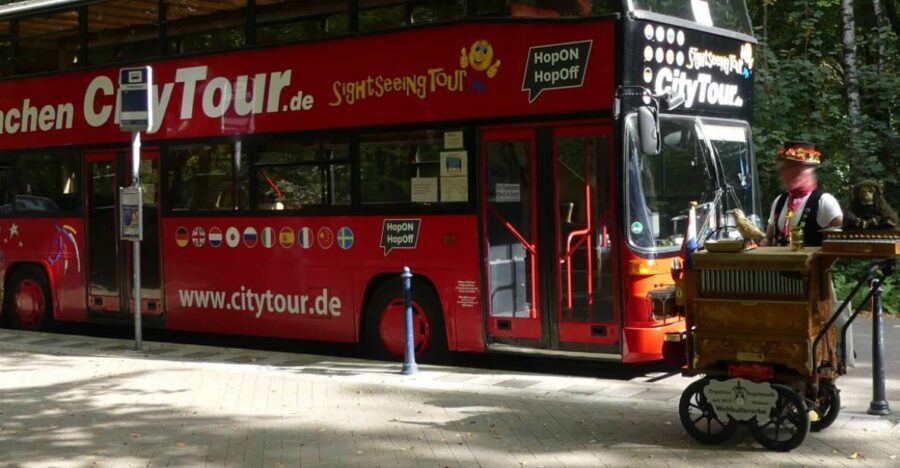
- Open-top double-decker views that make the city feel bigger and easier to understand fast
- Multilingual audio guide (English, French, Spanish, Italian, Dutch, German, plus Japanese, Russian, Chinese, Swedish)
- 2-hour sightseeing loop, with the freedom to jump off and return later
- Aachen’s “old + new” mix: imperial landmarks, Roman thermal baths, and university sites
- The three-country border triangle area, where you can step across Germany, Belgium, and the Netherlands
- Hopping between sports and culture stops, including CHIO Tivoli and the Tivoli stadium area
Getting Your Bearings Fast From an Open-Top Bus
If you’ve ever spent your first hour in a new city trying to figure out where everything is, this bus fixes that problem. Aachen is compact, but it has layers: Roman-era sites, imperial history tied to Charlemagne and the German kings, and today’s student energy around the university and hospital. From the open-top upper deck, you can connect those dots quickly without getting lost.
The best part is how the bus turns travel time into learning time. While you’re rolling through town, your multilingual audio guide explains what you’re seeing and why it matters. Even if you’re not the type to read every sign, you still get context. And because it’s hop-on hop-off, you can slow down where you care most and skip the rest.
One practical note: since this is sightseeing by bus, expect lots of stop-and-go moments. That’s normal here. Your goal isn’t to “cover everything as fast as possible.” Your goal is to pick your moments—views first, then walking when it makes sense.
You can also read our reviews of more tours and experiences in Aachen.
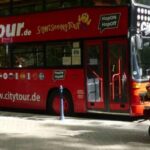


The 24-Hour Hop-On Plan: How to Pace Your Day
This ticket is built for flexibility. You can start at any of the main stops along the route, and you can ride for about 2 hours with commentary as the bus makes its loop. Then, during your hop-off time, you go explore on foot. When you’re ready, you simply hop back on at a stop along the route.
The schedule changes by season, and the Elisenbrunnen area is your key reference point. In April through October, Elisenbrunnen has departures around 10:30 a.m., 1 p.m., and 3:30 p.m. In November and December, it’s tighter—Elisenbrunnen departures only at 1 p.m. You’ll also see different arrival times back at Elisenbrunnen later (for example, arrivals around 12:40 p.m., 3:15 p.m., and 5:40 p.m. in April–October). So treat the timetable at the stop as your best friend.
A small but real advantage: you can use the route like a moving map. If a stop catches your interest—say the memorial area on Lousberg or the university hospital zone—you can jump off, take your time, and still feel like you’re on track. It’s a calmer way to do Aachen than trying to cram everything into one walking-only afternoon.
Elisenbrunnen and the Imperial Core: Where the Story Starts
Most people will gravitate toward Elisenbrunnen, and for good reason. It’s one of Aachen’s most recognizable landmarks, and the route is timed so you can connect with it smoothly whether you’re starting or arriving later. Along this area, the bus passes the 19th-century pavilion, and the audio guide frames it in the wider story of Aachen’s rise.
From there, you’ll glide into the city’s “former imperial” identity. The commentary connects Aachen to Charlemagne and to the tradition of kings of the Germans being crowned here for centuries. Even if that’s not your usual topic, the bus approach makes it less dry—you’re not sitting in a lecture. You’re looking at real places while the audio tells you what they used to represent.
If you like architecture and signage, this is where you’ll want a few extra minutes. Elisenbrunnen isn’t just a stop. It’s an anchor point that helps you understand the center of town and decide what you want to explore deeper on foot.
Ludwig Forum, Modern Culture, and the Roman Thermal-Bath Chapter
The loop doesn’t stay stuck in the past. It swings into modern culture and then back again, which is exactly how Aachen feels in real life.
One stop to notice is Ludwig Forum—your hint that Aachen isn’t only about old stones. This is the kind of stop you can use if you’re curious about current culture and art spaces and want the bus to cover more than just monuments.
Then you roll into the Carolus thermal baths area. The bus route also links you with Aachen’s Roman layer through the commentary, including the idea of Roman thermal baths as part of the long wellness tradition here. That matters because it explains why thermal baths aren’t a random feature of the city. They’re part of a continuity that stretches back much further than most people expect.
If you’re trying to plan your day without overcommitting, here’s a smart approach: spend your walking time where your interest is strongest. If thermal bathing is your thing, you can focus your “on foot” time around the Carolus stop. If you’re more history-first, use the bus to absorb the explanations, then keep walking shorter and more targeted.
CHIO Tivoli and Tivoli Stadium: Sports Fans, Here You Go
Aachen has major sports energy, and the bus makes it easy to spot the landmarks even if you aren’t attending an event. The route includes the CHIO Tivoli stop, which is tied to the famous horse show venue.
And nearby is the Tivoli football stadium area. Even if you only see it from the road, the audio guide helps you place it in the city’s rhythm: this is a place where seasonal events matter, not just everyday sightseeing.
This section is also a nice change of pace from the older center. If you’ve spent the morning around the imperial core, the sports stops can reset your brain. You get open areas, larger buildings, and a different kind of city feel—more local energy, less monument-mode.


Memorial, Lousberg, and the University Zone Around RWTH
Some sightseeing days feel like a checklist. This one helps you avoid that trap by including viewpoints and campus areas.
The route includes a Memorial / Lousberg stop. Even without going deep into a specific memorial site, Lousberg is the kind of area where you can often get a different angle on the city. If you like photo breaks, this is where you’ll likely want to hop off, walk a bit, and reset before the route continues.
Then you head into Aachen’s academic footprint. The bus passes RWTH (the university) and also the University Clinical zone. The audio guide highlights that the university hospital is the world’s largest single-building hospital. That’s an eye-opening fact, and it changes how you read the city when you realize you’re looking at a medical campus on a massive scale, not a normal hospital complex.
If you’re visiting for the day and want a sense of who lives here, this university stretch is valuable. It’s a reminder that Aachen is active and working, not just a museum-like stop on your map.
Vaals and the Three-Country Point: Stepping Into Another Country View
This is the “how is that even possible?” part of the route. The bus includes stops around Vaals bus station Maastrichterlaan and the Netherlands / border triangle area—built around the three-country point between Germany, Belgium, and the Netherlands.
The audio guide makes it simple: you can visit all three countries in just a few steps. That’s not a vague promise. It’s the exact kind of boundary-crossing moment that turns sightseeing into a memory you’ll still talk about later.
You’ll pass through the border triangle zone as part of the same loop that also covers Aachen’s central highlights. That means you don’t need a separate trip plan to get the “different country” experience. You just ride, hop off when it’s time, and then hop back on when you want to return.
Practical tip: treat this area like a short walking window, not an all-day commitment. You’re on a timed loop with a return path, and your best payoff comes from spending enough time to understand the geography without getting so stuck that you miss the earlier city stops.
Choosing Stops for Walking Time: A Simple Strategy
Because it’s hop-on hop-off, you don’t need to do everything. You need a plan that matches your energy and interests.
Here’s how I’d structure it:
- If you love imperial-era landmarks: focus your walking around Elisenbrunnen and use the bus audio to connect the rest.
- If you like Roman-to-modern wellness themes: spend more time around the thermal baths area and keep other stops shorter.
- If you’re a sports or events person: hop near CHIO Tivoli and the Tivoli stadium area for photos and orientation.
- If you want a local-life feel: use the RWTH / University Clinical zone to understand how the city works day-to-day.
As for specific stops that can be good for shorter breaks: Bendplatz, Theaterplatz, and the Health clinic / An der Rosenquelle area can be useful for orientation and quick strolls if you’re between “big” moments. And if you want a gentle scenic pause, the Memorial / Lousberg stop is a strong bet.
The key is to hop off long enough to feel the place, but keep enough time awareness that you can board the next bus when you want to continue. Since travel times can change, you’ll want to keep an eye on the timetable at a stop rather than assuming the bus is exactly on the clock.
Price and Value: Is $28 Worth It?
At about $28 per person for a 1-day 24-hour ticket, the value depends on how you travel.
If you plan to do at least a couple of hop-off walking segments, the price starts to make sense. You’re paying for three things at once:
- a loop that covers major sights without you navigating transit yourself,
- an audio guide that turns the route into a guided experience (not just sightseeing from a seat),
- and flexibility to adjust your pace across the day.
If your plan is only to stay on the bus and never get off, it may feel expensive. But if you treat it like a guided orientation followed by targeted walking—especially for the three-country point—the price starts to feel more reasonable.
Also remember what this ticket offers beyond city-center sightseeing: it expands Aachen’s story into an international angle. That’s hard to replicate in a single, self-planned trip if you don’t already know the geography well.
Practical Details That Can Affect Your Day
A few rules and realities can shape your experience more than you’d expect.
There’s no smoking allowed on the vehicle, and the lower level is accessible for wheelchair users. If you have a Category B disability pass, you can bring a travel companion for free. Dogs are allowed on the lower level, which is helpful if you’re traveling with a pet.
Seats are another factor. Seat reservations aren’t possible, and seats aren’t guaranteed. That means you should show up ready to grab a spot quickly at your boarding stop—especially if you’re aiming to sit together. On busier departures, the bus can fill up, and you may end up separated. This doesn’t ruin the day, but it can change the comfort of the ride.
And since there’s no food included, plan to bring your own snacks or buy along the way. This is a sightseeing transport ticket, not a meal deal.
Who Should Book This Aachen Bus Ticket
You’ll likely be happiest with this tour if you:
- want a fast orientation to Aachen’s main sights,
- enjoy audio-guided sightseeing while you move,
- like using public walking time for the stops that truly interest you,
- and want a simple way to include the Germany–Belgium–Netherlands border triangle without extra transport planning.
It’s also a good fit if you’re traveling in winter and want a lower-stress format. In November and December, the departures at Elisenbrunnen are fewer, so you’ll want to check the timetable and build your day around the listed times. But the overall structure stays easy: ride, hop off, hop back on.
Should You Book This Aachen Hop-On Hop-Off Bus Ticket?
Book it if you want the convenience of a guided loop plus the freedom to choose your walking time—especially if you care about Aachen’s imperial roots and the unusual payoff of the three-country border triangle.
Skip it or think twice if you hate being at the mercy of bus capacity, because there’s no seat reservation system. Also, if you’re the type who prefers one long walking route with minimal transit, this ticket may feel like paying for transport you could do on foot.
If you’re flexible, though, this is a smart one-day format: you get guided context from the audio system, open-top city views, and a boundary-crossing moment that turns Aachen from a single-city visit into a mini international stop.
FAQ
Where can I board the Aachen hop-on hop-off bus?
You can start at any of the stops along the route (you can check the detailed timetable at the bus stops). Elisenbrunnen is one of the key points for departures and arrivals, but boarding is allowed at the other listed stops as well.
How long is the sightseeing ride with the audio commentary?
You get about 2 hours of sightseeing with commentary as the bus makes its route. Your 24-hour ticket lets you hop on and hop off during that day.
What languages are available for the audio guide?
The audio guide is available in Dutch, German, Japanese, Russian, Italian, Spanish, French, Chinese, Swedish, and English.
Is the bus wheelchair accessible?
Yes. The lower level of the bus is accessible to wheelchair users.
Are dogs allowed on the bus?
Yes. Dogs are allowed on the lower level of the bus.
Are seat reservations available?
No. Seat reservations are not possible and seats are not guaranteed.