REVIEW · BERLIN
Berlin: Cold War Era History Guided Bike Tour
Book on GetYourGuide →Operated by Berlin on Bike BoB Fahrradtouren GmbH · Bookable on GetYourGuide
Pedal past a divided city. This guided ride connects Cold War sites you’ve seen on postcards to real street-level scenes, especially Berlin Wall fragments and the Brandenburg Gate.
I also love that the route is built for learning, with a guide pointing out symbolism, explaining why the Wall mattered, and telling escape stories as you go. The one drawback to note: it’s still a real bike outing—about 15 km in 3–3.5 hours—so it’s best for people comfortable in urban traffic and staying seated for a while.
Cold War stops you can actually see up close: Bornholmerstraße, Bernauerstraße, Checkpoint Charlie, and Wall remains.
Guides who tell stories with humor and patience: in past groups, people praised guides like Paul, Oleg, Lauren, and Anha for clear, engaging explanations.
A practical Berlin cycling setup: bike, helmet and gloves on request, plus trouser clips and rain ponchos if needed.
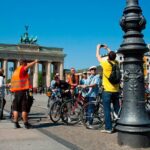
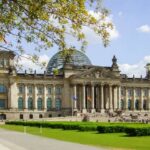
Brandenburg Gate with context, not just a photo op: you’ll hear why it was built and how it ties into the city’s shifting political story.
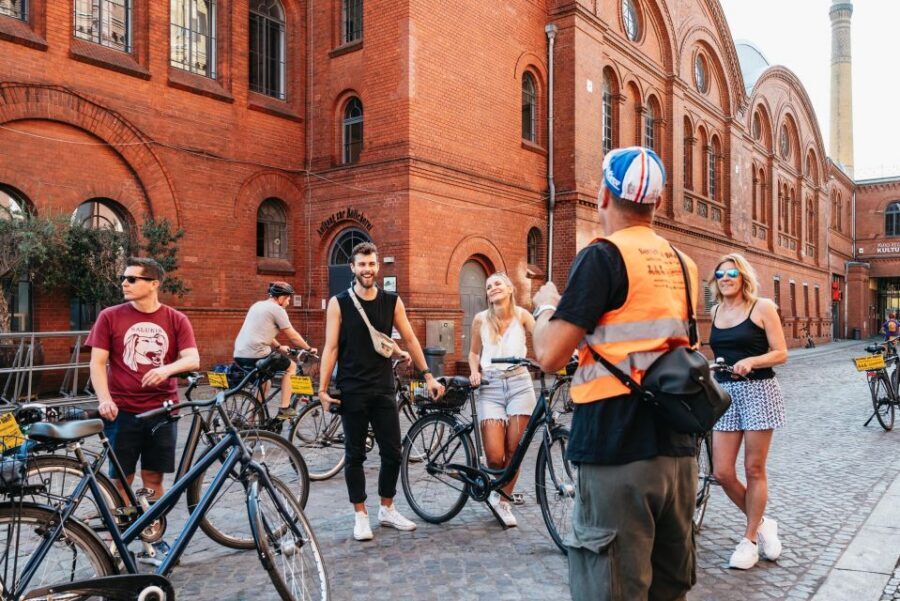
Prenzlauer Berg atmosphere at the start: the tour begins at the historic 19th-century Kulturbrauerei complex.
In This Review
- A 15-kilometer bike route that makes the Wall make sense
- Starting at Kulturbrauerei: why this old brewery sets the tone
- Cruising the former border: Bornholmerstraße, Bernauerstraße, and escape stories
- Checkpoint Charlie and Cold War symbols you can photograph
- Mauerpark and the living Berlin between the past and present
- Brandenburg Gate through a guided lens
- Bikes, safety gear, and small details that keep you comfortable
- How much time and effort it takes (and who it suits)
- Price and value: why $35 can feel like a bargain
- Getting the most from your guide (without overthinking it)
- Meeting up at Eberswalder Straße: simple directions that avoid stress
- Should you book this Cold War bike tour?
- FAQ
- What languages are the guides available in?
- How long is the tour and how far do you ride?
- What’s included in the ticket price?
- Where do I meet, and what’s the nearest metro stop?
- Can I choose which bike I ride?
- What should I bring or wear for the ride?
- Is the tour suitable for children, and are there any restrictions?
A 15-kilometer bike route that makes the Wall make sense
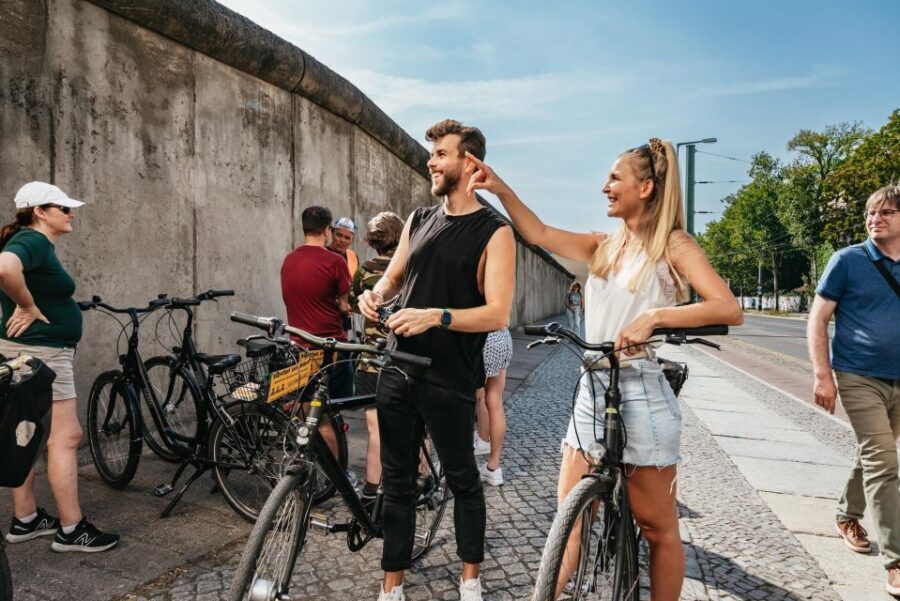
This is the kind of tour that helps your brain connect the dots. You start in Prenzlauer Berg and work your way toward major Cold War touchpoints—Wall remnants, border crossing areas, and famous symbols like Checkpoint Charlie—while still getting a proper ride in.
The big advantage of a guided bike tour is momentum. Berlin is spread out, and by bike you cover distance without turning the day into a grind of stop-and-go walking. The tour is paced as a relaxed city ride (about 3–3.5 hours and up to around 15 km), which makes it friendly for most adults who can handle basic cycling.
Starting at Kulturbrauerei: why this old brewery sets the tone
Your meeting point is the Berlin on Bike depot inside the Kulturbrauerei complex in Prenzlauer Berg, a striking 19th-century brewery area that feels like it belongs to a different century—good news when the whole tour is about eras and borders.
Why I like this start: it gives you a “real Berlin” reset before the history. You aren’t just heading straight to a monument; you’re starting in a lively neighborhood setting, then rolling into the places where the city’s political division shaped daily life.
It also helps with logistics. After the ride, you drop the bike back at the same depot, so you’re not hunting your way out with a tired body and a head full of facts.
You can also read our reviews of more cycling tours in Berlin

Cruising the former border: Bornholmerstraße, Bernauerstraße, and escape stories

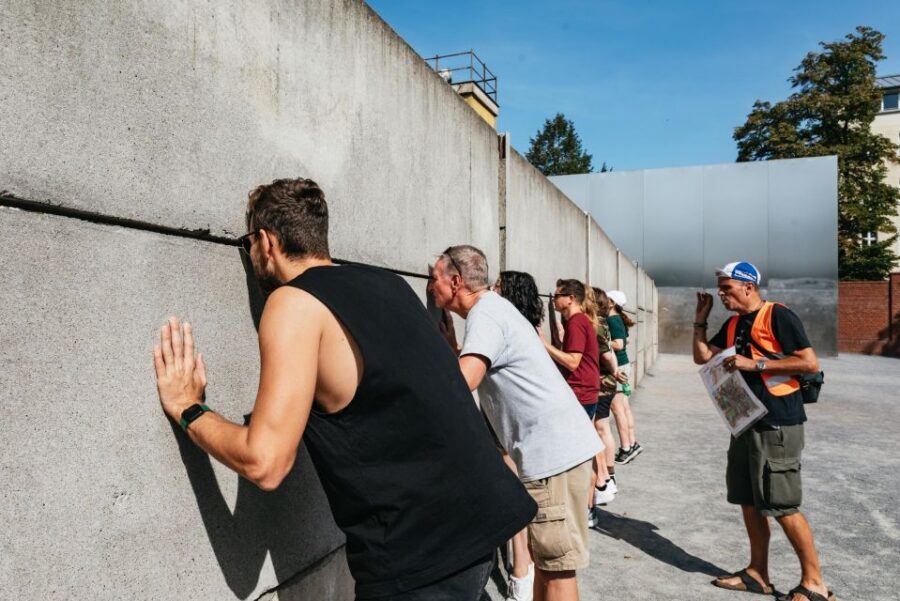
One of the tour’s strengths is that it treats the Wall as more than a wall. You’ll ride along the former border line and pass areas tied to escape attempts and the complicated legacy of separation.
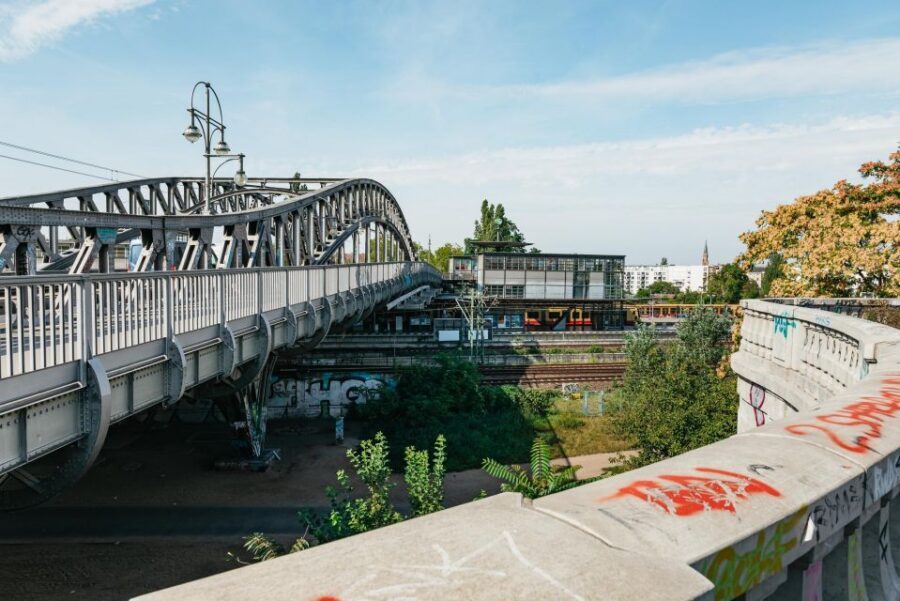
Two of the most talked-about stretches on this kind of route are Bernauerstraße and Bornholmerstraße. Seeing these places by bike matters because the landscape tells the story: you notice sightlines, gaps, and how the border cut through the city rather than sitting off in a museum corner.
Your guide also points out how the Wall was enforced, and you’ll hear about both successful and tragic escape attempts from stories connected to the route and the sites you pass. In past groups, people especially liked guides who were patient and willing to answer questions while keeping everyone safely together.
Checkpoint Charlie and Cold War symbols you can photograph
Checkpoint Charlie is the headline for a reason: it became a global symbol of East–West tension, and you’ll see it with the kind of context that makes the photos feel less like souvenirs and more like evidence.
This tour doesn’t just toss names at you. You also learn how the Wall’s system worked, what made certain locations important, and why these sites still matter to Berliners. One review called out a more neutral perspective on the Cold War, which I agree is a smart way to approach the topic—facts first, then interpretation, and you can form your own view.
You’ll also spot other Cold War markers, including the last watchtower. That detail hits harder than you might expect. A watchtower isn’t just architecture; it’s the physical reminder of surveillance, control, and the risks people took to get out.
Mauerpark and the living Berlin between the past and present
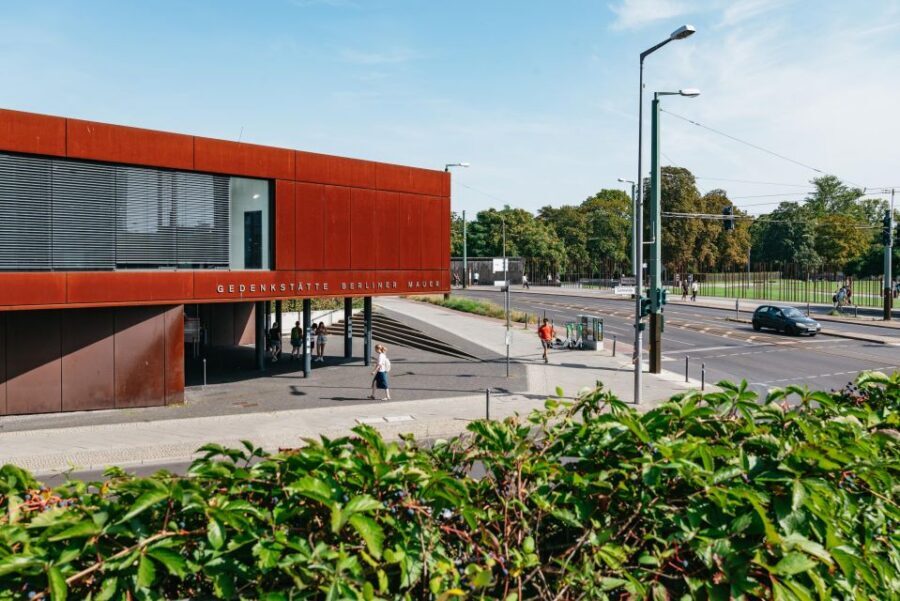
The ride connects the Cold War locations with places where Berlin life continues. Mauerpark is one of those stops that helps you understand the Wall’s legacy in a more human way—because the city didn’t freeze in 1989.
Cycling through areas around Mauerpark and along the route toward the central landmarks also helps with emotional pacing. You get time to process heavier topics, then the guide’s storytelling brings you back to daily reality: how Berliners adapted, how neighborhoods evolved, and why the Wall’s story is still part of public space.
If you’ve only ever seen Berlin Wall sites from the outside, the bike format makes the “in-between” areas feel real. You notice the way streets and corners can shape what happened there—then and now.
Brandenburg Gate through a guided lens
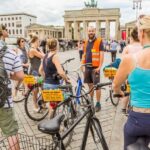
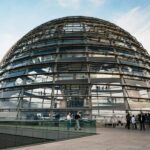
The ride finishes at the iconic Brandenburg Gate area. You’ll see it along with the surrounding Cold War traces and fragments of Wall material that make the history feel tangible rather than abstract.
One thing you should look forward to is the way your guide explains the Brandenburg Gate’s origins—built in the 18th century—and how it sits at the intersection of Berlin’s changing roles. When you hear the timeline, the gate shifts from a famous photo backdrop to a symbol with multiple lives.
A practical tip: give yourself time for a few extra minutes at the end for photos and to absorb what you just learned. The tour moves at a steady pace, and Brandenburg Gate is exactly where you’ll want to slow down.
You can also read our reviews of more guided tours in Berlin
Bikes, safety gear, and small details that keep you comfortable
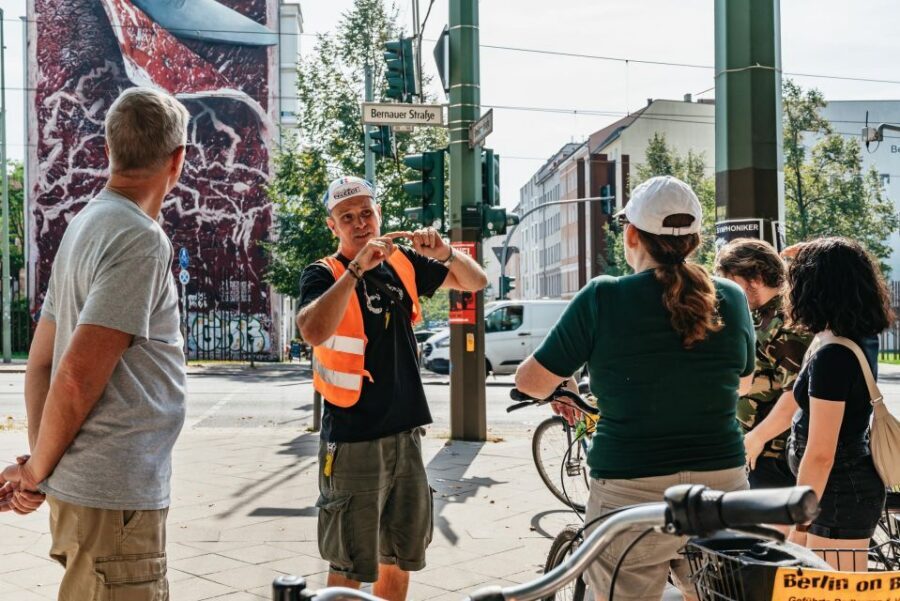
This tour includes the bicycle and your guide, plus a few helpful extras. You can request a helmet and gloves, and you’ll also have things like sunscreen, trouser clips, and rain ponchos available if weather turns.
Those “small” items matter in Berlin. A helmet request is one more thing less to think about, and trouser clips are a clever touch—helpful if you’re wearing looser pants and want less fabric flapping near the bike’s moving parts.
Bike choice is also real here. You’re picking from a large fleet and can choose what suits you. One practical review note: if you’re not very familiar with how a specific braking setup works (like a coaster brake), consider avoiding that type and choosing a bike you’re comfortable riding.
How much time and effort it takes (and who it suits)
Let’s talk effort honestly. Three to 3.5 hours plus about 15 km isn’t a casual stroll. It’s a relaxed pace, but it’s still a physical commitment, especially if you’re coming straight from a long day of walking or museum visits.
This tour fits best if you:
- Can comfortably ride a bike on city streets
- Want Wall history with movement and context, not a classroom lecture
- Prefer guided storytelling that points out what you’d otherwise miss
- Like covering ground efficiently (without rushing)
It’s not suitable for children under 8. And because this is an urban cycling route, it’s also a poor match if you’re not feeling steady on a bike. The good news is that multiple reviews highlight how manageable the cycling is, with roads that can feel surprisingly quiet depending on where you are and how your guide routes you.
Price and value: why $35 can feel like a bargain
At $35 per person for around 3–3.5 hours, you’re paying for more than sightseeing. You’re getting:
- A provided bike
- A live guide (with multiple languages: French, German, English, Dutch)
- Included safety and comfort add-ons like helmet/gloves on request, plus sunscreen and rain ponchos
- A route that strings together major sites and border-linked locations in one outing
In value terms, the guide is the real multiplier. Knowing what to look for at the Wall fragments, understanding the significance of checkpoint locations, and connecting the timeline (including how the Wall came down overnight after almost 30 years) is exactly the sort of thing a self-guided visit can’t replicate as well.
One more value point: the tour is offered by Berlin on Bike BoB Fahrradtouren GmbH, and multiple reviews praise organization and safe navigation—so you’re not left improvising routes while trying to learn history.
Getting the most from your guide (without overthinking it)
You don’t need to memorize dates to get a lot from this tour. What helps is showing up with curiosity and a willingness to ask questions when something clicks.
A few guide habits show up again and again in praise:
- Storytelling with humor, which keeps heavier topics from becoming a slog
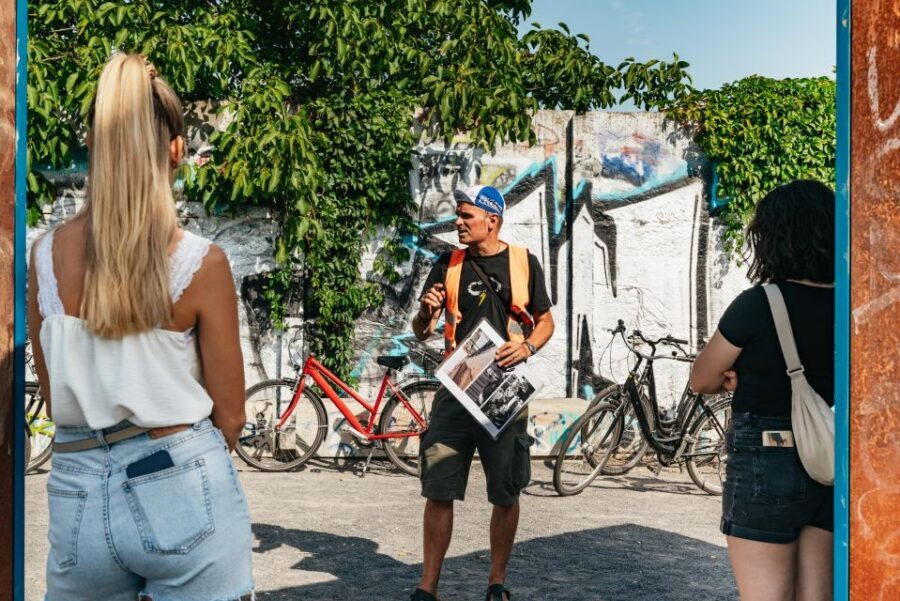
- Clear explanations tied directly to the spots you’re riding past
- Patience when people ask follow-ups
- Adaptation to group interests (some guides also adjusted the route on the fly when needed)
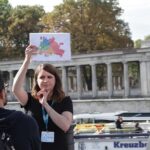
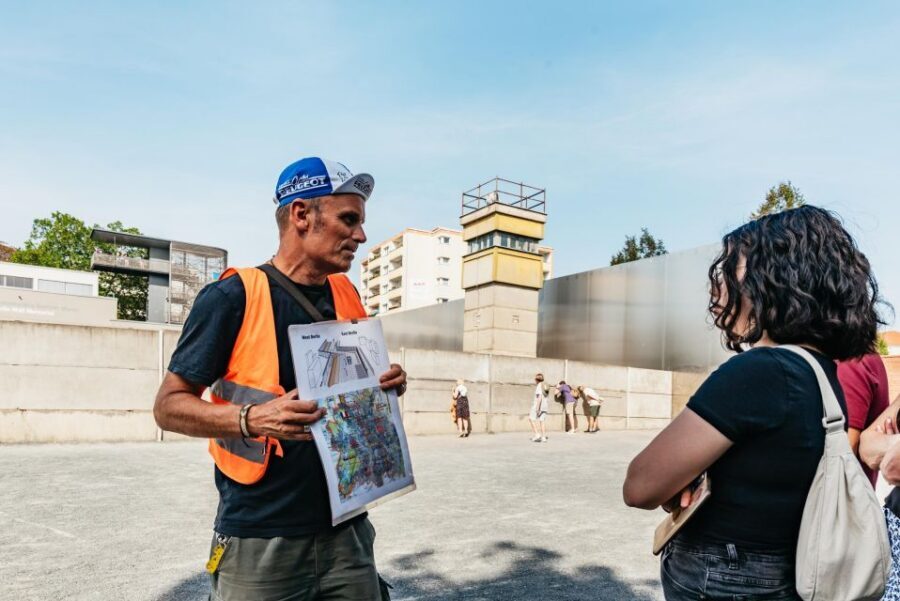
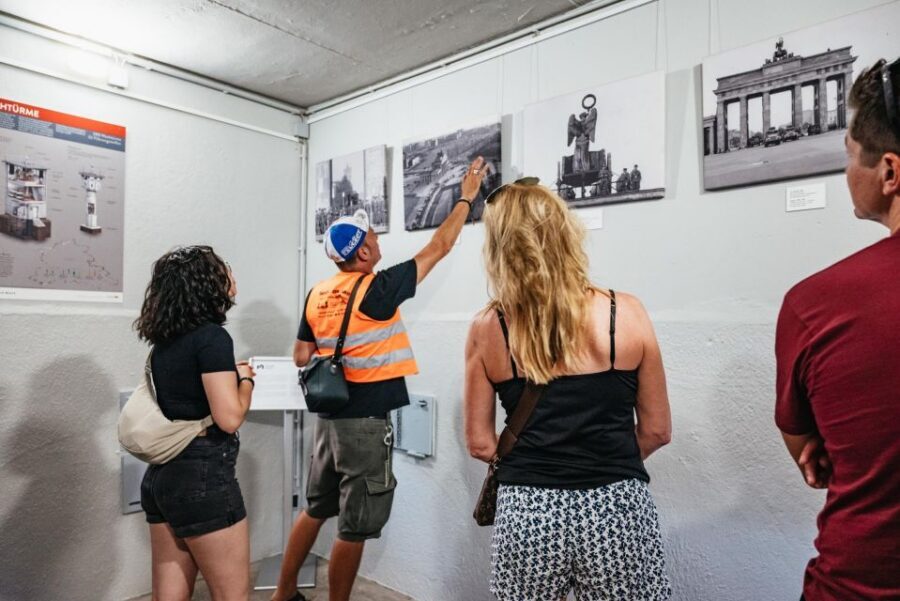
Some guides have even used diagrams or photos to enhance what you’re seeing. If your guide offers visual support, take advantage of it—it makes the physical space easier to picture even after the tour ends.
Meeting up at Eberswalder Straße: simple directions that avoid stress
You meet at the Berlin on Bike depot. The nearest metro station is Eberswalder Straße, just 3 stops from Alexanderplatz.
From Alexanderplatz:
- Take the U2 (red line) toward Pankow
- Get off after 3 stops at Eberswalder Straße
- Leave the station via the exit opposite your travel direction (signposted Kulturbrauerei)
- Walk toward Danziger Straße, then go about 150 meters on the right-hand side
- Turn right onto Knaackstraße, then after 50 meters turn right through the large doorway into the Kulturbrauerei complex
- Follow the yellow signs to the bicycle depot
You’ll finish back at the same meeting point and drop off your bike there.
Should you book this Cold War bike tour?
Book it if you want the Wall and Cold War story told in a way that feels grounded in real places. The bike format is the key advantage: it lets you hit major sites like Brandenburg Gate and Checkpoint Charlie while also seeing border-linked areas such as Bornholmerstraße and Bernauerstraße.
Skip it only if cycling in traffic sounds intimidating or if the 3–3.5 hour time commitment is too much for your schedule or stamina. This isn’t a short ride, and the history topics are serious—great for most people, but not ideal if you’re after light, purely scenic sightseeing.
FAQ
What languages are the guides available in?
The live tour guide is available in French, German, English, and Dutch.
How long is the tour and how far do you ride?
The tour runs about 3 to 3.5 hours and covers approximately 15 kilometers at a relaxed pace.
What’s included in the ticket price?
You get a bicycle and a guide. The tour also includes helmet and gloves upon request, plus sunscreen, trouser clips, and rain ponchos available if the weather is bad.
Where do I meet, and what’s the nearest metro stop?
You meet at the Berlin on Bike depot. The nearest metro station is Eberswalder Straße, which is 3 stops from Alexanderplatz.
Can I choose which bike I ride?
Yes. The tour offers a large fleet, and you can select a bicycle that suits you.
What should I bring or wear for the ride?
Bring comfortable shoes and comfortable clothes. You can also request a helmet and gloves, and rain ponchos are available in bad weather.
Is the tour suitable for children, and are there any restrictions?
The tour is not suitable for children under 8. Alcohol and drugs are not allowed.