REVIEW · BERLIN
Jewish Life in Berlin – Private Walking Tour
Book on Viator →Operated by Original Berlin Walks · Bookable on Viator
Berlin’s Jewish story changes block by block. This private walking tour gives you the full arc, from early 17th-century Jewish settlement through the Holocaust, then on to today, with key stops like the New Synagogue and the Museum Blindenwerkstatt Otto Weidt. I especially like how the route links big events to street-level places, and I also like the one-group pace that makes it easier to ask questions without feeling rushed.
The main thing to consider: the walk is focused on specific neighborhood sites and testimonial history. If you’re hoping for a stop at a particular Holocaust memorial (not listed in the route), you may need to adjust expectations and/or ask the operator before booking.
In This Review
- Key highlights at a glance
- Jewish Life in Berlin, from early settlement to today
- Price and logistics: what $355.25 per group really means
- Meeting Hackescher Markt and navigating a mostly flat route
- Hackescher Höfe and the area where memories are written in buildings
- Otto Weidt’s Museum: a wartime story tied to a workplace
- Scheunenviertel, Sophienstraße, and how a neighborhood tells its own story
- Grosse Hamburger Straße: schools, cemeteries, and the route of deportation
- Sophia Church and a surprising Martin Luther King connection
- Auguststraße and ending at the New Synagogue, Centrum Judaicum
- How guides handle sensitive topics (and keep the pace humane)
- Who should book this Jewish Life in Berlin walk?
- Should you book Jewish Life in Berlin (Private Walking Tour)?
- FAQ
- How long is the private Jewish Life in Berlin walking tour?
- Where do we meet, and where does the tour end?
- What does the price include?
- Is this tour private or shared?
- What’s the walking like?
- Does it run in bad weather?
- What are the hours for the New Synagogue/Centrum Judaicum stop?
Key highlights at a glance
- Otto Weidt’s Museum Blindenwerkstatt: resistance told through a real 1940s workplace story
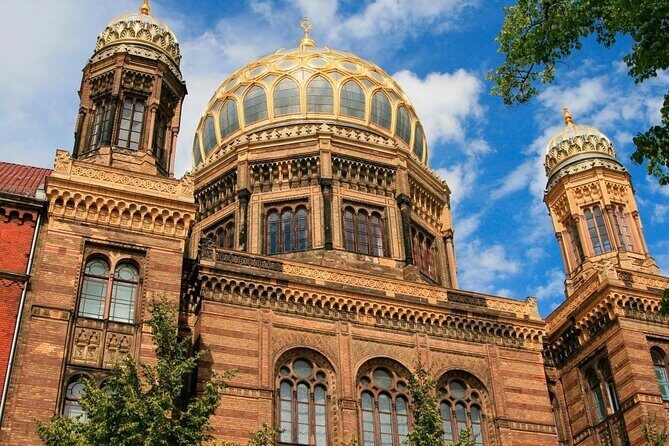
- New Synagogue at Centrum Judaicum: how a landmark building traces community life across time
- Neighborhood map, not just monuments: Scheunenviertel, Sophienstraße, Auguststraße, and more
- Everyday-life emphasis: schools, streets, and community geography—not only dates and dates
- Private group attention: your guide can tailor explanations to your group’s questions
- Flat walking for a mostly easy route: a lot of time outside, but not steep touring
Jewish Life in Berlin, from early settlement to today
This tour works because it refuses to treat Berlin’s Jewish story as one timeline with one ending. You move through neighborhood fabric—streets, institutions, and buildings—so you can see how community life formed, changed, and was then brutally interrupted.
You’ll start with the early Jewish presence in Berlin, including the first immigrants arriving in the 17th century. The tour also points you toward major figures tied to Berlin’s intellectual and educational life. One example mentioned is Moses Mendelssohn, credited with founding the first modern public school for Jewish boys. Names like Albert Einstein also get folded into the story, so you’re not just learning about suffering—you’re also learning about influence.
The route then turns hard toward the 1940s and the Holocaust period, and it doesn’t only talk about dates. It highlights how Nazi persecution hit daily work and daily survival. That matters because Berlin is full of history, and the temptation is to see everything as distant. Here, the tour keeps yanking history back to real places where people lived and made choices.
Finally, ending at the New Synagogue/Centrum Judaicum gives you a sense of continuity: the building isn’t just a relic. It’s used to interpret the past and connect it to community memory today.
You can also read our reviews of more walking tours in Berlin



Price and logistics: what $355.25 per group really means
The price is $355.25 per group, with up to 15 people. That’s not “cheap” on a per-booking basis, but it can become excellent value if you’re traveling with family or friends and can fill a group.
Here’s the math in real terms:
- If you max out at 15 people, you’re paying roughly $24 per person.
- If it’s just 2 people, it’s more like $178 per person.
So I’d treat this as a buy-together tour. If you’re solo or a couple, you’ll likely want to compare against other Jewish history tours and see whether you really need the private format.
You’ll also get a mobile ticket, and the tour runs in all weather. Expect the walking part to be the main “effort cost,” not anything complicated with admissions. In fact, the listed stops show admission tickets as free at each segment, though you should still allow time for the guide’s interpretation at each location.
The private format is the real perk: it’s just your group, so your guide can slow down when someone has questions—or speed up if your group wants the facts first and the feelings later.
Meeting Hackescher Markt and navigating a mostly flat route
The tour meeting point is at Hackescher Markt S-Bahn area, with the guide meeting you outside Starbucks. The walk starts in that lively central area, which is a plus because you can usually get there by public transit without drama.
The tour is about 3 hours. With nine stops, and each stop clocking around ten minutes in the plan, you’re looking at a steady pace: short talks, quick regrouping, then you move on. Reviews note it’s a lot of walking but on the flat, which is helpful if you want to keep the day simple and not fight steep hills.
Weather matters here because you’re outdoors for most of the time. Even if it’s not cold, Berlin wind can make rain feel sharper than you expect. Bring layers and plan for either sun or downpour.
Also, do yourself a favor and arrive a bit early. Meeting at a transit hub can be easy, but only if everyone is calm and punctual. A private tour is all about timing—your guide can’t start the story until you’re all together.
Hackescher Höfe and the area where memories are written in buildings
You begin with an intro right at Hackescher Markt. Then the walk takes you to Die Hackeschen Hoefe. This is the kind of stop that pays off because it’s not a single giant landmark—it’s a place you might pass without noticing. Your guide connects it to the history of the site and also talks about the Memorial of the woman protest. That’s the tone the tour uses a lot: quiet details that add up.
What I like about this early segment is the mindset shift. Instead of starting with only religious buildings or dramatic memorials, you start with urban space—courtyards, street patterns, and the way Berlin developed around daily life. It’s a good way to get your bearings fast.
Also, Hackescher Höfe helps set up the rest of the tour. You’re about to learn how Jewish community life in Berlin concentrated in particular neighborhoods. When you first understand the city’s layout, the later stops make more sense.
One consideration: if you’re expecting a nonstop stream of famous sites right from the first minute, this opening is more interpretive than flashy. You’ll still get landmark context quickly, but the tour aims to build understanding step by step.
Otto Weidt’s Museum: a wartime story tied to a workplace
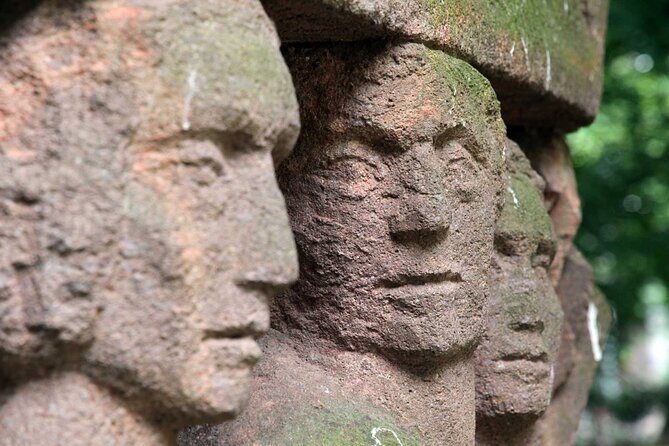
Stop three is the standout for many people: Museum Blindenwerkstatt Otto Weidt. This is a 1940s-era factory/workshop where Otto Weidt protected his blind and deaf Jewish workers from persecution during the Holocaust.
This matters because it’s not history told from a distance. It’s told through a place of work—where people lived their days, faced danger, and depended on choices made in real time. The tour frames Weidt’s actions as resistance, and it explains the logic behind that resistance: protecting people when the system was built to destroy them.
You’ll also get the emotional weight the story deserves, and the tone is described in reviews as sensitive and handled with care. That’s important because topics like this can overwhelm a group if the guide doesn’t pace it well.
What I’d take from this stop is a practical lesson: survival wasn’t only about hiding. It was also about networks, workplace relationships, and courage in small decisions. A factory becomes a lens for understanding how persecution worked—and how people sometimes fought back.
Tip for your visit: give yourself time here. Even when the tour plan says about ten minutes, you’ll want a moment to actually look around and absorb what the space represents.
You can also read our reviews of more private tours in Berlin


Scheunenviertel, Sophienstraße, and how a neighborhood tells its own story
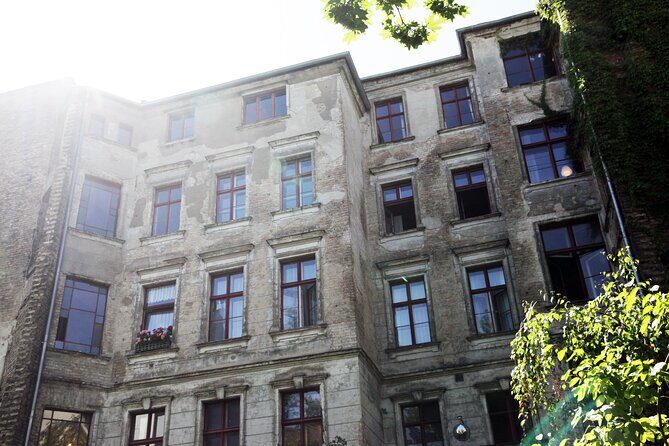
After Otto Weidt, you head into Scheunenviertel, historically tied to Berlin’s former Jewish quarter. This is where the tour starts feeling like a map of community life rather than a list of events.
Your guide explains the history of the area and the Jewish community in old Berlin. This is a key part of the tour because it’s where you can picture the density of community life before the catastrophe. When you later hear about deportation and destruction, the neighborhood context makes it much harder to treat those events as abstract.
Next comes Sophienstraße, described as a picturesque street in Berlin Mitte named after Queen Sophie. This is a smaller, street-level stop, and it works because streets are how you read a city. It also gives you a contrast: you see how beauty and everyday life existed in the same places where later persecution would strike.
These middle stops are where your guide’s style really shows. Some guides use facts and names. Others use stories and building context. From reviews, the better moments involve careful explanations and patience with questions, including when groups have a wide range of ages.
Possible drawback: if you only want big-ticket religious landmarks, this section may feel more about neighborhood meaning than about one icon you can photograph and call done. But that’s also the point. Berlin’s Jewish story is about place and pattern.
Grosse Hamburger Straße: schools, cemeteries, and the route of deportation
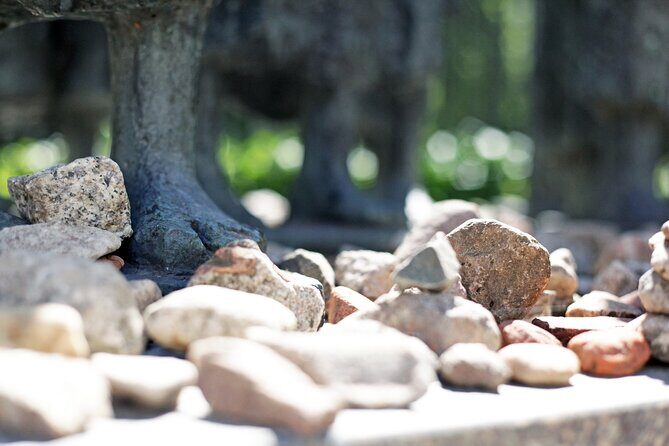
At Grosse Hamburger Straße, the tour focuses on three hard themes: the Jewish cemetery, the Jewish school, and the deportation of Jews in the Nazi era. This stop is heavy. It doesn’t hide from the reality of what happened to education, community memory, and human lives.
Even if the physical remnants you see are limited, the guide’s narration gives them weight. Reviews mention how guides brought what might look like only bits and pieces to life. That’s crucial here. Cemeteries can feel quiet and distant unless you’re taught how to read what you’re standing in front of.
What I like about this stop is the connection between structures and purpose. A school isn’t only a building. It’s a symbol of future plans. A cemetery isn’t only stone. It’s a record of continuity. When those are interrupted, you understand what the violence destroyed—not just who died.
One consideration: this part may hit emotionally. If you’re traveling with kids or anyone sensitive to Holocaust-related topics, check that you’re comfortable with the tone before you book. A few reviews specifically praised how guides handled sensitive situations well, which is a good sign, but the content is still serious.
Sophia Church and a surprising Martin Luther King connection
The route then includes Sophia Church, where your guide explains the church’s history and what it had to do with Martin Luther King.
That kind of connection is why I like this tour. Berlin can be a history maze, and you can end up thinking only in Berlin terms. A link to Martin Luther King pushes you to think about how justice movements echo across time and geography.
Because the tour doesn’t treat this as a random detour, it helps you see how different faith spaces and public movements connect to wider human rights stories. It’s also a reminder that Jewish history in Berlin isn’t the only thread here. It’s part of how the city’s moral and civic life evolved.
Do note: this stop is named, and it’s part of the route, but it’s not a Jewish landmark. If your goal is strictly Jewish-only sites, this may feel like a brief change of focus. Still, it can be a useful contrast stop, especially if your guide explains the connection clearly.
Auguststraße and ending at the New Synagogue, Centrum Judaicum
The final stretch includes Auguststraße, described in the tour plan as an area known for art galleries and important buildings connected to the old Jewish community. This is the kind of stop that helps you see present-day Berlin without pretending it’s untouched by the past.
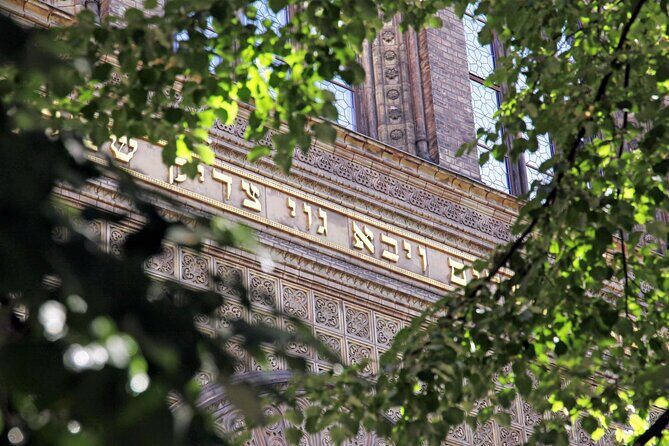
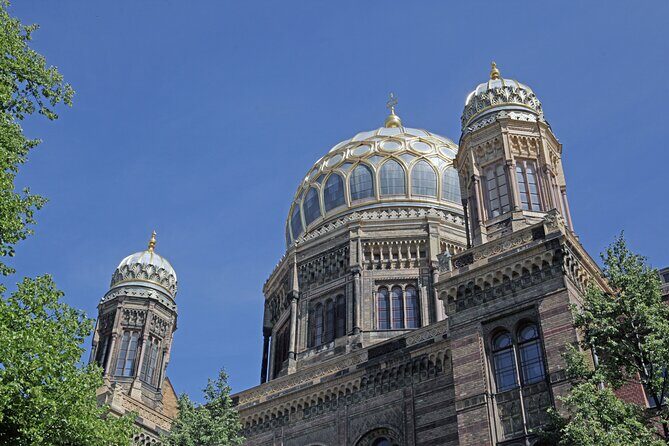
Then you finish at Stiftung Neue Synagoge Berlin – Centrum Judaicum, at Oranienburger Str. 28–30. This is the tour’s big visual finish: the New Synagogue. It’s presented as one of Berlin’s most significant Jewish landmarks and the main synagogue of the Berlin Jewish community, with architectural importance as a late 19th-century monument.
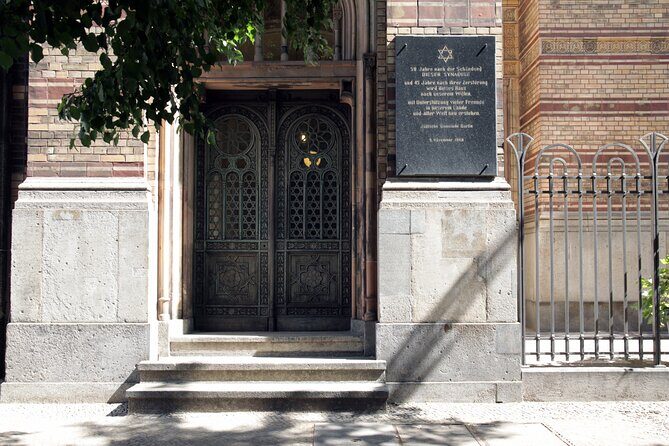
The Centrum Judaicum aspect is what gives the end point value beyond viewing walls. Your guide explains the history of the synagogue and references the Night of broken glass in 1938, plus the people who helped Jewish people during that period.
From a reader’s standpoint, I like that ending because it ties together everything you heard earlier: community life, cultural achievements, persecution, and the way memory is preserved through interpretation. If you’ve been thinking about this tour as only an emotional journey, this ending shows you it can also be an educational one.
How guides handle sensitive topics (and keep the pace humane)
This tour deals with Holocaust-era persecution and the collapse of a community. That means the guide’s approach is more than style. It affects whether you leave feeling informed or just overwhelmed.
In reviews, guides are praised for handling sensitive situations well, answering questions patiently, and keeping explanations clear while still respecting the subject. One review also highlighted a guide’s ability to talk about how Nazi propaganda infiltrated the Berlin population, which is exactly the kind of context that helps you understand why the horror spread so effectively.
Private tours can be better here because your guide can adjust tone to your group. If someone wants details, the guide can provide them. If someone needs time, the guide can pause and give space.
A practical note: if you’re the type who likes to ask many questions, go for it. This tour format is built for that. Just pace yourself—some stops are the kind where processing matters as much as listening.
Who should book this Jewish Life in Berlin walk?
You should book if you want a structured, street-level introduction to Berlin’s Jewish community—past and present—and you want the tour to connect schools, streets, workspaces, and landmark buildings into one story.
This also suits you if you like private tours for practical reasons: easier pacing, more conversation, fewer interruptions. Reviews praise guides for being friendly, communicative, and good with mixed-age groups, including keeping humor appropriate while still staying respectful.
You might hesitate if you mainly want a quick hit of famous memorials or a route that prioritizes specific Holocaust memorial sites. The walk you’re getting is centered on Jewish quarter geography, Otto Weidt, and the New Synagogue/Centrum Judaicum. It’s not a generic highlights circuit.
If your group includes someone who needs mobility simplicity, the “mostly flat” nature helps. You’ll still walk a lot, so comfortable shoes are non-negotiable.
Also: if this is your first serious Jewish-history tour in Berlin, you’ll appreciate the layered approach—starting with early settlement and ending with the way a landmark building explains history.
Should you book Jewish Life in Berlin (Private Walking Tour)?
Yes, if you want an organized, private route that links neighborhood places to real people and real decisions. The value is strongest when you can spread the cost across a group, and the content is strongest if you’re open to learning through streets and buildings rather than only seeing a few big monuments.
I’d book this especially for the Otto Weidt stop and the finish at the New Synagogue/Centrum Judaicum, because those two points give you both the human story and the interpretive endpoint. If your priority is a specific Holocaust memorial stop, check with the operator first so you’re not disappointed by the focus.
FAQ
How long is the private Jewish Life in Berlin walking tour?
It’s about 3 hours.
Where do we meet, and where does the tour end?
You meet your guide at Hackescher Markt S-Bahn station, outside Starbucks. The tour ends at New Synagogue Berlin – Centrum Judaicum, Oranienburger Str. 28–30.
What does the price include?
The tour includes a professional guide. The tour uses a mobile ticket.
Is this tour private or shared?
It’s private. Only your group participates.
What’s the walking like?
Expect a lot of walking, but the route is described as flat.
Does it run in bad weather?
Yes. It operates in all weather conditions, so dress appropriately.
What are the hours for the New Synagogue/Centrum Judaicum stop?
The listed hours are Monday–Sunday, 9:00 AM to 3:00 PM (for the provided date range).