REVIEW · BERLIN
Berlin’s Jewish Heritage: Private Tour of the Vibrant Jewish District
Book on Viator →Bookable on Viator
A walk through Berlin’s Jewish landmarks hits hard. In just about 3 hours, this private tour connects pre-WWII Jewish life with the losses of the Holocaust, using the streets of Scheunenviertel and key memorial sites as your guide. I like that you get undivided time with a private guide, with morning or afternoon departures, so you can ask questions instead of racing to the next photo stop.
My second big draw is the mix of places: the New Synagogue area, the moving Stolpersteine tributes, and then the Blindenwerkstatt Otto Weidt Museum and Friedrichstraße Station memorials. Guides such as Orit and Walid are noted for blending clear history with a personal human touch. One thing to consider: the content is emotionally heavy, and the New Synagogue stop may require a separate ticket if you want to go inside.
In This Review
- Key highlights to look for
- A 3-Hour Private Walk Through Berlin’s Jewish District
- Getting Oriented Near the New Synagogue and Centrum Judaicum
- Scheunenviertel Streets: Moses Mendelssohn, Old Cemetery, Stolpersteine
- Friedrichstraße Station Memorial: Trains To Life, Trains To Death
- Blindenwerkstatt Otto Weidt: A Rescue Story You Can Visit
- What Makes It Truly Private: Your Guide Sets the Tone
- Price and Value for $23: What You Pay vs. What You Save
- Timing, Departure Choices, and How the Walk Will Feel
- Should You Book This Berlin Jewish Heritage Tour?
- FAQ
- How long is the Jewish Heritage private tour?
- What is included in the price?
- Are museum tickets included?
- Where does the tour start and what areas does it cover?
- Are there different departure times?
- Is this tour private?
- What is the cancellation policy for a full refund?
Key highlights to look for
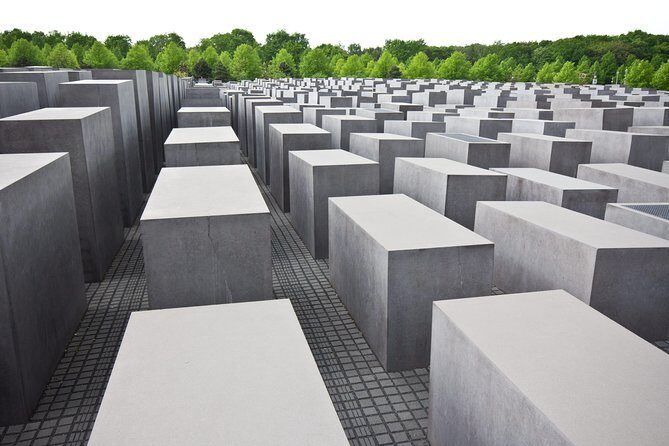
- Golden domes at New Synagogue Berlin – Centrum Judaicum and the former Jewish heart of the city
- Scheunenviertel walking focus on the oldest Jewish Cemetery site and public memory markers
- Stolpersteine tributes that put names and victims back into everyday streets
- Friedrichstraße Station memorials tied to transports in 1938 and from 1942 onward
- Blindenwerkstatt Otto Weidt Museum and the story of rescuing blind and deaf Jewish workers
- Private guide time with a route paced for your group, not a crowd
A 3-Hour Private Walk Through Berlin’s Jewish District
This isn’t the kind of tour where you check boxes and move on. It’s built as a focused walking route through a part of Berlin where history is literally written into the street plan. In roughly 3 hours, you’ll cover several stops in and around the former Jewish Quarter known as Scheunenviertel, plus two major memorial locations, without turning the day into a long museum marathon.
You’ll also feel the difference that a private setup makes. You can ask follow-up questions, slow down at a detail you care about, and keep moving when you want to. That matters on a subject like this, where context isn’t optional. The experience is described as most travelers can participate, and the stops are short—so even though the theme is serious, the pacing is not designed to overwhelm you with hours of standing still.
If you’re visiting Berlin for the first time, this tour works as a powerful orientation to how the city remembers. If you’re returning, it’s a meaningful way to connect the dots between “what happened” and “where you are standing right now.”
You can also read our reviews of more private tours in Berlin


Getting Oriented Near the New Synagogue and Centrum Judaicum
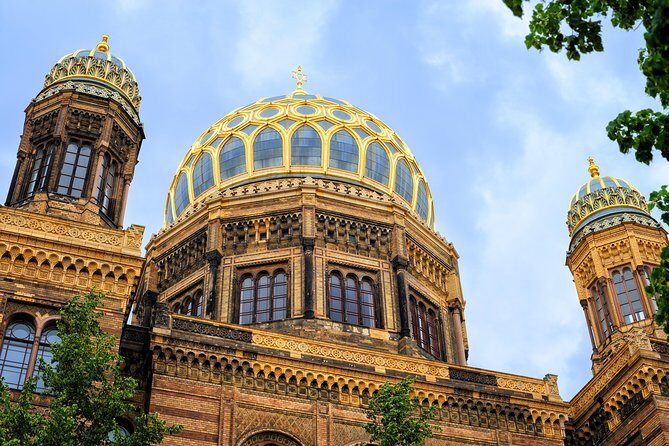
Your first stop is the New Synagogue Berlin – Centrum Judaicum, recognized for its striking golden domes. Even at a short visit (about 10 minutes), this is an effective entry point because it anchors the area in Jewish presence before the cataclysm of WWII.
A key detail here: the New Synagogue is noted as the formerly largest Jewish place of worship in Germany. That single fact helps you understand why the building matters beyond architecture. It signals community scale, visibility, and confidence—something that was later violently interrupted. Your guide’s job is to connect the dome and the location with what life looked like here before Nazism destroyed it.
Practical heads-up: admission for this stop is listed as not included, so if you want to go inside, plan for an extra ticket. If you prefer to keep costs down, you can still use the visit as a strong “arrival moment” to frame what you’ll see later—especially the memorial sites that explain how normal life was shattered.
Scheunenviertel Streets: Moses Mendelssohn, Old Cemetery, Stolpersteine
Next you move through Scheunenviertel, described as Berlin’s former Jewish Quarter. This is where the tour becomes a walk you can feel in your legs and remember with your eyes. You’ll have about 30 minutes for this stretch, which is enough time to slow down at meaningful points instead of just passing through.
Two elements make this portion particularly powerful:
First, you’ll visit the gravesite of Moses Mendelssohn at the oldest Jewish Cemetery in the city. Even if you don’t know much about him going in, your guide can give you the context needed to see why a cemetery location carries weight. Cemeteries are not only about mourning; they’re also about continuity—proof that communities lived, worked, and left roots behind.
Second, you’ll encounter the Stolpersteine memorials. These small brass markers change the mood of a neighborhood. They bring victims of Nazism back to street level, with names and fates tied to specific addresses. You’ll spend time paying tribute at these memorials, and the route style makes it hard to treat as an abstract concept. The street is the stage, and remembrance becomes part of walking around.
One consideration: Stolpersteine moments can feel personal fast, because you’re close to the site rather than protected behind a museum wall. That’s part of the point. Just be ready for that emotional immediacy.
Friedrichstraße Station Memorial: Trains To Life, Trains To Death
Then comes one of the most direct “place meets history” segments: Trains To Life Trains To Death at Friedrichstraße Station. This stop is short—around 10 minutes—but it’s packed with meaning.
This memorial is tied to how Nazi persecution unfolded through transportation and deportation. The description includes two key time frames you’ll want to keep in mind while you’re standing there:
- After the Nazi pogroms of 1938, children were transported to safety in the west.
- After 1942, the deportations continued eastwards toward extermination centers such as Auschwitz-Birkenau, including the young and infant victims you’ll see honored here.
If you want a guided experience that helps you understand the pattern, this is the stop that does it. The station setting matters: it’s about logistics in a terrifying sense—how the machinery of the regime moved people like objects. Your guide will help you hold both realities together: temporary refuge for some children after 1938, and later destruction for others after 1942.
Because this is a memorial site tied to mass violence, it’s also the kind of place where your guide’s pacing and explanation matter more than any single visual. Take a breath, read what you can, and don’t rush through the emotions just to keep the schedule moving.
Blindenwerkstatt Otto Weidt: A Rescue Story You Can Visit
The tour’s final major stop is the Museum Blindenwerkstatt Otto Weidt. You’ll have about 30 minutes, and this portion shifts tone in an important way. You’re no longer only tracking the machinery of harm—you’re also seeing how people tried to save others.
The museum tells the story of German factory owner Otto Weidt, who hired mainly blind and deaf Jewish workers. The description emphasizes that his actions helped them survive and avoid what was otherwise certain death at the hands of the Nazis.
That rescue element changes how you carry the rest of the information. It’s not a “happy ending,” and it’s not a free pass from the tragedy you’ve just seen. It’s something different: proof of human agency inside a system designed to remove it.
If you tend to learn better with stories rather than dates, this is the stop that will stick hardest. And because you have a full half hour here, you’ll have time to absorb the museum’s message without feeling like you’re rushing through artifacts.
You can also read our reviews of more historical tours in Berlin





What Makes It Truly Private: Your Guide Sets the Tone
The private format is one of the most practical reasons to choose this tour. Your group is the only group participating, and you can expect professional, local guidance rather than an automated script.
From the guide feedback tied to this experience, two qualities come up again and again: clarity and a personal touch. Guides like Walid are described as personable and professional, and Orit is noted for combining historical context with her own personal story. That matters because Jewish history in Berlin isn’t one topic. It’s community life, public space, memory, persecution, and survival—all layered in the same city blocks.
In a group tour, that complexity can get flattened. Here, your guide can adjust. If you’re curious about how memory is built into streets (hello Stolpersteine), you can linger. If you’re more drawn to how persecution moved through places like Friedrichstraße Station, you can focus there.
One more practical detail: a mobile ticket is mentioned. That typically makes entry easier at the stops where a ticket is needed, and it helps you avoid scrambling to find the right paperwork.
Price and Value for $23: What You Pay vs. What You Save
At $23 for about 3 hours, the headline value is strong because the tour isn’t pretending everything is paid-for museum access. Many of the meaningful stops are free, including the Stolpersteine tribute sites and the Friedrichstraße Station memorial.
That’s a smart way to design value, because you’re not paying admission multiple times just to stand in front of exhibits. The experience is also clear about where costs might appear: the New Synagogue stop lists admission as not included. So your total out-of-pocket might vary based on whether you want to enter there.
If you compare it to the cost of a guide alone plus separate tickets, the key is that the tour is built around public memory and short site visits. You’re paying primarily for interpretation: the guide helps you understand what you’re looking at, and that’s hard to replicate with a self-guided walk.
Bottom line: if you’re looking for a guided history-focused route with minimal forced museum spending, this price makes sense.
Timing, Departure Choices, and How the Walk Will Feel
You can choose either a morning or afternoon departure time, which is great if Berlin is already packed with other plans. The overall schedule works because the stops are short—10 minutes at the New Synagogue area, 30 minutes in Scheunenviertel, 10 minutes at Friedrichstraße Station, and 30 minutes at Otto Weidt’s museum.
That structure means you get variety without feeling trapped. You begin with an architectural anchor, then shift to neighborhood streets and public remembrance, then to a station memorial tied to transports, and end with a museum where the story turns toward survival.
If you’re the type who likes to see and then process later (good idea with this topic), you’ll likely appreciate the flow. It’s also easier on your attention span than a tour that only contains long indoor segments.
And yes, there’s a serious side to the subject matter, so your energy will matter. Plan this tour for a time when you’re not rushing straight from a late night out or a long day of museums.
Should You Book This Berlin Jewish Heritage Tour?
Book it if you want a guided walk through Berlin that connects pre-WWII Jewish life, Holocaust tragedy, and modern remembrance in specific places. I’d especially recommend it if you like learning with a human guide rather than reading labels on your own, and if you value the street-level impact of Stolpersteine and the station memorial context.
Skip or reconsider if you’re seeking a light, entertainment-style tour. This experience deals with real suffering and deportations, and the memorial sites will ask you to slow down. Also factor in that the New Synagogue stop lists admission as not included—so decide whether you want to budget for that.
If you’re planning your first serious history day in Berlin, this is a strong choice because it stays compact. You get a lot of meaning in a manageable time window.
FAQ
How long is the Jewish Heritage private tour?
It runs for approximately 3 hours.
What is included in the price?
You get a professional local tour guide. Depending on the chosen option, you may also have a private vehicle with a professional driver.
Are museum tickets included?
Museum entries are not required for the tour according to the overview, but the New Synagogue Berlin – Centrum Judaicum stop lists admission as not included. Plan for that possibility.
Where does the tour start and what areas does it cover?
It focuses on Berlin’s Jewish Quarter area around Scheunenviertel, with stops at the New Synagogue Berlin – Centrum Judaicum, memorial sites connected to Friedrichstraße Station, and the Blindenwerkstatt Otto Weidt Museum.
Are there different departure times?
Yes. Choice of morning and afternoon departure times is available.
Is this tour private?
Yes. It is a private tour/activity, and only your group participates.
What is the cancellation policy for a full refund?
You can cancel for a full refund if you do so at least 24 hours before the experience’s start time.