REVIEW · BERLIN
Berlin: The Wall and Cold War – a Private Walking Tour
Book on GetYourGuide →Operated by Sightseeing Point GmbH · Bookable on GetYourGuide
The Wall still tells stories. This private 2-hour walk helps you picture Cold War Berlin in real, human terms, especially at the Palace of Tears and the places tied to attempted escapes. The one trade-off: you’ll be mostly walking outside, so the experience can feel intense if you want something lighter and more relaxed.
You’ll start at U Bernauer Straße, follow the former border through the center, and end at Checkpoint Charlie, with a local guide who keeps the history grounded in daily life rather than just dates. I also like that you get a private group setup for a closer back-and-forth, and the guide can work in German or English. One more consideration: if the viewing area for the death strip is closed, you may miss that specific vantage point.
In This Review
- Key things I’d focus on before you go
- Why Bernauer Straße is the perfect place to start
- Walking the former border: how daily life in a divided city feels different
- Tränenpalast (Palace of Tears): what an actual station teaches you
- From the death strip to Checkpoint Charlie: finishing with two border realities
- Price and value: why $22 can make sense for a focused 2-hour walk
- Practical comfort: language, group size, and how to get the most out of it
- Who this tour suits best (and who might want something different)
- Should you book this Berlin Wall and Cold War private walking tour?
- FAQ
- Where do I meet my guide?
- Where does the tour finish?
- How long is the Berlin Wall and Cold War private walking tour?
- Is this a private tour?
- What languages are the tours offered in?
- Is the tour wheelchair accessible?
Key things I’d focus on before you go
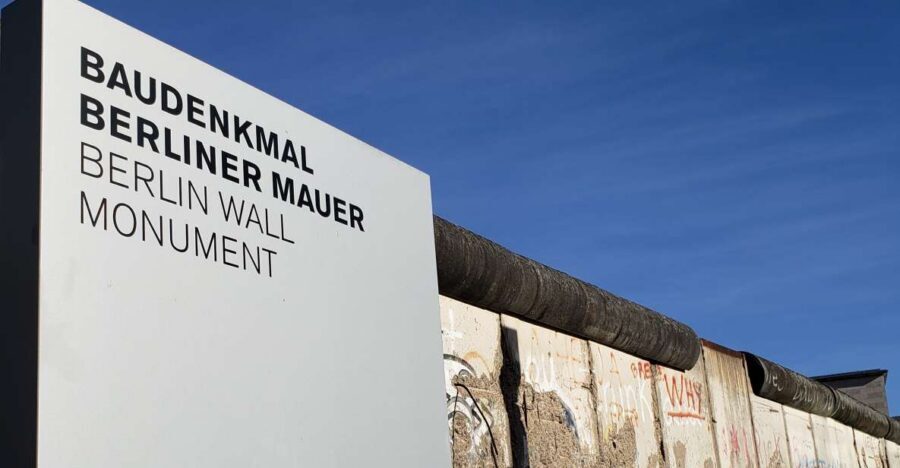
- Start at Bernauer Straße: a strong way to understand why this section mattered.
- Original border-station stops: you see places where people actually waited and crossed.
- Stories about daily life: you get beyond the big events into what division meant day to day.
- Escape-attempt context: you learn where people tried to break through and why it was so hard.
- Checkpoint Charlie as a finale: a familiar name tied to the real mechanics of the border.
- Death strip views if open: a rare chance to see the area meant to prevent escapes.
Why Bernauer Straße is the perfect place to start
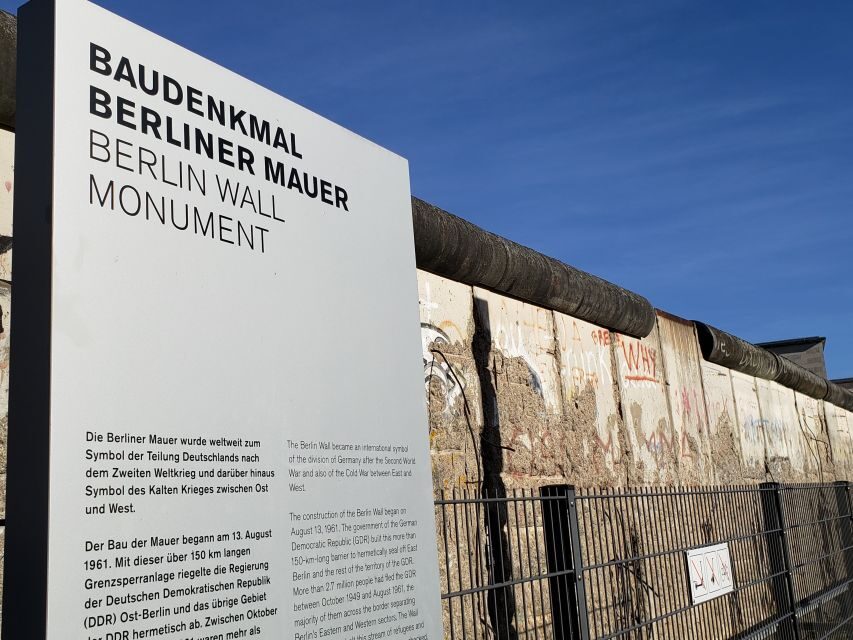
Bernauer Straße is a smart starting point because it’s tied to how the border cut through real neighborhoods, not just abstract politics. You meet at U Bernauer Straße, upstairs at the exit marked Bernauer Straße, and your guide takes it from there. That location matters because this is where you can get oriented quickly: this border wasn’t only a line on a map, it shaped movement, housing, and routines.
Right at the start, you’ll connect the geography to what you’re hearing. The street is now associated with an open-air documentation museum, so even before the walking really begins, you’re already surrounded by reminders of how the system worked. In other words, you’re not starting with a classroom; you’re starting where the tension was visible.
This first stretch also sets the tone for the rest of the tour: your guide follows the former borderline through central Berlin, which is a very effective way to build understanding. You get the sense of continuity. One stop doesn’t feel like a random photo-op. It all feels like one story moving across the city.
You can also read our reviews of more walking tours in Berlin



Walking the former border: how daily life in a divided city feels different
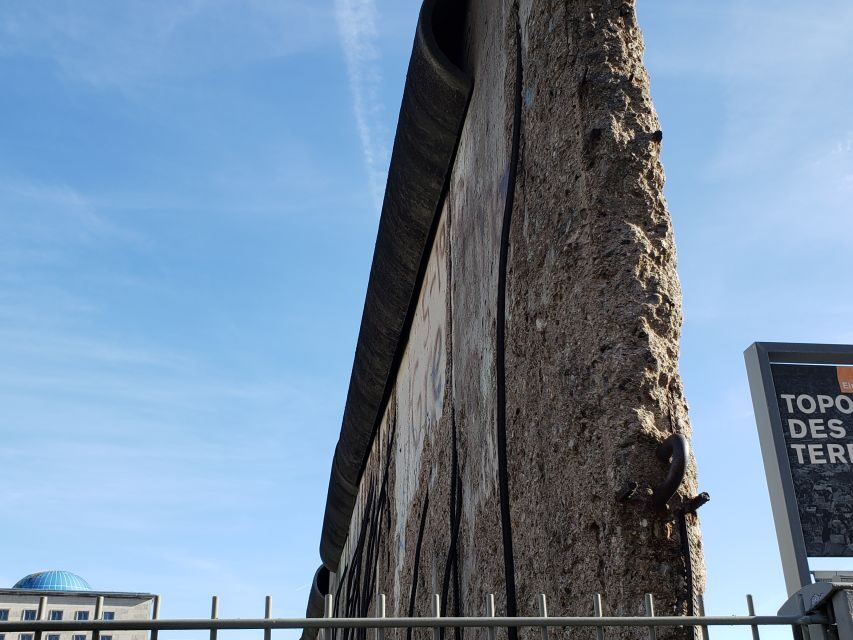
Once you’re on the route, the walking portion is where the tour earns its keep. You’re following the former borderline through the center of Berlin, and your local guide shares real-life stories about what Berliners experienced in the Cold War. That’s the key difference between a history talk and a walking tour like this. You’re learning by tracking the space where life got constrained.
Expect to hear about how daily routines were affected by division, and also about escape attempts—where they happened and why certain areas became infamous. Even if you’ve read about the Berlin Wall before, you’ll likely come away with a clearer sense of cause and effect: the wall and border controls didn’t just prevent movement, they shaped choices. People had to plan, wait, and take risks under constant pressure.
I also appreciate the private-group feel here. It makes it easier to ask a practical question when something doesn’t click. A guide can adjust the explanation to your interests, whether you’re focused on political strategy, human stories, or how the city functioned on both sides of the divide.
Wear shoes you can walk in for two hours. The tour is straightforward walking, but you’ll feel better if your feet are comfortable and you’re not worrying about blisters or awkward footwear.
Tränenpalast (Palace of Tears): what an actual station teaches you
One highlight that deserves attention is the stop at Tränenpalast, the Palace of Tears. The tour doesn’t just point at it; you get a guided tour there. That matters because this site is powerful in a very specific way: it’s an original border crossing station, meaning it’s tied to the real, physical process of crossing and separation.
A guided station visit tends to do something classroom history often can’t: it gives you the rhythm of the border experience. You start to imagine not only what people wanted, but what they had to do step-by-step while surrounded by controls and uncertainty. That’s where the stories you hear along the route start to make more emotional sense.
This is also one of those moments where a good guide’s storytelling style matters. In the feedback I saw, strong emphasis was placed on guides being friendly and skilled at turning history into something you can actually picture. People mentioned guides such as Stephanie and Stefan by name, and both were praised for clear, inside knowledge. That’s the vibe you want for a stop like this: real detail, not just broad strokes.
If you’re traveling with kids or you’ve got a mixed-language group, the Palace of Tears stop can be a good “anchor.” It gives you a concrete setting, and many guides are able to adjust how they explain the story based on the group’s needs.
From the death strip to Checkpoint Charlie: finishing with two border realities
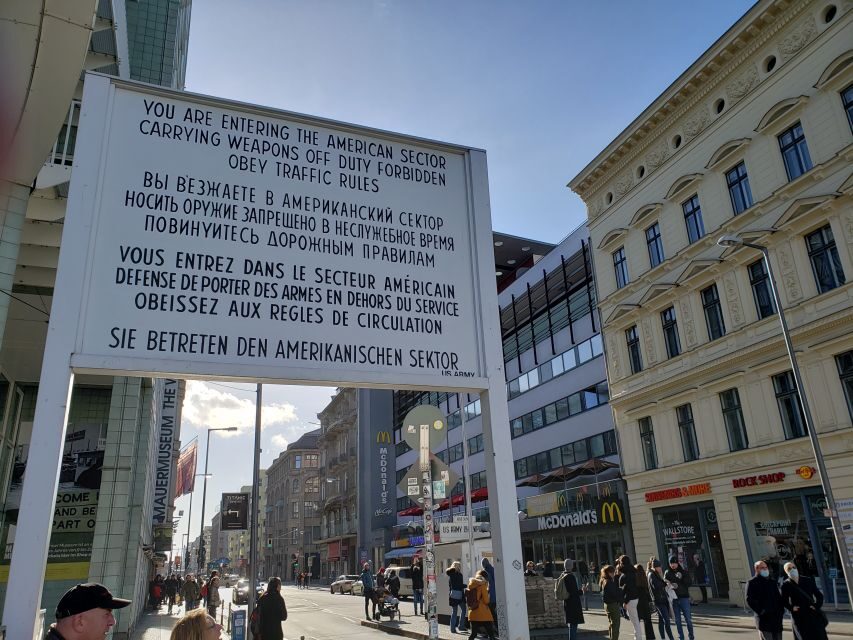
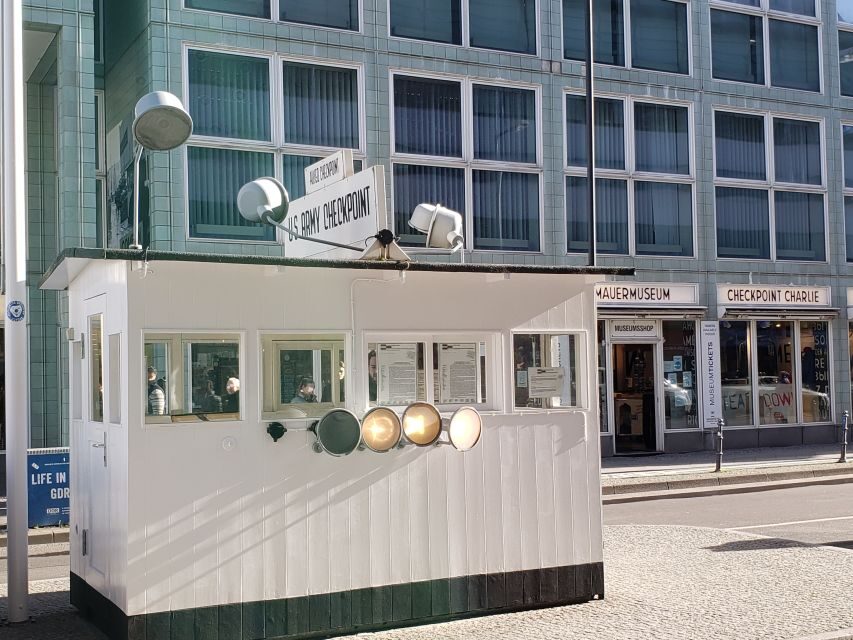
After Palace of Tears, you’ll keep moving toward the end of the tour, where the final major stop is Checkpoint Charlie. Ending here works well because the name is widely known, but many people have only a surface-level idea of what it represented. With a guide walking you into the context, Checkpoint Charlie becomes less of a postcard and more of a functioning border site in your mind.
Along the way, you’ll also learn about the former “death strip.” If a viewing platform is open, your guide will take you up to see this area—specifically the zone designed to prevent escape attempts. Even if you only get a brief look, the effect is usually immediate: it’s hard to see it as anything other than a carefully engineered barrier.
There’s one practical consideration here: access can depend on whether the platform is open. If it’s closed, you’ll still get the narrative and context, but you might not get the exact view you were hoping for. I’d treat this as a possible bonus rather than a guaranteed final spectacle.
Either way, the pacing matters. The tour is only two hours, so it doesn’t try to cover every wall-related location in Berlin. Instead, it builds a focused sequence: start at Bernauer Straße, learn from the human-sized border story, see the station at Palace of Tears, and end with Checkpoint Charlie while connecting it all back to how people tried to escape and why those attempts were so heavily controlled.
Price and value: why $22 can make sense for a focused 2-hour walk
At $22 per person for a private walking tour lasting about 2 hours, the value is less about squeezing in many sites and more about getting the right kind of explanation for a compact route. This is the classic travel trade: you’re paying for a guide to turn locations into understanding.
If you’re the kind of traveler who can look at a wall segment and feel curious but unsure what you’re seeing, a guided route can be worth it immediately. You’re not paying for transportation or admission tickets. You’re paying for interpretation—how the border line connected to daily life, why certain places mattered, and what the escape story looks like when you follow the space itself.
Also, private-group format helps here. Even within two hours, it’s easier to get your questions answered and to keep the pace aligned with your group. That reduces the frustration that sometimes comes with larger tours where you spend more time waiting for the group than learning.
You can also read our reviews of more private tours in Berlin



Practical comfort: language, group size, and how to get the most out of it
The tour is led by a live local guide in German and English, and the experience is set up as a private group. That flexibility matters because Cold War history is dense. Being able to absorb it in a language you’re comfortable with changes how much you retain.
From the feedback I saw, guides were praised for adapting delivery—someone even noted that explanations alternated between English for adults and German for kids in their group. I can’t promise every group will have that exact mix, but it’s a good sign that at least some guides handle varied needs thoughtfully.
You’re also getting wheelchair accessibility, which is useful if you’re traveling with limited mobility. Since the route is still a walking tour, you’ll want to consider how comfortable you are with outdoor walking segments, uneven sidewalks, and Berlin’s urban layout. But the key point is that accessibility is explicitly offered for this experience.
A small tip that improves the whole day: before you go, decide what you want most—history, human stories, or escape attempts. Then keep that question in mind while you walk. The guide will be able to shape the emphasis as you go, and you’ll feel like you’re getting a tour tailored to your curiosity rather than a fixed script.
Who this tour suits best (and who might want something different)
This tour is a strong fit if you want a grounded picture of Cold War Berlin without spending a whole day chasing dozens of locations. The route is focused: Bernauer Straße to Tränenpalast and then to Checkpoint Charlie, with the death strip view as a possible add-on. If that matches your style, you’ll likely enjoy it a lot.
It also works well if you’re interested in how borders change ordinary life. The emphasis on daily life and escape attempts turns the Wall from a monument into a lived reality. And because it’s private, families and mixed groups can often get more tailored pacing. The mention of kids and language switching in feedback is a good example of the kind of group dynamics this format can handle.
On the other hand, if you’re looking for a purely scenic walk or something light and humorous, the topic will naturally be heavy. It’s not bleak for the sake of it, but the story is about division, control, and attempts to break free. You might find another theme tour a better fit if you want distance from difficult history.
Should you book this Berlin Wall and Cold War private walking tour?
I’d book it if you want the Berlin Wall story explained through real spaces: Bernauer Straße, an original border-station experience at Tränenpalast, and the famous ending point at Checkpoint Charlie. For the $22 price and 2-hour time window, it’s a practical way to get understanding without turning your day into a marathon.
I’d hesitate only if the idea of the death strip view is a must-have for you. Since the viewing platform may or may not be open, treat that as a bonus rather than a guaranteed highlight. Still, even without the exact platform moment, you’ll have the station visits and the guided context that make the experience worthwhile.
If you like history with human scale, this is one of the most sensible ways to spend a couple of hours in Berlin.
FAQ
Where do I meet my guide?
Meet your guide at the underground station U Bernauer Straße, upstairs at the exit marked Bernauer Strasse. The guide will have a sign with your name on it.
Where does the tour finish?
The tour finishes at Checkpoint Charlie.
How long is the Berlin Wall and Cold War private walking tour?
It lasts 2 hours.
Is this a private tour?
Yes. It’s listed as a private group.
What languages are the tours offered in?
The live tour guide speaks German and English.
Is the tour wheelchair accessible?
Yes, it is wheelchair accessible.