REVIEW · BERLIN
Night magic city tour in Berlin
Book on Viator →Operated by Farolero - Night magic city tour · Bookable on Viator
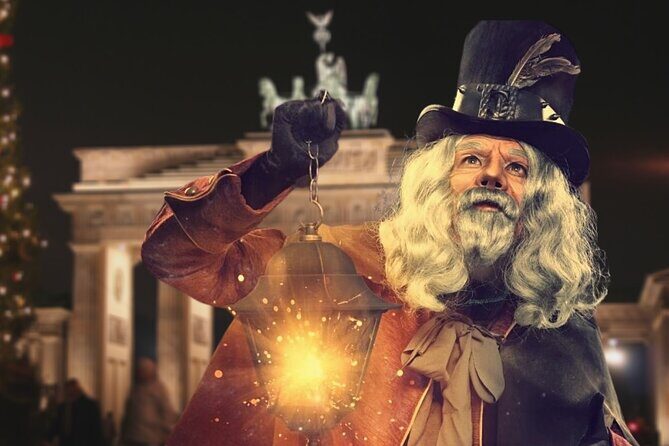
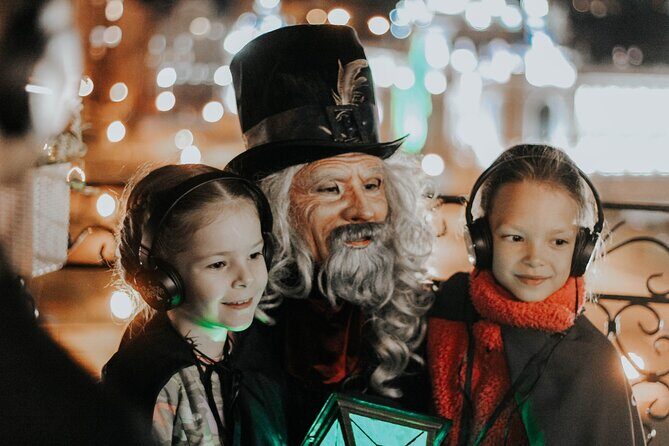
Berlin at night has a way of surprising you. This night magic city tour turns key sights in Mitte into an easy, story-driven walk, with interactive elements like audioguide-style moments, actors, and visual effects that cut through the usual street noise.
I especially like the playful, hands-on vibe—including the chance to be part of the show, not just a listener.
One thing to consider: it runs best when weather cooperates, and the tour is timed tightly to specific meeting points.
What really works is the route itself. You hit compact, high-impact landmarks—Neptune Fountain, Rotes Rathaus, and the Nikolaiviertel/Nikolaikirche area—so you learn a lot without spending the whole evening commuting. I also like how the story connects big themes (Prussian symbolism, East vs. West design cues, Berlin’s reconstructed heart) instead of treating each stop like a disconnected postcard.
Still, plan for a night walk. The experience requires good weather, and one reported hiccup (a guide not arriving at the designated time) is a reminder to arrive early and double-check the exact location on your phone.
In This Review
- Key highlights and what they mean
- A night tour built for stories, not checklists
- Price and logistics: what you’re paying for
- Where you start: St. Marienkirche and the “ready to go” vibe
- Neptune Fountain: Prussian symbolism in bronze and stone
- Rotes Rathaus: Berlin’s government heartbeat
- Ampelmännchen: the tiny traffic light with big East/West meaning
- Nikolaiviertel: the rebuilt heart of Alt-Berlin
- St. Nikolai-Kirche (Nikolaikirche): Berlin’s oldest church zone
- Humboldt Forum: non-European art and a palace shell
- Mühlendamm: the old city’s spine, still in use
- The small extras that make it feel like an event
- Pace, group size, and who this suits best
- Practical tips so your night goes smoothly
- Should you book Farolero’s Night Magic City Tour?
- FAQ
- FAQ
- How long is the Night Magic City Tour in Berlin?
- How much does the tour cost?
- Is the tour offered in English?
- Do I need to print a ticket?
- How large is the group?
- Where do I meet the tour?
- Where does the tour end?
- Is the tour dependent on weather?
- What’s the cancellation window?
Key highlights and what they mean
- Interactive performance beats a basic lecture: audioguide-style storytelling plus actors and stagey visual effects.
- Mitte in 90 minutes: you concentrate on central spots you’ll otherwise walk past quickly.
- Neptune Fountain’s hidden lesson: Prussian river allegories are built into the stone.
- Ampelmännchen symbolism you can spot instantly: a tiny traffic-light figure with East/West meaning.
- Nikolaiviertel + Nikolaikirche after dark: the oldest church zone feels special when lit.
- Humboldt Forum and Mühlendamm connection: modern museum culture next to the city’s older spine.
A night tour built for stories, not checklists
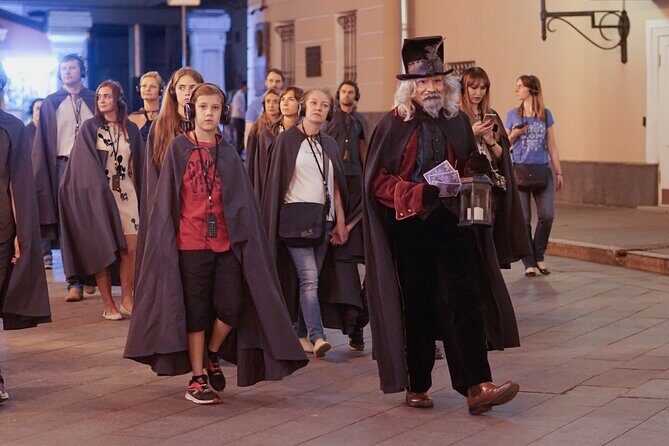
This is a Berlin evening walk designed to feel fun while it teaches. The pacing is short—about 1 hour 30 minutes—so you’re not stuck out late with nothing to do but stare at buildings. With a cap of 20 people, the group stays small enough for the tour style to feel personal rather than assembly-line.
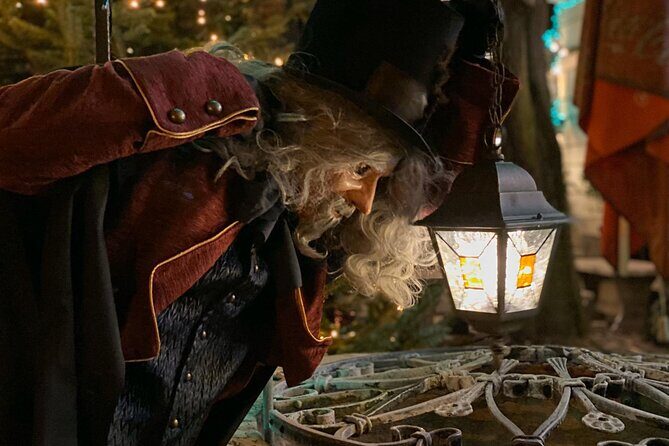
The “magic” part isn’t vague. It’s the way the night is staged around the route: audio-style guidance, added performer moments, and some visual effects that keep the experience moving even when you’re standing still at a famous corner. You’ll get the sense that the team wants you to notice details—symbols, architecture, and little urban clues—rather than just collect photos.
And you’re not walking blind. The tour uses a mobile ticket, and it’s offered in English, which keeps the logistics simple if you’re traveling without a German-speaking partner.
You can also read our reviews of more city tours in Berlin
Price and logistics: what you’re paying for
At $46.99 per person for roughly 90 minutes, this isn’t the cheapest way to see Berlin. What makes it feel fair is that the tour isn’t only a guided stroll. You’re paying for a guided storyline plus interactive theatrical touches, with a small-group format and a central route.
Another value point: this is the kind of tour you can do early in a trip. You’ll pick up names and visual markers—like Rotes Rathaus and the Ampelmännchen—that help you navigate Berlin the rest of your stay.
Practical tip: check the meeting spot on the map before you go. The tour starts at St. Marienkirche, Karl-Liebknecht-Str. 8, 10178 Berlin, and ends on the Spree at Ephraim, Spreeufer 1, 10178. If you’re even a few minutes off, you’ll feel it, because the walk is timed.
Where you start: St. Marienkirche and the “ready to go” vibe
You begin at St. Marienkirche in Mitte. That matters because it sets the tone: you’re starting in the older central part of the city, not a remote suburb. It also means your walking loop stays tight and mostly walkable.
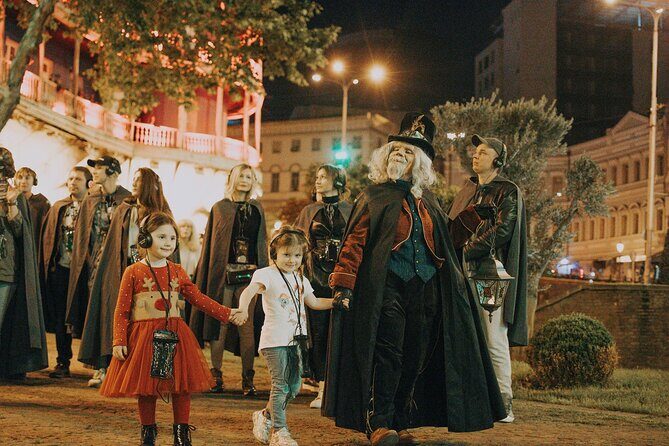
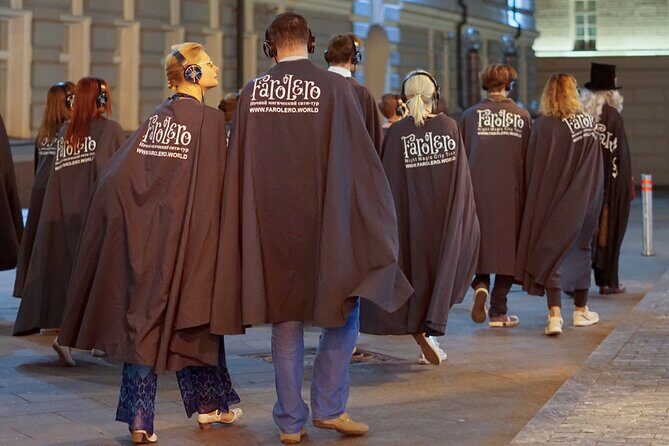
From what you can reasonably expect, the team works to get people engaged quickly. Past experiences with this tour format include warm welcomes, and sometimes the team has handed people items to wear or get into character at the start. Even if that part varies, don’t show up expecting a sit-down museum tour. This is a moving, responsive evening.
Neptune Fountain: Prussian symbolism in bronze and stone
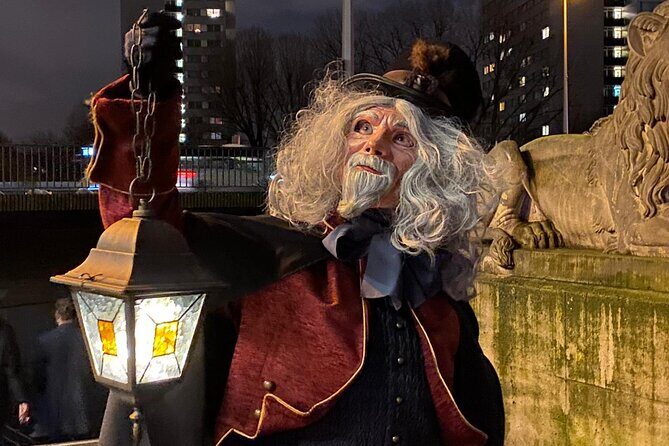
One of the most satisfying stops is Neptune Fountain, built in 1891 and designed by Reinhold Begas. Neptune stands in the center, but the real payoff is the ring of figures around him. They represent the four main rivers of Prussia at the time the fountain was constructed:
- Elbe: shown with a figure holding fruits and ears of corn
- Rhine: fishnet and grapes
- Vistula: wooden blocks tied to symbols of forestry
- Oder: goats and animal skins
Here’s the useful way to look at it at night: this isn’t just a pretty statue. It’s a political map made into art. You’ll also get a clear, modern connection—parts of those river regions don’t sit in the same countries today (the Vistula is now entirely in Poland, and the Oder is the border between Germany and Poland).
Why it’s great at night: the fountain becomes a landmark you can actually aim for. In daylight you’d likely treat it like another “good photo spot.” At night, the story makes it feel like a clue you’re collecting on purpose.
Rotes Rathaus: Berlin’s government heartbeat
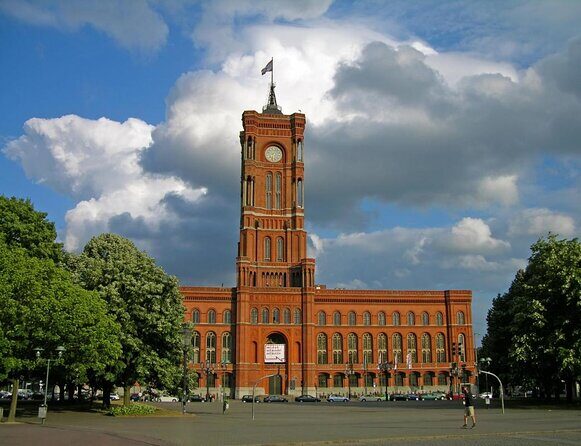
Next you head to Rotes Rathaus (Red City Hall), located in Mitte near Alexanderplatz. The building is the seat of the governing mayor and the government of the state of Berlin, housed within the Senate of Berlin.
The name “Red City Hall” is tied to the façade design and its red clinker bricks. That kind of detail sounds small until you’re standing in front of it. After your stop, you’ll start spotting how Berlin uses color, brickwork, and massing to signal importance—especially around government and civic sites.
If you like city walks that help you read architecture quickly, this stop earns its place. It’s not only about who works there. It’s about learning how Berlin signals authority in stone and brick.
You can also read our reviews of more evening experiences in Berlin



Ampelmännchen: the tiny traffic light with big East/West meaning
Then comes a stop that’s almost funny in its scale: Ampelmännchen, the little pedestrian traffic light man. You’ll see this symbol across Germany, but Berlin’s version carries extra meaning.
Before German reunification in 1990, the two German states used different pedestrian-signal designs:
- In West Germany, the figure was more generic.
- In East Germany, the figure tended to wear a style associated with a more “male” presentation, including a hat.
This is one of those “how did I not notice this before?” moments. You’ll stop looking at street signs as background noise. You’ll start noticing them as cultural leftovers from a divided past.
At night, it’s even easier to spot because pedestrian signals are bright and rhythmic. Once you know what you’re looking for, you’ll keep seeing Ampelmännchen around town.
Nikolaiviertel: the rebuilt heart of Alt-Berlin
Now you shift into one of the most atmospheric parts of the whole route: Nikolaiviertel (Nicholas’ Quarter). This is an area that, together with nearby Cölln, makes up the reconstructed historical heart of Berlin’s “Alt-Berlin.”
It’s located in Mitte, and it’s about five minutes from Alexanderplatz—so you’re not far from the big tourist hub, but the quarter feels more human-scaled.
The point isn’t to pretend it’s purely medieval. It’s to see how Berlin recreates identity. You’ll notice restored buildings and street rhythm designed to recall an earlier city center. After you’ve just learned the symbolism of Prussia and the East/West meaning of Ampelmännchen, the Nikolaiviertel stop clicks. Berlin is constantly mixing old references with present-day choices.
Night tip: wear comfortable shoes. This area encourages slow walking and looking up. If you rush, you’ll miss what makes it work.
St. Nikolai-Kirche (Nikolaikirche): Berlin’s oldest church zone
The tour then moves to St. Nikolai-Kirche, also called Nikolaikirche or St. Nicholas’ Church. This is the oldest church in Berlin, dating to the early 1200s, built between 1220 and 1230.
The church sits in the eastern part of central Berlin, within the Nikolaiviertel area. The zone around the church is bounded by Spandauer Straße, Rathausstraße, the River Spree, and Mühlendamm. It’s also a place where you’ll find restored medieval buildings, and in some cases, recent imitations meant to preserve the feel of the old center.
A helpful comparison you might hear on the tour is that while St. Nicholas’ Church is among the oldest churches here, it’s not the only early landmark nearby. There’s also another old church presence around Alexanderplatz—but the Nikolaikirche is the anchor that gives the quarter its age.
At night, churches can feel either solemn or flat. Here, the added storytelling style makes it feel like you’re standing at the beginning of the city’s long timeline.
Humboldt Forum: non-European art and a palace shell
From medieval-era ground, you step into the modern museum world at Humboldt Forum, located on Museum Island in Berlin’s historic center.
This museum is dedicated to non-European art collections. Its name honors Wilhelm and Alexander von Humboldt. What makes it visually interesting is the way it combines:
- three rebuilt baroque façades from the former Royal Palace
- a contemporary exterior facing the Spree
- a modern interior designed by Franco Stella
If you’ve ever wondered why Berlin looks like it’s in constant conversation with itself, this stop explains it. The building is a physical argument: rebuild the outer shell, update the purpose inside, and keep the conversation moving.
Even if you don’t plan to go inside during this particular walk, the tour helps you understand why this is such a big deal in Berlin’s cultural map. It’s the kind of place you’ll remember later when you’re choosing which museums to visit.
Mühlendamm: the old city’s spine, still in use
To end the storyline, you pass through Mühlendamm (Mill Dam), one of the main thoroughfares in the Mitte district. It runs from the historic areas of Cölln and Fischerinsel toward Molkenmarkt Square through the Mühlendammbrücke, crossing the Spree.
The street’s name points to the mills that once operated there. A historic causeway existed at this location around 1200, and it became the nucleus of late medieval Berlin’s city foundation.
Here’s what to notice: Mühlendamm isn’t only “where people walk.” It’s where the city’s structure hardened—literally in the ground. After your earlier stops (Neptune Fountain’s national symbolism, Ampelmännchen’s political design split, Nikolaikirche’s medieval age, Humboldt Forum’s modern culture), the Mühlendamm story gives you continuity. It helps you feel the city’s older bones under the evening bustle.
The small extras that make it feel like an event
A big reason this tour earns high marks is the overall tone: it’s organized, and it feels like a show that still respects the facts.
In some versions, the experience includes small treats like coffee, chocolate, and even a small schnaps at the end. In at least one account, the team also handed people a warm welcome and some form of costuming or getting-in-character right after arrival. That doesn’t change the core sights, but it changes how the walk feels—less like you’re being escorted, more like you’re joining a night scene.
Also, the format is kept moving. You’re not stuck hearing the same explanation from one person at one volume level. The interactive, visual, and audio elements are clearly meant to keep your attention even if you’re visiting Berlin for the first time and feeling a little overwhelmed.
Pace, group size, and who this suits best
With a maximum of 20 travelers, you’re likely to get a group that’s small enough for interaction. The tour lasts about 90 minutes, so you’ll finish while there’s still plenty of energy left in your evening.
This tour is a good match if you:
- like tours that explain the “why” behind symbols (Neptune Fountain rivers, Ampelmännchen East/West design)
- want a night activity in Mitte without a long transit plan
- enjoy interactive storytelling, even if you’re more into people-watching than museum time
It may be less ideal if you:
- hate cold weather walks (the experience requires good weather, and a short delay can still feel long on icy pavement)
- prefer quiet, purely informational tours with no performer-style elements
Practical tips so your night goes smoothly
- Arrive a few minutes early at St. Marienkirche (Karl-Liebknecht-Str. 8). This is one of those walks where precision matters.
- Dress for Berlin nights. Even when the weather is “good,” you’ll still be outside most of the time.
- Bring a charged phone. You’ll use your mobile ticket, and you’ll want your map ready for the final stop at Ephraim on Spreeufer.
- Expect interaction. If the team offers participation, don’t overthink it. It’s part of the fun.
One last note: one past experience reported a guide not showing up at the designated time and place, and the person requested a refund. That’s not the norm based on the overall rating, but it’s a reminder to double-check you’re at the correct meeting point and give yourself some buffer.
Should you book Farolero’s Night Magic City Tour?
I’d book it if you want a Berlin evening that feels like a guided performance with real context. The route is sensible: it links famous landmarks with symbolic details you’ll remember later. At $46.99 for about 1.5 hours, the value is strongest if you enjoy interactive tours and want to cover a lot of meaningful stops in one go.
Skip it (or rethink your timing) if you’re traveling in rough weather or you dislike any chance of delay on icy sidewalks. And if you prefer strictly quiet sightseeing, the theatrical, interactive style may not be your thing.
FAQ
FAQ
How long is the Night Magic City Tour in Berlin?
It’s about 1 hour 30 minutes.
How much does the tour cost?
The price is $46.99 per person.
Is the tour offered in English?
Yes, it’s offered in English.
Do I need to print a ticket?
No. You’ll get a mobile ticket.
How large is the group?
The tour has a maximum of 20 travelers.
Where do I meet the tour?
You start at St. Marienkirche, Karl-Liebknecht-Str. 8, 10178 Berlin.
Where does the tour end?
The tour ends at Ephraim, Spreeufer 1, 10178 Berlin.
Is the tour dependent on weather?
Yes. It requires good weather, and if it’s canceled for poor weather you’ll be offered a different date or a full refund.
What’s the cancellation window?
You can cancel for a full refund up to 24 hours before the experience’s start time.